Who’s Most Responsible for the Monopolization of America?
Friends,
I focused this morning on Chevron and the Big Oil monopoly — and the importance of antitrust enforcement. I’d like to give you a bit more background on what happened to antitrust in America.
Whether it’s Big Oil, Big Ag, Big Tech, Kroger and Albertsons dominating the grocery market, or Big AI (Anthropic, OpenAI, and SpaceX), corporate concentration is on the rise.
And its social costs are growing.
— The typical American household is paying more than $5,000 a year because corporations can raise their prices without fear that competitors will draw away consumers.
— Such corporate market power has also been a major force driving inflation.
— Huge corporations also suppress wages, because workers have fewer employers from whom to get better jobs — limiting the ability of workers to negotiate higher wages and benefits. According to the U.S. Congress Joint Economic Committee, this drop in labor market bargaining power costs U.S. workers more than $1 trillion annually.
— And corporate giants are also fueling massive flows of big money into politics (one of the major advantages of large size).
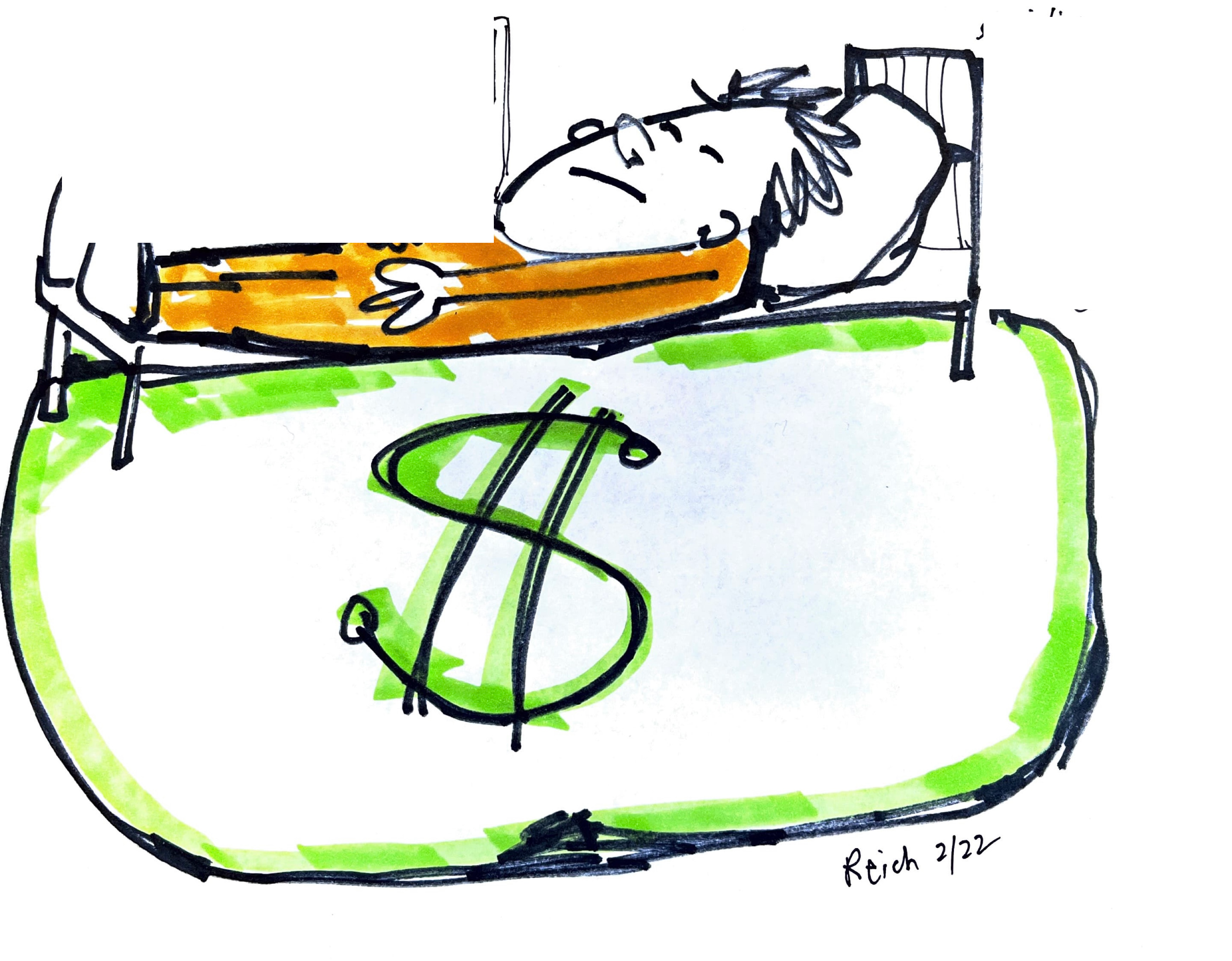
Yet the federal courts have been slow to do anything about this. And the monied interests — as exemplified on the editorial pages of the Wall Street Journal and the Washington Post — argue that antitrust shouldn’t be enforced. Why? Because of a man named Robert Bork.
I first met Bork in September 1971, when I took his class on antitrust at Yale Law School. I recall him as a large, imposing man, with a red beard and a perpetual scowl.
He was only in his mid-40s then, but he seemed impatient and bored with us (also in that class were Hillary Rodham and Bill Clinton).
We kept challenging his view that the only legitimate purpose of antitrust law was to lower consumer prices.
“What about the political power of giant corporations?” we asked.
His retort: “How do you expect courts to measure political power?”
“But what about the power of big corporations to suppress wages?”
“Employees are always free to find better jobs.”
“What about their power to undercut potential rivals with lower prices?”
“Lower prices are good for consumers.”
“What about the sheer power that comes from their gigantic size?”
“Also good for consumers. Large size means lower costs through efficiencies of scale.”
Bork had an answer to each of our objections, but we were never satisfied. He spouted economic theory based on dubious “Chicago School” assumptions that all economic players have perfect information and face no cost of entering or leaving markets (Bork had attended the University of Chicago and its law school).
Even in our mid-20s, we knew this was bullshit.
Bork refused to recognize power — even though antitrust laws emerged from the Gilded Age of the late 19th century, when a central concern was the untrammeled power of giant corporations.
A few years later, Bork wrote a book called The Antitrust Paradox that summarized his ideas. The staff of a conservative California governor bound for the White House read it and passed it along to their boss, and Bork’s book formed a basic tenet of Reaganomics.
Federal judges read it, too. Most judges didn’t (and still don’t) know much economics and hated getting bogged down in interminable and almost incomprehensible antitrust trials that could last for years. They found Bork’s simplicity and cogency helpful in limiting such lawsuits.
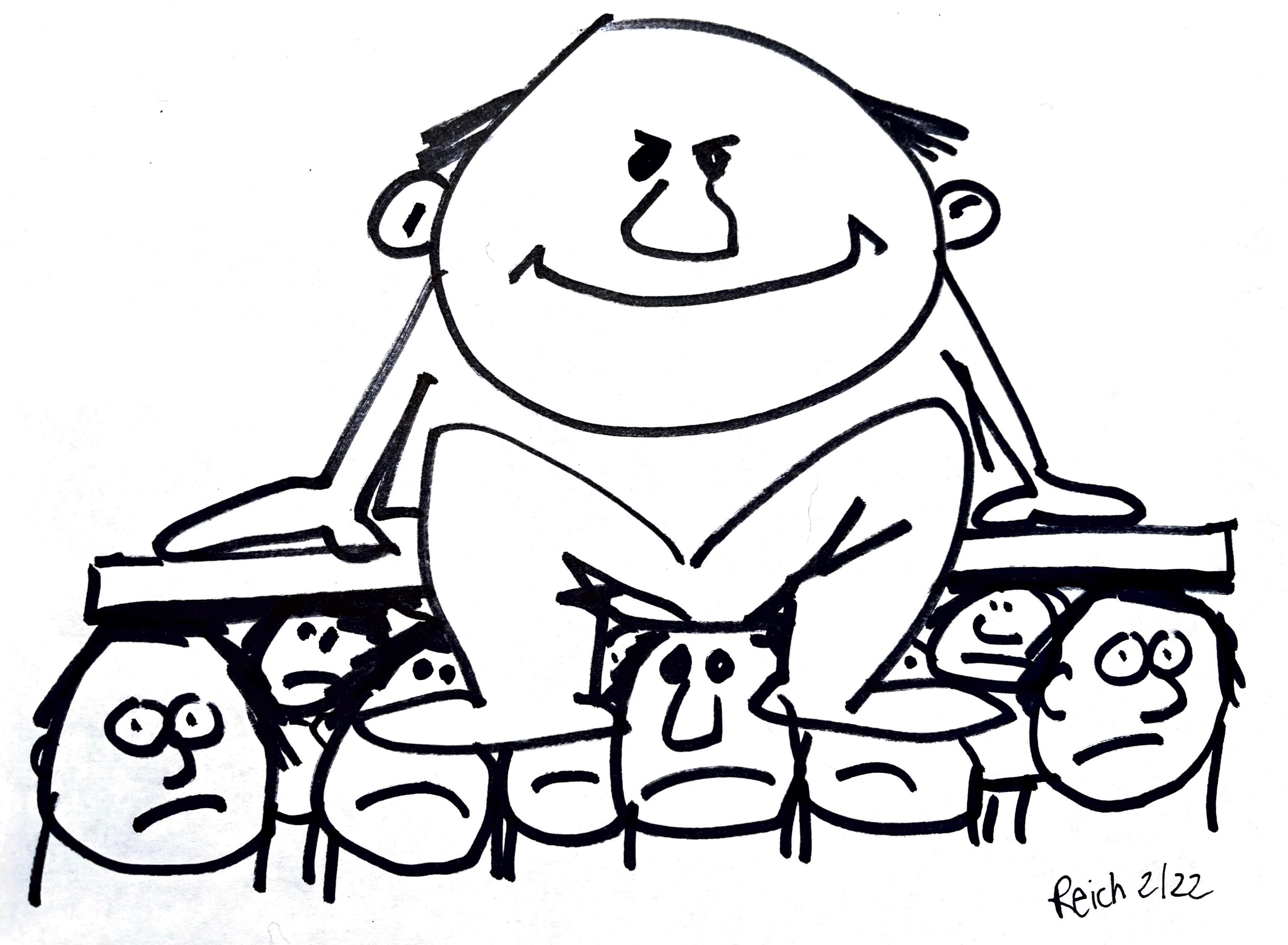
BORK’S INFLUENCE over the courts represented the culmination of years of work by the monied interests to kill off antitrust. They’re still at it.
Which is why the new view of antitrust that was pioneered by the Biden administration — through Lina Kahn’s FTC and the Antitrust Division of the Justice Department — was so important.
This new view regarded corporate concentration as a problem even if it provides economies of scale that might allow lower consumer prices in the short term. That’s because corporate concentration also means less innovation, more wage suppression, predatory behavior, price-push inflation, and increased political power.
The optimist in me thinks that as the public becomes more aware of the close connections between corporate power, predation, high prices, inflation, wage suppression, and political corruption, the new antitrust movement will eventually succeed.
This won’t happen in the Trump regime, of course, but it should be a central part of the progressive message for the midterms and in 2028.
Check this story
Is this AI-made?
AI checkers give a likelihood, not proof.