A Point-by-Point Breakdown of Trump’s Failed Iran War Objectives
At the very start of his war with Iran, President Donald Trump declared victory. “We won,” Trump announced on March 11, 11 days after launching the joint attack with Israel. “In the first hour it was over.” But more than 2,200 hours later, the conflict is obviously still raging.
This week, U.S. forces bombarded Iran after the downing of an American Apache helicopter near the Strait of Hormuz. Iran responded with strikes on targets across the Middle East and threats to “turn the entire region into hell.” Trump told Fox News’s Trey Yingst on Wednesday night that the U.S. fired 49 Tomahawk missiles at targets inside Iran, in addition to bombing raids by fighter jets. Yingst reported that Trump also said, “We’ll bomb the S out of them tomorrow night’” if Iran did not sign a peace agreement. Trump followed this on Thursday by declaring the U.S. would be “hitting Iran … VERY HARD TONIGHT.”
The burgeoning forever war contradicts months of reassurances by Trump that a peace deal with Iran is imminent.
An Intercept analysis of Trump’s claims about the Iran war, stated objectives, and supposed achievements finds the U.S. has fallen short or flamed out on all counts. The public record shows an administration that has consistently scaled back its goals and downgraded its claimed successes, without nearing anything resembling the victory Trump has touted.
A Promise of World Peace
On the first day of the conflict, Trump laid out, with complete clarity, his most ambitious objectives. Claiming Iran was already “very much destroyed and, even, obliterated,” Trump said his war would bring peace to the region and, somehow, the globe. “The heavy and pinpoint bombing … will continue, uninterrupted … as long as necessary to achieve our objective of PEACE THROUGHOUT THE MIDDLE EAST AND, INDEED, THE WORLD!” Trump wrote on Truth Social on February 28.
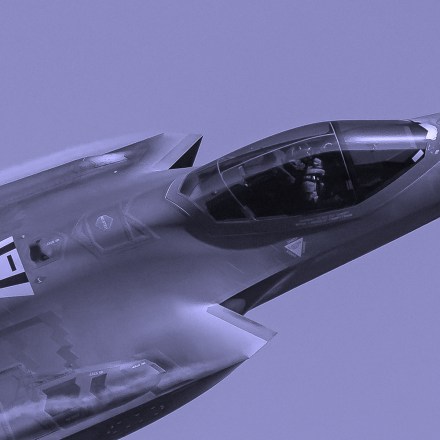
The bombing campaign was, indeed, “heavy.” The “pinpoint” attacks included a strike on an elementary school that killed between 150 and 175 civilians, most of them children. And thousands more civilians died in other strikes. Almost 149,000 civilian infrastructures, including homes, hospitals, and schools, have been damaged in the U.S.–Israel war, according to an April report from the Iranian Red Crescent Society. An estimated 400,000 people have been affected by damage to houses and apartments. But Iran was not “very much destroyed,” much less “obliterated.”
Peace in the Middle East, it goes without saying, never came to pass. The U.S.–Israeli strikes actually kicked off a regional war that grew to include more than a dozen countries, including Bahrain, Iraq, Jordan, Kuwait, Lebanon, Oman, Qatar, Saudi Arabia, and the United Arab Emirates. Beyond this, the inability of the self-proclaimed “peace president,” head of the world’s newly created Board of Peace, and recipient of the first FIFA Peace Prize to achieve “peace throughout … the world” may stand as Trump’s grandest failure.
Just two days after setting out his topline goals, Trump began publicly vacillating and dramatically scaling back U.S. aims. “Our objectives are clear. First, we’re destroying Iran’s missile capabilities,” he said during a March 2 White House ceremony. “Second, we’re annihilating their navy. … Third, we’re ensuring that the world’s number one sponsor of terror can never obtain a nuclear weapon. … And finally, we’re ensuring that the Iranian regime cannot continue to arm, fund and direct terrorist armies outside of their borders.”
Months later, these objectives remain unmet.
Eliminating Missiles
While the United States claims to have struck more than 13,000 targets in Iran, leaked U.S. intelligence assessments found evidence that Iran restored 30 of the 33 missile sites along the Strait of Hormuz to operational status, and retained 70 percent of its prewar missile stockpile and 70 percent of its mobile launchers. Reports emerged that in April and May, Iran began efforts to repair its Yazd Missile Base. In just one day last week, Kuwait says it was targeted by an Iranian barrage of “13 hostile ballistic missiles.” On Sunday, Iran launched ballistic missiles at Israel. And on Thursday, Iran attacked multiple countries in the region, including Jordan which said it shot down 20 Iranian missiles.
During an aborted interview with NBC News that aired on Sunday, even Trump admitted he had failed. “They have some missiles left,” he said. “I would say, percentage-wise, maybe 21, 22 percent of their missiles. It’s a lot of missiles.”
Annihilating the Navy
While the U.S. sunk many Iranian ships, the Iranian Navy has not been annihilated. In fact, U.S. Central Command, which is overseeing the war effort, has repeatedly referred to actions by Iran’s Navy and the Islamic Revolutionary Guard Corps Navy in the months since Trump laid out his aims, demonstrating that both still exist, upending Trump’s frequent boasts to the contrary.
Just last week, Secretary of State Marco Rubio told the Senate Foreign Relations Committee that “there is no Iranian Navy,” and in the next breath admitted there was, referencing Iran’s “Boston Whalers with machine guns on them.”
Ending the Nuclear Program
Iran also still maintains its stockpile of enriched uranium. And there is no evidence that nuclear sites that were not attacked during Trump’s 2025 Iran war, such as Pickaxe Mountain, were ever damaged. Last week, in fact, Rubio confirmed that Iran’s “nuclear program” still exists. And during his recent NBC interview, Trump acknowledged that Iran still possessed its stockpile of highly enriched uranium and “they can get it, I guess, with years of work.”
Last week, Rubio even suggested Iran might be allowed to continue enrichment at some later date, noting it would need to accept “severe and long-term limitations, and/or cancellation, of enrichment.”
Halting Funding of Militias
The Trump administration has also failed to ensure “that the Iranian regime cannot continue to arm, fund and direct terrorist armies outside of their borders.” Days after Trump declared this war aim, House Republicans introduced legislation stating that “Iran remains the world’s largest state sponsor of terrorism and provides substantial financial and military support to groups including Hezbollah, Hamas, and the Houthis.” In the months since, even the Trump administration says the president’s goals haven’t been achieved.
In mid-April, the State Department said that Iran still “funnels the wealth of the Iranian people to Hizballah and other terrorists in the Middle East.” That same month, the Treasury Department took action against a “constellation of Iran-backed terrorist militias,” specifically “seven Iraqi militia commanders responsible for planning, directing, and executing attacks against U.S. personnel, facilities, and interests in Iraq,” including leaders of Kata’ib Hizballah, Kata’ib Sayyid Al-Shuhada, Harakat Al-Nujaba, and Asa’ib Ahl Al-Haqq. In May, the Treasury Department again targeted “Iran and its proxy militias in Iraq,” sanctioning “leaders of Iran-aligned terrorist militias Kata’ib Sayyid Al-Shuhada and Asa’ib Ahl Al-Haq” and referencing still “other Iran-aligned terrorist militias in Iraq.”
Unconditional Surrender
This assemblage of failures has been compounded by other unmet war aims. On March 6, Trump set the terms for an agreement with Iran. “There will be no deal with Iran except UNCONDITIONAL SURRENDER!” he wrote on Truth Social. In the months since, that hard-line stance has turned to mush.

“There is the prospect before us — which could happen today,” Rubio said last week of a potential peace deal, in a weak-kneed explanation to lawmakers. “We’re hopeful that something like that could happen in which the straits would reopen, we would enter into a period of negotiations on very specific topics — delineated negotiations in the hope of reaching an outcome that’s acceptable to us, and something they would be able to do as well.”
Reopening the Strait
The “straits” in question have become another sticking point and catastrophe. After failing to achieve all his initial war aims, Trump added another that was nothing more than a return to the status quo antebellum in the Strait of Hormuz: opening the waterway to traffic after Iran imposed a wartime blockade.
Before the war, the average number of vessels crossing the strait — a critical artery for the world’s oil, fertilizer, helium, critical materials for microchips, and numerous other goods — was more than 120 per day. It has never been close to that level again.
“I gave Iran ten days to MAKE A DEAL or OPEN UP THE HORMUZ STRAIT. Time is running out,” Trump declared on April 4. When the U.S. and Iran agreed to a ceasefire on April 7, Trump wrote on social media that he would “suspend the bombing and attack of Iran” on the condition that Tehran agree to the “COMPLETE, IMMEDIATE, and SAFE OPENING of the Strait of Hormuz.”
The next day, the White House declared: “Iran has now agreed to a ceasefire and reopening the Strait of Hormuz as the Trump Administration negotiates a broader peace agreement — once more proving Peace Through Strength victorious.” But that same day, Iran closed the strait, following continued Israeli attacks on Hezbollah targets in Lebanon.

In response to Iran’s blockade, the U.S. imposed its own blockade of the strait on April 13, barring commercial vessels from entering or leaving Iranian ports. Then on April 15, Trump posted: “I am permanently opening the Strait of Hormuz.” Two days later, Trump claimed, “Iran has agreed to never close the Strait of Hormuz again.” On April 19, Trump said Iran had launched attacks in the strait and noted Iran had announced a blockade. On April 23, Trump ordered the Navy to attack Iranian ships laying mines in the strait. On May 6, Trump teased that the war might be “at an end, and the highly effective Blockade will allow the Hormuz Strait to be OPEN TO ALL, including Iran.” A day later, Trump said U.S. warships came under Iranian fire in the strait. The situation was still dragging on when Trump wrote, on May 29: “The Hormuz Strait must be immediately open, no tolls, for unrestricted shipping traffic, in both directions.” On Monday, a U.S. Army Apache helicopter gunship patrolling the strait was downed by Iran.
The Strait of Hormuz remains functionally closed, except for a tiny trickle of traffic. “Last month, I directed our Great U.S. Military to execute a secret mission to support Oil Tankers and other Commercial Ships through the Strait of Hormuz,” Trump posted on Wednesday. “More than 200 Commercial Ships have safely traveled through the Strait.” (About 3,000 ships normally traverse it every month.) On Thursday, Iran announced that it, again, closed the strait to oil tankers and commercial ships.
Oil industry analysts say that global oil reserves are dwindling and that if the war doesn’t wrap up in the near term, petroleum prices could skyrocket to $150 a barrel. “The oil will go down,” Trump said on NBC, but acknowledged the war had driven up prices. “We’re going to have higher gasoline. We’re going to have a little higher fertilizer,” he admitted, before equivocating further when asked if gasoline prices had peaked. “Well, it depends. I mean, it depends where the war goes. It could be,” he waffled. “If we sign an agreement, it’ll go down now. Otherwise, it’ll go down after we’re finished.”
Oil prices rose to about $95 a barrel on Thursday as the U.S. and Iran continued to launch attacks. Trump said on Wednesday that the price of oil would have been at $250 a barrel had the U.S. government not been siphoning off “millions of barrels” of Iran’s oil over the course of the war. On Thursday, Trump posted that the U.S. would also soon seize Iran’s “oil infrastructure points, and assume total control of their Oil and Gas Markets.” Despite the rampant oil theft and threats of more to come, U.S. inflation accelerated for a third straight month in May, driven by energy prices which rose 3.9 percent over the month.
A Peace Deal
The “agreement” in question is still another failed aim. On March 23, Trump told reporters about supposed peace talks and cited “major points of agreement, I would say — almost all points of agreement.” Iran denied negotiations had taken place. Two days later, Trump claimed Iran wanted to “make a deal so badly.” On March 26, he said Iran was “begging to make a deal.” On April 15, he said the war was “very close to over.” On April 17, Trump claimed that Iran had “agreed to everything” and that “we will get a deal in the next day or two.”
“An Agreement has been largely negotiated, subject to finalization,” Trump announced on May 23. On June 2, Trump wrote: “as I told Iran, ‘It’s time, one way or another, for you to make a Deal.’” Then Trump told NBC late last week: “We’re very close to having a deal.” But on Monday, Trump said a “Final Deal” has yet to be “reached.”
What such a “deal” will end shines a bright light on another flip-flop failure by the president. Trump went from claiming, in early March, that the U.S. won the war with Iran, to attempting to convince Americans that he never even went to war in the first place. “We don’t call it a war,” he said before the end of that month. “We call it a military operation.” By early May, Trump was calling it a “mini war” or “a little detour.”
Just Give Him Two Weeks
The deadline for when this “mini-war” will finally end may be the most telling of Trump’s failed aims and achievements. It’s well known that Trump’s lying and laziness coalesce around one simple phrase: two weeks. “We’ll have something in two weeks,” Trump said in January of an agreement with Europe to extend U.S. control over Greenland, to take one example.
Trump has long used this two-week delaying tactic when faced with vexing questions about anyone and everything, from Russian President Vladimir Putin and the war on ISIS to international trade and the Covid-19 pandemic. Two weeks really means later. Except when it means never.
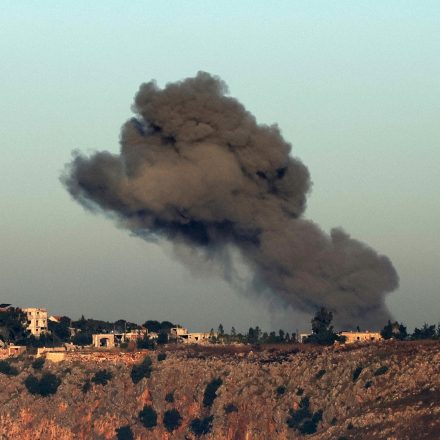
The ceasefire with Iran, announced on April 7, was initially supposed to last “two weeks” while the two countries inked a deal to end the war, according to Trump. He claimed at the time that they were already “very far along with a definitive Agreement concerning Longterm PEACE with Iran, and PEACE in the Middle East.”
On Monday evening, Trump held a tele-rally for South Carolina Sen. Lindsey Graham where he addressed his failed war with Iran. “We’re negotiating now, and they want to make a very good deal. They’re willing to give us everything,” Trump claimed, noting, “It’ll happen very soon.” The president then added in his favorite faux time frame: “I think we are winning that battle, but you’re really going to win it over the next two weeks when we declare total victory.”
The post A Point-by-Point Breakdown of Trump’s Failed Iran War Objectives appeared first on The Intercept.
Check this story
Is this AI-made?
AI checkers give a likelihood, not proof.