Tai Po fire: To sell or not to sell? As gov’t deadline looms, some owners still hope their homes can rise from the ashes
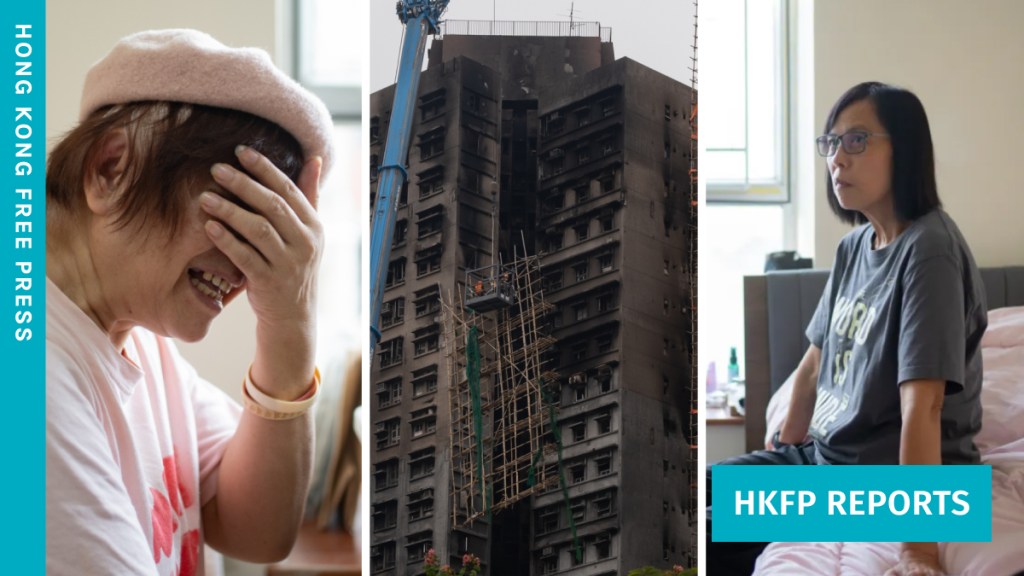
Betty Ho is adamant that she will not sell her flat in Wang Fuk Court under a government buyout scheme that is due to expire on Monday afternoon.
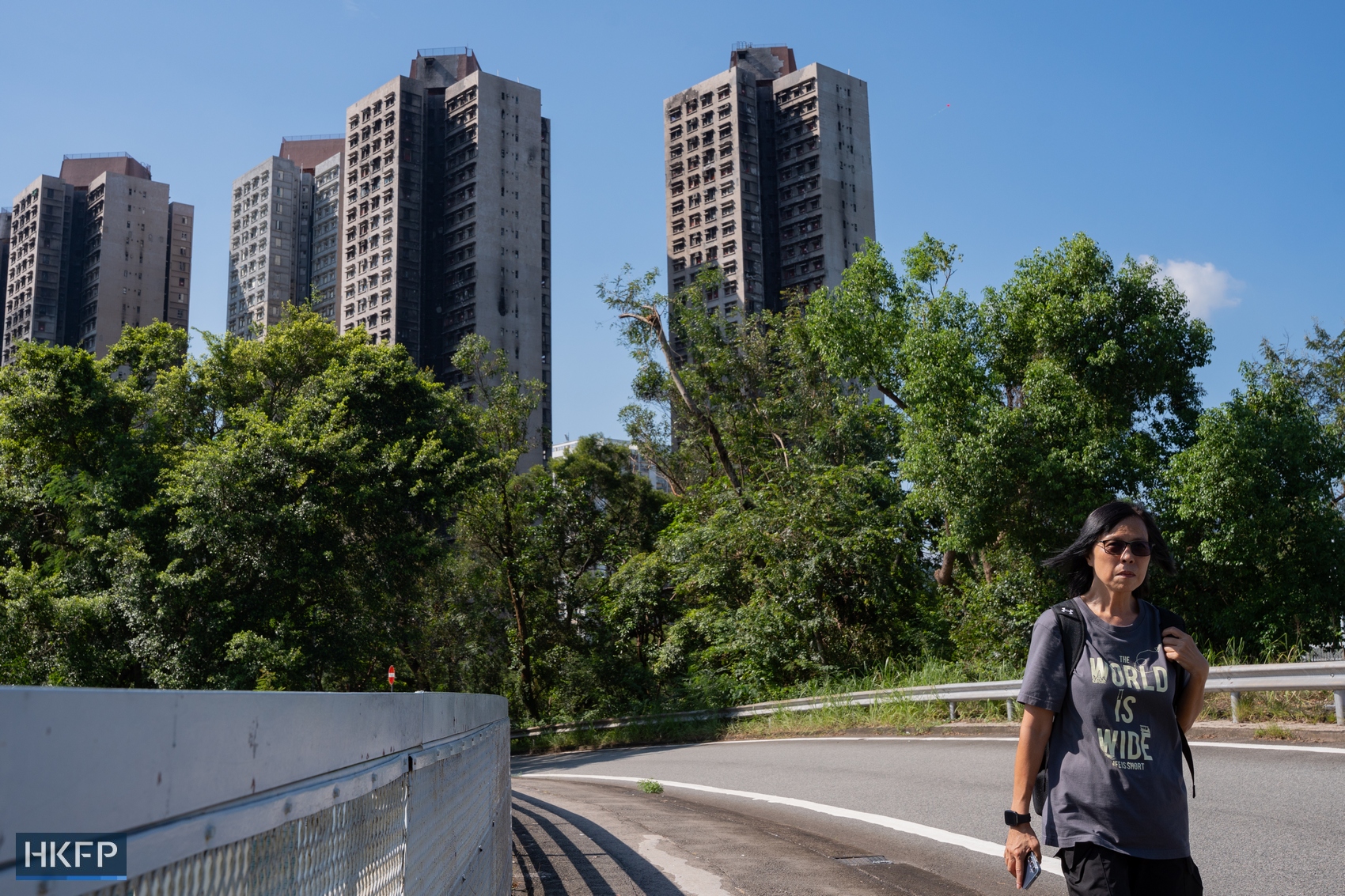
Nine months have passed since the blaze that killed 168 people and displaced thousands from the Tai Po housing estate. An independent committee is still preparing its final report on what caused the fire and how the systemic failures it exposed can be addressed.
Meanwhile, 1,984 households have until 5pm on Monday to accept the government’s acquisition offer.
Most homeowners have already accepted their terms. By last Thursday, 96.5 per cent of homeowners had signed a letter indicating that they were willing to sell their flat under the official plan, either for a cash pay-out or in return for a new unit in another government-subsidised development, according to official data.
A little more than three-quarters have also taken the next step in the process, signing a formal sales agreement.
But Ho, who bought a flat in Wang Shing House under her mother’s name in 1991, is one of those insisting that the government rebuild the estate on its original site for those who wish to return – a demand firmly rejected by the authorities, on the grounds that it would take a decade to rebuild.
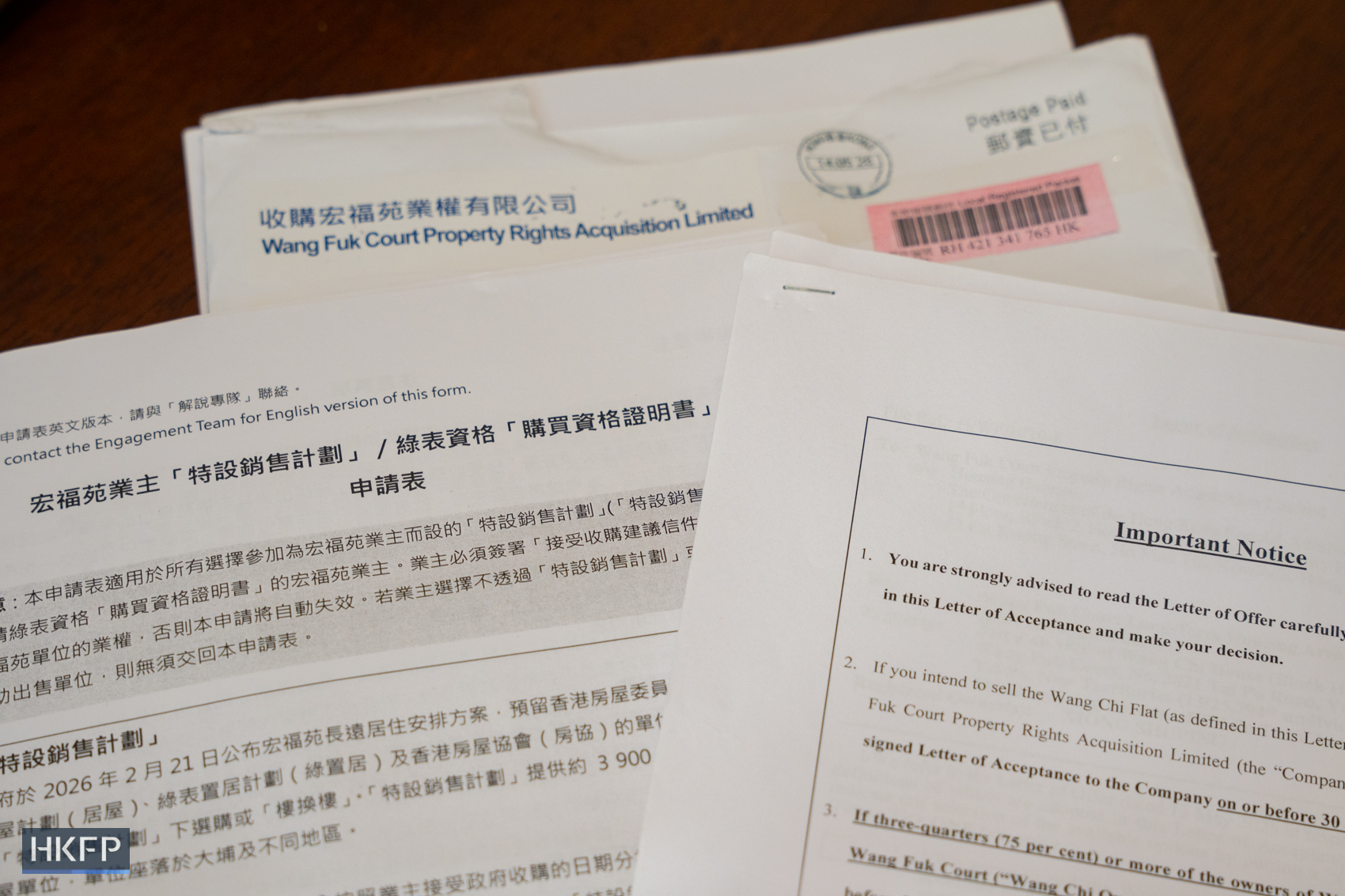
“We have always demanded on-site redevelopment, but we also know they won’t do it,” Ho said in Cantonese.
The government has said that the August 31 deadline will not be extended, and it has not ruled out using “legislative means” to deal with remaining unsold flats in the future.
As the deadline approached, some residents felt forced into submission. They said they were worried about their future housing, and feared that they would be forced to surrender their property by law if they declined to sell.
“I feel helpless. I know that many of us don’t want to sign [the agreement],” Woo, a Wang Yan House resident who asked to be identified only by her surname, told HKFP in Cantonese. “We don’t know what we can do.”
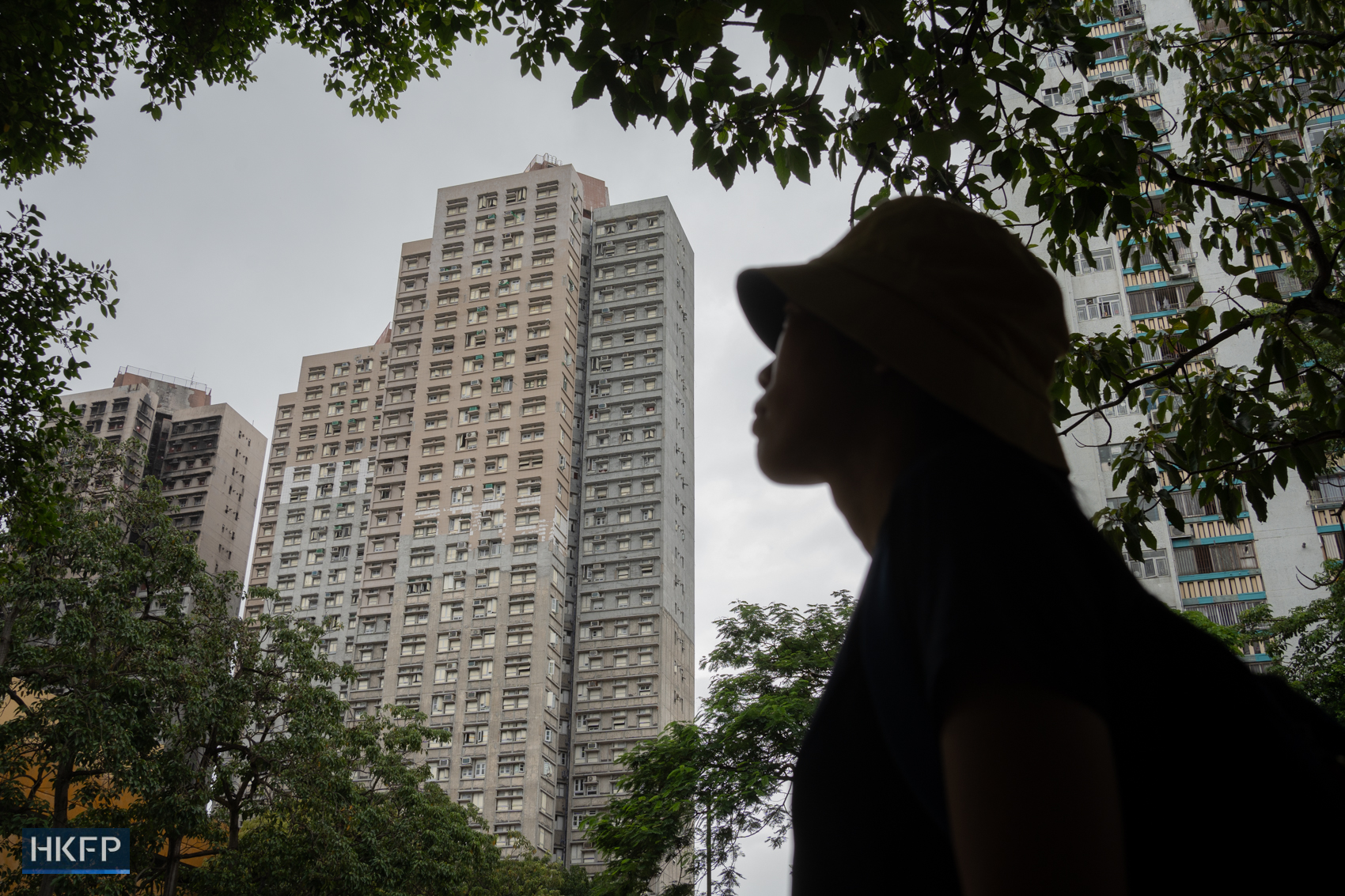
With the buyout deadline looming, unsold properties now risk becoming “nail houses” – a Chinese term for holdouts who refuse to make way for development, often ending up isolated, cut off from utilities, and subjected to legal battles and harassment.
Anthony Cheung, a public administration scholar who served as secretary for transport and housing from 2012 to 2017, said legislation for compulsory acquisition could be challenged in court – something that the government would take into account when drafting such a law.
“We all know that the Basic Law protects private property. That doesn’t mean [the government] cannot take a private property, but there has to be reasonable compensation and a public purpose. It cannot be arbitrary,” Cheung told HKFP in Cantonese.
“Like in land acquisition, [the government] will need to prove there is a good cause, a public purpose… and why this public purpose could reasonably override one’s private property rights,” he said. “It has to be rigorous. The test will have to be watertight.”
‘Ruining’ Hong Kong
Betty Ho lived in Wang Fuk Court for 35 years before the disaster struck. After retiring last year, she began travelling abroad to reset following decades of hard work as an accountant.
She returned home from a two-week trip to America in the early hours of November 26 – the day of the fire. Alarms at the complex failed but, as she slept through the afternoon, a friend called to tell her about the growing inferno, she recalled.
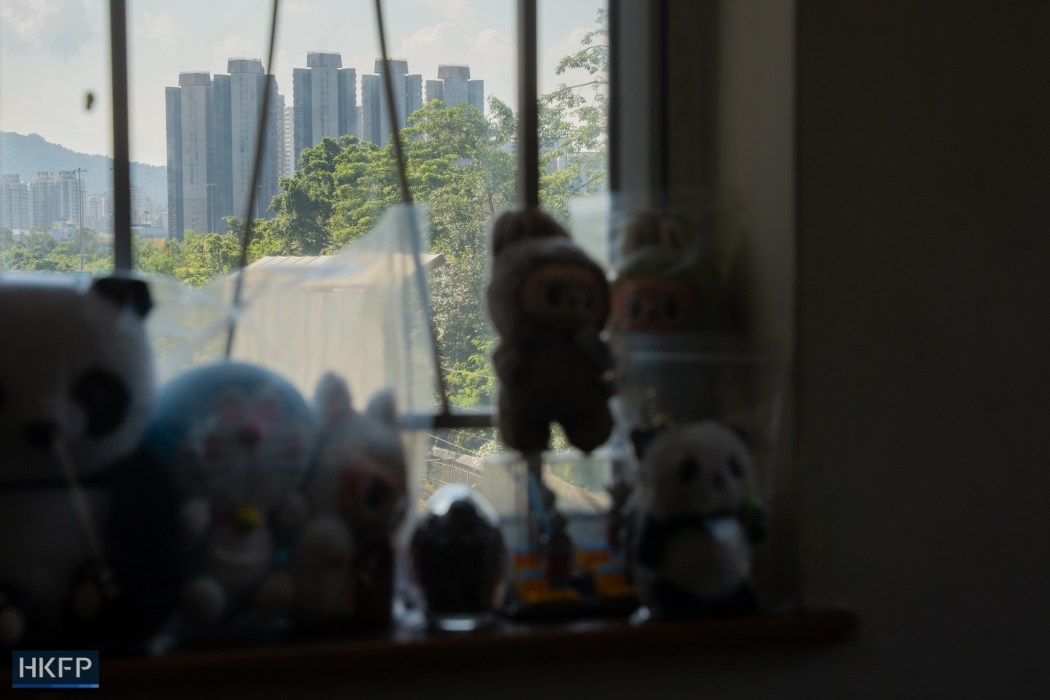
“If my friend hadn’t called me, I might be still sleeping,” the 61-year-old told HKFP in Cantonese earlier this month.
Since the tragedy, Ho has been one of the more outspoken residents, lambasting the government’s response to residents’ long-term housing wishes.
She said she insisted on rebuilding Wang Fuk Court because her home was “purchased with my hard-earned money,” adding that many residents’ lives were closely woven into the local Tai Po community.
She also said she was not troubled by the thought of living where so many had lost their lives, adding that she was unlikely to find a home elsewhere that was as large or comfortable as her now burnt-out flat.
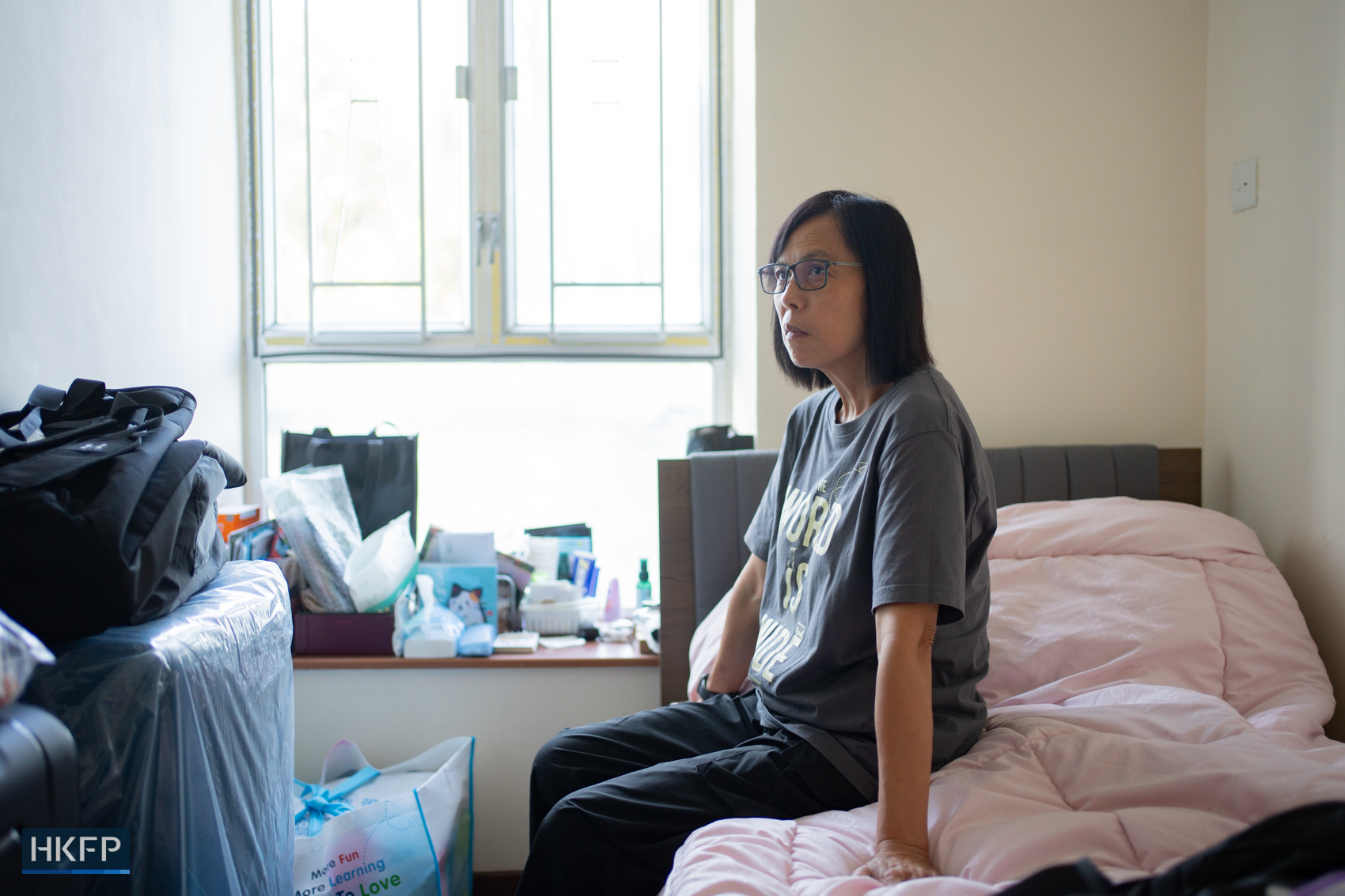
If the government tried to acquire unsold titles by law, it would be “robbing” residents of their private property, Ho said.
“I am interested to see how [the government] could make such a law. It would completely ruin Hong Kong,” she added.
From a public administration perspective, the challenge of rebuilding Wang Fuk Court is a “hot potato,” said Cheung, the ex-housing chief.
While Hong Kong routinely rebuilds public housing estates – like the iconic rainbow-coloured Choi Hung Estate, which is set to be torn down in phases in 2028 for redevelopment – the city has no precedent for rebuilding government-subsidised housing, according to Cheung.
Home Ownership Scheme estates like Wang Fuk Court have complex ownership structures, since residents do not fully own their flat if they have not paid land premiums, Cheung said.
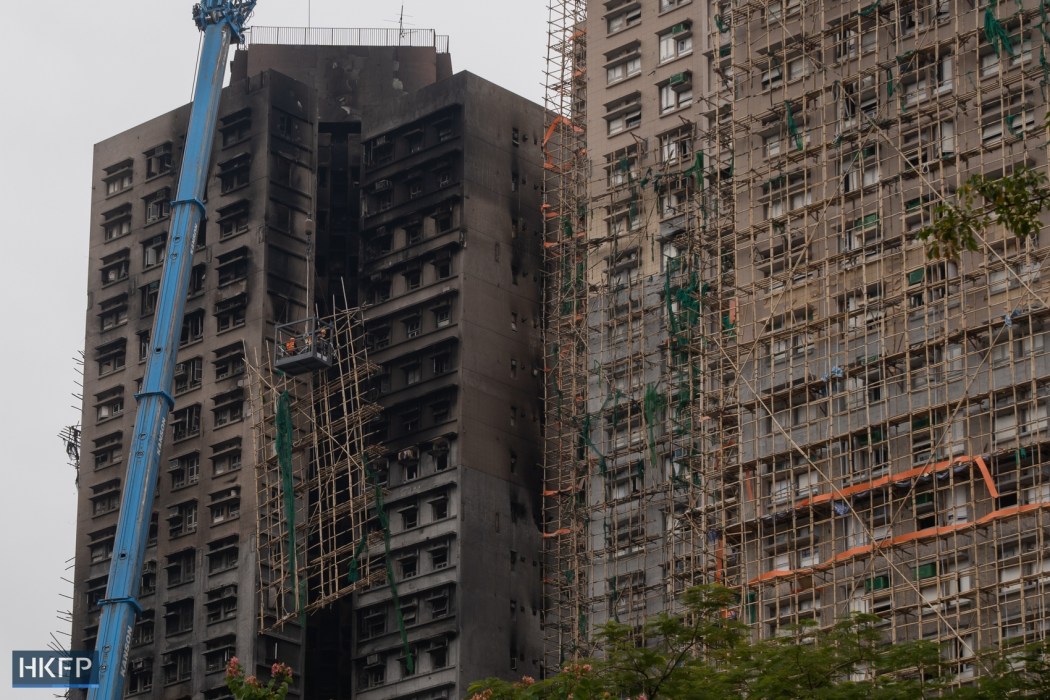
Rebuilding Wang Fuk Court would also require new architectural plans that comply with current regulations, Cheung said, meaning that the rebuild would not be a replica of the original towers erected in 1983.
“One would not move back to the exact same unit, the same floor, the same block following a rebuild. It doesn’t work like that,” Cheung said.
With the government opting not to rebuild, it will have no option but to acquire unsold titles by law, he added.
‘Too naïve’
In February, the government announced its buyout scheme for Wang Fuk Court homeowners. Prices were set at HK$10,500 per square foot for those who have paid land premiums, and HK$8,000 for those who have not.
The plan did not originally cover Wang Chi House – the only block left unscathed by the blaze – but was extended there after more than 75 per cent of homeowners in the building expressed interest.
It is expected to cost the government a total of HK$7.8 billion to acquire all the flats at Wang Fuk Court. That includes HK$5 billion of taxpayer money and HK$2.8 billion drawn from a relief fund largely made up of public donations.
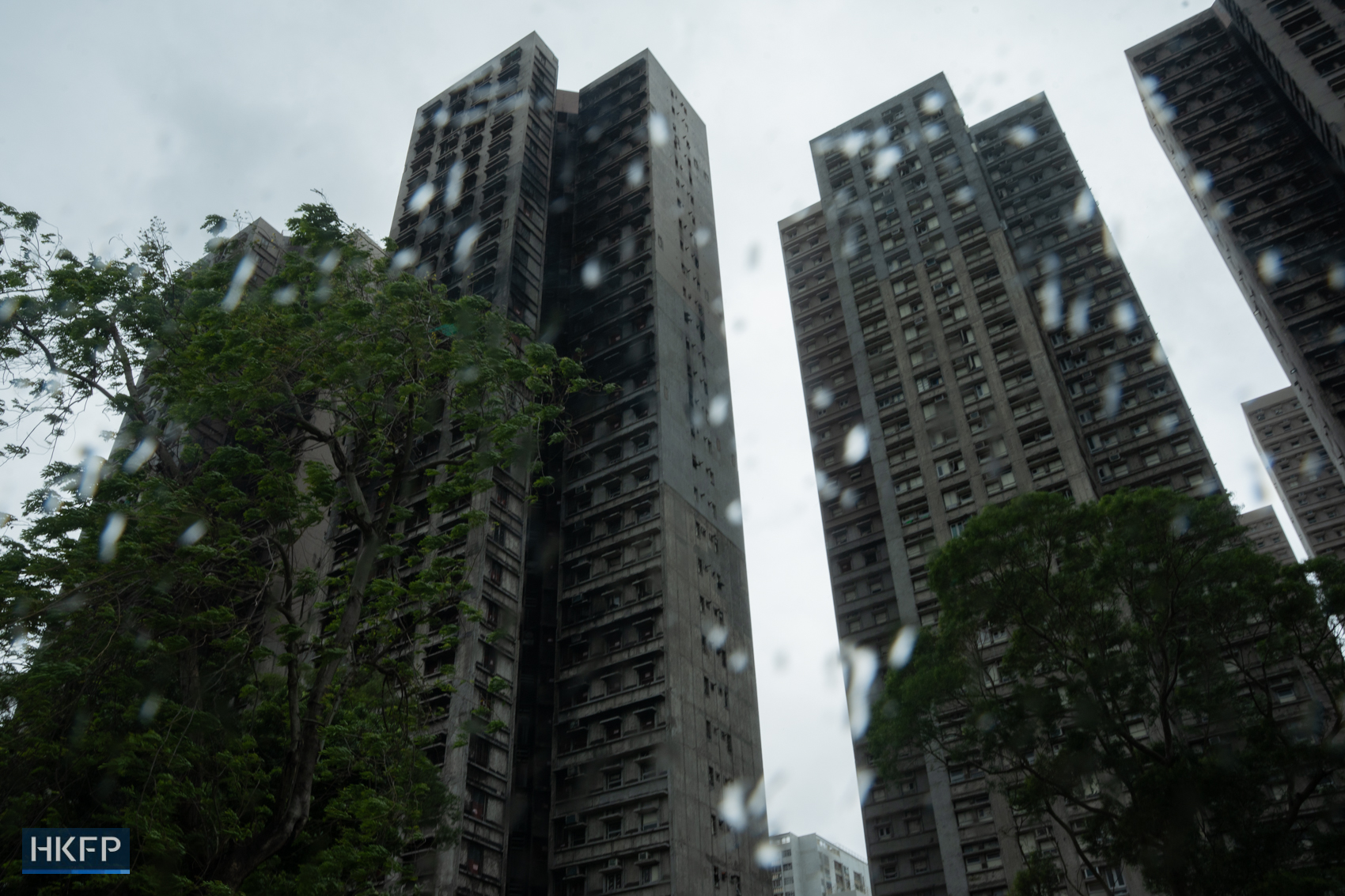
When unveiling the scheme, the government also indicated that Wang Fuk Court will be torn down instead of rebuilt, explaining that the seven buildings suffered “irreversible” internal damage in the fire. A park or community facilities will be built on the site instead, the government said.
In a statement last week, the government reiterated that Wang Fuk Court was a “special case of exceptional nature,” and that the acquisition price was 30 per cent higher than pre-fire market price as assessed by the Hong Kong Institute of Surveyors.
“As reflected in the acquisition figures, the vast majority of owners welcome the Government’s proposal,” it said.
That was not the case for Xiong, a Wang Chi House resident who asked to be identified only by her surname. She had left the brown envelope containing the government’s offer letter unopened for weeks, not knowing what to do with it.
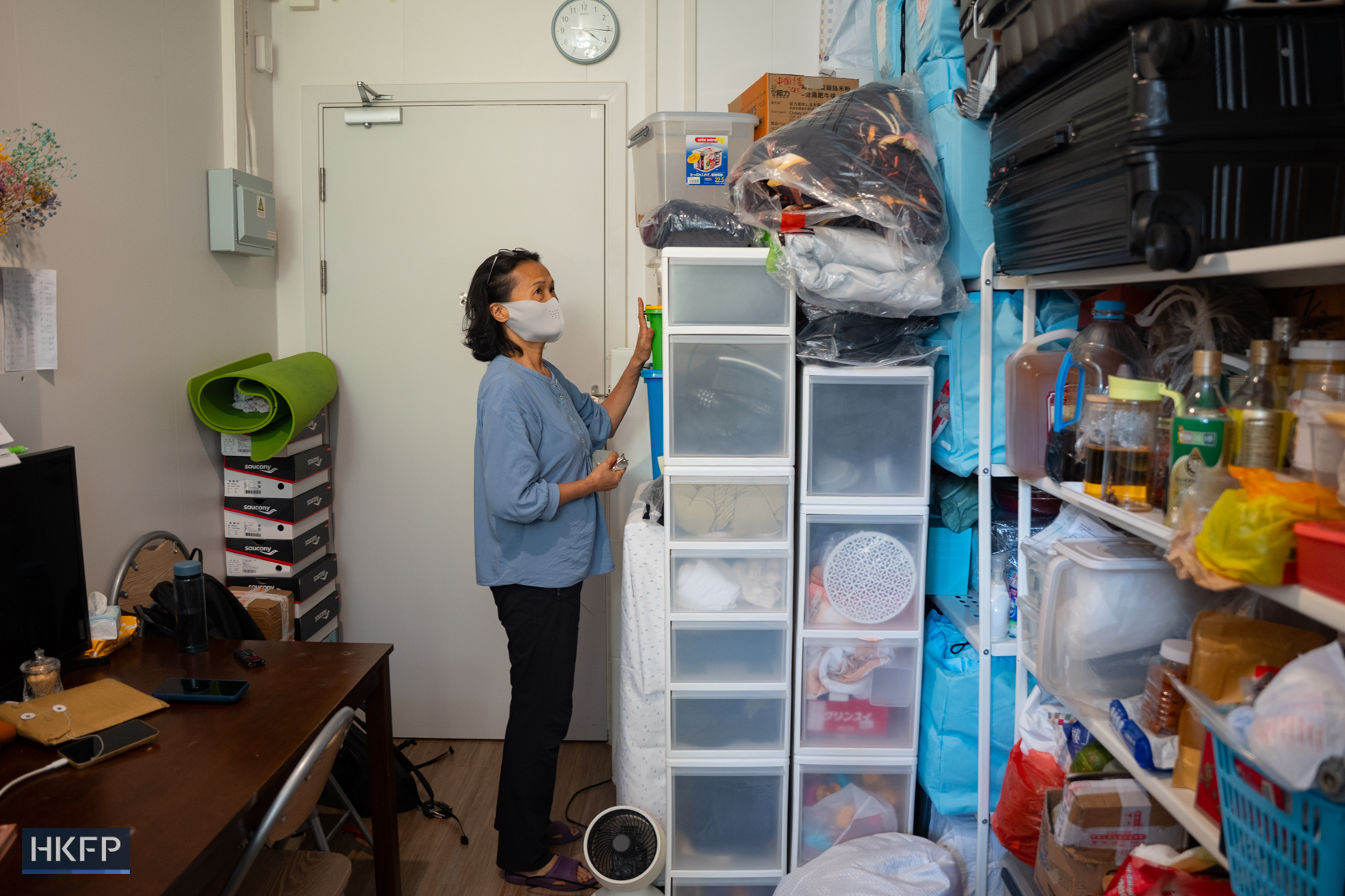
After the fire broke out in November last year, Xiong spent two nights sleeping inside a nearby shopping mall facing Wang Chi House, praying that the flames would not spread to her building.
To her relief, Wang Chi House was spared, and Xiong believed she could soon return to her home – what she called a “lifeline” meticulously built over two decades.
Selling “is like carving out a piece of my body, like stabbing a blade in my heart.”
Xiong
Xiong and her husband raised their two children in the flat, which they purchased in 2003. They also hoped to grow old there.
Selling it “is like carving out a piece of my body, like stabbing a blade in my heart,” the 58-year-old told HKFP in Cantonese earlier this month. “I’ve kept putting it off one day at a time. I just can’t put my signature on it.”
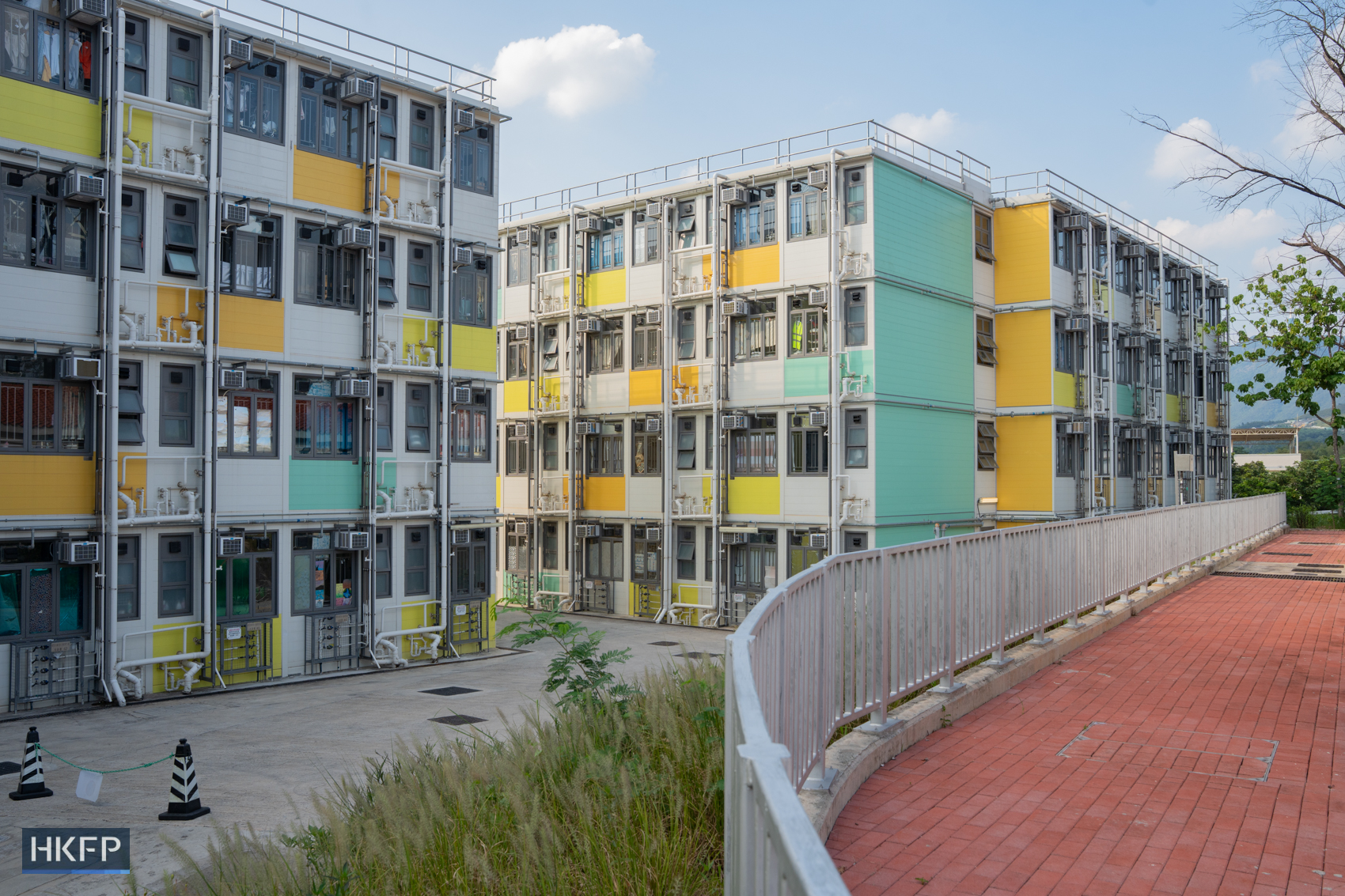
The choice would be an easier one to make if her flat was damaged in the blaze, she said. “If it was burned, that’s the end of the story. But it was not, and I thought I could move back,” she said. “I was too naïve.”
Xiong signed the letter of acceptance last week, primarily to secure her family’s future housing.
Unheeded demand
In the lead-up to Monday’s deadline, many Wang Fuk Court residents have seized every opportunity to implore the government to reconsider its plan to tear down the estate instead of rebuilding it.
Violet Tang and her husband Chan had lived with their two children, daughter-in-law, and a grandchild in Wang Yan House. Their flat was severely damaged in the blaze.
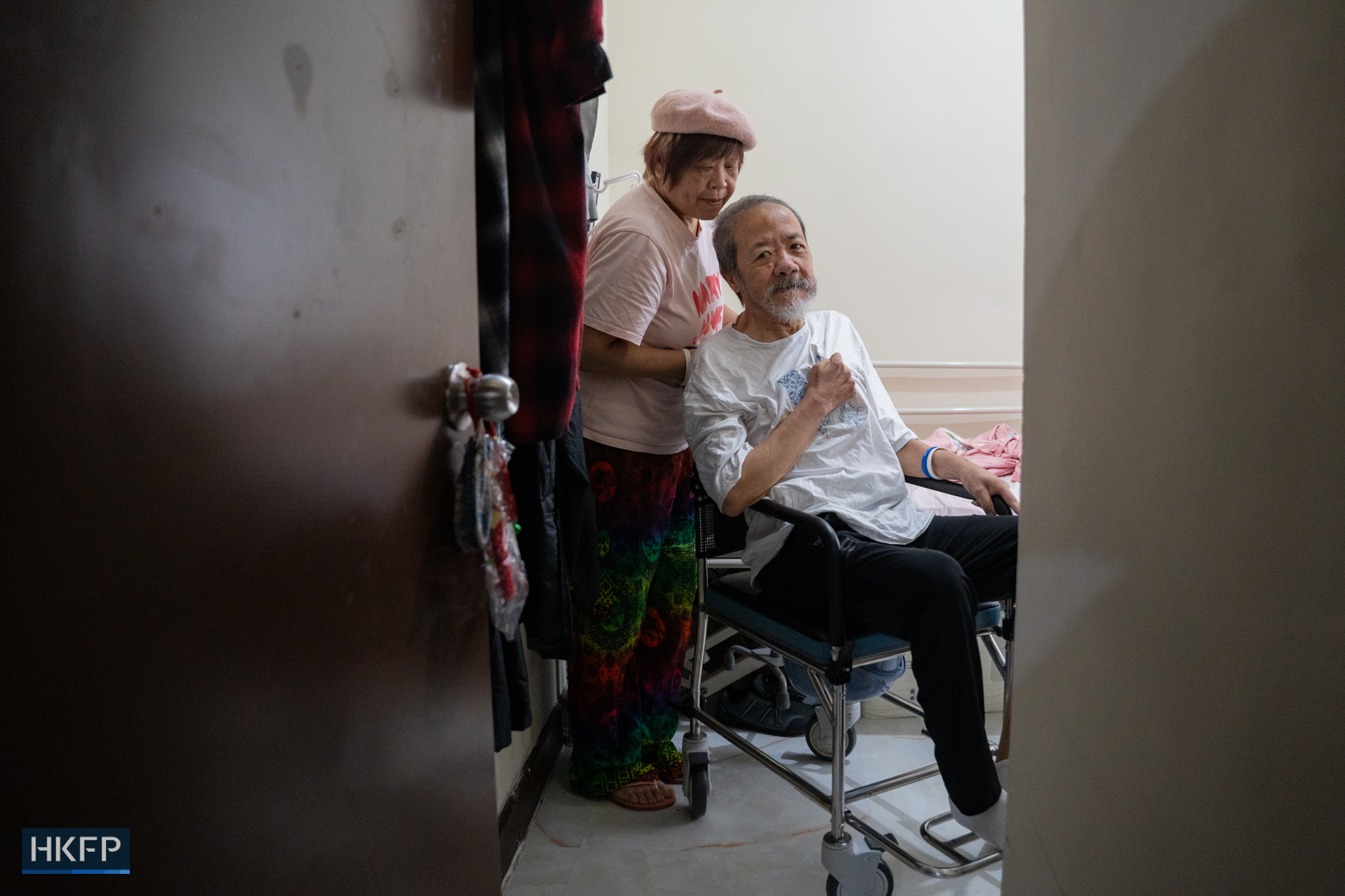
In May, the family of six returned to their charred flat to collect personal belongings. They carried Chan – who lost his mobility and speech after a stroke – up 26 floors using an electric stair climber.
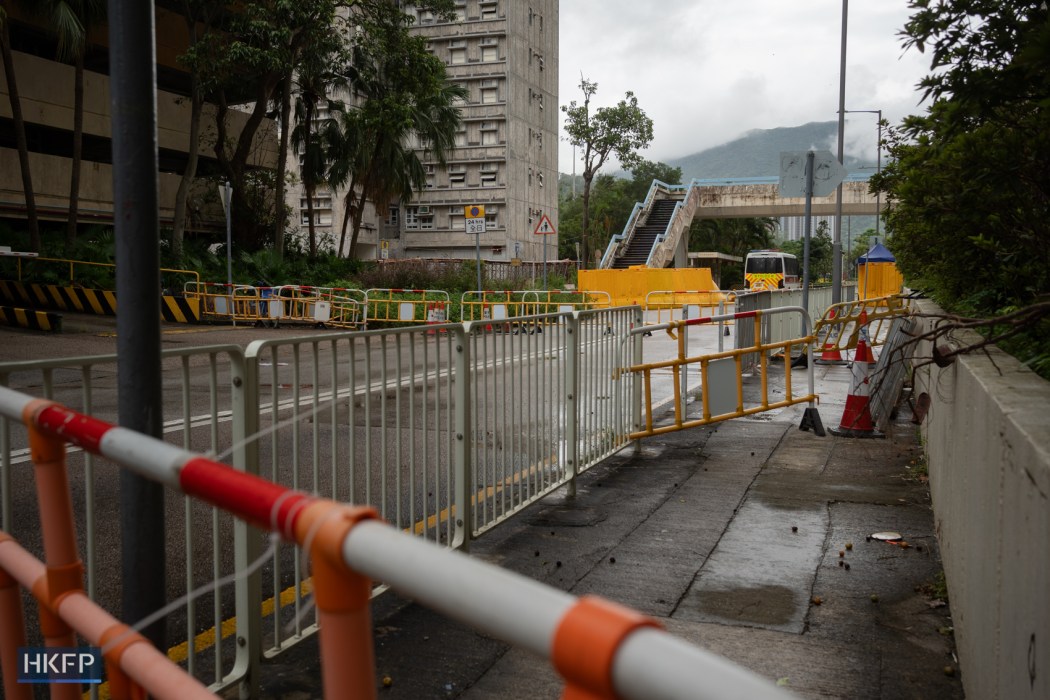
That was the second time residents were allowed to return home for three hours to retrieve their possessions. The entire estate has been off-limits since the blaze, with the government citing safety hazards and security reasons for the restriction.
Standing before blackened walls, Tang led her family in bidding farewell to their home of over four decades – but, they stressed, it was only a “goodbye for now.”
“We will come back,” Tang was filmed saying in Cantonese. “Rebuild on-site,” she chanted, raising her fists into the air.
Speaking to HKFP in their temporary housing unit in Tai Po this month, Tang said her intention was never to be confrontational with the authorities. Instead, she was hoping that by making some “noise,” the government would handle the matter in a “humane” manner, she said.
“We really tried. Some of my neighbours were initially reluctant to speak to the media, but they did [in May],” Tang said in Cantonese. “We had this dream that the government would hear our voice.”
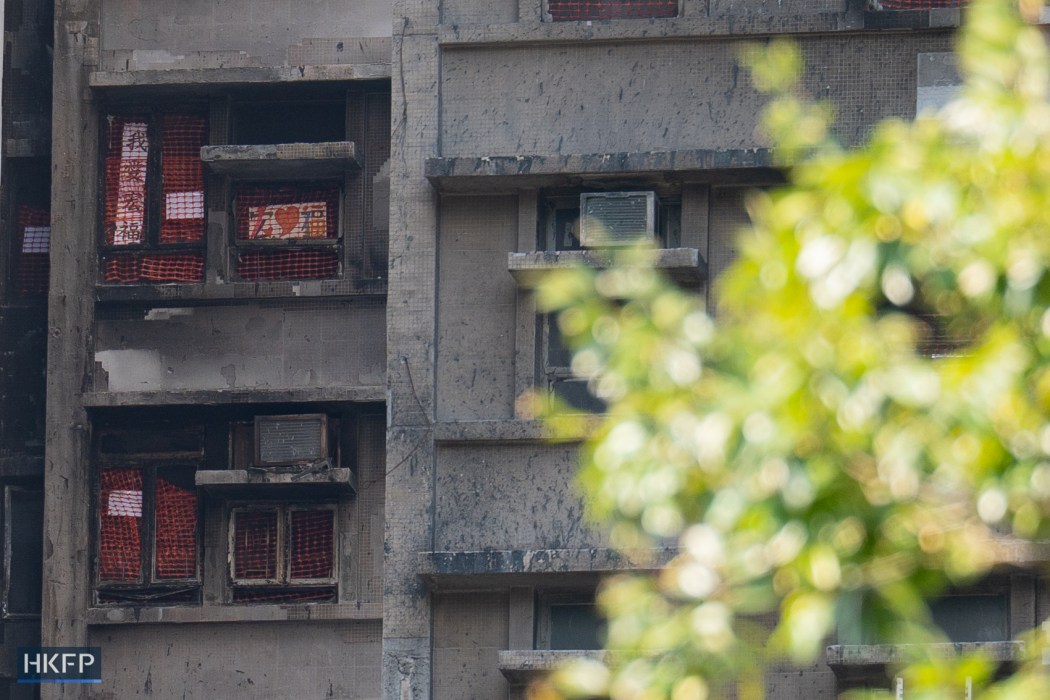
Woo, who has called Wang Fuk Court home since she was an infant, hung vertical banners from the windows of her flat during her allotted timeslot in May. The banners – legible even on street-level – read out in Chinese: “I love Wang Fuk” and “I want to move back.”
But their demand has gone unheeded, with the government doubling down on its buyback scheme and its plan to demolish the estate.
Tang’s and Woo’s families signed the letter of acceptance last week. Both told HKFP that as the deadline approached, anxiety and tension began to build within their families regarding the potential fallout from missing the government’s offer.
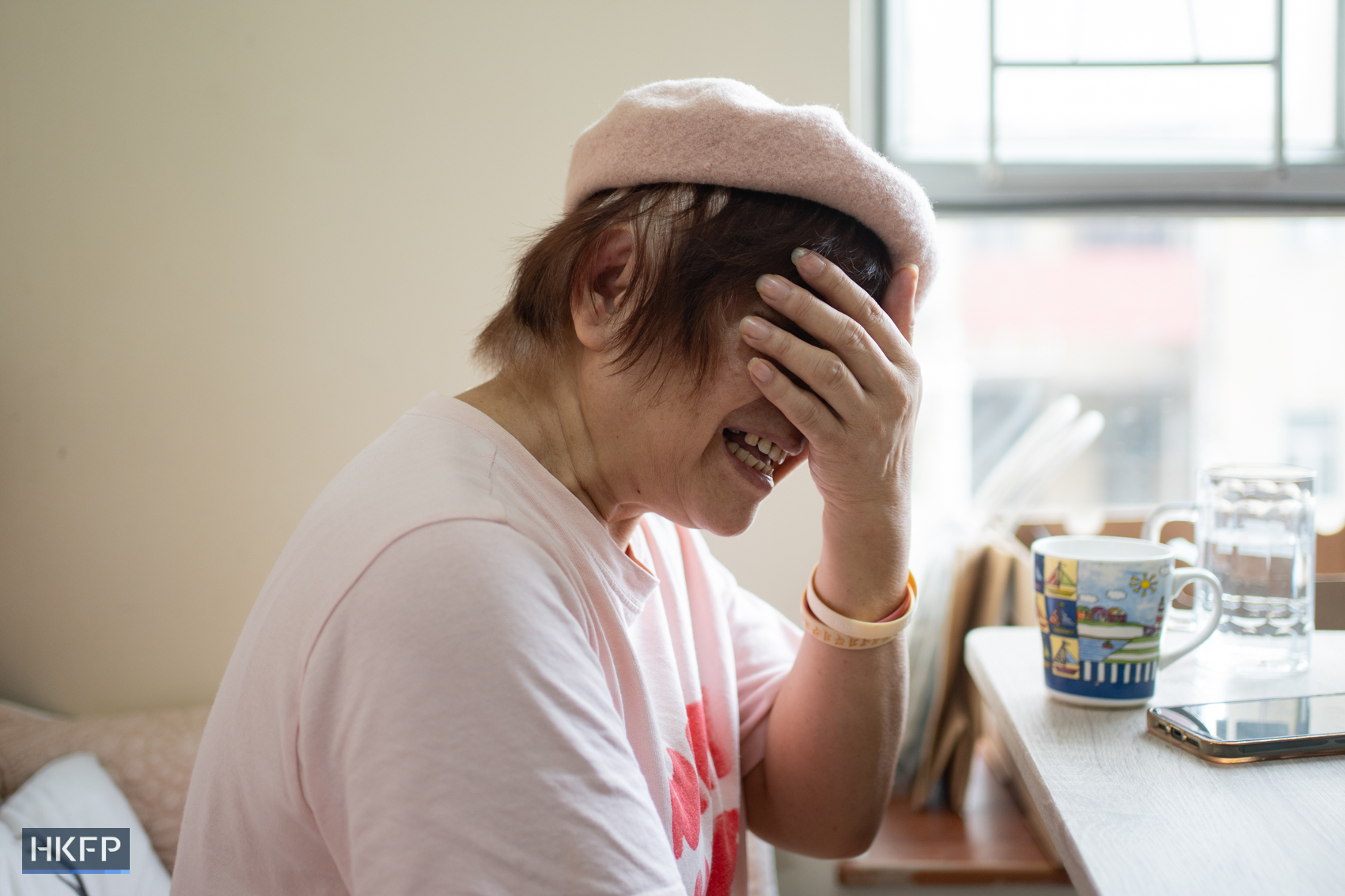
“It’s as if I am being forced to get a divorce,” Tang said. “I feel like I really have to say goodbye to Wang Fuk Court.”
“It seems [the government’s] strategy has worked,” she added.
The government has said that it has “persistently prioritised empathy” in its handling of the Tai Po fire’s aftermath, while balancing that imperative with reason and the law.
What’s next?
Deputy Financial Secretary Michael Wong, who heads the government task force arranging long-term accommodation for residents, earlier said that the government could start the legislative process for acquiring unsold titles as early as next year.
Wong added that if the government were to handle unsold titles by law, compensation would have to be based on Wang Fuk Court’s post-fire market value – which would be “substantially lower” than the current buyout offer.
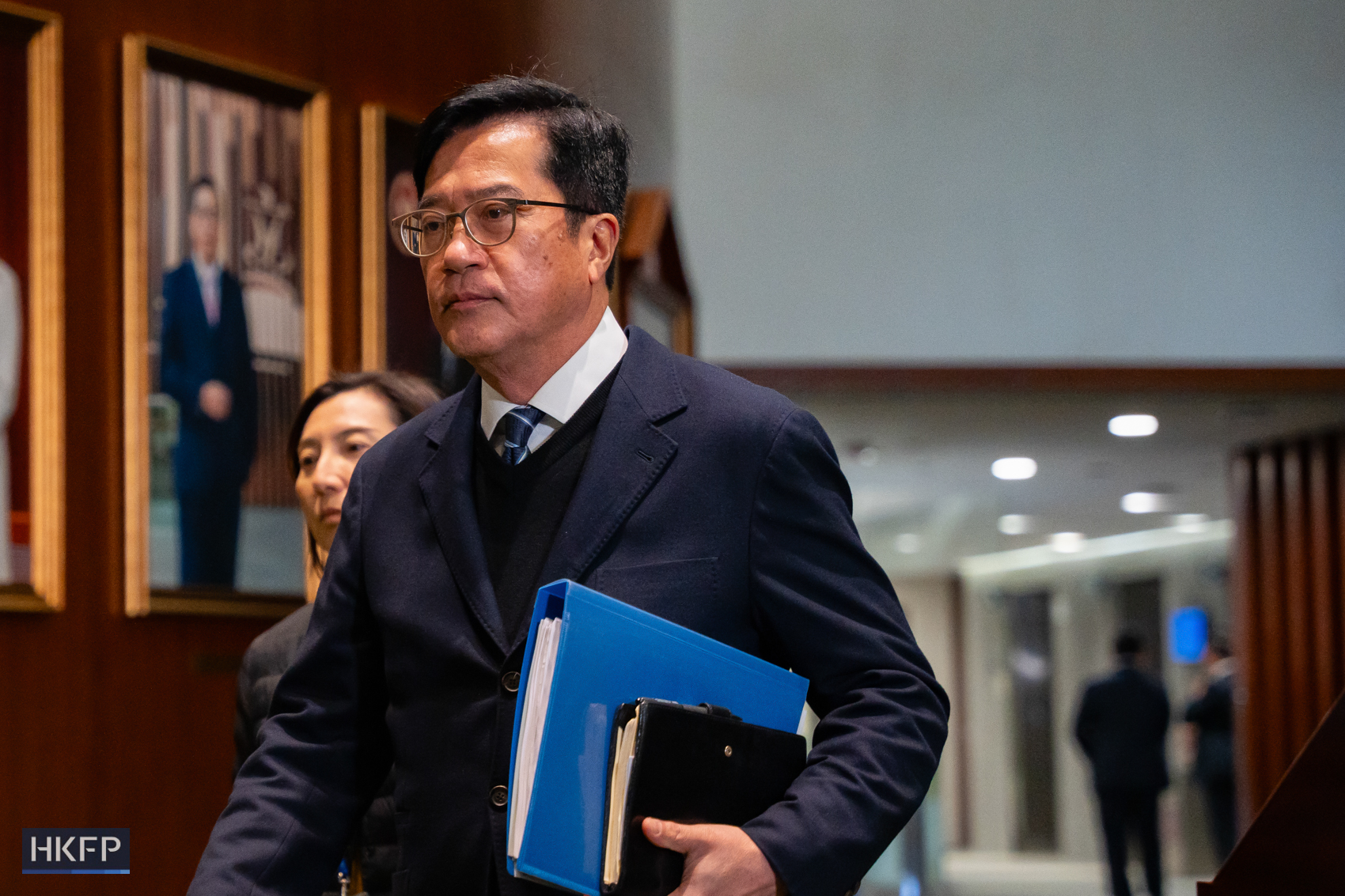
Cheung, the ex-housing chief, said that the process could be long, as the government would have to “foresee any possible challenge” when drafting the law.
“From the government’s point of view… it must anticipate a challenge, and it must think through what would be the grounds of such a challenge, and how it would defend itself,” Cheung said.
The crux of the issue will be whether the government can prove Wang Fuk Court is “structurally unsafe” to an extent that warrants public intervention, the former official said.
The government has so far declined to release the building inspection reports for Wang Fuk Court’s seven fire-hit towers, on the grounds that the buildings’ structures have been weakened by the fire and require constant monitoring during the typhoon season.
Cheung expected such information would be disclosed in court if the government pressed ahead with legislation and residents mounted a legal challenge.
Betty Ho admitted she had no plan for what comes next after Monday’s deadline. “I have not thought about this yet. Right now, all I can do is to stand firm on not selling,” she said.
One thing is certain for her, however: if the government eventually acquires her flat by law, she will never buy property in Hong Kong again.
“You don’t even protect private property anymore. How can you tell people to buy flats?” she said.
Check this story
Ask the guide
The guide explains what to check and where. It cannot see this article or recent news.
Is this AI-made?
AI checkers give a likelihood, not proof.