Sunday thought: Integrity
Friends,
There’s been a lot of discussion this past week about the meaning of integrity.
You didn’t hear the word used directly; it was alluded to indirectly — in wondering whether Lindsey Graham was an immoral opportunist or clever pragmatist; in suspecting Todd Blanche of being more loyal to Trump than to the nation; in distrusting Erica Schwartz, Trump’s latest pick to lead the CDC, when she said she’ll never compromise on the science; in doubting that Jay Clayton, his pick for director of national intelligence, will tell Trump anything he doesn’t want to hear.
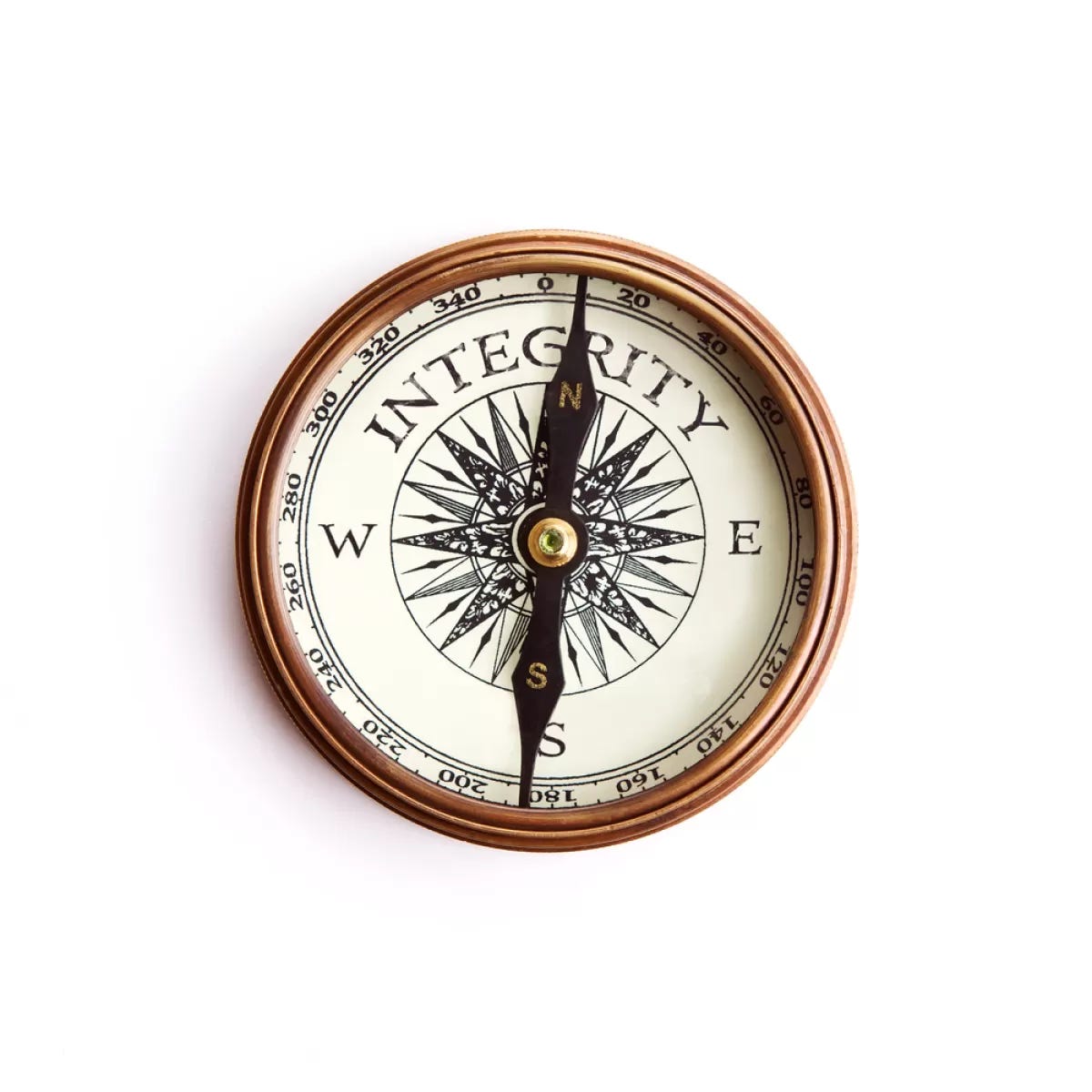
The word integrity is rooted in the Latin word integer, meaning “whole” or “complete” — living by your principles, choosing honesty over opportunism, making ethical choices that may be inconvenient or unpopular, maintaining your moral compass.
Graham’s public record of denouncing Trump on the Senate floor after January 6, 2021, and then becoming Trump’s most loyal Senate apologist revealed someone who traded honesty for influence — a person with little or no integrity.
Blanche, in his hearing to be attorney general, said he wanted to bring trust back to the Justice Department but then accidentally referred to himself as Trump’s lawyer —before clarifying that he “was” — had been —Trump’s lawyer. Blanche’s momentary lapse revealed a deeper conflict, as evidenced by his unswerving loyalty to Trump. He lacks integrity.
Schwartz, in her confirmation hearing, undercut her pledge to be guided by science in saying she believed Trump and HHS Secretary Robert F. Kennedy Jr. would “never” implement policies that aren’t scientifically sound. That’s enough to cast doubt on her integrity.
Clayton, in his confirmation hearing, repeatedly refused to say Biden won the 2020 election, causing Senator Jon Ossoff to ask Clayton: “You refuse to answer a basic question about who won a presidential election? But you ask to lead America’s intelligence community? Isn’t it humiliating to be unable to answer this question? To have to indulge the president’s delusions? We know, you know, everybody in this room knows the truthful answer to that question, why can you not give it?”
It is not possible to have integrity and be loyal to Trump. The two are in direct conflict.
No one can be honest in a regime based on big lies. As the poet, philosopher, and statesman Václav Havel put it, “If the main pillar of the system is living a lie, then it is not surprising that the fundamental threat to it is living in truth.”
So a choice must be made — personal integrity or loyalty to Trump.
In his book The Art of the Deal, Trump wrote that he preferred loyalty to integrity — as epitomized by his mentor, Roy Cohn.
History remembers Cohn for his ruthless bullying, profane braggadocio, opportunistic bigotry, lying, and more lying. Like Trump, Cohn was utterly without principle and prioritized personal power that could be leveraged for wealth, influence, and celebrity. In 1986, Cohn was disbarred by the New York State Bar for unethical conduct after attempting to defraud a dying client by forcing him to sign a will amendment leaving Cohn his fortune.
Yet in his book Trump praised Cohn for his loyalty, contrasting him with “all the hundreds of ‘respectable’ guys who make careers out of boasting about their uncompromising integrity but have absolutely no loyalty …. What I liked most about Roy Cohn was that he would do just the opposite.”
It is not possible for Blanche or Schwartz or Clayton or anyone else in Trump’s orbit — nor was it possible for Lindsey Graham — to be loyal to Trump and simultaneously maintain their own integrity. It must be one or the other.
Yet integrity is more important than loyalty. As Trump demonstrates time and again, someone lacking integrity is inherently untrustworthy. Such a person cannot serve the people of the United States.