Hegseth Dodges Impeachment, for Now. And Tom Morello on Fighting for the World You Want
Secretary of defense Pete Hegseth narrowly avoided impeachment on Tuesday, but his future is anything but secure as an enraged Democratic caucus prepares to take control of both the House and Senate in January.
“Tick, tock! Get ready, asshole, because we’re coming,” Congress member-elect Richard Ojeda, D-N.C., warned Hegseth at a press conference on Wednesday. Ojeda told The Intercept that he planned not only to impeach Hegseth but also to bring criminal charges against him.
On Tuesday, the House declined to move forward with impeachment proceedings introduced by Rep. Thomas Massie, R-Ky., which accused Hegseth of multiple “high crimes and misdemeanors.” Massie accused Hegseth of illegally waging war against both Iran and Yemen and of overseeing extrajudicial killings in the Caribbean Sea and Pacific Ocean.
This week on The Intercept Briefing, co-host Jessica Washington speaks with Nick Turse, Intercept senior national security reporter and editor of Tom Dispatch, about Hegseth’s legacy as “secretary of war.”
“Hegseth can spin it any way he likes,” says Turse. “He can use the troops as a shield, claiming that indictments of him are indictments of them. But in the end, he’s got a lot to answer for on his own, and none of it’s because he’s doing a good job.” Turse adds: “It’s because he’s committing high crimes.”
Co-host Jordan Uhl also sits down with musician and guitarist Tom Morello to talk about his new album “Everyone Gets Everything They Want” and his decades-long fight against forever wars and his resistance to fascism.
“My career has basically been rebellion as self-care,” says Morello. “But in this day and age, every act of art is an act of resistance. Every truth spoken is a light in the gathering darkness. And every song sung has the potential to be a trumpet of a bulwark against the rising tide of authoritarianism to help sound the bell for current and future generations to continue to fight for a more just and peaceful and decent planet.”
For more, listen to the full conversation of The Intercept Briefing on Apple Podcasts, Spotify, YouTube, or wherever you listen to podcasts.
Transcript
Jessica Washington: Welcome to The Intercept Briefing, I’m Jessica Washington, politics reporter for The Intercept.
CNN: Republicans banded together and they killed this effort to impeach Pete Hegseth and largely stayed united. And the final vote here was 211 to 204.
NBC: Republicans uniting to block them from moving forward following Hegseth’s fiery rebuke of the outgoing congressman who introduced them, Thomas Massie.
ABC: The Republicans sticking together have essentially tabled or moved this resolution to the House Judiciary Committee, where it’s expected under Republican control these articles of impeachment will die. Pete Hegseth, for the moment, will not be impeached by the House of Representatives under this effort by Kentucky Republican Congressman Thomas Massie. Not a single Republican colleague joined him. All the Democrats stuck together, but there were not enough.
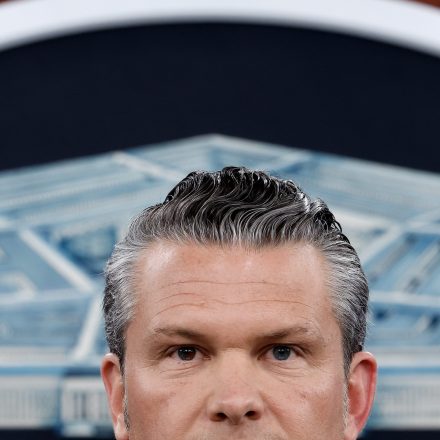
JW: On Tuesday night U.S. Secretary of Defense Pete Hegseth narrowly avoided impeachment as House Republicans blocked a bill introduced by Republican Congressman Thomas Massie of Kentucky.
Rep. Thomas Massie: We’re not indicting him for being bad at his job. In fact, he was very effective at killing school children in Iran. He was very effective at extrajudicial killings. There’s no argument in these impeachment articles that he’s ineffective. The argument here is that he’s broken laws and he’s violated the Constitution.
JW: That’s Congressman Massie speaking at a press conference about the articles of Impeachment he introduced against the embattled Cabinet Secretary. This is how Hegseth responded:
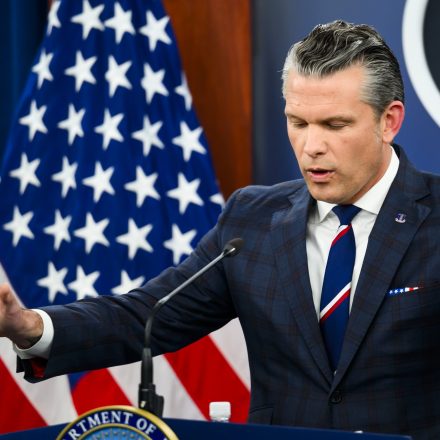
Pete Hegseth: As for the articles themselves, Iran, the cartels, Maduro, Yemen, every one was a lawful operation ordered by the commander-in-chief, then ordered by myself, notified to congress and executed by American warriors who did their jobs. We destroyed terror regime’s capabilities. We sank the boats carrying poison into our communities. We put a narco dictator into handcuffs. These are not high crimes. This is the job. And it is a job well done.
Joining me now to break it all down is Nick Turse, senior national security and foreign policy reporter for the Intercept and editor of Tom Dispatch.
Nick, welcome back to The Intercept Briefing.
Nick Turse: Thanks for having me on. It’s great to be here.
JW: Before we dive in, I also want to let listeners know we have a special interview with Tom Morello, the musician and original member of Rage Against the Machine.
Tom Morello: My job from day one is to try to make one guitar sound like a riot and to have my music be a contributing factor to social justice movements at home and abroad.
JW: So stay tuned for that conversation
All right, Nick, to start. What’s your reaction to Secretary Hegseth dismissing Massie’s impeachment articles, claiming:
Pete Hegseth: What one disgruntled and defeated congressman is attempting is not oversight, and it’s not accountability. It’s a political spectacle, a personal manifesto driven by ego and resentment.
JW: and that Massie is punishing him for a, “job well done”? What is your response?
NT: To start, it’s laughable. For half an hour at a press conference on the morning of the impeachment vote, Secretary Hegseth wove a web of lies designed to refute or obfuscate Massie’s eight impeachment charges. He repeatedly claimed that the effort to impeach him was just a stunt by one disgruntled congressman.
But, as we came to see, more than 200 members of Congress voted with Massie. So no, this wasn’t one man’s vendetta. When the new Congress is sworn in I think we’re going to find that the number in favor of impeaching him is only going to grow. And consequently, I think the list of high crimes and misdemeanors against him is also going to grow.
There’s almost a limitless list of high crimes that Hegseth can be charged with, and there are crimes within crimes. Waging unlawful wars in Iran and Yemen and Venezuela and specific war crimes within them that Hegseth may also be culpable for.
“Waging unlawful wars in Iran and Yemen and Venezuela and specific war crimes within them that Hegseth may also be culpable for. “
The boat strikes in and of themselves are criminal, and then there is, for example, the double tap strike on the first attack on a so-called drug boat, which is a crime in its own right.
Hegseth can spin it any way he likes. He can use the troops as a shield, claiming that indictments of him are indictments of them. But in the end, he’s got a lot to answer for on his own, and none of it’s because he’s doing a good job. It’s because he’s committing high crimes.
JW: High crimes and misdemeanors to a layperson, even to me, is not exactly indicative of what these actual crimes are. So what were the actual charges that Massie leveled against Hegseth?
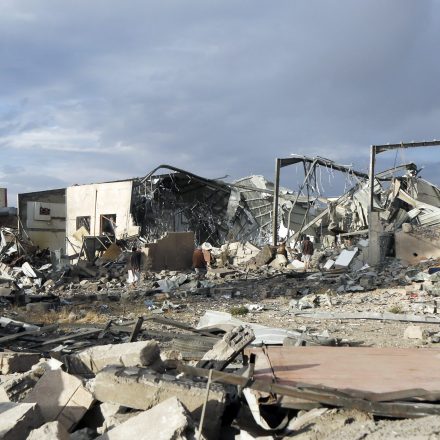
NT: There were three charges for illegally waging war against Iran in violation of the War Powers Resolution. There was a charge related to Operation Rough Rider, which is the 2025 war in Yemen, which caused a tremendous number of civilian casualties. It’s become a forgotten conflict at this point.
The boat strike campaign which experts say are extrajudicial killings. There’s also a charge related to Hegseth’s efforts to undermine efforts at minimizing the possibility of civilian casualties. So these are some of the high crimes and misdemeanors of eight charges that Massie put forth.
JW: You just mentioned the drone strikes on so-called “narco terrorist” boats in the Caribbean and the Pacific, which to your estimate have killed more than 240 civilians. Those strikes, from my perspective, have gotten far less media attention than the Iran war, and obviously part of that is that much of what the U.S. is doing and who they’re targeting in open waters is shrouded in secrecy. But, how unprecedented are these strikes, and are these actions considered war crimes?
NT: The boat strikes, as you said, have largely been overtaken by the Iran war. But during his Pentagon press conference, Hegseth made a full-throated defense of his actions that actually drew attention to the unprecedented nature of the boat strike campaign.
Hegseth said that the charges that the American military targets civilians are a lie, and that the only people that target civilians are the terrorists that the U.S. hunts down. That itself is an outright lie. The U.S. boat strike campaign has only targeted civilians. Only. Not some, not inadvertently, not maybe. These are all civilians, period, full stop.

These summary executions of more than 240 people are a significant departure from the standard practice in the long-running U.S. war on drugs, in which law enforcement agencies detained suspected drug smugglers and then brought them to trial on criminal charges.
Experts in the laws of war, Pentagon officials that I’ve spoken with, and members of Congress from both parties say that Hegseth’s boat strikes are illegal, that they’re extrajudicial killings. The military is not permitted to deliberately target civilians, even suspected criminals.
Interdiction in these cases is possible. It’s preferable. It’s legal. We don’t execute suspected criminals in this country, or when the police do, it’s supposed to be a crime. If there was a declared war, these boat strikes might be war crimes, but no war exists, and there is no plausible legal justification for the strikes. And outside of armed conflict, the legal term for premeditated killing is murder. That’s what’s happening. That’s what Hegseth is responsible for, outright murder.
“Outside of armed conflict, the legal term for premeditated killing is murder. “
JW: Massie has not called Hegseth a war criminal or used the term murder like you have, but he did have this to say about Hegseth when discussing the articles of impeachment.
Thomas Massie: You won’t find a reference to war crimes. What I do say, though, is because he’s violated the international norms of war and violated our own conventions of war, he’s put our own soldiers and sailors at risk. When you go back for a second kill on people who are clinging to wreckage, you’re encouraging our adversaries to do the same. That’s why those laws — those international laws — are on the books.
JW: Nick, what did you make of Massie’s response just now?
NT: We were the first outlet to report that double tap strike in September 2025. It caused a firestorm in Congress for the very reason that Massie’s talking about.
He’s right. Double tap strikes on helpless shipwrecked people, they’re in contravention of the U.S. military’s own law of war manual, and they undermine respect for the laws of war and encourage enemies to give Americans no quarter, which is a war crime, and a war crime that Secretary Hegseth has openly called for and advocated.
I’m going to out myself as a lapsed historian here, but to emphasize that this is a longstanding norm in armed conflict I’d mention that a great rallying cry of the Revolutionary War — the American Revolution —was “Remember Paoli.” It’s a town in Pennsylvania where British Redcoats reportedly offered no quarter and massacred American forces.
Back in 1777, this was considered a major breach of the laws of combat. This is what Secretary Hegseth has advocated [that] we are doing in these types of double tap strikes, executing those who are injured those who are surrendering. That’s outright barbarism.
JW: We were just discussing civilian casualties in the boat strike —intentional civilian casualties. I also wanted to talk about what happened in February when the United States conducted an airstrike on an elementary school in Minab, Iran. That strike killed at least 150 people, most of them children.
Now, U.S. officials said the strike was caused by a “targeting error” where the military mistook the elementary school for an Islamic Revolutionary Guard Corps naval base. What did this horrific incident tell us about how the military has been operating under Hegseth when it comes to civilian casualties?
“Hegseth made it inevitable that something like this mass killing of children would happen.”
NT: This horrendous attack — a massacre of children — was the predictable result of Pentagon policies that The Intercept has been spotlighting since the spring of 2025, just after Pete Hegseth came to office. Hegseth made it inevitable that something like this mass killing of children would happen.
We reported that immediately upon taking office, he began dismantling what is known within the military as CHMR, the shorthand for Civilian Harm Mitigation and Response, basically undermining everything he could that restrains the military in favor of his favorite dictum, which is lethality.

A group of Democratic lawmakers told Hegseth in July in a letter directly to him that this gutting of CHMR had left the Pentagon unable to comply with the law and also its congressionally mandated responsibilities to protect civilians. This is precisely what military officials told us would happen months earlier, and it all came to fruition.
These criticisms were echoed in another report that we revealed in July that found that Hegseth had gutted the premier center devoted to preventing civilian casualties in war zones, the Pentagon’s own Civilian Protection Center of Excellence. Its workforce was slashed from 40 personnel in January of 2025 to just nine at the end of last year.

Last week we published an exposé that quoted six current and former defense officials who served under Hegseth, and one of them was the former senior advisor to this Civilian Protection Center of Excellence. This former official Wes Bryant, served eight combat deployments calling in airstrikes on ISIS and other post-9/11 entities.
Then he served under Hegseth until he was pushed out for blowing the whistle on policies that would undermine protections for civilians. Bryant told me that Hegseth is conducting what he called, “state terrorism.” He said Hegseth is “100 percent a war criminal,” and that he needs to be prosecuted.
JW: To that last point, and I really don’t like to play devil’s advocate, but from my understanding, you choose to refer to Hegseth by his self-styled title, Secretary of War, and if I understand you correctly, your argument is that there’s no need to sugarcoat what the U.S. military is doing. The Army is not in the business of defense. It’s in the business of war.
Is there an argument to be made that Hegseth is simply stripping back the facade of the U.S. military as anything other than a war machine, or is he really changing how the U.S. operates in the theater of war and in the world?
NT: I take a lot of heat from from readers on social media and in my email inbox about this, and readers plead with me not to bend to Hegseth’s will and call him the Secretary of War, which is, as you said his preferred title.
But I’ve really jumped at the chance for the reasons that you mentioned. When Hegseth unilaterally renamed the department, it gave me license to do what I’d wanted to do for years to call it as it’s seen, as it’s experienced in the world. For years out in the field, I found it grating whether I was in Vietnam or Cambodia or Libya and Somalia, to talk to victims of U.S. military violence about the so-called Department of Defense. The DoD says this. The DoD spokesman says that. I don’t think these people cared about it, but I absolutely did.
The Defense Department made war on the world, killing, wounding, and displacing millions of people not in the defense of anything. It was an aggressive war-making organization, plain and simple.
I hate using milquetoast euphemisms, but journalistic conventions handcuffed me. I couldn’t go off on my own and start calling it “Department of War.” But when they freed me up to give readers a more accurate assessment of what they do now under Hegseth and what has been done since they changed the name going back to the 1940s, I took the opportunity that I was afforded.
Attacking an elementary school in Iran is an act of war and maybe a war crime. It’s not a defense of the United States or in defense of the United States. That’s the reason why I use that title.
JW: Do you think that Hegseth has changed what the department is? Did it becoming the Department of War change something fundamental about it, or is that what it’s always been? And then is Hegseth changing anything about the actual way it operates?
NT: Hegseth has pulled the veil off of what the department does. I think in a very real sense, he’s undermined protections on civilians that were only just starting to perhaps take hold. The Center of Excellence that I mentioned earlier only just came into existence and was needed because the Pentagon has a long history of attacking civilians whether purposefully or inadvertently as “collateral damage.”
So the Defense Department always did what the Department of War does now, but there were some measures that were perhaps just starting to take hold, and Hegseth has undermined them completely.
JW: I think to your point, yes, Hegseth has lifted the veil off of what this department does. It is a department that makes war on the world. But he’s also made that worse and deadlier for civilians around the world.
And, obviously on Tuesday, Republicans killed the possibility of Hegseth being impeached by the current Congress. But come January, there’s going to be a new Congress dominated by Democrats. Now, before the vote on Massie’s articles of impeachment, Massie had this really interesting argument actually for why Republicans should join him in impeaching Hegseth. Let’s hear that clip.
Thomas Massie: I’m being polite here. What is an impeachment? An impeachment is just firing somebody, really. You don’t go to prison. You don’t go to jail. You don’t pay a fine. OK, when the Democrats get in charge, they are going to be very vicious.
JW: He went on to say.
Thomas Massie: The Democrats are going to bring people in here who have served under him and with him, give them protection. They’ll be able to say what he’s actually done, the things that he has ignored, the things that he did that caused civilian casualties, the way he’s ignored the laws, and then there’ll be a full, robust trial over in the Senate.
JW: Nick, what do you make of Massie’s remarks, the failure of this vote now, and what do you think might be coming in the next Democratic-led House and Senate?
NT: So Hegseth was very fixated on Massie having a grudge against Trump, which he had transferred over to the war secretary. But Massie, as we heard there, throughout the process, was very vocal that he was doing Hegseth a huge favor. Massie suggested that his impeachment resolution was the legislative equivalent of a mercy killing, calling it a much gentler version of what the Democrats would do when they take control of Congress in January.
The Democrats can rain down relentless hellfire on Hegseth. Congressional committees have broad investigative powers including the authority to subpoena administration officials to testify under oath and compel them to turn over documents. They can paper the Pentagon with subpoenas.
Representative Yasmin Ansari, who filed articles of impeachment against Hegseth in the spring, told me that Hegseth surviving Massie’s impeachment only opened him up to a plethora of ways for Democrats to hold him accountable in the next session. Specifically compelling to testify under oath before Congress and before the American people.
She emphasized that he’s “not only one of the most incompetent members of the administration,” her words, “but also one of the most unpopular” on a bipartisan basis. What she believes is going to happen is that Hegseth is going to be hauled up before Congress, and he’s just going to be battered incessantly.
This is probably going to grow so great that he’s going to become toxic to the administration. Representative-elect Richard Ojeda of North Carolina told our colleague Matt Sledge just after the impeachment vote the new Democrats are spoiling for a fight with Hegseth. He said “I want Pete Hegseth not just impeached, I want him prosecuted.”
I personally think that Hegseth might relish this rhetorical combat on Capitol Hill as a prelude to a potential presidential run. But, I think at some point it’s going to become untenable for him to actually preside over the Pentagon.
JW: I was at a press conference where Richard Ojeda was as well, and he had even more colorful language for Hegseth.
Rep.-elect Richard Ojeda: Make no mistake about it, the 120th Congress, he will not be so lucky. Tick, tock! Get ready, asshole, because we’re coming.
JW: They certainly seem to have plans to really target Hegseth and Massie might have been right that he was trying to offer a mercy kill. But we’re going to have to leave it there.
Nick Turse, thank you so much for joining me on the Intercept Briefing.
NT:: Thanks so much for having me.
JW: After the break, my co-host Jordan Uhl speaks to musician and guitarist Tom Morello about his new album “Everyone Gets Everything They Want” and using his platform to fight fascism.
[Break]
Jordan Uhl: “Every act of art is an act of resistance,” says the legendary musician Tom Morello. Fighting for social justice and against fascism has been a staple of his art and career, from his work with The Nightwatchman to Rage Against the Machine to Audioslave.
And he’s at it again with his new album “Everyone Gets Everything They Want.” The track “Adjourn it” denounces the rising tide of racism and anti immigrant bigotry.
The song features Serj Tankian of System of a Down and Morello’s 15 year old son, Roman.
Tom Morello joins me now.
Tom, thanks so much for joining us on The Intercept Briefing.
JU: Tom Morello, it is an honor. Thank you so much for joining us on the Intercept Briefing
Tom Morello: It’s my pleasure. Thank you very much for having me
JU: Tom, you have a long history of activism, infusing that into your music and your art, and creating space for activism-oriented concerts and events like Power to the People. Your new album follows that tradition. It’s called “Everyone Gets Everything They Want.” Can you tell us about this new album, the themes that you explore on it, and if there are plans for future Power to the People festivals as we head into the presidential cycle?
“Every act of art is an act of resistance.”
TM: My career has basically been rebellion as self-care — rock and roll, especially in these troubled times. But in this day and age, every act of art is an act of resistance. Every truth spoken is a light in the gathering darkness. And every song sung has the potential to be a trumpet of a bulwark against the rising tide of authoritarianism to help sound the bell for current and future generations to continue to fight for a more just and peaceful and decent planet.
“Everyone Gets Everything They Want” is the 22nd album of my career. All 22 of those records have been built around a single purpose: that history is not something that happens, history is something that we make. Standing up in your place, in your time, in your place of work, whether it’s in a recording studio, whether it’s at the carpenter’s union, whether you’re a student, whether you’re an unhoused person, whether you’re a politician, is doing what you can with what you’ve got to try to be an advocate and an agent for a more just and peaceful planet.

JU: We are coming off of a massive rout in this election. Voters made it clear how they feel about this growing fascist movement in this country. But coming out of it, while some people are relieved, some people are happy, there are already intra-party debates over the policy priorities and leadership.
Unsurprisingly, we are seeing the pundit class rush to quell people’s enthusiasm, insisting the left does not have a mandate and that the moderate policy is the answer. What is your response to that?
TM: I was the scheduling secretary for United States Senator Alan Cranston for two years, so I got to see how the sausage is made from inside the sausage factory, and it is worse than you could possibly imagine. While it is encouraging that here and in Hungary and in Serbia and in Brazil that the people have resoundingly said no to fascism but the idea is not to have a kinder, gentler oligarchy. The idea is the liberation of humanity. The idea is securing a planet — a healthy planet — for our children and grandchildren, generations to come.
“People have resoundingly said no to fascism but the idea is not to have a kinder, gentler oligarchy. The idea is the liberation of humanity. “
One thing that is encouraging in those other countries and in our most recent election is in addition to the terrible corporate Democrats who are also represented, there’s a new breed of politician. We have a socialist mayor in New York City. We have a socialist mayor in Los Angeles, the two biggest cities in our country.
The young people are once again the hope of the future. Rather than having me, a musician of a certain age saying, “This is what you should do,” I think that the main thing I can do is listen to what they have to say and encourage them in their efforts to build that more just and more peaceful planet.
JU: Do you have any thoughts on who should lead in the House and the Senate? We’re seeing calls for Schumer to step aside. Maybe if it’s new blood, maybe it’s Chris Van Hollen. Do you have any thoughts on who should lead Democrats in the Senate?
TM: My thoughts of people who should lead in the Senate are not elected in politics. And likely your show would be thrown off the air if I were to name them. [Laughter.]
Obviously the Chuck Schumers and Hakeem Jeffries are just awful continuations of the awful policies that got us in this to begin with. You can trace it back to Clinton with the crime bill and with NAFTA, and the abandonment of the working class that got us in this mess to begin with.
“Aim for the world you really want without compromise.”
But again, I also think that it’s important to aim for the world you really want without compromise, without apology, and to not just go, “OK, well this is going to be better than the slippery slope to obvious this 50 percent clown show, 50 percent fascism that is the Trump administration.”
But what is the world you really want, and how do you build that? Not just what is a glazed-over version of what we’ve had, a reheated version of the terrible policies of both parties that got us in this situation of nearly environmental collapse and right-wing white Christian nationalism.
One thing I will say is that, there has been some reckoning that needs to be pushed even further of dealing with America’s original sin. The paradox of this country, which is demanding liberty while embracing white supremacy. That is the story of our country from day one in that some people’s lives just matter a lot more than other people’s lives, both at home and abroad. And a full rejection of that we’ve seen in some other countries, we’ve seen in part of the electorate here, and in some of the elected officials.
In my view, Election Day is harm reduction. I always vote. I vote my conscience, unless it is a contested election, and then I vote for the absolute most harm reduction.
“What’s the world you really want, and how do we fight for it?” That doesn’t just happen on Election Day. That happens the day after Election Day, and the day after that. ”
To go beyond that and be like, “What’s the world you really want, and how do we fight for it?” That doesn’t just happen on Election Day. That happens the day after Election Day, and the day after that.
Since I was 17 years old, I have been in the trenches of grassroots organizing via rock and roll to try to do what I can in my small way with a Marshall half stack to liberate humanity. And that work has only just begun.
JU: I want to touch on that. I live in Los Angeles, and we just watched California voters reject a billionaire tax. This was a fight you were directly involved in. You performed at a rally here in Los Angeles in the spring. How do you make sense of that? You’re talking about these socialist gains, and we’re seeing this—
TM: It’s easy to make sense of it. It’s money in politics. I’m a fan of sports. Every World Series game, every football game had 72 ads paid for by tech billionaires and featuring the heroes of the California Democratic Party saying, “Please don’t tax the billionaires, whatever you do.”
This is a firsthand account. I was the scheduling secretary for a U.S. senator. Let me tell you what I scheduled. I scheduled phone calls for him to ask rich dudes for money. That’s what the schedule was.
We would go to a hotel, and there were like 10 payphones in a row. I would commandeer them, and I would call up the first guy and say, “Can you hold for the senator?” He’d get on the phone and ask that rich dude for money. Nine more calls in a row, Republicans, Democrats, corporate people, whatever.
Then they would start again, and we would spend the whole day doing that. Those guys are bought, sold, and totally beholden to the oligarchs that have their hands on the lever of power. So the reason why that tax failed was because how much money did they spend? If they had put as much money into healthcare for Californians as they did in trying to reject the billionaire tax, we’d be a lot better off.
JU: Over $300 million by a handful of billionaires. It’s absolutely staggering.
I want to look ahead. You and through your music, you’ve always been ahead of the curve waiting for folks to catch up. So what are the emerging fights that you see now that people need to get plugged in on? Is there something that stands out?
TM: I would say one thing is to not sink into a complacency when there’s a euphoria in the aftermath of a in my view somewhat surprising rejection of to the level that we’ve seen of Trumpism. But that’s just the beginning. We’ve already seen, as you mentioned, the right-wing of the Democratic Party asserting their hold on, like, “Hold on now. Hold on now.”
What people need to realize is the world isn’t going to change itself. That is up to you. That is up to me. While that may sound like a daunting sentence and a daunting task, the good news is whenever the world has changed in progressive, radical, or even revolutionary ways, it has been changed by people who didn’t have any more money, courage, power, intelligence, influence than anyone listening or watching this right now. The world is changed by average, everyday, ordinary people standing up in their time, not just at the ballot box, but in all that intervening time. Change comes from below. When change is real, it comes from below. It comes from you and me. That’s what I’ve been singing about and screaming about in my songs for an entire career. But I think that just that realization that we are agents of history, not just on election day, but beyond.
JU: The song “Unconquered” on your album features Kneecap, the Irish rap trio who have been very vocal at their shows for the liberation of Palestine, and they faced backlash, losing gigs, revocation of visas. Macklemore, same thing, speaking out about Palestine. We are in a moment right now where artists are using their platform for a critical human rights issue, a moral issue, and they are being punished.
What do you make of this backlash from the industry, from venue owners, from the billionaire class?
TM: First of all, welcome to my life. There’s nothing new about that. From Rage Against the Machine to my own political organizing, the pushback is real when you threaten centers of power and established orthodoxy in that regard.
The one thing that artists should remember is that you don’t put down your First Amendment rights when you pick up a microphone or a guitar. A lot of people are like, “Just shut up and dribble in sports,” or, “Just shut up and play music.” I would encourage all artists, don’t leave behind who you are and what you do.
But not just artists. As journalists, whatever your job is, don’t leave behind your convictions in your vocation. Those artists, Kneecap and Macklemore, have done it, and they’ve paid a price. Well, thank God. If you are making music that everyone can like hold hands to and skip around, you’re probably making pretty shitty music.
But those artists have stood up at a critical juncture. They are the Rage Against the Machine of now, fearlessly standing up for an oppressed people in a time where the world pushes back, and they don’t give a fuck. That should not just be Irish rappers and Pacific Northwestern rappers, but everybody should be emboldened by that and realize that they’re on the right side of history.
JU: Tom, before we let you go, we know you’re pressed for time. Any final thoughts?
TM: Thank you for your service, and The Intercept’s service in doing what you do. I think that you guys are upholding a long tradition of confrontational journalism, which the world needs now more than ever.
“My job from day one is to try to make one guitar sound like a riot and to have my music be a contributing factor to social justice movements at home and abroad.”
And also I’ve just started. I had hoped maybe around this time in my career we’d be living in the anarcho-syndicalist utopia that perhaps we imagined in the pre-choruses of some Rage Against the Machine songs long ago. That not being the case, though, I’m in it to win it. And I’ve only just started. My job from day one is to try to make one guitar sound like a riot and to have my music be a contributing factor to social justice movements at home and abroad.
JU: Tom, thank you so much for joining me on the Intercept Briefing
TM: Thank you very much.
JW: That’s Intercept Briefing co-host and contributor Jordan Uhl and musician and guitarist Tom Morello.
And that does it for this episode.
We want to hear from you. Tell us what you’re following or want to see more coverage of. Email us at podcasts@theintercept.com or leave us a voice mail at 530-POD-CAST that’s 530-763-2278.
This episode was produced by Laura Flynn. Chelsey B. Coombs is our social media producer. Ben Muessig is our editor-in-chief. Maia Hibbett is our Managing Editor. William Stanton mixed our show. Legal review by David Bralow.
Slip Stream provided our theme music.
This show and our reporting at The Intercept do not exist without you. Your donation, no matter the amount, makes a real difference. Keep our investigations free and fearless at theintercept.com/join.
And if you haven’t already, please subscribe to The Intercept Briefing wherever you listen to podcasts. Do leave us a rating or a review, it helps other listeners find our reporting.
Until next time, Jessica Washington.
The post Hegseth Dodges Impeachment, for Now. And Tom Morello on Fighting for the World You Want appeared first on The Intercept.
Check this story
Ask the AI guide
The guide explains what to check and where. It cannot see this article or recent news.
Is this AI-made?
AI checkers give a likelihood, not proof.