No bumps on a log allowed at 50th Free Folk Fest
“Power to the people.”
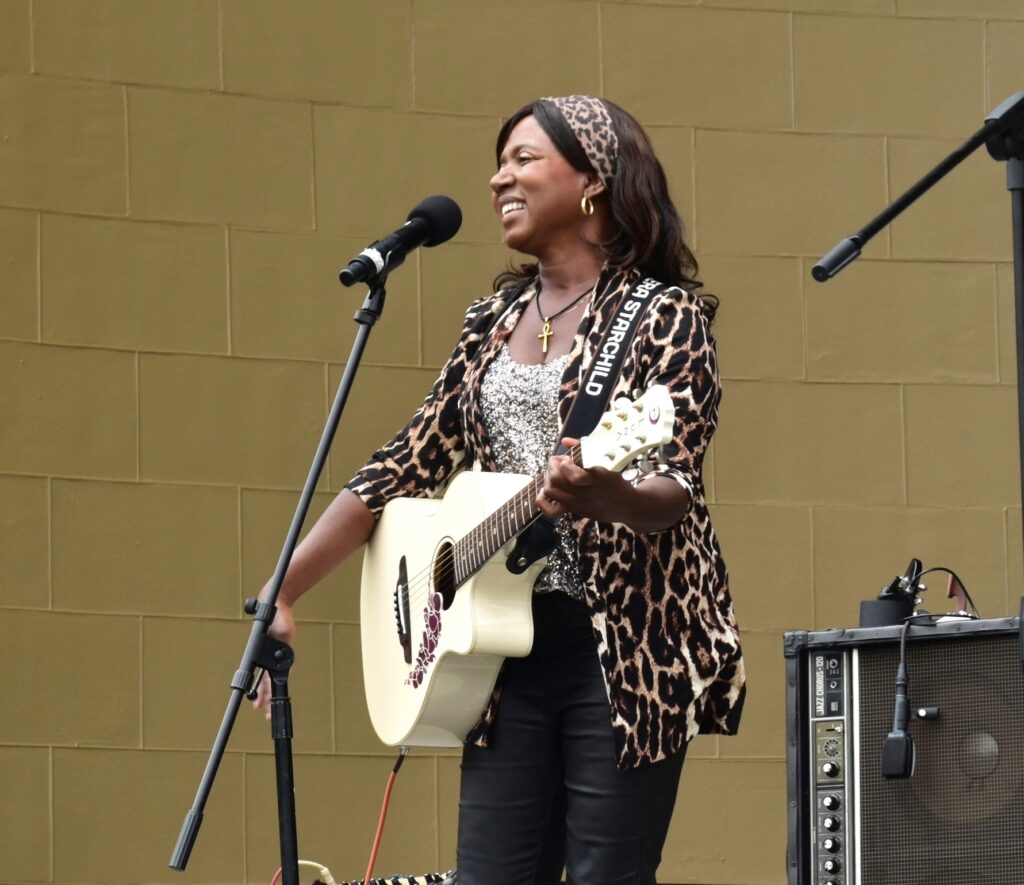
With her fist raised above the microphone, singer-songwriter Zera Starchild delivered the line to the crowd gathered at the Golden Gate Bandshell. Cheers erupted, and someone in the audience shouted the words back.
The moment captured the spirit of the 50th Annual San Francisco Free Folk Festival this past Saturday, an event that traverses a sonic rainbow of global roots musical styles. Across Golden Gate Park’s Music Concourse, attendees moved between performances, workshops, and jam sessions that celebrated folk music not as a fixed genre, but as a living tradition shaped by the people who play, sing, and share it. The festival’s relocation to this public space from Everett Middle School (it was originally held at the Hall of Flowers in 1977) has helped it blossom, drawing in new attendees stumbled upon it during their stroll through the park.
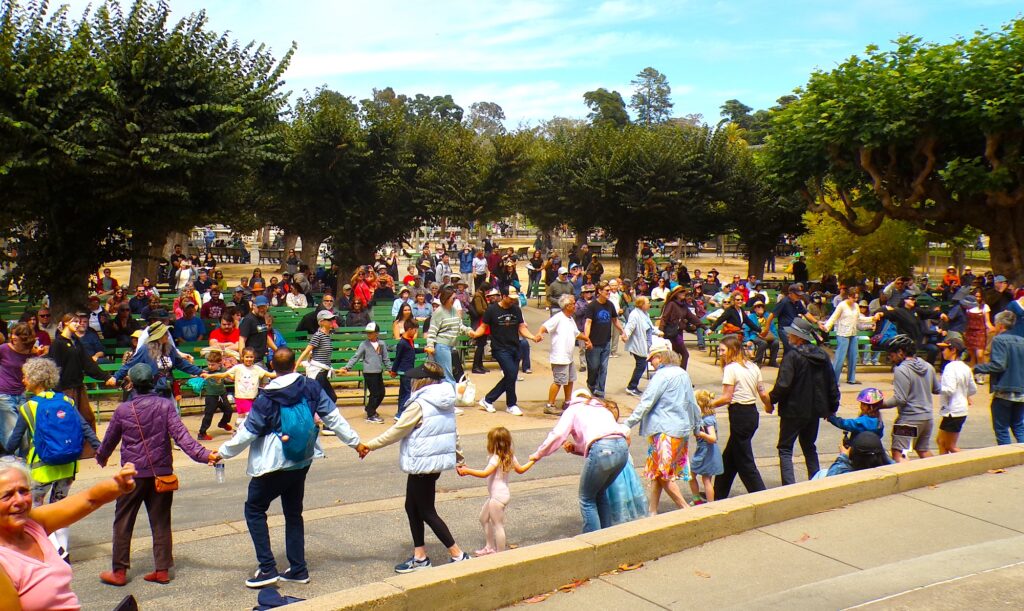
Folk music wasn’t confined to the stage. As festival director Daniel Hersh noted, the key focus of the event is participation, allowing people who aren’t professional musicians to make music themselves. “Most festivals separate audiences from performers,” he explained. “Here, people can actually join in.”
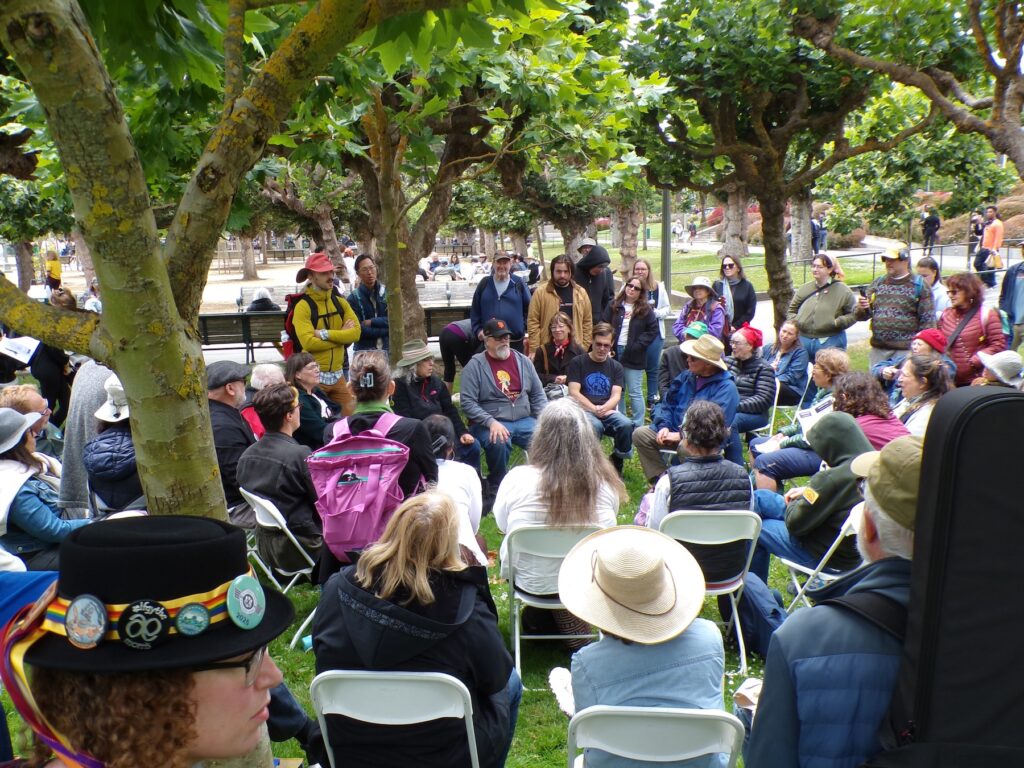
One of the festival’s busiest workshops, “Sea Songs & Shanties,” drew a large group of participants as workshop leader Travis Pratt taught centuries-old tunes through call and response. He sang a line, and the group answered together, turning strangers into a collective voice. Nearby, another space remained dedicated to informal jamming and singing throughout the day, while other workshops explored Cajun-Creole music, Klezmer dancing, storytelling, Spanish California dance, and folk songs celebrating women’s history.
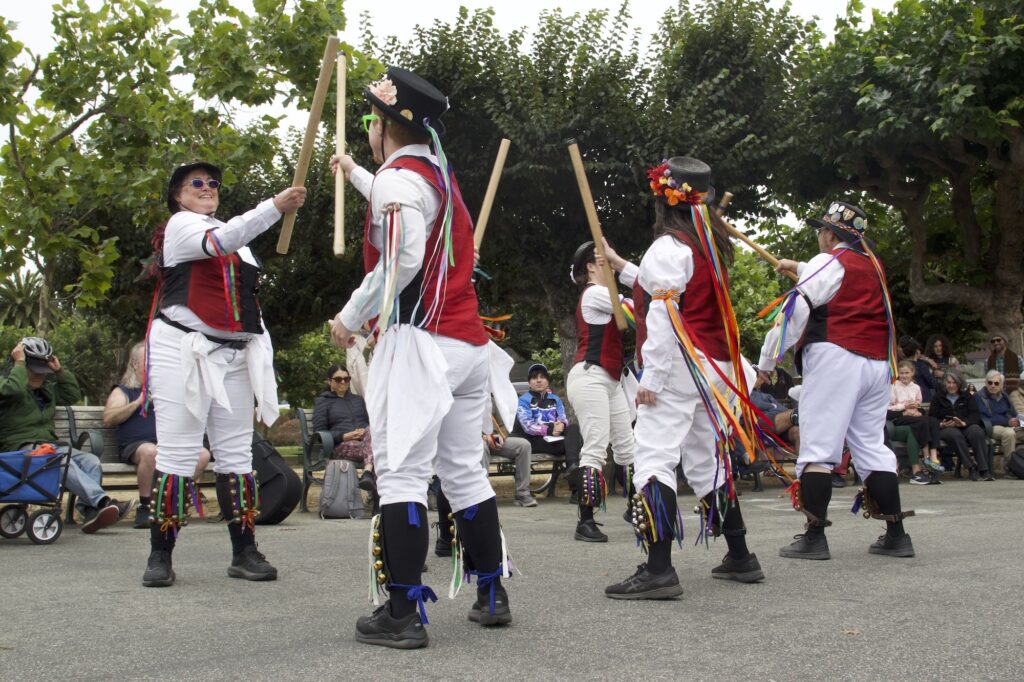
Near the fountain, morris dancers performed before inviting spectators to join them. Bells fastened to their legs rang with each step as ribbons flowed from their sleeves and hats. Talitha Aho of the Berkeley Morris Dance Group explained that morris dancing is one of the oldest traditional dances of England, and while they have made their choreography less traditional, their costumes remain historically rooted.
“It doesn’t require a high skill level, but it’s very energetic, and it’s always done with a set of people,” she said, noting the festival is a special opportunity to introduce the tradition to newcomers. It proved to be a hit across generations, with attendee Grace Hansen mentioning that her young daughter was “loving the morris dancers”.
The Bandshell lineup reflected the same sense of variety. Maurice Tani opened the stage with thoughtful songwriting that paired gentle folk melodies with reflective lyrics. A San Franciscan born in the Mission and raised in the Sunset, Tani shared that playing the venue meant a lot to him, as it was where he saw his first rock bands. His set moved from an inspirational song about relying on others to songs exploring darker themes and fictional characters. “I write the kind of music that keeps me interested,” Tani explained.
His performance gave way to one of the day’s most distinctive sets. Zera Starchild blended folk guitar with the cadence and lyricism of hip-hop. Starchild, who spoke about attracting a Gen Z following on TikTok, sees this blend as a natural progression, noting that rap’s reliance on simple loops pairs well with folk’s simple chord progressions. Accompanied only by a lead guitarist, she balanced topical lyrics with expressive guitar work on songs like “Hands Up,” written in response to humanitarian aid boats attempting to reach Gaza.
Mostly Marys followed with harmony-rich bluegrass and Americana. The group emphasized the collaborative nature of the genre, relying on the blend of their voices and instruments to create a full sound.
Treble By the Bay celebrated Celtic music and dance, introducing audiences to longstanding traditions
through both music and movement. The group incorporated traditional dancing into its performance,
explaining the cultural elements behind the songs and steps.
T Marie & Bayou Juju brought another shift in sound, filling the Bandshell with Cajun, Creole, zydeco, rhythm and blues, swamp pop, and New Orleans influences. Marie-Isabelle Evangeline Pautz, the frontwoman, grew up immersed in these styles as her family actively worked to preserve Louisiana culture and language. “We’re really interested in those cross-cultural connections and how Louisiana’s music has evolved over time,” she said. The energetic set struck a chord with attendees like Cathy Hightower, a New Orleans visitor, who enthusiastically said, “When there’s music like this playing, how can you just sit there?”
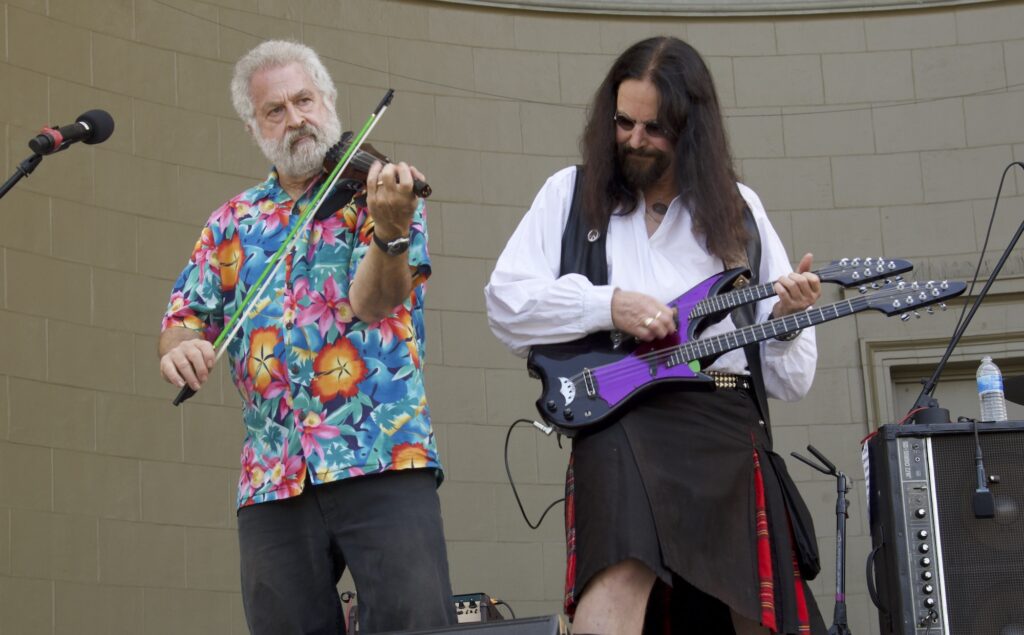
As the afternoon continued, Tempest delivered one of the festival’s biggest crowd-pleasers. The 37-year-old Celtic folk-rock band paired soaring fiddle melodies with electric guitar and a commanding rock vocalist, creating what lead singer Lief Sorbye describes as “electric folk”. The musicians moved around the stage with a chemistry that appeared almost choreographed—though Sorbye noted the movements are completely spontaneous. Audience members rose to their feet, many joining hands and dancing together. According to Sorbye, folk music remains relevant because “the human condition is the same now as it was 200 years ago.”
Bululú closed the Bandshell with an equally energetic celebration of Latin folk traditions. Bright guitar lines, smooth horn melodies, lively keyboard riffs and layered percussion kept the audience moving as the ensemble brought the festival to an exuberant finish. New city resident Rayven Isaak-Bleau felt the pull of the closing bands, diving in to dance and noting that moving to the music is a healing experience. “Sometimes you just have to shake your ass,” Isaak-Bleau said. “It doesn’t matter if you know how to dance or not. Just move your body and let it out.”
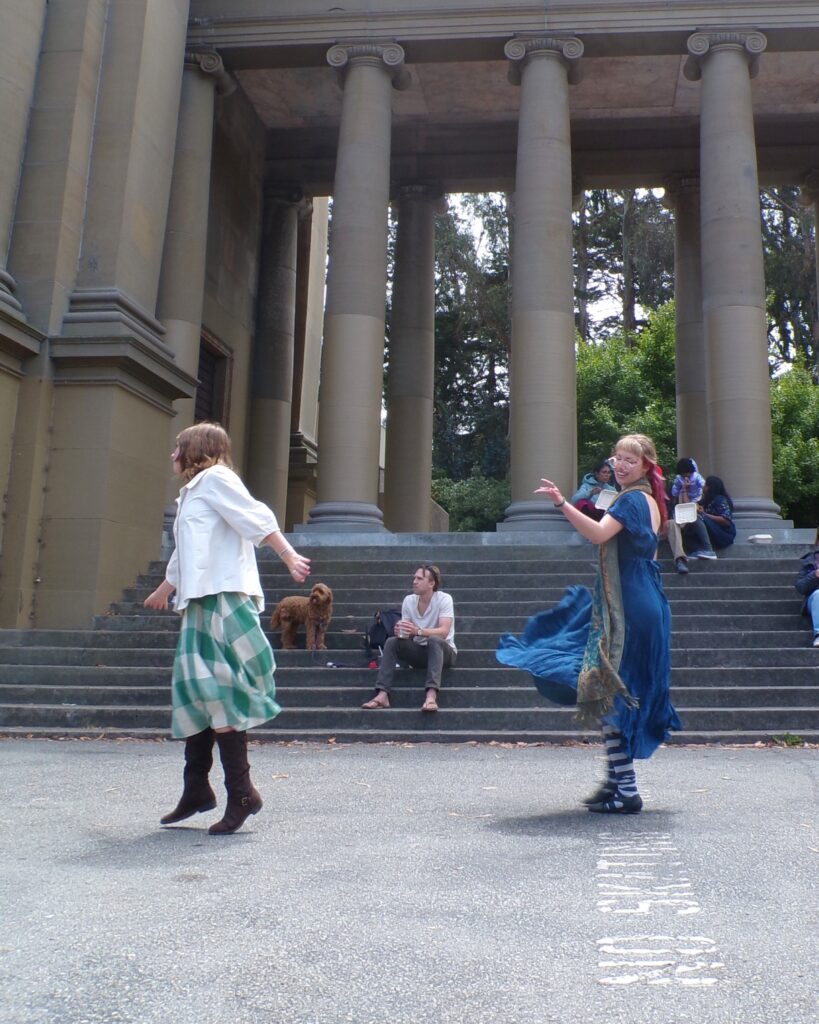
Singing sea shanties, learning traditional dances, discovering local artists who continue to redefine folk music— festivalgoers spent the day doing more than listening. They became part of a tradition that continues to grow by welcoming new voices alongside old ones, fulfilling director Hersh’s hope that attendees leave “having heard music they haven’t heard before, having participated in music they might not normally experience, and wanting to come back next year.”
The post No bumps on a log allowed at 50th Free Folk Fest appeared first on 48 hills.