In LA County, hospice fraud warning signs persist despite state and federal crackdowns, records show
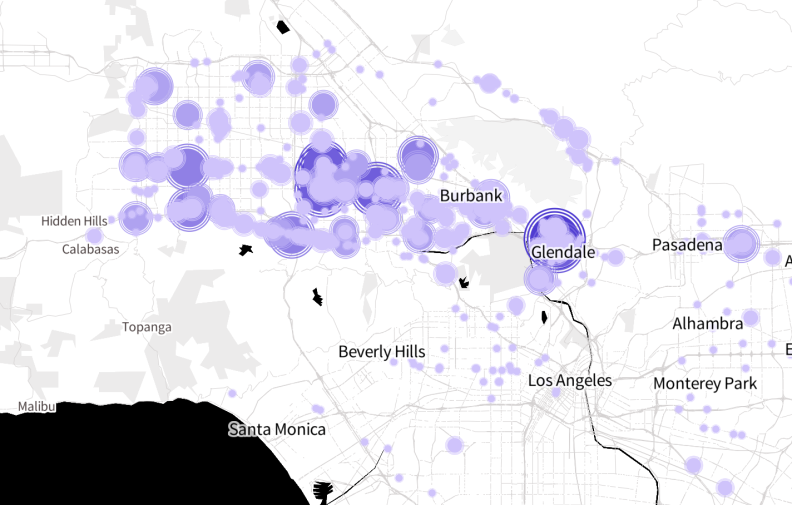
Los Angeles County has become a hotbed for sham hospice companies exploiting the state’s loose licensing regulations and federal Medicare rules, according to government audits and state and federal prosecutors.
The explosion of hospice companies in Los Angeles County — many of them suspected, and some proven, to be fraudulent — has played out as a yearslong game of whack-a-mole for regulators.
California authorities and the Trump administration are both cracking down on L.A.’s hospice fraud problem, while trading blame for oversight failures.
In the midst of the political fingerpointing, records show fraudulent billing schemes in L.A. have cost taxpayers hundreds of millions of dollars over the past decade, despite high-profile enforcement efforts.
An LAist analysis of thousands of state and federal records found those efforts — while showing some progress — have failed to eradicate many of the conditions that have allowed fraud to flourish. The analysis found warning signs identified by state auditors — from unusually high rates of people leaving hospice care alive in L.A. County to clusters of hospices in the same location — persist at much higher rates than elsewhere in the nation.
The cash grab seems particularly fraught given hospice is end-of-life care for terminally ill patients who agree to give up treatment aimed at extending their lives.
Medicare, the federal health insurance program predominantly for people 65 and older, pays for most hospice care in the U.S. The Medicare hospice benefit hinges on a medical judgment by a doctor that a patient is terminally ill with a life expectancy of six months or less. Patients can stay longer if a doctor recertifies, and they can end hospice at any time.
And it’s a multibillion-dollar-a-year industry. In 2024, 1.8 million Medicare beneficiaries used hospice, and Medicare spent more than $28 billion on it, according to the Medicare Payment Advisory Commission, an independent congressional watchdog agency. More than half of all Medicare beneficiaries who died nationwide received hospice services that year — a record high.
Unlike being admitted to a hospital, patients enrolled in hospice most commonly receive services at their home. Services can also be delivered in a nursing facility or assisted-living facility, rather than in a dedicated hospice facility.
Medicare pays hospices a daily rate for each enrolled patient, regardless of whether staff visit that day. That structure, according to a June report from the Government Accountability Office, likely creates incentives for longer stays and fewer visits. Those incentives, the report notes: “may attract fraudsters to enroll as hospices.”
How the fraud works and why it’s so persistent
Most documented hospice fraud in L.A. County is Medicare billing fraud. In many of the L.A.-area cases, federal prosecutors allege, operators enroll patients who aren’t dying and collect the daily rate.
In many schemes, recruiters approach older adults at shopping centers and front doors, offering cash, gift cards or free supplies in exchange for their Medicare ID numbers, according to prosecutors and advocates.
Most victims of hospice fraud discover the problem only when Medicare denies coverage for healthcare they actually need, according to patient advocates.“They’re only finding out about it because they’re not able to pick up their prescription or seek other treatment,” Catherina Isidro, statewide director for Senior Medicare Patrol, told LAist. “We’re not just talking about stealing from the Medicare trust fund.”
Preventing hospice fraud is a responsibility split between state and federal agencies. The California Department of Public Health (CDPH) licenses hospices in L.A. County. The Centers for Medicare and Medicaid Services, or CMS, certifies them to bill Medicare and pays the claims.
To investigate how and why the problem persists, LAist analyzed state hospice licensing records, federal Medicare enrollment and billing data, and records of license revocations and Medicare billing terminations.
The reporting also drew on a state audit, federal court filings and visits to addresses where dozens of hospice companies in L.A. County are registered.
What LAist found
Nowhere is the scale of the issue more evident than in the explosion of state-licensed hospice agencies in L.A. County in the last 16 years — from about 100 in 2010 to more than 2,000 at the peak in 2022, before dropping to 1,132 in state licensing records this October.
The county has persistently had far more licensed hospices compared to the size of its older population than elsewhere in the nation. A state audit found that in 2019, L.A. County had six times the national average. A state license alone doesn’t mean a hospice agency can bill Medicare. Medicare’s enrollment file lists 553 hospices in L.A. County that are eligible to bill the program, roughly half those active state licenses, according to LAist’s analysis.
The number of hospices enrolled to bill Medicare is also far higher than elsewhere. L.A. County has about four times the national rate relative to its older population, according to LAist’s analysis of federal Medicare enrollment data from October 2026 and Census Bureau population estimates for 2025.
In raw numbers that means the county has about 35 enrolled hospices for every 100,000 residents 65 and older, compared with about nine nationally. It has roughly 10% of the nation’s Medicare-enrolled hospices and only about 2.4% of its older residents.
In addition to the high number of hospices, LAist found that several other patterns state auditors identified in 2022 as possible fraud indicators persist in newer federal data, including unusually high rates of patients leaving hospice alive, long stays and high Medicare payments per patient.
- A 2022 state audit found that in 2019, L.A. County hospices discharged patients alive at about 2.4 times the national rate. According to LAist’s analysis of fiscal year 2025 CMS data, the L.A. County rate was about three times the national rate.
- LAist’s analysis of CMS hospice data found the average stay in hospice for L.A. County patients also went up, from 89 days in the state auditor’s 2019 data, to 106 days in fiscal year 2024, the most recent data available.
- In federal fiscal year 2025, long stays were far more common at L.A. County hospices than nationally. An estimated 39% of discharges (which include deaths) in L.A. County followed stays of 180 days or more. Nationally, just 20% of stays were that long, according to LAist’s analysis of CMS’ Service and Spending Variation Index.
- After adjusting for regional wage differences, Medicare paid L.A. County hospices about $19,600 per patient in federal fiscal year 2024, 29% more than the roughly $15,200 paid to hospices elsewhere in California, according to LAist’s analysis of CMS hospice utilization data. A 2022 state audit found L.A. hospices were paid about 15% more per patient than the national average in 2019.
- Federal data show that in fiscal year 2025, just 29 hospices in the whole country ended care for at least 50 patients without recording a single patient death. All 29 were in California, and 28 were in Los Angeles County. The data doesn’t show why these patients were discharged. Patients can improve or choose to leave.
Why long stays and live discharges raise concern
L.A. County has both unusually long hospice stays and unusually high rates of live discharges for a benefit meant to ease pain and suffering for patients expected to live six months or less. Because Medicare pays by the day, hospices can have an incentive to enroll patients likely to stay awhile, said Lauren Hunt, an associate professor at UC San Francisco and former hospice nurse.“Essentially the longer a patient is enrolled, the more money they make,” Hunt said.
That incentive has drawn scrutiny from regulators.
“Medicare is really cracking down on these long stays, and the regulators are coming in and they really want a lot of documentation around whether somebody’s eligible,” Hunt told LAist.
She said hospices may discharge long-stay patients alive to avoid having claims denied and the money clawed back.
“That’s why you see this pattern of enrollment, long stays and then the eventual discharge,” Hunt said. “If you’re a hospice that’s trying to make as much money as you can, then that’s what your approach is going to be.”
In 2023, the typical L.A. County hospice cared for about eight patients on an average day, compared with about 39 elsewhere in the country, according to LAist’s analysis of CMS data.
Small censuses are part of the strategy, Hunt said. “You can still be pretty profitable with a pretty small census if your patients have long stays.”
Not every live discharge is a red flag for fraud. There are legitimate reasons patients are discharged from hospice while still alive. Medicare allows it when a patient is no longer considered terminally ill or when a patient chooses to end hospice care. Patients living in a nursing home or assisted living facility often stay where they are, Hunt said, but stop receiving hospice care.
“If they’re at home, the services just go away basically,” she said.
One area of concern for regulators: The disproportionate concentration of licensed hospices tied to addresses in the eastern San Fernando Valley and Glendale. An LAist analysis of registered addresses found this concentration still exists after years of reform efforts and crackdowns by federal and state officials targeting those areas.
Because hospice care happens at patients’ homes, an agency’s office doesn’t need to be in the neighborhood it serves. But in 2022, state auditors flagged large numbers of hospices clustered at and around certain addresses as a possible sign of fraud.
- While Van Nuys is home to about 1% of the county’s overall population, state records show 12% of all county hospice licenses are currently registered to addresses in Van Nuys.
- Glendale is home to 2% of L.A. County’s population and 11.7% of the county’s hospice licenses.
- Burbank has 1% of L.A. County residents and 9.5% of the hospice licenses.
- More than half of L.A. County’s 1,132 licensed hospices share a street address with at least one other hospice, according to LAist’s analysis of California Department of Public Health licensing records.
- Twenty-eight addresses hold five or more hospice licenses, and five addresses hold 10 or more.
- The most striking cases uncovered in LAist’s analysis include an office building in Van Nuys with 13 hospices, one in North Hollywood with 12, and a Glendale building with 11.
In June, California put its first comprehensive licensing rules for hospices into effect. One of those rules generally limits administrators, who manage a hospice agency, to one hospice at a time. But state records show more than 100 administrators in L.A. County are listed for two or more currently licensed hospices. Those listings cover about 260 hospices, nearly one in four of those licensed countywide.
Two people were each listed as an administrator for five separate L.A. County hospice agencies, according to state records from October. LAist contacted these administrators for explanation but did not get a response.LAist identified more than 160 L.A. County hospices with current licenses that share administrator names, phone numbers or addresses with hospices whose licenses were previously revoked.
- State records for 119 licensed L.A. County hospices list an administrator with the same name as a person listed on a revoked hospice license.
- A single fax number is listed in state data for 19 different licensed L.A. County hospices and was also used by at least one hospice the state revoked in 2025.
Joan Teno, a hospice researcher at Brown University’s School of Public Health, has argued that hospice regulators need to link owners, administrators, medical directors and addresses across hospices instead of just reviewing each one on its own.
Knocking on doors
In late October, LAist visited six office buildings in the San Fernando Valley where state records showed multiple hospices registered to suites in the same building.
Of the 55 hospices licensed at those addresses, 36 carried at least one red flag associated with potential fraud, including connections to revoked hospices, unusually high numbers of patients discharged alive and administrators listed on more than one hospice.
The addresses are all older office buildings on commercial strips, with small suites that rent cheaply.
An empty office doesn’t prove a hospice isn’t treating anyone. But LAist’s visits found that many of the hospices at those addresses with warning signs of potential fraud, though still licensed by the state, appeared not to be operating there.
Only a handful of the 55 hospices showed any activity during business hours: signage, posted hours, contact information or someone answering the door.
New emergency hospice regulations, in place since June, now require every hospice to have exclusive commercial office space with permanent signage and posted hours.
LAist visited locations with multiple hospices. What we found:
After a CBS News investigation in March focused attention on the Merabi Medical Plaza, investigators from state agencies conducted on-site reviews at the building in April. The state’s department of public health said 109 companies that had applied for hospice licenses using the building’s address were never licensed, and just 19 hospices at the address were licensed and eligible to bill Medi-Cal in April. The department did not say what records it reviewed, or how many of the companies were enrolled to bill Medicare.
State hospice regulators said a statewide freeze on new hospice licenses, which began in 2022, had stopped more than 60% of the hospice agencies in the building from getting a license.
Merabi Organization Group, which owns the building, advertises “virtual office” services, with plans starting at $30 a month. The company’s website says a virtual office gives a business “a physical business address and office number for your business cards, website, and email and registering a new company.”
A December 2024 post on a company Instagram account, still online as of Nov. 15, offered a $99-a-month plan that included “a professional office address with an actual suite number—not a P.O. Box.”
“For industries needing a California or Los Angeles presence to obtain licenses, a suite at the prestigious Merabi Professional Medical Plaza Building provides more than just an address,” the post continued.
The post doesn’t mention hospices. Merabi Organization Group did not respond to LAist’s voice messages, emailed questions or interview requests.
Because the state has barred new hospice licenses since 2022, buying an existing one has become the main way into L.A. County’s hospice industry. At one of LAist’s site visits, a hospice administrator reached by phone explained that she had recently acquired a hospice with an address at 12444 Victory Blvd. in North Hollywood.
Active online listings on BizQuest offer hospice licenses for sale for between $120,000 and $1.2 million, advertising “clean, never-operated CDPH license,” “no billing history,” and “active and ready to bill.” Selling a hospice license is legal, but state rules require a change-of-ownership application filed 120 days before the sale and approved by the state before it takes effect.
Across six addresses LAist visited in October, the state has revoked at least 45 hospice licenses since 2023, according to the department’s list. At many of the other licensed hospice agencies, offices appeared to be empty or closed, though their licenses remain active.
A crackdown on two fronts
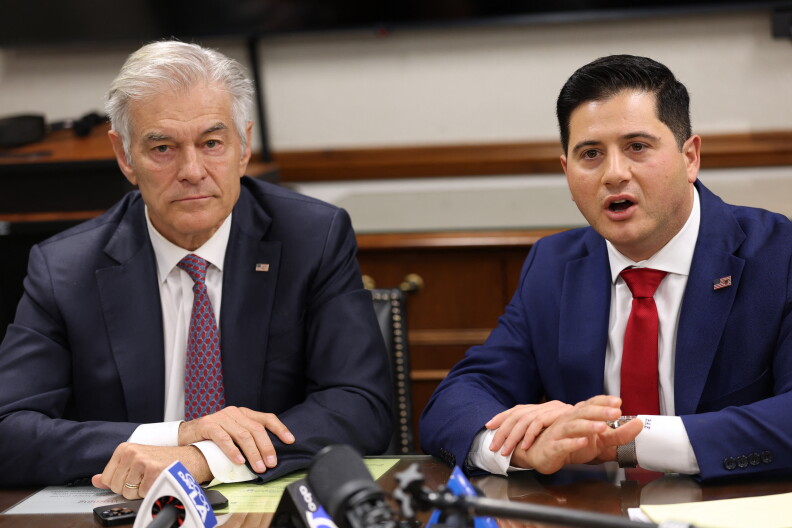
(Patrick T. Fallon
/ AFP via Getty Images)
For years, the state rarely took away a hospice’s license. A 2022 state audit found the California Department of Public Health had revoked a hospice license just once since 2015. In L.A. County, CDPH has revoked more than 500 hospice licenses since 2022 — 79% of all revocations statewide, according to a list the department provided to LAist. Those revocations are largely concentrated in Van Nuys, Burbank and Glendale. The agency said in June it was investigating hundreds more across the state.
The wave of revocations came after California’s 2022 freeze on issuing new licenses. State regulators followed that with new emergency licensing rules in June.
By then, the Centers for Medicare and Medicaid Services had imposed its own six-month moratorium on new Medicare hospice enrollment across the nation, which began in May. Last week, CMS extended it for another six months, saying it remains concerned about hospice fraud.Still, enforcement efforts to stem the loss of taxpayer dollars to fraud remain disjointed across state and federal agencies. One example: when California revokes a hospice license, the state has no authority to shut off the hospice’s Medicare billing number and gets no confirmation from the federal government that the number was ever deactivated.
State and federal officials point fingers at each other.
Dr. Oz’s claims about who is behind LA hospice fraud
At a Jan. 9 news conference in Los Angeles, Dr. Mehmet Oz, the CMS administrator, said hospice fraud in L.A. County had risen sevenfold over the past five years, without citing figures.
“That doesn’t happen naturally,” Oz said. “There are not seven times more deaths in L.A. County than there were five years ago. These fraudsters — and these do tend to be foreign influences, either Russian or Armenian gangs, mafia — that are leading a lot of these efforts, we believe.” A few weeks later, Oz visited a stretch of Victory Boulevard in Van Nuys where state and federal data show dozens of hospice agencies are clustered.
He posted a video on social media, in which he referenced a 2024 federal fraud case involving sham hospice companies convicted of defrauding Medicare out of $16 million. Prosecutors found that those companies had used the names of foreign nationals as straw owners and laundered money to conceal the scheme.
The four hospices named in the 2024 indictment were in North Hollywood, Toluca Lake, Pacoima and Van Nuys. None was on Victory Boulevard where Oz filmed. In the video, Oz repeated his organized crime claims: “It’s run, quite a bit of it by the Russian-Armenian mafia.”
Newsom’s administration quickly filed a civil rights complaint against the TV doctor turned public official, calling the comments “racially charged.” Newsom’s press office, on social media, also cited “historic sensitivities” between Armenia and Turkey in criticizing Oz’s remarks. While the complaint does not state it, Oz is the child of Turkish immigrants to the U.S.
In court filings in recent hospice cases, federal prosecutors have not alleged any connections to broader organized crime networks or foreign syndicates. When asked if such a connection exists, a spokesperson for the U.S. Attorney’s Office told LAist: “Dr. Oz certainly has said so.”
Trading blame
At an April news conference, Bill Essayli, the first assistant U.S. attorney, accused California of failing to properly vet hospice operators before licensing them.
“California is basically enabling the fraudsters by handing them the key to the Medicare piggybank,” Essayli said, calling the state a “kingdom of fraud.”
State officials argue the federal government shares the blame, because Medicare certified these hospices and paid their claims for years. Gov. Gavin Newsom also noted the Trump administration suspended the federal government’s own hospice-oversight program in February 2025.
“It’s rich to see the Trump administration suddenly talking tough on hospice fraud after pulling back federal oversight just last year,” Newsom said in a January statement. “California didn’t wait — we’ve identified and cracked down on hospice fraud for years, taking real action to protect patients and taxpayers.”
Both state and federal officials have claimed progress:
- The state attorney general’s office conducted 294 hospice-related investigations, filed 119 criminal cases and secured 51 convictions statewide between April 2021, when Rob Bonta took office, and April 2026, according to a news release. The office did not answer a request for a county-level breakdown of its hospice cases and arrests or for updated numbers.
- A CMS spokesperson in May said the agency’s enhanced hospice oversight efforts had led to more than 600 revocations of Medicare billing privileges nationwide since July 2023. At a May 6 news conference in MacArthur Park, CMS official Kimberly Brandt said the agency had stopped payments to several hundred providers in the L.A. area. CMS did not provide updated figures when asked.
CMS has also recently temporarily suspended payments to several hundred L.A. County hospice companies that it suspects of fraud, according to the agency. Many were reportedly flagged for unusually high live discharge rates. That means a large share of their patients left hospice alive, which can signal people were enrolled without being terminally ill. Some providers have claimed their payments were unfairly frozen and are submitting rebuttal statements to the federal government.
“CMS recognizes the seriousness of these actions and is committed to ensuring that legitimate providers have a clear path to demonstrate compliance and resume participation in the Medicare program,” a spokesperson told LAist.
Charges mount as the fight turns political
Since April, federal prosecutors have charged 15 people in 10 L.A.-area hospice fraud cases, totaling more than $90 million in alleged Medicare overbilling.
Separately, the California attorney general’s office charged 21 people in April in an alleged fraud ring that it said billed Medi-Cal more than $200 million between 2023 and 2025, using more than a dozen sham hospices operated under false names to conceal the real owners. The charging documents claim restitution of about $23 million for two of the three groups charged. The office told LAist the total loss was far higher, but has not provided documentation.
The federal hospice crackdown in L.A. is part of a broader federal effort to combat public benefits fraud in President Donald Trump’s second term, including with AI-assisted billing data review to flag providers to the Department of Justice en masse.
It extends well beyond the hospice industry. The Trump administration withheld more than $2 billion in Medicaid payments to California this year based on suspicion of fraud, with most suspensions targeting providers of home health or in-home supportive services.
Brandt, deputy administrator for CMS, warned reporters at the May news conference in MacArthur of the potential scale.
“The hospice problem here in Los Angeles County is epic,” Brandt said. “There are nearly 1,500 hospices here in the L.A. area. We think up to half of them could be fraudulent.”
Federal prosecutors have continued bringing cases since.
“Hospices exist to bring comfort to people in the final weeks of life,” said Colin McDonald, assistant attorney general of the Justice Department’s National Fraud Enforcement Division, while announcing charges against three more people at an L.A. news conference in October. “Turning that benefit into a billing machine is about the most egregious theft from hard-working Americans that any of us can imagine.”
Hunt, of UC San Francisco, who has worried about these problems since she started working in hospice in 2009, said she welcomes the increased scrutiny. At the same time, she cautioned against letting fraud overshadow the good hospice care can do.
“I don’t wanna throw out the baby with the bathwater here,” Hunt said. “We’ve got to figure out a way to get back to the mission of hospice, which really can be just such a beautiful thing for patients and families. I have personally seen how much it helps people when it’s done well.”
Check this story
Ask the AI guide
The guide explains what to check and where. It cannot see this article or recent news.
Is this AI-made?
AI checkers give a likelihood, not proof.