The Last Mayor of Houston
On his second Saturday as the 63rd mayor of Houston, former state Senator John Whitmire drove to Yale Street Grill, a no-frills diner in the Heights neighborhood, to rendezvous with Bill King, a former Houston Chronicle columnist and current fellow at Rice University’s Baker Institute, who, in 2015, had very nearly become mayor himself.
Whitmire’s schedule was packed. In the first two weeks of January 2024, he’d already convened with many a city and county official; sworn in the new members of the Houston Police Officers’ Union (HPOU) board; ordered an end to the city’s eight-year labor dispute with the firefighters’ union; twice hosted discussions with the conservative nonprofit Crime Stoppers of Houston; and received measurements for a bulletproof vest. Amid the clamor, Whitmire was asking a friend for advice: Which of the city’s problems should he try to tackle first?
Shortly before Whitmire announced his bid for mayor, King, who previously ran for mayor twice, had offered Whitmire his honest assessment: “I don’t think the city’s problems can be fixed anymore.”

At the time, Whitmire drawled, “Oh, don’t tell me that.” But having now spent a moment under the hood, the city was apparently in worse condition than either had imagined.
At root was the problem of revenue—too many payments out, too few deposits in—combined with a beleaguered tax base. “We’ve already got an affordability problem. We’ve got one of the highest water rates in the state; we’ve got high property tax rates already,” King told the Texas Observer. One of Whitmire’s most pressing tasks would be to avoid a deficit while maintaining city services, at a time when Houstonians’ confidence in the economy has now plummeted more in a single year than at any time since the 1980s oil bust. With one in five Houstonians living under the poverty line, the highest rate among large U.S. cities, the prevailing sentiment is that the “Golden Buckle of the Sunbelt” has lost its sheen.
In his campaign for mayor, Whitmire cast the legacy of his two-term predecessor, Sylvester Turner, another former Lege Democrat, as the reason for the city’s many ills—from the budget and the post-pandemic increase in crime to supposedly excessive biking infrastructure. By comparison, Whitmire’s actual opponent, the iconic Houston Congresswoman Sheila Jackson Lee, seemed like almost an afterthought. Whitmire won in a landslide December runoff through a hodgepodge coalition of suburbanites, Latinos, MAGA Republicans, and organized labor, particularly the police and firefighters, attesting to Whitmire’s self-image as a dealmaker. He even touted his working relationship with Republican state leadership, forged during his decades as a state senator, after such relations had deteriorated under Turner. “I’ve told Austin, we’re all in this together,” he informed the New York Times. “How Houston goes is how the state of Texas goes, and that’s just a fact.”
Theoretically, if Houston’s problem were only who sat in the mayor’s office, a well-experienced and well-connected pol like Whitmire, who became the “dean” of the Texas Senate after serving since 1983, would be well positioned to reverse the city’s fortunes. It’s the only major city in Texas with a strong mayor system—and arguably the strongest of such systems in the country. The mayor here holds executive authority and appoints, removes, and oversees all administrative department heads—and, unlike other strong mayors, also controls the city council’s agenda and presides over it as a voting member.
But anyone aware of state Republicans’ penchant for anti-local control laws (never mind Texas Governor Greg Abbott’s recent appetite for pulling public safety grants) knows the dynamic Whitmire described to the Times runs the other way around. As the rulers of Texas go, so must go Houston. And when it isn’t Abbott, it’s the Trump administration: sending oil prices spiraling, gutting the National Weather Service, and dispatching masked U.S. Immigration and Customs Enforcement (ICE) agents in unmarked vehicles.
In an emailed statement to the Observer, Whitmire’s office said: “It is undeniable that the city has a more fruitful relationship than in previous administrations, but policy disagreements between the city and state will always persist.”
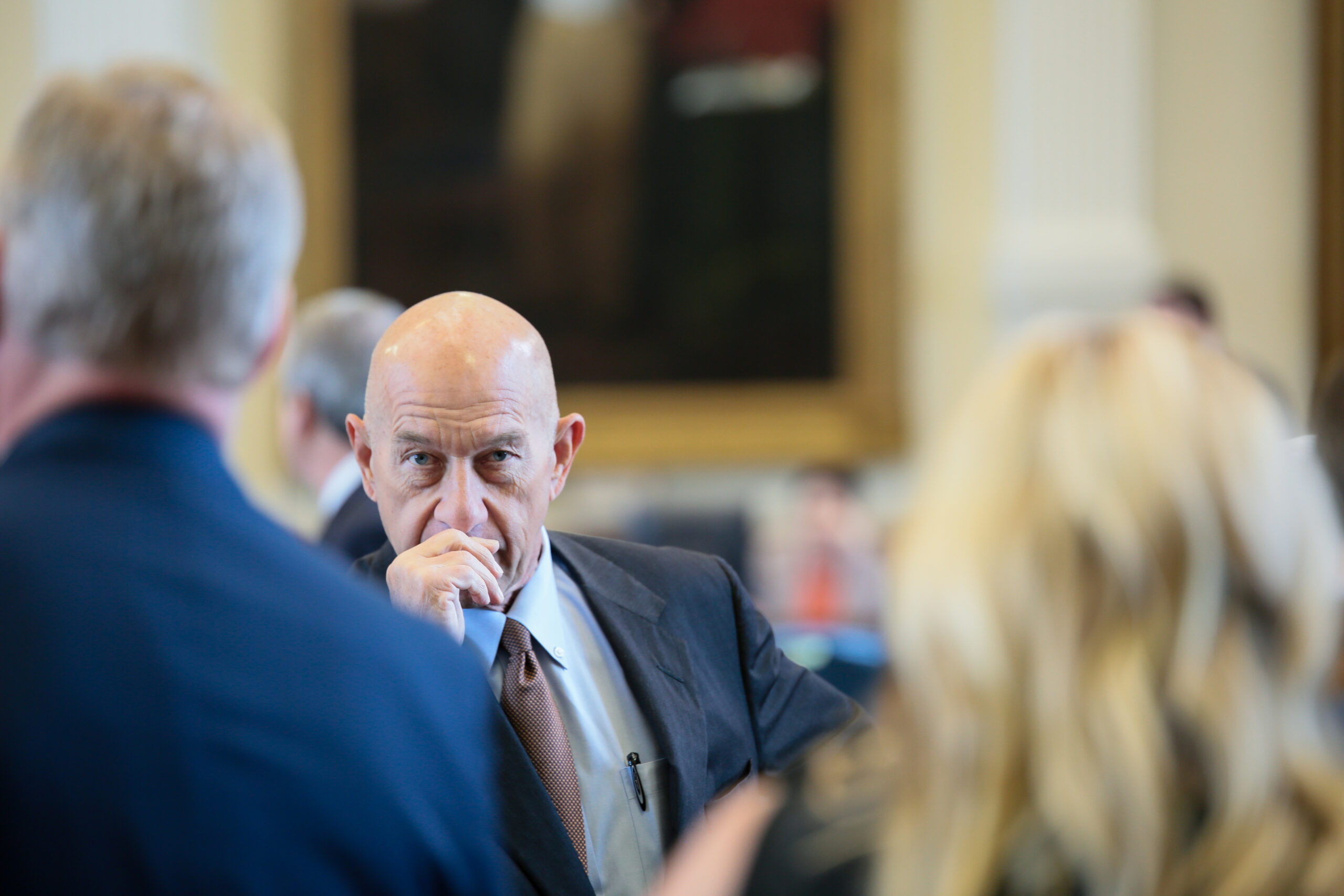
While the mayor’s local purview may be unmatched, Houston’s regional mandate in the greater metropolitan area is waning. Once the fastest-growing city in the country, Houston’s year-to-year population growth rate has nosedived, with the locus shifting to the outer suburbs. Municipal resources are stretched thin across the city’s more than 670 square miles of territory, and frequent disputes over funding streams and responsibilities break out between the City of Houston, Harris County, and the regional planning bodies such as the Houston-Galveston Area Council (H-GAC). The region’s municipal governing apparatus is effectively “a series of solutions stacked on top of one another from different eras, creating a feudalistic funding policy, particularly on the infrastructure front,” said Michael Moritz, a longtime Houston resident and one of the plaintiffs suing the city for refusing to enact a voter-approved charter amendment requiring Houston to renegotiate for more-democratic representation on H-GAC.
This quagmire didn’t start with Turner and likely won’t end with Whitmire. And Houstonians themselves appear obliquely aware that, for all its statutory power, the mayoralty is a bit of a paper tiger. At least, that’s what’s implied at the ballot box: “You typically see higher voter turnout in strong mayor systems because the office of the mayor is perceived as more important,” said James Vanderleeuw, professor of city administration at Park University. Houston’s mayoral turnout is still several points higher than “weak mayor” cities like Dallas and Fort Worth (Austin, a weak mayor outlier, recently shifted to scheduling mayoral elections in presidential years), but that’s leaping a low bar. When compared with its strong mayor city peers like New York and Atlanta over the past four mayoral cycles, Houston’s overall voter turnout ranked dead last. Just 17 percent of the city’s registered voters cast a ballot for their top municipal executive in November 2023, and fewer still (just around 200,000) showed up to make the final decision in the December runoff.
Taken altogether, Whitmire is a nominally “strong” mayor with a relatively meager voter mandate, presiding over a once-mighty fiefdom in decline. And while Houston is no stranger to tragedy, he appears hardly able to confront the torrent of problems washing over his city. Municipal procedure here has for years been captured by the “task force” that goes nowhere, the “committee” that solves nothing. In those all-too-brief moments when the council chambers suddenly show signs of life, state Republicans are quick to intervene. How, then, did the strongest mayor in America become so weak? And even if Whitmire could get his way, what would that way look like?
After graduating in 1968 from Waltrip High School (a roughly five-minute drive from the Yale Street Grill), Whitmire entered the Great Society—that is, while studying political science at the University of Houston, he got a job with Texas’ welfare department.
That department was, at the time, buoyed by the largesse of President Lyndon B. Johnson’s War on Poverty, in many ways the last gasp of the New Deal order. Where the feds intended to finance a selection of “community action programs” within underserved Black and brown neighborhoods, Houston’s mayor, Louie Welch, had outmaneuvered them by forcing a merger between the city’s existing welfare services and the program’s local planning committee. His handpicked board, which featured a “predominance of millionaires,” quickly co-opted the funds and dispensed them at will, drawing concern from federal officials about what was known internally as the “Houston situation.”
To the city’s elite, “community action” meant rabble-rousing. Black residents of the northeastern neighborhood of Settegast, for example, had recently entered Houston’s typically muted City Hall to demand improvements to the sewage system to address contaminated drinking water. For Welch, who styled himself a civil rights moderate, this was embarrassing—and couldn’t happen again. To ensure nothing smelled of “revolution,” Welch’s explicitly stated fear, he and the police chief worked hand in glove to surveil pastors and activists and ply informants within the region’s welfare system.
It was a critical period. Whitmire, whose job was to conduct unannounced compliance interviews with food stamp recipients, had a front-row seat to the War on Poverty’s collapse. By invoking the specter of outside agitators (who would today be cast as “paid protesters”), Welch had effectively defied the federal government through an alliance with the local police, demonstrating a model of strong mayor governance that appealed to Houston’s elites.
In 1973, when Whitmire ascended to the Texas House as a 23-year-old state representative, what remained under Mayor Welch—the first of nine Houston mayors that Whitmire worked with over his political career—was a sweeping surveillance regime, paternalistic management of Houston’s poor, and tight-gripped command over allotted state and federal dollars. Meanwhile, from the 1940s to the ’60s, the city had already quadrupled its land area through annexation. With no state income tax on the books, and since wealthy white enclaves within Houston incorporated as their own “cities” to avoid racial integration, these property tax infusions were the Bayou City’s best way to pull in revenue in the short term. That is, until those annexed communities started demanding clean water and trash pickup.
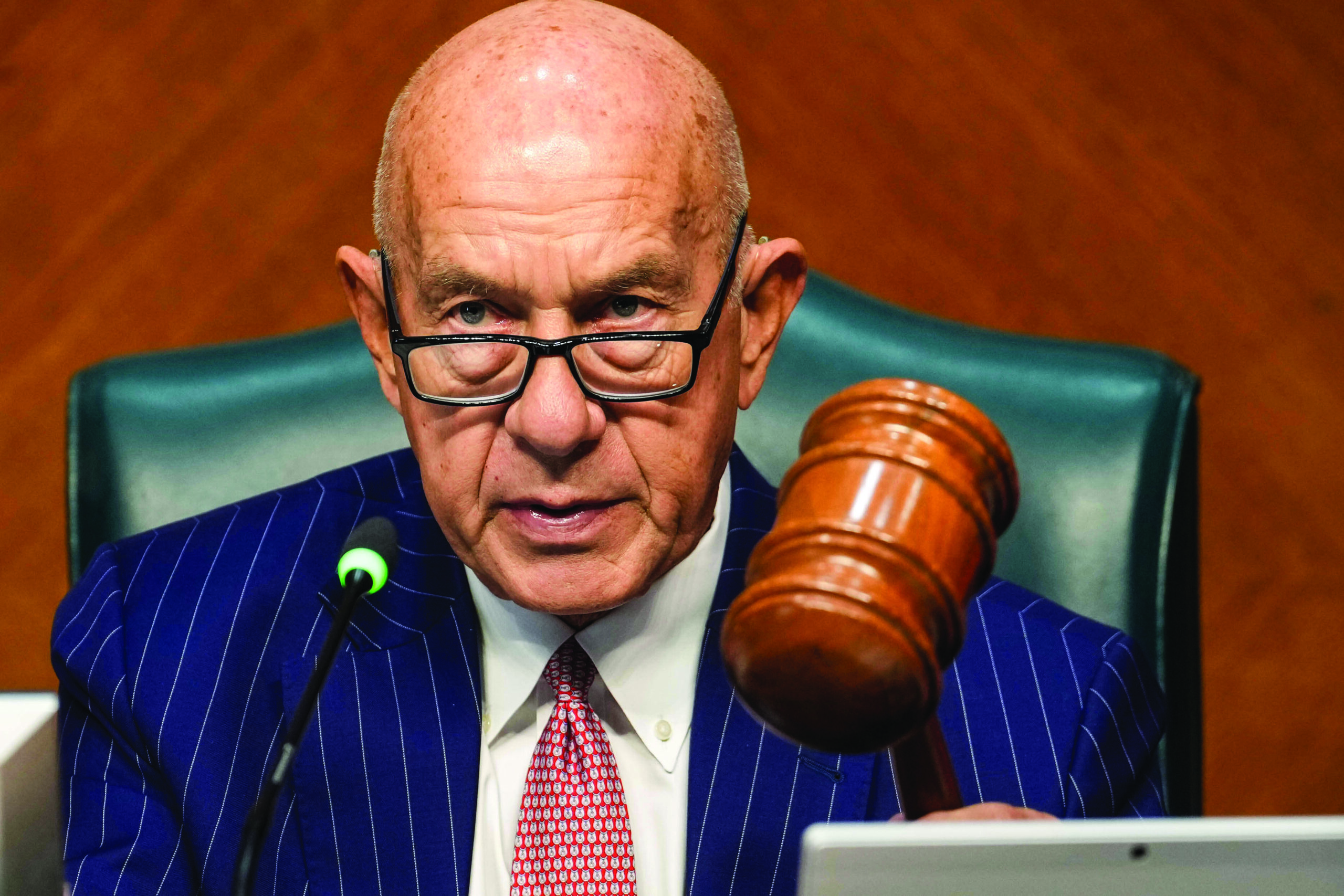
Whitmire’s next decade in the Lege was so inconsequential that he “couldn’t get a clean seat in the bathroom,” a lobbyist once told the Houston Post, and little changed even after he jumped to the Texas Senate in 1982. With his muddy drawl and thinning hair, which slowly yielded to his now-standard Elmer Fudd likeness, he earned the nickname “Boogie” thanks to his penchant for partying and his zippered “boogie-woogie” ankle boots. He built a reputation as a reliable moderate Dem, quick to follow when the power players called, and received his first big break in 1993, when his mentor, the boisterous Texas Lieutenant Governor Bob Bullock, tapped him to chair the Senate Criminal Justice Committee. There, he essentially built upon Welch’s example on a statewide scale, authoring a sweeping rewrite of the state’s criminal code and, concurrently, spurring Texas’ prison construction boom.
With a $2.5 billion price tag at the time, the build-out became one of the largest public works projects in the country. This was a different kind of war on poverty, a dark refraction of New Deal-style initiatives. While the country’s social safety net frayed and Texas cities stretched their territory, the prison expansion produced tens of thousands of jobs, from construction to policing to corrections staffing, and compounded local leaders’ sense of control. In the 1990s, the Houston Police Department (HPD)’s full-time staff also grew by more than 30 percent. Already a longtime force in city politics, HPD now had greater numbers and, thus, more political power than ever. If the police were once a junior partner in the mayor’s plans, they soon became major stakeholders in their own right, another force the mayor would have to concede to if he wanted to keep his job.
Senator Whitmire’s prison build-out was a quick-burning boon with long-term fiscal (not to mention humanitarian) consequences. By 2007, Texas was facing another $2 billion in costs to accommodate projections that the state would need an additional 17,000 beds in the next five years. Polishing his bipartisan bona fides once again, Whitmire worked with Republicans to outrun that price tag, pulling off what was hailed as a prize piece of criminal justice moderation and reform. But the result was actually more of a shell game: Texas still increased the number of prison beds but simply categorized them differently, dispersing costs across the budget without really rolling back incarceration rates.
Twenty years later, as Whitmire faces another deficit—this time as a big-city mayor—it’s hard to see his most recent budget proposal without a sense of déjà vu.
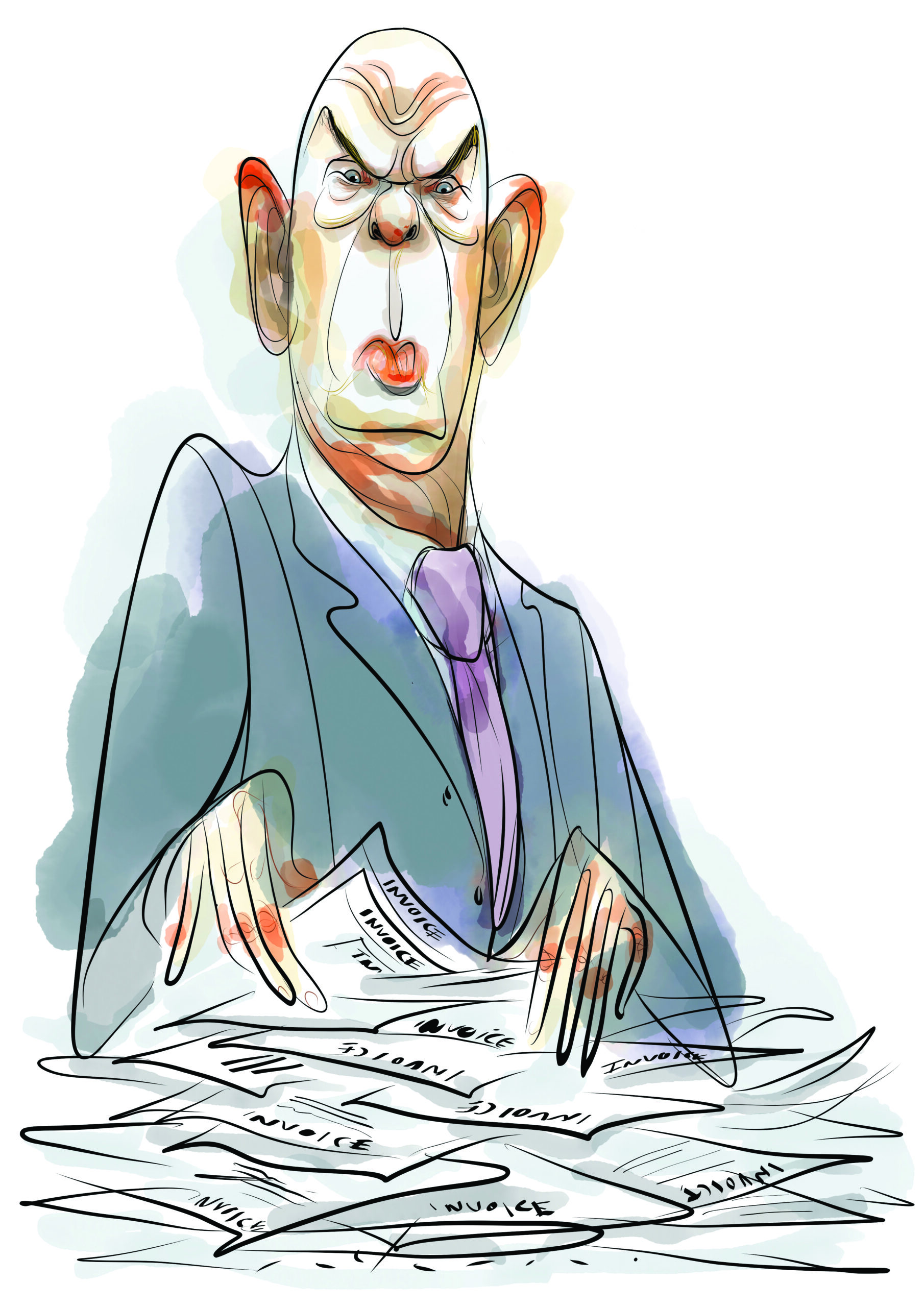
As of early May, Houston risked running a record-setting $174 million deficit, coming fresh off last year’s $832 million contract agreement with the Houston police union, which increased officer pay by more than 36 percent over the next five years—the city’s greatest expense and a fiscal headache for a mayor who is elsewhere proffering coolheaded austerity.
Whitmire’s plan to meet the city’s deficit, approved by the city council in June, was essentially a sleight of hand. By shifting solid-waste operations from the general fund into the utility fund, then charging a new $5 “administrative fee” for garbage services, it merely closed the coming year’s fiscal gap without fixing structural revenue problems. Even as the budget passed, questions remained as to whether he may soon need to hike property taxes to make ends meet. “I don’t really dispute the fact that Whitmire’s going to have to do a property tax increase here at some point,” King told the Observer. “But every time you make it more expensive to live here, that’s more incentive for someone to leave.”
Generations of Houston mayors have approached their jobs with this fear top of mind. In the 1990s, after the city controversially absorbed the wealthy suburb of Kingwood, the state Legislature barred cities from certain types of annexations, meaning they could no longer capture revenue from their periphery. Then-mayor Bob Lanier and his predecessor, Kathy Whitmire (the widow of John’s brother), couldn’t agree on much, but as suburban influence grew, they both emphasized turning downtown into a “destination” to reel in White Flight-ers.
Kathy’s tack involved adorning the area with cultural offerings, like the George R. Brown Convention Center construction project and a plan for a “straight-out-of-Buck-Rogers” monorail, as labeled in Texas Monthly. Soon after Kathy’s ouster, however, Lanier shredded her Houston Metro Transit Authority plan and instead boosted police presence downtown. The combined efforts hardly tamped the city’s bleeding. If anything, it got worse: Today, most population growth within Harris County isn’t in Houston proper. Since 1980, nearby Sugar Land’s population has increased by more than 1,100 percent, while Houston’s inner-loop population remains roughly the same as it was in 1970. (“The city remains the key to economic growth for the entire region,” Whitmire’s office insisted in its statement.)
IT’S AMAZING HOW PEOPLE IN MEDIA SAY, ‘WHAT IS YOUR VISION?’
Facing this long-standing crisis, Whitmire has mixed and matched the approaches of his ’90s-era predecessors. Like Lanier, he’s drastically expanded police funding. Like Kathy, he’s championed the expansion of the George R. Brown Convention Center. Like Lanier, he scrapped his predecessor’s transit plan, and like Kathy, his “straight-out-of-Buck-Rogers” alternatives have flitted from “water taxis” on the bayou, which he proposed during his annual State of the City address, to stretching Houston’s embattled light-rail system to the airports.
That this contradictory set of priorities is so familiar doesn’t mean Whitmire’s reign has lacked a personal touch. In many ways, he’s brought the Lege back with him. His 2023 campaign manager, Diana Patiño, was his longtime staffer in Austin. Today, she’s his senior adviser and consultant—technically not on city payroll, but a mainstay around City Hall all the same.
Patiño served as an adviser during the mayoral transition and “had a hand in selecting who was head of each city department,” one in-the-know Houston operative, who asked for anonymity for fear of reprisals, told the Observer. (Although Patiño has been Whitmire’s “trusted advisor,” his office said that he selected his department directors himself.) Those interested in speaking to the mayor, from politically connected donors to vendors looking for an edge with the city, often go through Patiño, the source said. Her office on Baldwin Street, about five minutes from City Hall, hosts a campaign office for Whitmire, replete with his Senate-era memorabilia—including his old chair and desk—and old photos covering the walls. It’s where Whitmire goes to hold private meetings, the source added, away from prying eyes.
In an emailed statement, Patiño said that the office was necessary for modern political operations, like the Houston mayoralty, which require a “year-round presence.” (Alan Bernstein, Turner’s director of communications from 2017 to 2019, said, “If Turner maintained a campaign space for the duration of his first term, I certainly wasn’t aware of it.”) She added that Whitmire had “never met with vendors” there, and “on the few occasions he has visited the office, it has been to meet with his campaign team to discuss political matters.”
Thus far, Whitmire’s greatest win circumvented local politics almost entirely, transposing one of his top municipal priorities to the familiar grounds of the state Capitol. Beginning in the spring of 2024, his housing czar, Mike Nichols, who formerly led the region’s Coalition for the Homeless nonprofit for five years, began privately showcasing Whitmire’s plan to “end street homelessness” in his first term, according to a slideshow acquired through a public records request. Under Mayor Turner, the goal had been to “end chronic homelessness” (that is, people who have been living on the streets for more than a year or who have been repeatedly unhoused), but under Whitmire, the chosen term of art was less academic. Police would, per the slideshow, “systematically transition individuals off the streets,” with the help of probate courts, adult protective services, and other outreach teams, to “restore public spaces for community enjoyment.” They only needed funding—and a green light from the state.
That October, alongside officials from Austin and San Antonio, the City of Houston delivered a list of big-city priorities for the Senate State Affairs Committee’s consideration—some admirable, some not. Among them were to expand Medicaid, seal eviction records so tenants could avoid landlords’ blacklists, create new revenue streams for a state homelessness fund, and “enhance the ability of law enforcement and crisis response teams” by broadening language around involuntary commitment. Adding weight to his request, Nichols explained in a letter to the committee that Downtown Houston+, an umbrella of local development groups, and the Greater Houston Partnership (the region’s 12-county chamber of commerce) “shared with me that homelessness is their members’ most significant concern.”
The Legislature, of course, ignored the pleas for funding but pounced on the involuntary commitment component. Per a draft bill obtained through a public records request to Nichols’ office, an initial proposal to the Lege stated that a police officer would merely need “evidence that a person is homeless and has been for at least 12 months or on at least 4 separate occasions in the last 3 years” and has an “inability to provide for basic personal needs,” such as “food” and “shelter,” to qualify for involuntary detention. (Nichols told the Observer he didn’t support this draft.)
The language that eventually passed into law with bipartisan support, taking effect in September 2025, was more modest, making anosognosia, or the inability to recognize one’s own psychiatric condition, grounds for commitment. Yet even here, the Whitmire administration had successfully lobbied to broaden the bill’s scope, removing requirements that the persons pose an “imminent danger” to themselves.
“It is inhumane to allow anyone, especially someone experiencing a severe mental health crisis, to continue living and deteriorating on the streets without intervention,” Nichols said in response to questions for this story.
Perhaps more telling, though, is Whitmire’s greatest loss—that is, when his mandate to govern appeared shakiest. After a monthslong campaign led by local immigrant advocacy groups, Whitmire had been forced to act locally, first by finally acknowledging that HPD was cooperating with ICE during traffic stops and then by reluctantly voting in favor of a city council measure reducing police discretion to do so. It was an almost perfect inversion of the involuntary commitment push.
The reaction from state Republicans was swift. Governor Abbott threatened to pull $114 million in public safety grants from Houston, much of it earmarked for the upcoming World Cup games, and fired salvos at Austin and Dallas for having previously enacted similar ordinances. Texas cities’ budgetary woes became a way for Abbott to hold cities hostage, but Whitmire went far beyond grudging negotiations. On April 22, the city council voted 13-4 in favor of amendments cowritten by Whitmire and Abbott’s staff, which essentially reverted the language to what it was before the controversy. At-large council member Alejandra Salinas called it the “Abbott Amendment.”
In a way, the saga proved one of the theses of Whitmire’s mayoralty: that resistance to the state is futile. But the episode also left him politically exposed on all sides. This is a problem past leaders, like Turner, would have addressed by signaling alignment with activists while carefully avoiding any too-meaty challenge to the governor. Whitmire, on the other hand, simply failed to appease the public, exposing both his inability to enact people’s demands and, worse, his reluctance to try. In its statement, Whitmire’s office disagreed, saying that “his administration navigated a political firestorm and came to an agreement” that kept Houstonians safe and compliant with state and federal laws.
Facing mounting dissent, Whitmire and his administration have grown leery of traditional public relations strategies. Today, the septuagenarian mostly turns to social media, his office’s preferred mode of communicating with voters, without the traditional middlemen. His office produces its own podcast, 901 Bagby: Inside The Mayor’s Office, in which Whitmire discusses the city’s goings-on with former KPRC 2 anchor Owen Conflenti. While he still sits for the occasional TV news one-on-one and seems eager to disseminate various podcast interview clips, the mayor didn’t respond to Houston Chronicle requests for comment for almost a year, nor did his office grant the Observer’s request for an interview for this story.
Meanwhile, what Whitmire calls “pop-up protests” such as No Kings Day weigh heavily on him. He’s brought them up during multiple television appearances and on his podcast, often unprompted. Like Mayor Welch, when facing dissent, Whitmire has levied the paid protesters canard: In 2024, he said the pro-Palestine protesters pressing him to pass a ceasefire resolution and divest from Israeli bonds were “being paid by Iran.”
This predictably did nothing to quell the protests, though the resolution push did fizzle out. In the meantime, Whitmire’s team has mostly resorted to passively monitoring the situation: Through a $620,000 contract with Zencity, a controversial AI-powered data firm based in Tel Aviv, cofounded by a veteran of Israeli military intelligence, the city has expanded its usage of all kinds of aggregated, publicly available real-time data—from hyperlocal social media posts, including Nextdoor data, to 311 complaints—to score each council district on levels of satisfaction.
Zencity’s mission is “to bring community voices into government decision-making,” as its co-founder and CEO, Eyal Feder-Levy, said in an emailed statement to the Observer. In other municipalities, it’s been used to monitor online discussion following police shootings. But the core of Zencity’s Houston work, which Feder-Levy said started under Turner and expanded under Whitmire, is “running representative community surveys.” It’s essentially an über-granular pollster, gauging residents’ opinions on everything from e-scooters and homelessness to public transportation and Whitmire’s handling of the ICE ordinance. A March Zencity report assessed online reception of Whitmire’s “pragmatic ‘follow the law’ stance,” i.e., kowtowing to Abbott, apparently finding that it tested well, except among those engaging with “direct testimonies in Spanish-language media.”
Feder-Levy added: “Zencity is not surveillance on any level,” pointing to the company’s code of conduct. “Our Listen module, which aggregates publicly available comments from online sources in a completely anonymous way, was especially built to be even more secure than regular off-the-shelf social monitoring tools used by most brands.”
Patiño, Whitmire’s adviser and former campaign manager who attended some meetings between the city and the firm, said Zencity is used to “monitor public sentiment and not to gauge electoral support,” and Whitmire’s office clarified: “The City does not use public resources for campaign purposes.”
Still, for an old pol like Whitmire, outsourcing outreach into Houston’s far-flung corners could be easier than relying on the Chronicle to temper public opinion. It’s a far cry from Welch’s more clandestine methods—tracking activists, working with informants—but by siphoning resources into monitoring localized reactions to problems rather than comprehensively addressing the problems themselves, Whitmire can boost the information at his disposal as he gears up for a 2027 reelection bid, while the city’s structural issues go mostly unchanged.
No “Listen module” was necessary to register Houstonians’ outrage after ICE killed 52-year-old construction worker Lorenzo Salgado Araujo in July of this year. Yet, once again, Whitmire was caught flat-footed. After all but throwing up his hands and telling the grieving public an independent investigation was impossible, he dolefully joined the district attorney’s efforts to pursue exactly that. The unwashed masses had forced his hand once more.
What happens next, as of early August, remains an open question. The Texas Rangers are involved in the investigation now, at Abbott’s behest, while the Trump administration has since ordered the FBI to limit its scrutiny of ICE agents. The day after a tense public comment session at City Hall, during which speakers implored Whitmire to take further action after he joined the investigation, he scolded them for “using this tragedy” for “political purposes.” Several council members looked shocked at his inability to read the room, but this was par for the course. Whitmire often rails against what he terms “politics”: a simple, if clunky, way to signal that posturing isn’t his thing. But this is itself a political posture, and, needless to say, a mayor holds a political position.
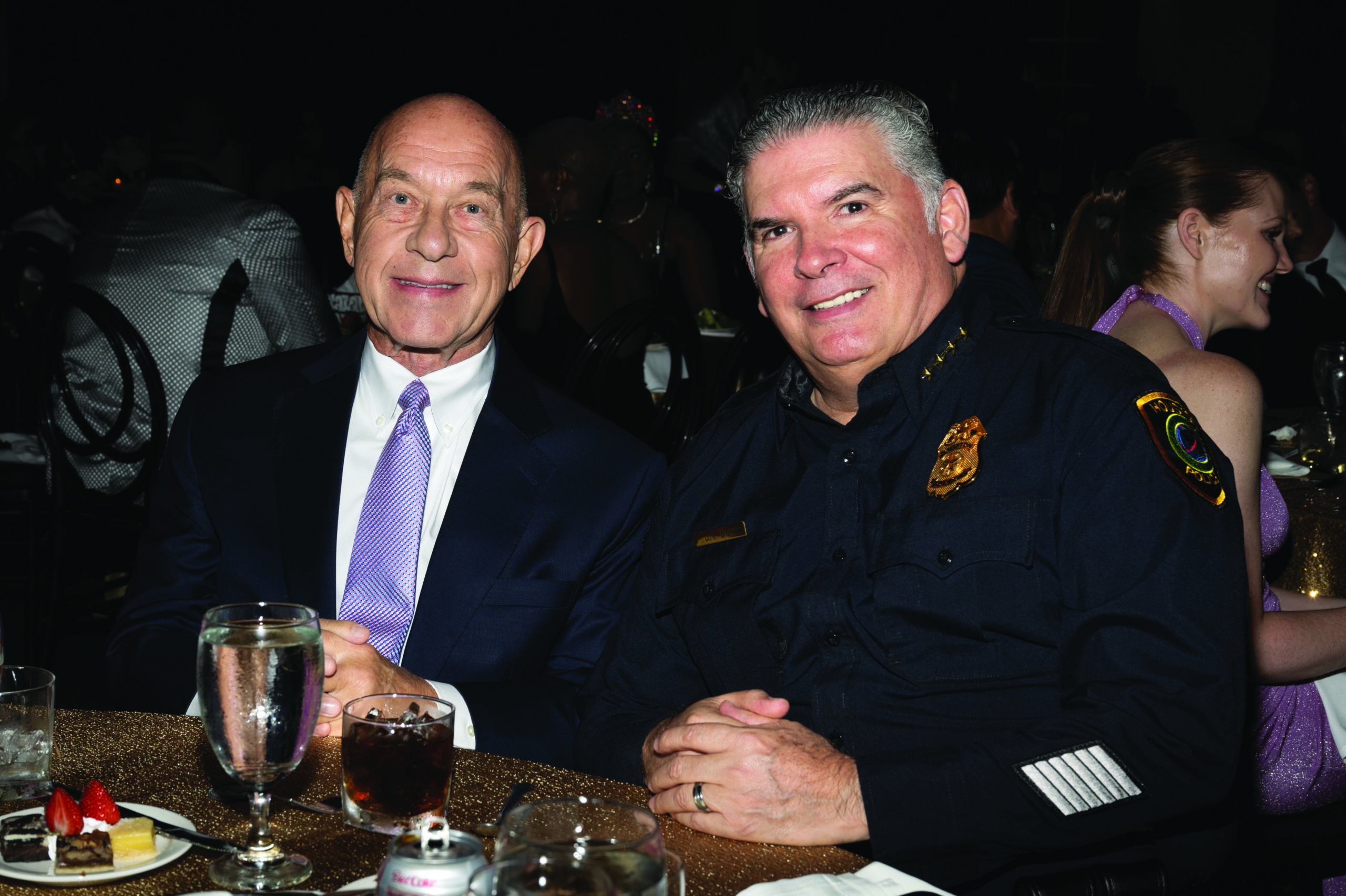
In good times, the relationships among the city, county, and state may work as described in a civics class, but these are not good times. Cowed as the council remains under Houston’s strong mayor system, it’s still prone to bouts of insubordination. Likewise, GOP state leaders have demonstrated that they’re interested only in using Whitmire to advance their own ends, and while he may see HPD as his best (and arguably last) ally, the police, too, are capable of going rogue. Immediately after the initial anti-ICE cooperation vote, HPOU president Douglas Griffith appeared to pull the union’s endorsement of Whitmire, telling Houston Public Media that the mayor’s support for the ordinance “blew me away.” And days after Araujo was killed, the Chronicle reported that HPD had continued collaborating with ICE, even as the city briefly limited its ability to do so, at least nominally defying the mayor’s authority.
Griffith ended up swiftly walking back his statement, and—nearly 18 months before Houston’s next mayoral election—HPOU’s PAC unanimously endorsed Whitmire for reelection. Griffith’s comedy of manners betrayed a simple truth: Few Texas Democrats today are as enmeshed with the police lobby as Whitmire. He needed them, but they also needed him.
About three months before the conflicts over Trump’s ICE acutely tested his mandate to govern, Whitmire ventured over to the friendly terrain of another local podcast aficionado, Tony Buzbee, the flamboyant trial attorney and ex-mayoral candidate (bested by Turner). “You know, it’s amazing how people in media say, ‘What is your vision?’” Whitmire said. After listing several accomplishments, such as “transforming downtown,” renovating the convention center, and “getting homeless in shelters”—initiatives that Houston’s mayors throughout history have cyclically leveraged to no avail—he trailed off, seeming to have forgotten his own rhetorical question. That many of these were “solved” through legislation in Austin appeared lost on him. Helping him along, Buzbee interjected: “I can sense a fire in you. It’s a good fire.”
Whitmire agreed, saying he was about to put that fire to use. “I’m gonna leave here and probably go to work,” he said.
But work toward what? Increasingly, it seems that even Whitmire’s not sure. While he might remove a bike lane or knock down an abandoned building to perform his authority now and then, real leadership has absconded elsewhere. And as the might of his office wanes, what should concern Houstonians even more is that—barring drastic change—he’ll still be more powerful than any of the city’s top executives to come. The suburbs will keep sprawling, and the soil will keep sinking, taking America’s strongest mayor down with it.
The post The Last Mayor of Houston appeared first on The Texas Observer.
Check this story
Ask the guide
The guide explains what to check and where. It cannot see this article or recent news.
Is this AI-made?
AI checkers give a likelihood, not proof.