Sean Duffy’s FAA Fiasco
A week after the Federal Aviation Administration issued a nationwide ground stop — disrupting 12,000 flights for an estimated 1.5 million passengers — there are still no answers on what exactly went wrong.
Transportation Secretary and former Real World Star Sean Duffy initially claimed that the incident was the result of “instability with air traffic communications and radar feeds,” but has since backtracked. With zero answers to one of the biggest aviation communication crises in recent memory; some speculated that the incident could be the result of the recent implementation of a new artificial intelligence air traffic control program, SMART. The FAA has denied any connection between the new program and the ground stop, and there is no reporting to indicate a connection.
However, questions remain about the AI program’s safety moving forward — and the Trump administration’s ability to manage one of the most complex and potentially deadly functions of our government.
“These are deeply unserious people in charge of a highly complex system in which the stakes could not be higher,” says Wise, referring to both President Donald Trump and Secretary Duffy. “Hundreds of thousands of people’s lives are in the hands of this system that is being maintained by people who have no idea or interest in how it works.”
This week, host Jessica Washington speaks with Jeff Wise, an aviation journalist who writes frequently for New York magazine, Wired, and others and the host of “Finding MH370,” an investigative podcast about the 2014 disappearance of an Malaysia Airlines flight. He explains why the nationwide ground stop wasn’t unprecedented at all, that the air traffic control system isn’t as antiquated as you might think, and that the skies of the United States might soon be taken over by delivery drones, if Amazon and Walmart have their way.
Washington also speaks with Intercept reporter Noah Hurowitz who was temporarily trapped in Denver during the ground stop along with other attendees of the “What’s Next!” conference, a who’s who of moderate Democrats discussing the future of the party. “It was funnier to witness than to be part of,” jokes Hurowitz.
He says the moderates at the post-midterms summit were “crafting themselves as the maverick middle,” adding, “What’s interesting is that they were also saying that we have to listen to voters. And the lack of any talk of Israel, for example, I think, is evidence of perhaps a selective idea of listening to voters.”
For more, listen to the full conversation of The Intercept Briefing on Apple Podcasts, Spotify, YouTube, or wherever you listen to podcasts.
Transcript
Jessica M. Washington: Welcome to The Intercept Briefing. I’m Jessica Washington, politics reporter for The Intercept.
Noah Hurowitz: And I’m Noah Hurowitz. I cover politics, federal law enforcement, and immigration at The Intercept.
JMW: Noah, last week I know you attended the “What’s Next” conference, which was a two-day summit in Denver, Colorado, hosted by the Majority Democrats PAC, where moderates debated the future of a party that appears to be slipping from their grasp.

Both Senate Minority Leader Chuck Schumer, and Maryland Sen. Chris Van Hollen, who is challenging Schumer for majority leader in the next Senate, spoke at the conference, sharing their visions for the party.
Noah, what is next for Democrats? Was there a winning vision that emerged?
NH: That was the question: What is next? It was interesting because the conference was scheduled sometime in advance, and so of course, what’s next could be a question for if they lost and if they won. It just so happened that this came on the heels of just this massive wave of wins for Democrats. And Democrats of all stripes, really.
Obviously, there’s an ascendant DSA left in New York and the [Senate] candidate in Maine, Troy Jackson, is relatively of the left. But there were also a number of more moderate, more centrist wins around the country. So this party, it really was a party because the “what’s next” here is, “OK, what do we do with these wins?” rather than, “How do we stop losing?” [laughs]
JMW: Nice change of pace.
NH: It did seem like a nice change of pace. There was an effort to craft both a reading of the midterm elections and a strategy for what’s next that elevated the wisdom of what I would call a centrist or a moderate vision. That’s not exactly the words that they used.
I had a conversation with one of the conference organizers, Lis Smith, who is a very prominent spokesperson for the moderate wing of the Democrats. She was saying, we don’t see Majority Dems as a centrist or an establishment group.
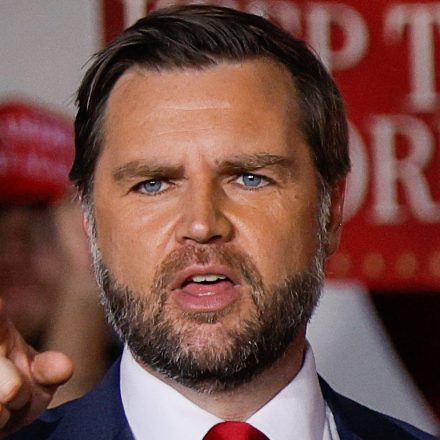
They’re crafting themselves as the maverick middle. They’re calling for flexibility. They’re calling for different strategies in different places, but there were a few themes that came up a number of times. I didn’t hear anything about Israel at all, but I did hear a number of calls for an end to the Iran war. I did not hear anything about abolishing ICE, but there were calls for a humane but secure immigration policy.
If you’re looking at it strictly from a popular standpoint, part of the reason that the Democrats likely lost, especially along the border in Texas in 2024, was that there was an experience of chaos on the border. With that gone, that was less of an issue here. I do see some of where they’re coming from — it’s not like saying a secure border is an unpopular opinion.
JMW: The maverick middle is a really, really funny way of putting it. But obviously issues like Israel, ICE anger and a desire for people to do more than what Democrats have been doing played into the midterm races, particularly in the primaries.
Was there any pushback on the fact that that wasn’t discussed more? Did you hear anything from people in the room that they wanted to hear on anything on these issues?
NH: We heard from some unsanctioned visitors to the conference during the speech by Hakeem Jeffries. A number of protesters stood up and called for a Green New Deal. They called for an arms embargo. They yelled, “We don’t trust you.” That was perhaps the most contentious instance of dissent or disagreement that I saw. For the most part, this was a fairly self-selected group of people — big group of people. There were more than 3,000 people there. There were a lot of elected officials there, including a number of candidates backed by this PAC, Majority Dems.
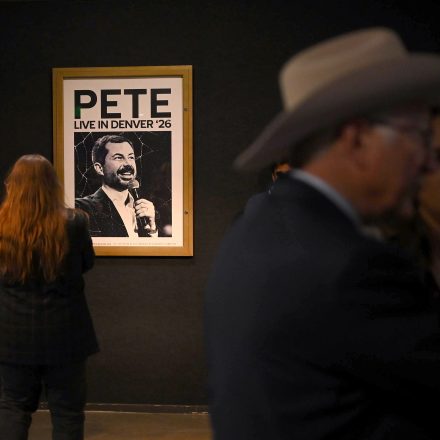
But one interesting fact is that this conference was co-signed by or done in close coordination with this group called the Searchlight Institute, which is a think tank formed by a former John Fetterman staffer, Adam Jentleson, which has really made its thing about pushing back on the so-called groups, pushing back on the left wing of the party who they blamed for perhaps going too far with some of the messaging in 2024. Woke 1.0, if you will. The tone was really set by just tuning out what they view as the groups’.
But what’s interesting is that they were also saying that we have to listen to voters. And the lack of any talk of Israel, for example, I think, is evidence of perhaps a selective idea of listening to voters.
JMW: The groups telling you not to listen to the groups because they’re the only group you should listen to is always funny. And I have to say, I’ve really enjoyed your little dispatches in our group chat from the conference. There’s a lot that’s in your story that people should read and also your social media.
But something else really funny happened. Funny is maybe not the right word, but you were —
NH: It was funnier to witness than to be part of. [Laughter.]
JMW: That makes sense. It was funnier to watch from the group chat. But you were also among the politicos stranded in Denver after the FAA — the Federal Aviation Administration — issued a nationwide ground stop. What was that like? Did you get to share a beer with anyone interesting?
NH: So on Friday afternoon, news broke of the FAA ground stop, and this obviously had very immediate logistical complications for most of the conference because it was ending Friday night, and everyone was flying home Saturday morning. And indeed, a lot of people got stuck.
I had a flight home the next morning at 7 a.m., which was canceled that night, and I booked some complicated itinerary for later in the day, which ended up also getting canceled.
When I was at the airport on Saturday, late morning/early afternoon, the departures terminal at the Denver International Airport was a very bizarre mix of normal stranded travelers and very high-powered stranded travelers.
Over here was Lis Smith, who was one of the conference organizers; she’s holding a Shake Shack bag. Over there, we have Mayor Jacob Frey of Minneapolis. I tried to talk to Sen. Raphael Warnock, but I think he had such a bad time of it that he didn’t want to talk; he told me that his flight had been canceled, then he had been deplaned from another flight.
It was a mess. This kind of aviation fiasco is bad for the people in charge no matter what, but it was certainly on the nose that a significant portion of the D.C. press corps and senators and representatives and politicos were all also stranded.
JMW: I have to say, when I was looking at the fact that you all got stranded there from a sourcing perspective, I was a little jealous. Then I thought about it, I was like, “Oh, they’re all trapped in one space. That’s ideal.” Then I thought about actually having to deal with that, and I was like, “You know what? I’m pretty happy I’m in D.C. right now.”
NH: That’s what I’m here for, taking one for the team.
JMW: You do a great job with that. [Laughter.] Obviously there is a lot more that we could get into, and I will be asking you about it offline.
Airport hijinks aside, the nationwide ground stop was obviously a massive crisis for Transportation Secretary and former “Real World” star Sean Duffy. The entire fiasco opened up a ton of questions about Duffy’s tenure as secretary, and how the administration’s embrace of AI could impact future air travel.
Joining me now to talk about all of that and more is Jeff Wise, an aviation journalist who writes frequently for New York magazine, Wired, and others. He’s the host of the podcast “Finding MH370,” an investigative podcast about the 2014 disappearance of a Malaysia Airlines 777.
Jeff, welcome to The Intercept Briefing.
JW: Thanks for having me.
JMW: Jeff, as you know, we’re entering one of the busiest travel seasons of the year, about a week after the FAA issued a nationwide ground stop that disrupted thousands of flights. To be exact, more than 12,000 flights were canceled and thousands more were delayed. Initially, the FAA said the issue stemmed from “instability with air traffic communications and radar feeds,” which was then traced back to a facility in El Dorado, Arkansas.
On Tuesday, though, Transportation Secretary Sean Duffy said the root cause has yet to be determined. To get us started, what do we know at this point about what caused the ground stop last Friday? What do you make of the explanations given so far? And just how unprecedented was that stop?
JW: It wasn’t unprecedented at all, actually.
One of the crazy things about this is that in 2009 there was a ground stop. It was more limited, it was shorter in duration, but it was caused by the same company doing the same thing — replacing copper wiring with fiber optic — and they had a problem with a router going haywire. This was in 2009. This was 17 years ago.
“One of the crazy things about this is that in 2009 there was a ground stop.”
I keep seeing these quotes like, “they’re replacing antiquated copper wire with new fiber optic.” They’ve been replacing copper wire with fiber optic forever. So the fact that they still haven’t gotten it right after all these years, and the fact that, as you alluded to, there were all these explanations being given over the weekend, and then on Tuesday, Duffy comes out and says we don’t actually know what is causing this. What do we know? I don’t even know what we know!
JMW: Essentially, we don’t know what’s happening, but there has been some new reporting. According to CNN, on Monday, the FBI took possession of the router and other equipment the FAA says was behind the meltdown. Now, of course, now they’re saying they don’t know what was behind the meltdown — but is it normal for the FBI to take possession of equipment like this?
JW: The Department of Transportation called in the FBI, apparently out of concern that there might be a malicious actor involved, there might be some kind of hacking attack.
Sean Duffy: I’m concerned about what do the American people think? Which is why Kash Patel has sent his team to us from the FBI.
JW: Kash Patel? Right-wing podcaster Kash Patel is seizing equipment under the authority of an investigative agency? Look, nothing is normal. Nothing is normal.

I think the context that’s important to understand is that our government is being run by people who don’t know how anything works, are deeply incurious about how everything works, and we have seen a drumbeat of malfunctions, rule-breaking, and just general screw-ups, frankly, agencies working at cross-purposes to one another.
It’s truly a clown show, and I think, we can talk in all seriousness about this malfunction, that malfunction, but I think we do the the audience a disservice if we don’t point out that these are deeply unserious people in charge of a highly complex system in which the stakes could not be higher.
Thousands of people’s lives, tens of thousands, hundreds of thousands of people’s lives are in the hands of this system that is being maintained by people who have no idea or interest in how it works.
Obviously, a lot of the noises that were made over the weekend about this was a malfunction caused by an installation crew somehow misconfiguring a router. Apparently, we’re back to square one. We have no idea what’s going on.
The best case scenario, I guess, is that this is all being done out of an abundance of caution, that they’re pretty sure that it was just an unfortunate error on the part of the installation crew, and that they just want to rule out the possibility that it’s a hack.
But these are not people who have a very good track record based on the last two years of this administration. There has been one screw-up after another. And yeah, I think confidence is lacking. The one thing that you do not want to have lacking in an air transport system is confidence.
It’s really tragic because for decades, thousands of hard-working people have tried really hard to do their best to apply their professional expertise to make sure that this system is as safe as it can be. A lot of money has been spent, a lot of time has been spent to instill confidence in the American public.
But they always say it’s hard to build trust, and it’s really easy to lose trust. And unfortunately, we’re in the second part of that equation right now.
“ The one thing that you do not want to have lacking in an air transport system is confidence.”
JMW: To your point about confidence, it’s not even just confidence in air travel, which is obviously a hugely scary thing that we partake in on a somewhat regular basis.
But there’s bigger issues happening as well. The FAA ground stop followed a Microsoft outage, and then this week several large banks also reported widespread service outages. Then the NSA, the National Security Agency’s internal communication was also reportedly down. All of these have been reported to be unrelated and isolated incidents, though on Tuesday, The Washington Sun reported that bank CEOs and the NSA have told Congress that AI-driven patches were behind their outages.
These combined incidents have obviously sparked concern from the public and online that they’re related. What do you make of the string of technological malfunctions and the public’s reaction to them?
JW: I see two main threads. One is that the public is deeply distrustful of AI. Everybody, I think, at this point has used AI. They know that AI can generate incredible images, music. They can give really sophisticated answers to highly technical questions, but they are not reliable. They make stuff up. They hallucinate. They lie, whatever you want to call it. So that’s part one, public distrust of AI.

Secondly, we are counting on our government ultimately to protect us. That’s one of their jobs, is to protect us. We have an elected leader who was primarily chosen for his entertainment value, and who has selected his Cabinet based on how telegenic they are and how good they are on TV, whether they come from central casting or not. So we have deeply unserious people who frequently lie to us.
There’s something really interesting about being in an era of AI and of Trump, because we both have these entities with enormous power that lie to us shamelessly. Then there’s another part of it, which is Trump coming out and saying that he takes no responsibility.
Reporter: What responsibility do you take for the ground stop on Friday, given that you’re the president?
Donald Trump: I don’t take any responsibility. They did a great job.
JW: So we are counting on this person to protect us, and he takes no responsibility.
“We have an elected leader who was primarily chosen for his entertainment value.”
JMW: Transportation Secretary and former “Real World” star Sean Duffy has been making rounds on TV blaming the ground stop on an archaic system that he says is in need of major upgrades, one that he inherited and claims that past administrations and Congress have failed to sufficiently fund.
Sean Duffy [On “Face the Nation”]: One of the problems I have is I need more money.
Sean Duffy [On “Meet the Press”]: The president was able to get $12.5 billion in One Big Beautiful Bill.
Sean Duffy [On Fox]: I need new software, Sean.
“Meet the Press”: Is $50 billion the total ask?
Sean Duffy: Let’s not let it happen again. Let’s make sure we keep the American people safe. Yeah, $50 billion.
JMW: President Donald Trump blamed Pete Buttigieg, the former Transportation Secretary under Joe Biden, who then threw the blame right back.
Buttigieg responded on X saying, “We reversed a decade of decline in air traffic controller staffing, drove down runway safety incidents.” He then went on to question the Trump administration’s execution of the work he started to transition copper wire to a more modern network, and asked why under Duffy they “triggered the worst FAA communications breakdown this century.”
Jeff, can you help us make sense of all of this finger-pointing? Who is really to blame, and how did we get here?
JW: I think to answer that question, we’d need to find out who was president over the last two years, and what party was in charge of Congress, and what party is in charge of the Supreme Court.
If we could find out the answer to that question, we might be a good way to answering who’s responsible. Because I think whoever holds political power in this country has to bear responsibility for the things that are done. So that would be the investigative path that I would pursue.
But, all this finger-pointing, nobody wants to take blame — that does not instill confidence. If something goes wrong, you don’t want just to hear, “Oh, it’s somebody else’s fault, it’s not my fault.” Or again, as the president said, “I bear no responsibility,” or “I accept no responsibility.” So it’s frustrating, and in the context of, we just don’t know what’s happening, it’s not the kind of noise you want to hear.
JMW: When we look back at Congress, at the White House, do past administrations, does Congress bear any responsibility? Is the FAA underfunded? Is there any truth to what Duffy is saying, essentially?
JW: My understanding is that money was allocated that Russ Vought just X-ed out and did not spend. We know that they fired a bunch of people when they came in at the FAA. They did not cut air traffic controllers. That is true.

There’s been a really bipartisan, ongoing long-term struggle to staff air traffic control towers and facilities. That is the structural nature of the job. It’s a very demanding job, requires very strict screening, so it’s just hard to fill those positions. I wouldn’t say it’s gotten dramatically better or worse in recent years, but that’s not really the issue here.
The issue is the other parts of what the FAA does, like this communication facility network that failed on Friday. I don’t think people want to find out who’s to blame. They want a sense that someone is in charge and knows what’s going on and is taking steps, and that’s not what we’re perceiving right now.
JMW: As a journalist, I’m always interested in who’s to blame, but as a consumer of air travel, I’d want to know that the airplanes are safe. To your point, that’s what most people who aren’t in our profession and whose job it isn’t to nitpick and assign these things, that’s what people want.
I am curious how other countries run their air traffic control system. How does the U.S. system of air traffic control compare to other countries? Why has it taken decades to upgrade our system, a system that, to my understanding, handles the most flights in the world?
JW: I recently did a deep dive into the history of American air traffic control, and I was interested to find that at every single moment in its history, there have been people complaining that it’s out of date and inadequate and needs more funding and needs to be better.
There’s never been a time when people have been happy with the condition of air traffic control in this country. I also think it’s interesting to look at, if you’ll recall, there was a major disruption at Heathrow back in, I believe it was early September. My wife was actually coming back from London at that exact moment.
She got lucky because her flight was not affected, but many flights were canceled because apparently a military flight had tried to enter some information into the system, and they had entered some bad data. I never heard the whole story about how it went down. But this kind of problem is not unique to the United States, and other countries have other kinds of problems.
“You’re trying to make sure that all of these planes are taking off at the same place at not exactly the same time.”
Air traffic control is a difficult problem. You’re trying to make sure that all of these planes are taking off at the same place at not exactly the same time, and landing and taking off. The stakes couldn’t be higher, of course. It’s a tricky challenge, and there’s always going to be a need for more money and more expertise, and people are going to always have to make do with what they’ve got.
[Break]
JMW: I want to pivot to the future of aviation and the road that we’re currently heading down in the U.S. Immediately after the flights were grounded last week, there was obviously a lot of speculation that it could be linked to the implementation of a new AI-infused air traffic control system that was expanded nationwide a few days earlier called SMART.
I just want to play a clip of a produced video that Duffy shared on X about it really quick for you.
Sean Duffy: We are going to show you what we call our SMART system, which is Strategic Management of Airspace, Routes, and Trajectories. We are actually able to use predictive data to see where flights are going, where weather is not just right now, but where weather is going to be in the future.
JMW: Government officials said the new AI system was not responsible for causing the ground stop last week. But obviously timing of the rollout, general concerns about the use of AI, as you’ve mentioned, and public trust in the Trump administration has raised questions. What do we know about how this new SMART AI system is supposed to work with air traffic control? And are other countries implementing anything similar?
JW: I’m not aware of any other country doing this. This is brand-new stuff, and as you say, it was just fully implemented. It was only partially implemented a couple months before, and so there was a very limited test of it in the Washington, D.C., airspace.
Of all places, Washington, D.C., has been on the receiving end of a lot of crazy activity on the part of the U.S. government. I don’t know why they choose this as their test bed, because it’s a very important, busy airspace. Anyway, they tested it out there for a couple months, then they decided, “OK, good enough. We’re going to roll it out to the whole system.”
The idea is that this is going to be essentially helping air traffic controllers plan the routes. It can take in hundreds of streams of data and integrate it and find patterns and find out the best route. One of the examples that they gave in one of the videos that I saw was if an initial route was going to have to go around weather and delay by 30 or 35 minutes, then the system would say, “Oh, actually, you can do this other thing. You can go over the weather instead, and you save all that time.” So one of the things that they took pains to underline when they were rolling this out is, this is not going to directly interact with flight crew. It’s not going to directly be communicating. There’s going to be a human in the loop who’s going to be able to review everything and sign off on it.

Whether that is an adequate safeguard, I think each of us can form our own conclusion, but there is some worry that these systems have a tendency to hallucinate. They can make up solutions that aren’t so good. What if this system hallucinates a danger where there isn’t one or just doesn’t see a major danger that needs to be avoided? Merely having a human in the loop is only partial protection because how is the human supposed to know that this information was hallucinated?
JMW: I have to say, I was not incredibly pleased as someone who lives in D.C. when I found out that they were doing the test here. It was not the best news I’ve ever gotten.
I did want to point to some of your reporting on this. I know that you spoke to an FAA employee about SMART who told you, “They’re pushing through all this new technology without any understanding of the complexity of the National Airspace System.” Can you talk to us a little bit about that complexity? What is the actual job of an air traffic controller? And, what are the implications of this new AI program at a time when there’s already a shortage of workers?
JW: Their hope is that by having this system that will be able to give them advice and kind of act in lieu of a human, that they will be able to reduce their staffing levels still further.
You asked: What does an air traffic controller do? They are tasked with looking at what’s happening, where the planes are coming in. Looking at the routes that they’ve been assigned, seeing how other traffic is coming in and taking off, looking at weather, looking at unexpected events.
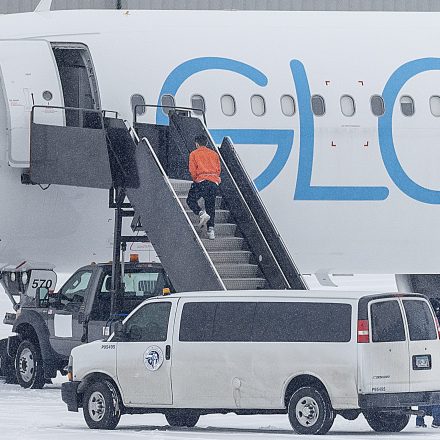
Like in Washington, D.C., one of the unexpected events that can happen is the president’s helicopter taking off, and they’re supposed to give a three-minute warning. There was just an incident this past year where they just took off. They didn’t give the warning, or they said they tried to give the warning, but it wasn’t picked up. They did not establish that affirmative contact that is required, and so they just took off into airspace, and all of a sudden now all these other planes have to stop what they’re doing or go around it, or what have you. So it’s a very dynamic environment, and of course, the stakes are very high. Each of these planes has hundreds of people on it potentially, and it’s highly stressful, and it’s typically understaffed. So it’s quite a lot.
JMW: For Wired, you wrote this piece titled “No Pilots, Few Air Traffic Controllers, What Could Go Wrong?” And you got into these various commercial endeavors to create more, “robot-friendly skies” from making drone deliveries to electric air taxis ubiquitous.
What exactly is the vision here of some of these companies, and how does the FAA factor in? How exactly is all of that supposed to work safely and not kill or injure people?
JW: That’s a great question. It’s a big question. We hear a lot of talk lately about the “antiquated” air traffic control system. And that kind of rubs me the wrong way because I got my ticket, my pilot’s license, in 2002, and at that time, they were just ramping up a major overhaul of the entire airspace and the whole air traffic control system.
It was called NextGen, and a lot of the features of planes and aviation today are a result of that. It was a major buildout. It started around 2009, 2010. Billions of dollars were spent. Lots of capabilities were added. So antiquated, I guess I’m really antiquated because I’m 60 years old, and we’re talking about equipment that’s 15, 16 years old, and they’re like, “It’s antiquated.” And if that’s antiquated, I am definitely super antique.
This first renovation of the airspace, as it were back then, back in those days, already we were starting to see a really dramatic increase in the capabilities of drones. You were starting to see DJI, these Chinese drones starting to really multiply, and you can buy them off the shelf, and everyone’s flying drones.
The FAA was worried. In the future where we’re going to have lots of drones and other things of this nature flying around, how are we going to prevent them from colliding into other things? One of the FAA’s major, major jobs is to prevent planes from crashing into each other, and that’s basically what air traffic control is tasked with doing.
“In the future where we’re going to have lots of drones and other things of this nature flying around, how are we going to prevent them from colliding into other things?”
They realized that they had to introduce new capabilities, and over the intervening years, they’ve spent a lot of time generating new rules that will allow drone delivery, the use of drones for other purposes as well, and also what’s called eVTOLs, or flying taxis. These are going to be sort of like mini helicopters.
Imagine a helicopter that’s really a drone or vice versa. It’s got like many whirring blades, and it can carry you from point A to point B, usually a few people a short distance. Eventually, for that to be economically feasible, it’s going to have to be pilotless. These drones are pretty much pilotless.
I don’t think a lot of people really understand the scale of the ambition that companies like Amazon and Walmart have to transform the U.S. retail economy. They want to not have people driving up to your house in a van. They want to have the stuff dropped off in your backyard from a drone. Like tens of thousands of stations dotted around the country where you’re going to have sort of robot systems loading up these drones which will automatically take off, drop off the stuff, go back and get more.
So the skies of the United States, if these plans of these major corporations come to fruition with the help of the FAA, there’s going to be drones constantly buzzing overhead all the time.
“I don’t think a lot of people really understand the scale of the ambition that companies like Amazon and Walmart have to transform the U.S. retail economy.”
JMW: Sounds lovely.
JW: Sounds nice, right?
JMW: Sounds perfect. Sounds ideal. I have to say, as a nervous flyer, this has not been the best episode for me.
I do want to get into Sean Duffy’s role in this whole thing. He has been described as much more business-friendly than his predecessor, Pete Buttigieg, a Democrat who the Wall Street Journal says “took a more consumer-focused approach that carriers viewed as adversarial.” What has Sean Duffy’s approach been when it comes to this vision of a more robot-friendly skies? Can you talk about how he’s helped accelerate the use of AI in aviation?
JW: This shift toward making American skies more friendly for robots is something that has been going on for many years. Both Obama and Trump 1.0 and Biden and Trump 2.0, even before that, I’m sure its roots go back to Bush.
This is something that a lot of very important, powerful people and corporations want to do. It’s the kind of future, like a physical world manifestation of the information technology revolution that has transformed so many parts of our lives.
It’s going to make it super responsive to your needs. You need a tube of toothpaste doo-doo-doo, buy it on Amazon, boop, boop, boop. It’s like, two seconds later, it’s dropped in your backyard.
So the consumer’s desires are fulfilled instantly. That’s the ultimate desire of capitalism, right?
JMW: I wanted to talk a little bit more about Duffy, and you already brought this up earlier, but he asked for more money from Congress. He’s now going on television saying he needs $50 billion to fully upgrade the air traffic control system, and he says he needs it by the end of the year. The FAA has already been allotted $12 billion, which hasn’t been fully spent. Do you think the FAA actually needs more money overall, and what do you think of Sean Duffy’s tenure as transportation secretary?
JW: I don’t think it’s about the dollar figure. He had that very morning asked for $30 billion, and then everything came a cropper, and he went back on air and asked for $50 billion. Listen: A highly, highly complex system requires the interplay of many different agencies, corporations, unions, customers. The interplay is mind-bogglingly complex.
“Complex systems are boring.”
What it requires above all is patience, steadiness of funding, and the willingness to be boring. Complex systems are boring. It’s really dull, and it requires pages and pages of regulation. And you can’t just come in and scoop up a bucket of money and just dump it on the problem and hope that it’s going to do better.
It’s probably going to make it worse, honestly. How can you just, out of thin air, come up with $20 billion worth of spending? It just doesn’t really make any sense.
I find that there’s a really useful metaphor in air crash investigation, and one of the reasons that flying is so safe is because of the approach that air crash investigators take. Which is, something bad happens, you go out and you meticulously document every single thing you can find out about it, and you don’t draw a conclusion until it’s done.
Only then do you lay out what you think to be the root causes. You’re not laying blame. You’re saying, “These are the root causes, and then these are the steps we could take to reduce the risk of this happening again.” You do that over and over again, and you wind up with a set of regulations and best practices, training protocols, and so forth, that make the system bit by bit a little bit safer.
Again, takes a lot of time, takes a lot of patience. It’s frankly pretty boring to go through that kind of meticulous detail.
If you then just tear up regulations, this idea that it’s pro-business to just tear up the regulations — if your business is founded on the trust that you’ve carefully inculcated in the public, you’ve carefully earned by years and years of not having accidents, by following this rigorous procedure, and then you’re going to start tearing it up and asking for money? What isn’t needed is, it’s not money by itself. You need rigor. To say, I only need $30 billion. No, wait, I need $50 billion. There was $20 billion. There’s no program that that’s attached to. It’s just noise, really.
What we’ve seen is time and time again, the administration doing things like there was recently an example where in order to have some giggles, they sent a fighter jet flying really low over people on a beach; it made great viral video footage. This is incredibly dangerous. There’s a reason why you don’t fly planes over civilians like that. It is an accident waiting to happen. The administration’s response to complaints about this, as with other things, is just like to laugh it off, to say, “Oh, you’re a stick in the mud. Can’t you have fun?”
That’s not how it’s supposed to work. Then we had the example with Kid Rock. Some helicopters flew past Kid Rock, and it violated regulations, and the powers that be said, “Ha, ha, ha, suck it,” basically.
So, much better than having an extra $20 billion pouring out of some hose somewhere would be to have people in charge of the aviation system who understand aviation culture, who understand how it came to be so safe in the first place. And it didn’t happen by flouting regulations.
JMW: If I’m understanding you correctly, what we need in this position is someone who is interested in doing the boring nitty-gritty, who is excited potentially by the boring nitty-gritty.
JW: Yeah.
JMW: And how would you overall rank Sean Duffy’s tenure as transportation secretary?
JW: Tragic. I know that’s not a letter grade. But this whole thing, it’s been really weird watching the country sleepwalk into this state of just absolute absurdity.
And how is Duffy as an administrator? He’s a reality star. What do you want? This whole thing is a joke.
If this happened in any other country, we’d be laughing at it. And now, listen, I don’t think I’m speaking out of turn in talking like this because I think the country, the penny has dropped. And I keep thinking about that Abraham Lincoln quote about, you can fool some of the people some of the time. I think you can’t fool all the people all the time. And I think enough people have realized what an insane situation we’re in right now.
Sean Duffy is a deeply unserious person in charge of a very, very serious project which he is in the process of running off the rails.
JMW: To your point, these are deeply unserious people doing what is supposed to be a deeply serious job.
Even earlier this year, Duffy returned to his reality TV roots, filming a cross-country road trip with his family called “The Great American Road Trip.” This was a seven-month road trip that followed his wife and nine children and was funded in part by companies, the agency he oversees and regulates, including Toyota, Boeing, and United Airlines.
JW: It wasn’t even a TV show, it was a YouTube channel. And I don’t want to piss on YouTube, I’ve got a YouTube podcast myself. God bless them. But this was all in service instead of being the secretary of transportation, which sounds boring, frankly — he’s off doing his YouTube channel for seven months or whatever.
And meanwhile, after all this breaks, and the air traffic system is desperately trying to unsnarl itself from five hours of being ground-stopped, we have Markwayne Mullin, who flies off on a government jet to go attend a football game and is in a booth with a corporate person who’s doing business with the government, et cetera.
To call it unserious is really not even strong enough.
JMW: Truly ridiculousness on top of ridiculousness. And by the way, you were referencing Markwayne Mullin, the secretary for the Department of Homeland Security. Jeff, we’re going to have to leave it there. Thank you so much for joining me on The Intercept Briefing.
JW: Thanks for having me.
JMW: And that does it for this episode.
We want to hear from you. Tell us what you’re following or want to see more coverage of. Email us at podcasts@theintercept.com or leave us a voice mail at 530-POD-CAST that’s 530-763-2278
This episode was produced by Laura Flynn. Chelsey B. Coombs is our social media producer. Ben Muessig is our editor-in-chief. Maia Hibbett is our Managing Editor.
Fei Liu is our product and design manager. Nara Shin is our copy editor. William Stanton mixed our show. Legal review by David Bralow.
Slip Stream provided our theme music.
This show and our reporting at The Intercept do not exist without you. Your donation, no matter the amount, makes a real difference. Keep our investigations free and fearless at theintercept.com/join.
And if you haven’t already, please subscribe to The Intercept Briefing wherever you listen to podcasts. Do leave us a rating or a review, it helps other listeners find our reporting.
Until next time, I’m Jessica Washington.
The post Sean Duffy’s FAA Fiasco appeared first on The Intercept.
Check this story
Ask the AI guide
The guide explains what to check and where. It cannot see this article or recent news.
Is this AI-made?
AI checkers give a likelihood, not proof.