Did Trump Promise “No Wars” If Elected?
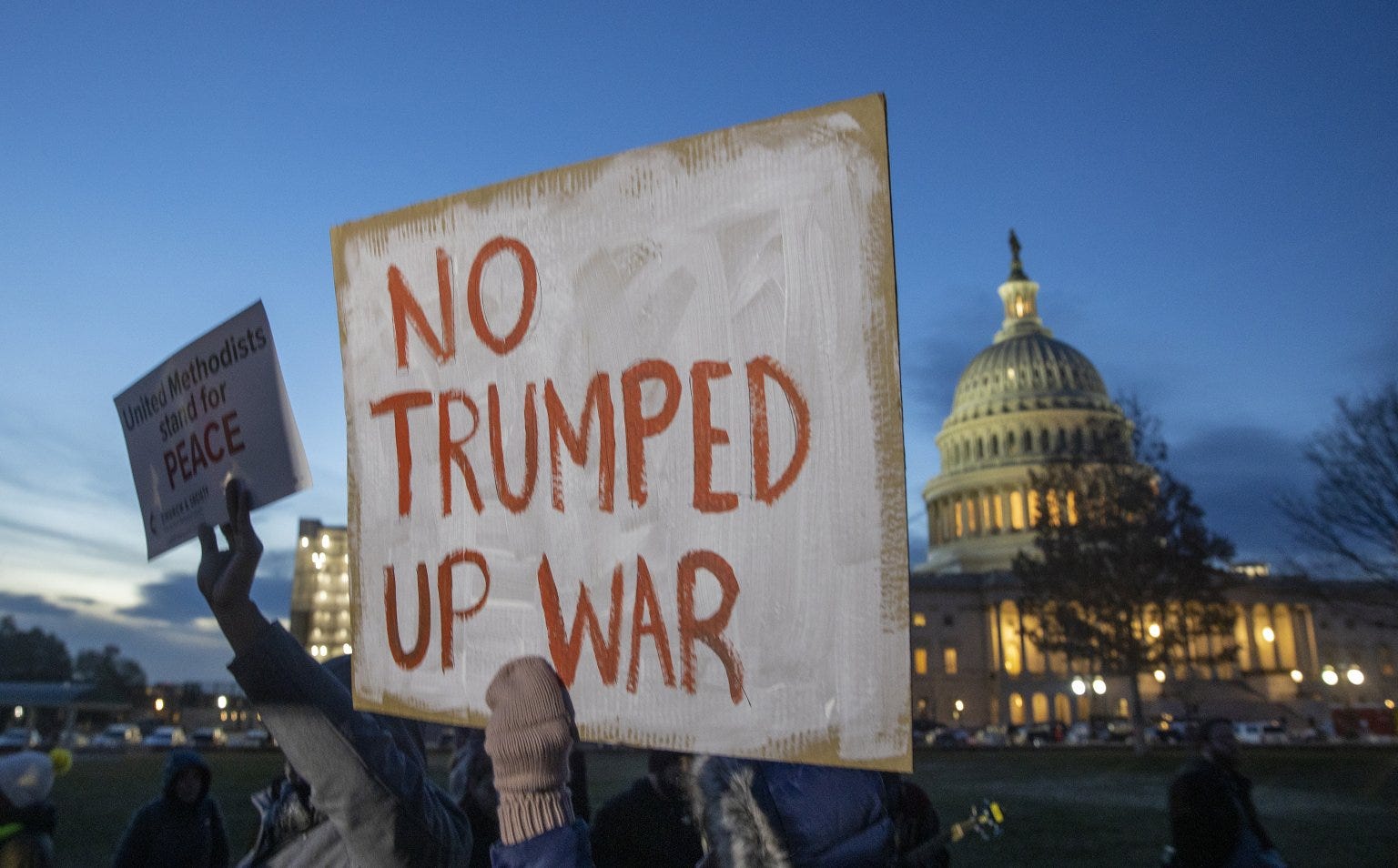
Friends,
Sometimes I provide you with information that I hope you’ll find helpful in making arguments with others. I don’t expect that what I share with you will change the minds of committed Trumpers, but the facts and the evidence may have some sway with Republicans and independents who are wavering about whom to support in the midterms.
One of the main reasons Trump was elected was his pledge to keep the United States out of wars, especially the kind of “endless” wars America has fought in Iraq, Iran, Syria, and Afghanistan.
Obviously, he broke that pledge. We’re now well into the fourth month of a war he said would be four or five weeks at most.
In addition, the war he initiated in Iran was a war of choice — Iran did not attack the United States, and most specialists in foreign policy say Iran was not close to devising a nuclear weapon at that time. (It’s likely to be closer now, or at least more committed to making one.)
Yet in a lengthy interview with Kristen Welker, the host of NBC’s “Meet the Press,” which aired Sunday, Trump was once again trying to rewrite his own history, He claimed:
“I didn’t guarantee no war. So when you say I promised, I didn’t promise anything. I don’t like these endless wars. This is not an endless war. We’ve been doing this for three months.”
In fact, Trump repeatedly and unequivocally promised during the 2024 election campaign that the U.S. would not have any wars during his second presidency.
Herewith, some examples.
In a June 2024 social media post, Trump described the election as “a choice between STRENGTH or WEAKNESS, COMPETENCE or INCOMPETENCE, peace and prosperity or war and no war.”
In one of the highest-profile speeches of his campaign — his July 2024 address to the Republican National Convention — he said, “With our victory in November, the years of war, weakness, and chaos will be over. I don’t have wars.”
He made the promise again and even more directly during an August 2024 rally in the swing state of Pennsylvania, saying: “Under Trump, we will have no more wars, no more disruptions, and we will have prosperity and peace for all.”
Trump reprised the same pledge in an August 2024 interview with Adin Ross, an online personality. After saying there were no wars during his first administration, he promised, “And we won’t have wars again.”
At another rally that month in the hotly contested state of North Carolina, Trump approvingly cited Viktor Orbán, then the prime minister of Hungary, as supposedly having said, “Make sure that Trump gets reelected president, and you’re not going to have any more wars.” Trump reiterated moments later, “No more wars. No more disruptions. We will have prosperity, and we will have peace.”
Trump told versions of the Orbán story at numerous other events. For example, in the swing state of Wisconsin in October 2024, he said, “Viktor Orbán said, ‘If Trump comes back, you won’t have any wars. You won’t have any wars.’ And he’s about as tough as they get, and he said it loud and clear and he said why. But you won’t have any wars.”
Finally, in his victory address in November 2024, Trump made a clear promise that he would not start a war — even when he no longer had to persuade voters to elect him. He said in that high-profile speech: “Four years, we had no wars, except we defeated ISIS. … They said, ‘He will start a war.’ I’m not going to start a war, I’m going to stop wars.”
In reality, of course, Trump has been one of the most bellicose presidents in modern American history.
His failing war in Iran and his campaign pledge not to start any wars should be held against Republicans in the House and Senate. They’re partly responsible. They have repeatedly refused to stop his wars. They have repeatedly enabled his aggression.