An Air Force Major Is Being Held in Solitary Confinement for Criticizing Trump on CNN
Government lawyers on Tuesday played a video in court of a CNN interview where an American citizen called for President Donald Trump’s impeachment, arguing that the video alone proves the interviewee must remain in solitary confinement until his February trial.
“Not only is [Trump] a failure as president, he is flagrantly violating the Constitution, breaking the law, engaged in rampant corruption, and is killing Americans,” the now-defendant told CNN host Erin Burnett in August. “I believe we can defeat this government if we just take a stand.”
This view of the current presidential administration is hardly controversial, as this month’s midterm elections proved, let alone criminal.
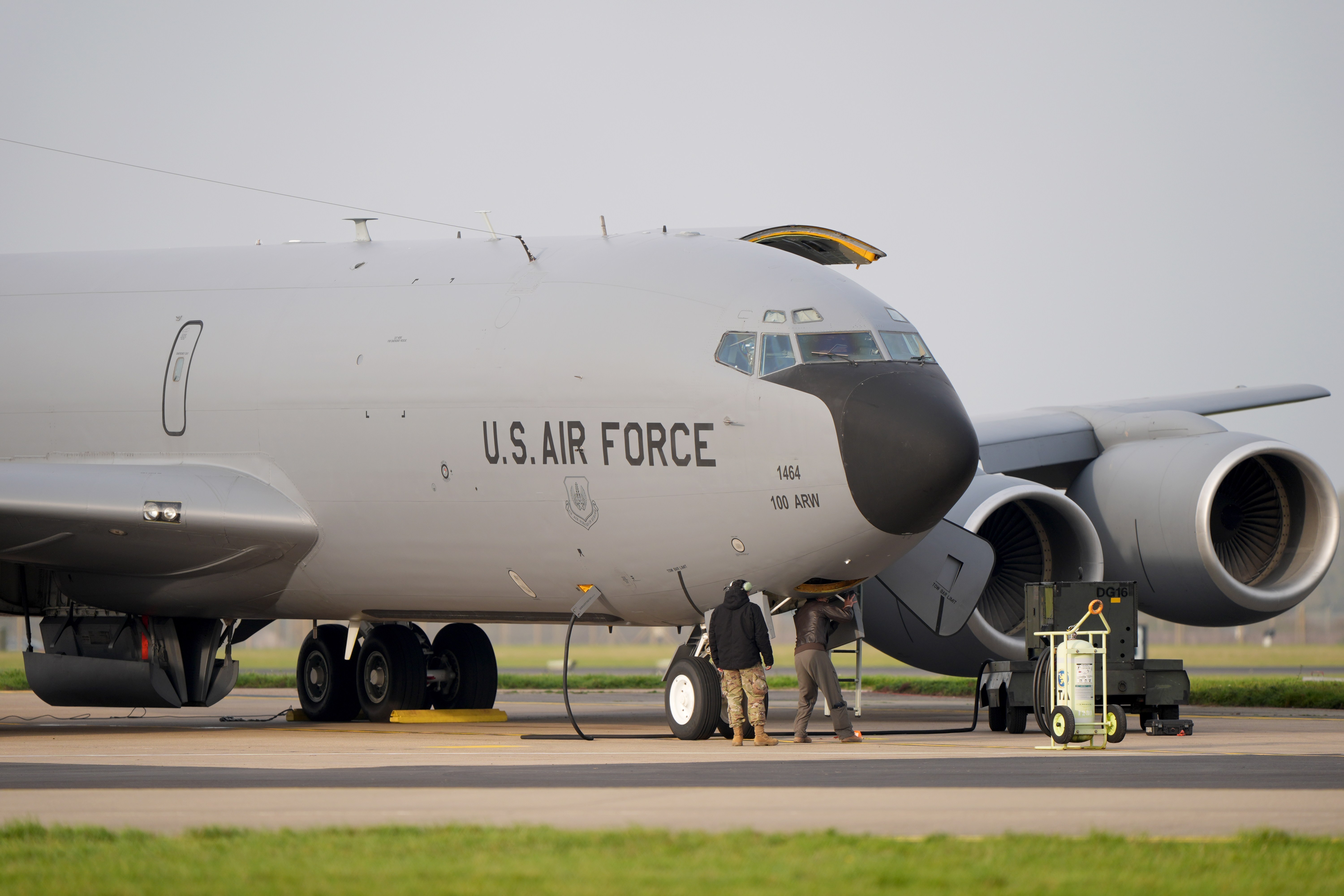
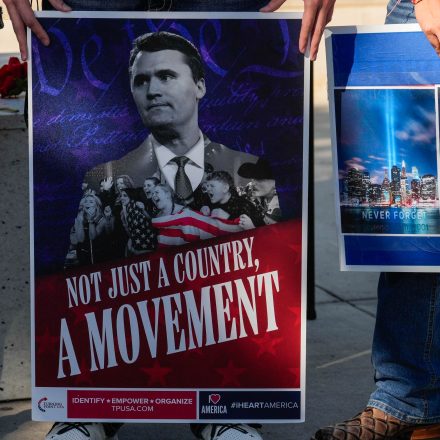
The catch is that the interviewee is an Air Force officer, Maj. Jason Watson. In July, he was arrested during a protest on the steps of the U.S. Capitol where he wore his military uniform and held a sign calling for Trump to be impeached and removed from office.
He was subsequently charged under the Uniform Code of Military Justice over the protest and the CNN and other media interviews, including for “contemptuous words” against the president, failing to obey orders or regulations, and conduct unbecoming of an officer.
The military, unfortunately, has been afforded significantly greater leeway by the judiciary to punish speech than civilian courts.
But not that much leeway. As we’ve seen before, when the law gives the Trump administration an inch, it takes a mile. Watson’s case is the latest example of the administration plucking low-hanging fruit to suppress — and harshly punish — dissent.
The administration took advantage of purported ambiguities in immigration law to try to deport noncitizens for protesting and writing op-eds and posting on social media. It believes its broad authority to fight terrorism empowers it to make up a domestic terror organization, antifa, and prosecute and convict protesters — or people who merely read radical literature — as conspirators. It has used the archaic Espionage Act to harass journalists and their sources for exposing its incompetence.
Now, it’s weaponizing military law to retaliate against soldiers who talk to journalists.
The Trump administration is far from the first to try to justify punishing whistleblowers, and like its predecessors, it claims, based on flimsy or no evidence, that leaks of newsworthy classified documents threaten national security. But like the noncitizens the administration targets for their political speech, Watson leaked nothing. He simply spoke his mind, and for that he’s being held in extreme isolation for 24 hours a day, as if his freedom poses a danger to Americans.
The conditions of Watson’s confinement are further proof of the government’s vengeful motives. The charges against him cite the July 1 protest and his anti-Trump comments to a Substack blog in June in addition to the CNN interview, but he was placed in pretrial solitary confinement after the cable news appearance, where he’s been ever since. That interview was also used to justify his conditions at the recent hearing.
The Air Force says the CNN interview establishes probable cause of “continued misconduct.” But “continued misconduct” implies an initial misconduct, and according to military defense attorney Cody Harnish, who has followed the case closely, the order that Watson reportedly violated by talking to Burnett had expired weeks earlier.
But what kind of “continued misconduct” does the military fear enough that warrants keeping a decorated officer in conditions the United Nations considers torture? Is the prospect that he might give further interviews (despite his attorneys offering assurances he won’t pending trial) so terrifying that Watson must be caged for months?
Even those who agree that the military should be able to punish political expression in ways that civilian courts cannot should be alarmed by this escalation.
Watson simply spoke his mind, and for that he’s being held in extreme isolation for 24 hours a day, as if his freedom poses a danger to Americans.
Watson has been convicted of no crime. Military law says a service member awaiting trial cannot be punished, and confinement may not be any more rigorous than the circumstances require.
According to Watson’s legal team, the government’s own witnesses testified Watson is not a flight risk. The military has not argued he is dangerous to anyone. Watson offered to resign in lieu of being court-martialed, an offer his attorney said in court that the government declined within a day.
Watson’s attorney, Christopher Mutimer, says Watson is the first major in the history of the military to be charged for “contemptuous words.” Harnish counts only three modern “contemptuous words” cases against service members of any rank. He has noted the offense is aimed at personal attacks, not advocating for legal processes like impeachment.
Yet the government is so committed to keeping Watson in solitary confinement that it’s willing to spend additional taxpayer funds to do so. Watson sits in a Maryland civilian jail because Joint Base Anacostia–Bolling, where he is stationed, has no confinement facility of its own. That means the government is contracting to hold Watson in jail, at your expense, for speaking his mind about the current presidential administration.

The government has claimed Watson is allowed to leave his cell for recreation and library visits. But the defining characteristic of solitary confinement, under the U.N. Nelson Mandela Rules, is solitude rather than space constraints.
His lawyers say he spends 20 to 22 hours a day alone in a small cell, where the lights are on around the clock. But as Mutimer told CNN, “Even if he gets an hour to eat or to exercise, he’s alone.”
Conditions are only getting worse. With the weather getting colder, he reportedly has to wear thermal underwear in his cell to keep warm. Guards have suggested jumping jacks to keep his body temperature up. That will, presumably, be less effective come January.
Mutimer told NPR that even soldiers who have been arrested for sexual assault and other violent crimes are not held in solitary confinement.
Watson’s case is selective enforcement at best and lawless retaliation at worst. Americans — whether they’re military or civilian, immigrant or citizen — should not be held in torturous conditions for months at a time, without having even been convicted of a crime, merely because they criticized the president or his policies.
A ruling in Watson’s case should come down soon, but even if he succeeds in being freed from solitary confinement, the administration will have succeeded in making an example of him.
The post An Air Force Major Is Being Held in Solitary Confinement for Criticizing Trump on CNN appeared first on The Intercept.
Check this story
Ask the AI guide
The guide explains what to check and where. It cannot see this article or recent news.
Is this AI-made?
AI checkers give a likelihood, not proof.