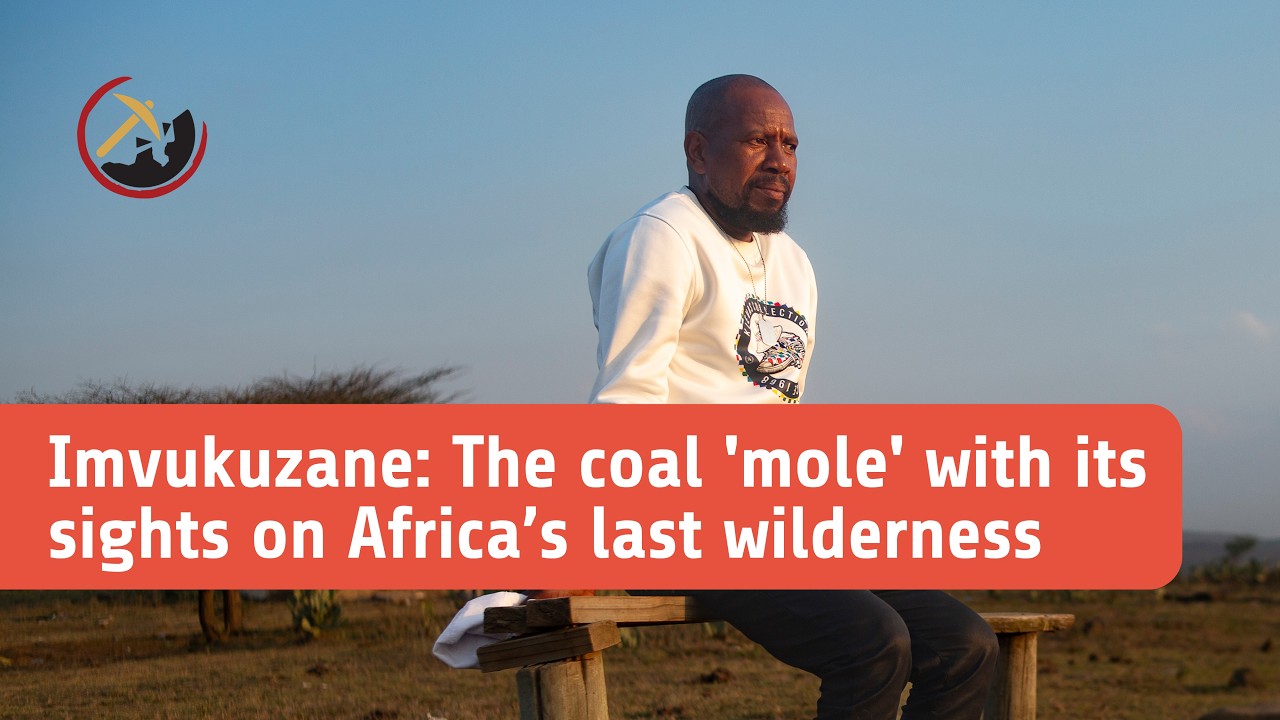
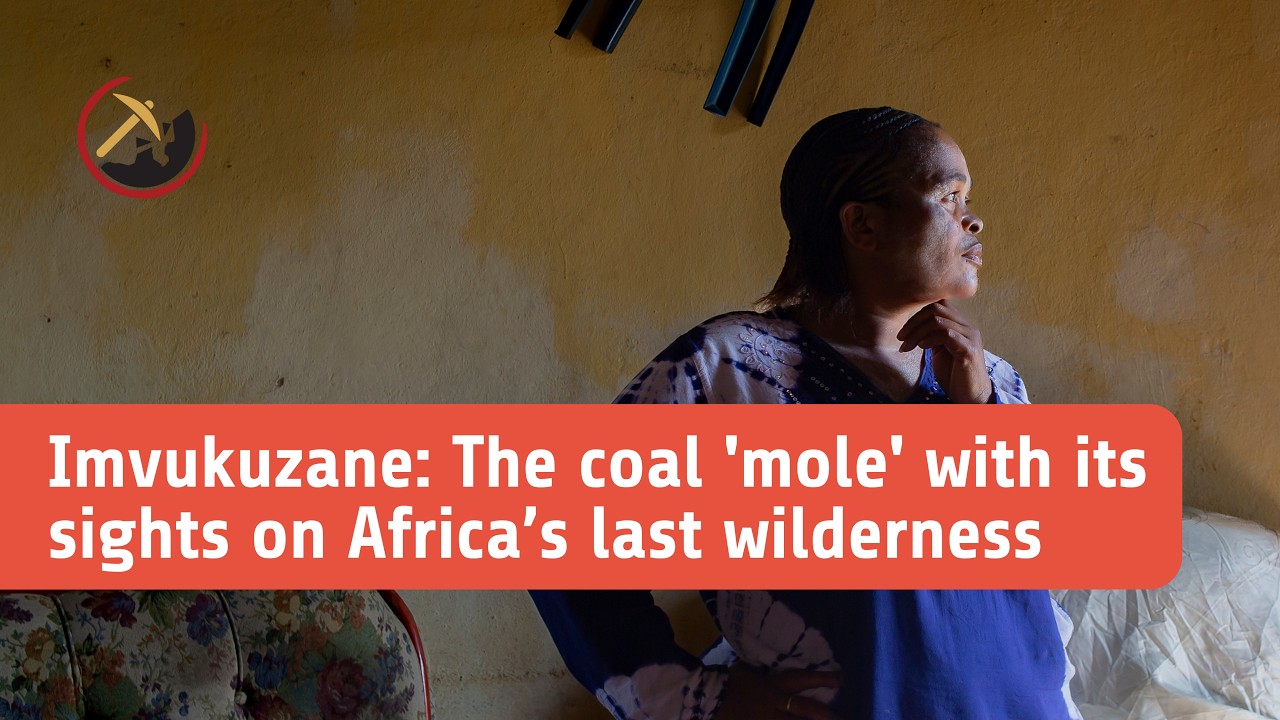
Imvukuzane: The coal ‘mole’ with its sights on Africa’s last wilderness
Residents in the villages of KwaZulu-Natal’s Fuleni region are pushing back against renewed coal-mining plans – this time by Imvukuzane Resources, a subsidiary of the Menar Group. Dianah Chiyangwa investigates
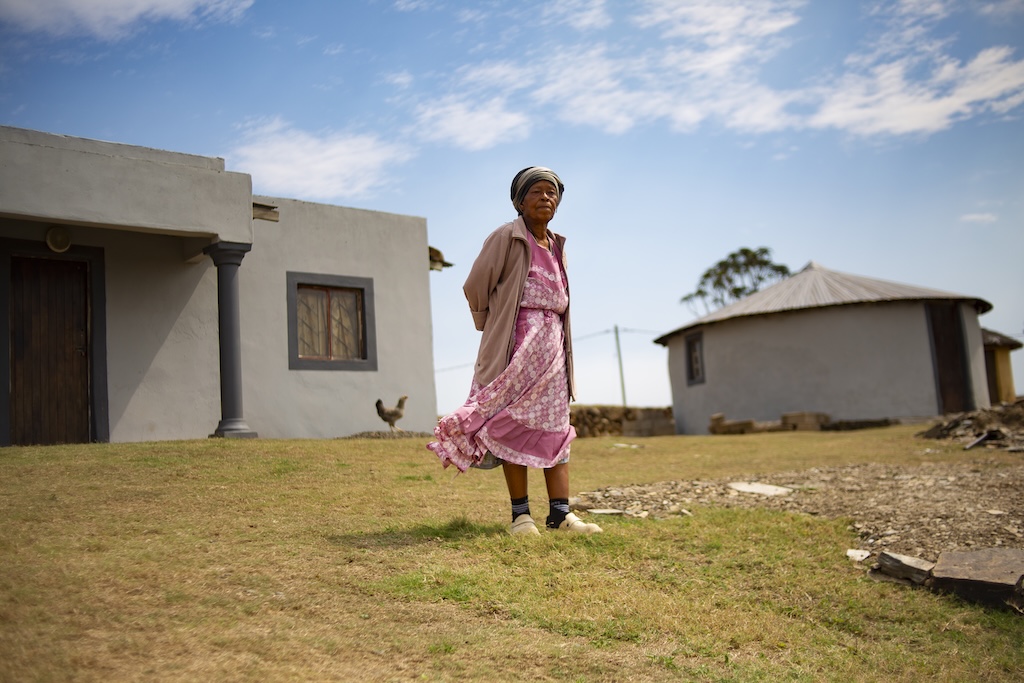
Gogo Khuluse Sibiya, who was forcibly relocated from Cwaka to Ocilwane in 1963, is now fighting to protect her home from renewed coal mining plans by Imvukuzane Resources. Photo: Mafutha Enkehle
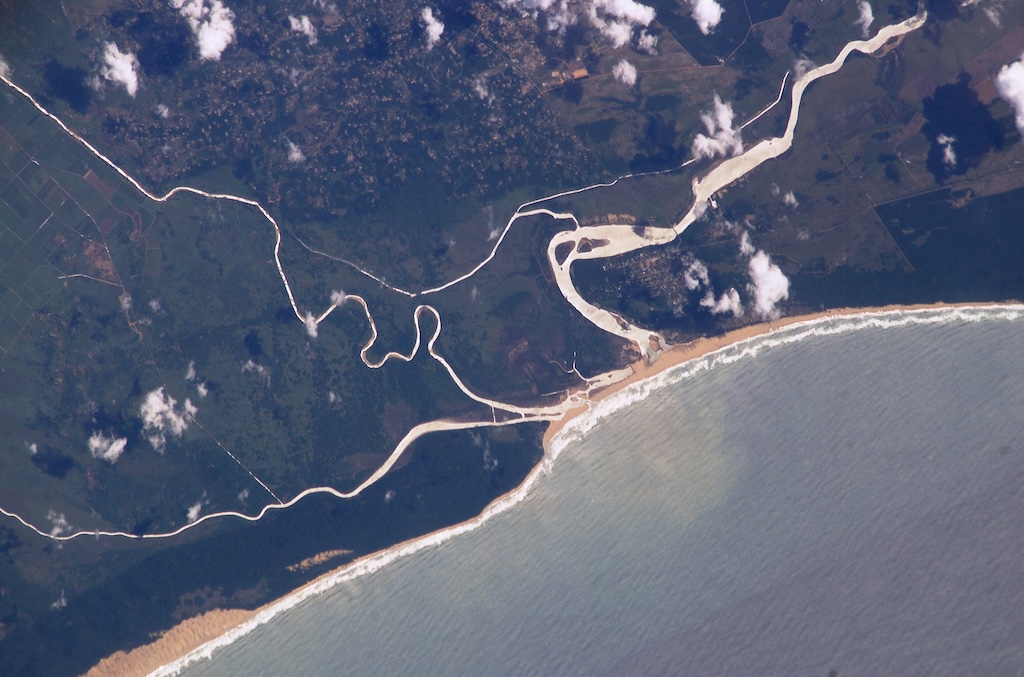
The Umfolozi River was contaminated with an estimated 1.5-million litres of toxic mine waste in 2022. Photo: NASA
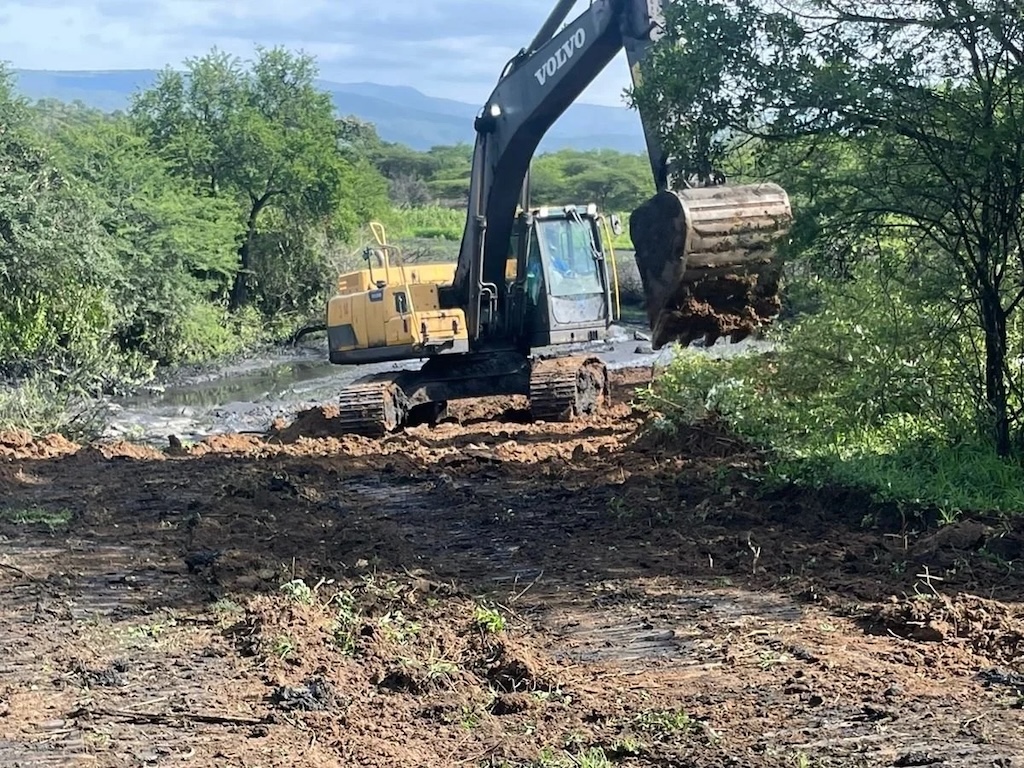
The Zululand Anthracite Colliery, which was found to be the source of the contamination, released a press release 13 days later, committing to ‘fix the dam after the slurry spill incident’. Photo: ZAC
Gogo (“grandmother”) Khuluse Sibiya was just 21 years old in 1963 when hers was among 24 families forced out of their homes in Cwaka in northern KwaZulu-Natal and moved to Ocilwane, another village in the area.
Six decades on she’s at odds with the government once more, fighting to keep Ocilwane out of the hands of a coal company. It’s a situation Sibiya finds bitterly ironic.
“[The] apartheid government gave us land,” she says, “and the democratic government is opening gaps for mining companies to mine on that same land.”
She and her neighbours have reason to worry about coal mining expanding into their community. One morning in early 2022 residents of rural communities along the Black Umfolozi River in the Fuleni region, Ocilwane among them, awoke to find their livestock dead. Farmers raised the alarm with Ezemvelo Wildlife, the provincial conservation authority.
The Umfolozi River, historically a vital source of fresh drinking water, had been contaminated with an estimated 1.5-million litres of toxic mine waste. The source was found to be the Zululand Anthracite Colliery (ZAC), owned by the Menar Group, a South African private investment and mining holding company headquartered in Johannesburg. The colliery is located upstream on the Black Umfolozi River from Ocilwane, Emakhwenini and Somkhele.
In a written response to Oxpeckers’ questions, the Menar Group said: “ZAC notified the relevant authorities and other stakeholders of the slurry spill incident in 2022 upon becoming aware of it, in accordance with applicable legal and regulatory requirements. Information relating to the incident has also been publicly available through statements issued by ZAC.”
It also said that community leaders were briefed immediately after the incident and on several subsequent occasions: “Community leaders were generally satisfied with how ZAC has handled the incident, working together with the host communities themselves as well as relevant authorities to ensure continued support for livelihoods and economic activities.”
Three years on there’s been no visible regulatory response. Oxpeckers’ attempts to obtain information about whether and how the Menar Group has been penalised have thus far been unsuccessful.
The Department of Forestry, Fisheries and Environment (DFFE) transferred our Promotion of Access to Information Act (PAIA) request to the Department of Minerals and Petroleum Resources (DMPR), saying it is best placed to respond. The DMPR partially granted the request for all mining rights and environmental authorisations granted to ZAC or Menar Group since January 2022, and prospecting rights granted to Imvukuzane Resources (Pty) Ltd for the Fuleni area, a day before publication. An official within the department’s regional office has been assigned to assist further with the records.
Meanwhile, communities affected by the 2022 spill say the river’s water remains contaminated. And the Menar Group? It is still looking to actively expand its coal footprint – including on the boundary of Africa’s oldest wilderness and into Gogo Khuluse’s village.
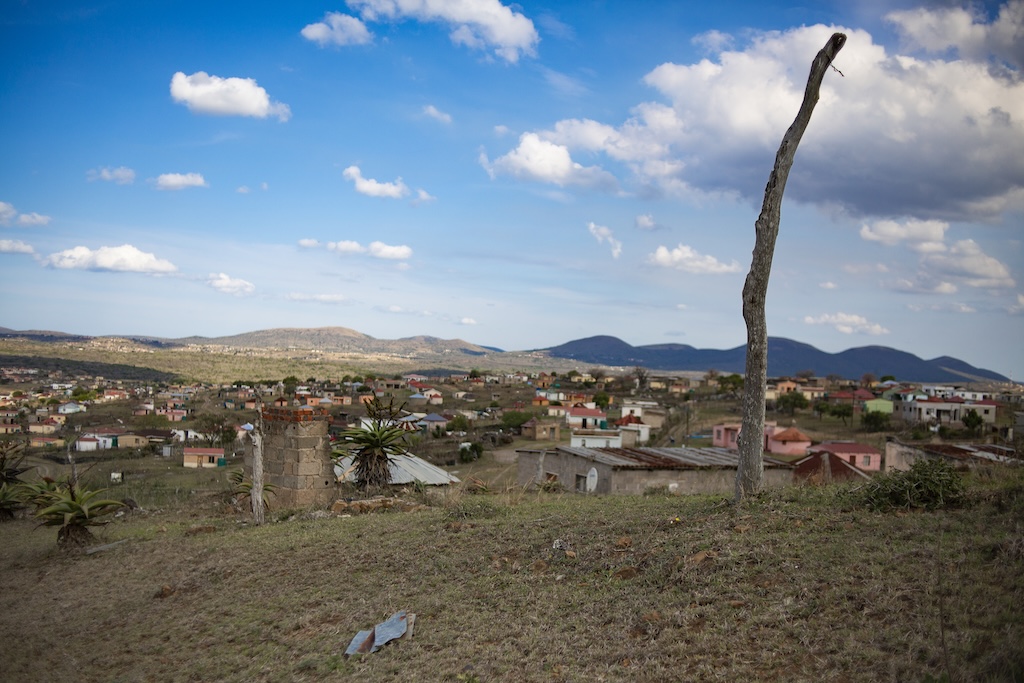
A view overlooking the rural community near the Black Umfolozi River in Mahlabathini. Photo: Mafutha Enkehle
The expansion
Mining companies have been sniffing around Ocilwane for some time; one set up shop as far back as 2013. That’s when Billy Mnqondo, acting chairperson of the Mfolozi Community Environmental Justice Organisation (MJECO), moved to the village with his family and discovered that Ibutho Coal was prospecting without the community having been consulted.
“We chased the Ibutho Coal Mine out of our villages because they did not do proper consultation with communities,” Mnqondo said. “Now we have Imvukuzane.”
He’s referring to Imvukuzane Resources, a subsidiary of the Menar Group. Imvukuzane (which means “mole” in English) holds a prospecting right for the Fuleni area. The right was granted in February 2023 and is valid until August 2028.
Fuleni is directly adjacent to the western boundary of Hluhluwe-iMfolozi Park, established in April 1895, and further to the east of iSimangaliso Wetland Park. The latter is a UNESCO World Heritage Site.
Sengiwakhile Mchunu, an MJECO member from Emakhwenini village, says the community only learned of Imvukuzane Resources through pamphlets distributed in the area.
“Mining companies no longer come to us as communities,” he complained. “They go to the local traditional council and come back distributing pamphlets. Without MJECO, communities would not have been made aware of any prospecting in their villages.”
Mchunu warned that many residents in Emakhwenini did not understand the full implications of mining. Once a traditional leader agreed to allow a company to prospect, he said, the decision was treated as final.
“When you agree to mining, it is the same as selling the whole place to them, because mining companies will take full control of the area,” Mchunu explained.
This pattern is not isolated to one village. Across Ocilwane, Emakhwenini, and Somkhele, Oxpeckers documented a consistent practice: mining companies approach traditional leaders rather than communities directly, bypassing meaningful public participation. Some leaders, though, refuse to be swayed.
Sibiya recalled that, some time in 2013, a convoy of Ibutho vehicles arrived at the home of the man who was then Ocilwane’s leader, Inkosi uNtemba. The Inkosi told the delegation plainly: “I do not have a place for you to prospect in Ocilwane. Go and speak to the people. If they agree, prospecting can take place.”
The community did not agree, and Ibutho left the area. (Inkosi uNtemba has since passed away.)
Now residents worry that Imvukuzane will set up shop in their village.
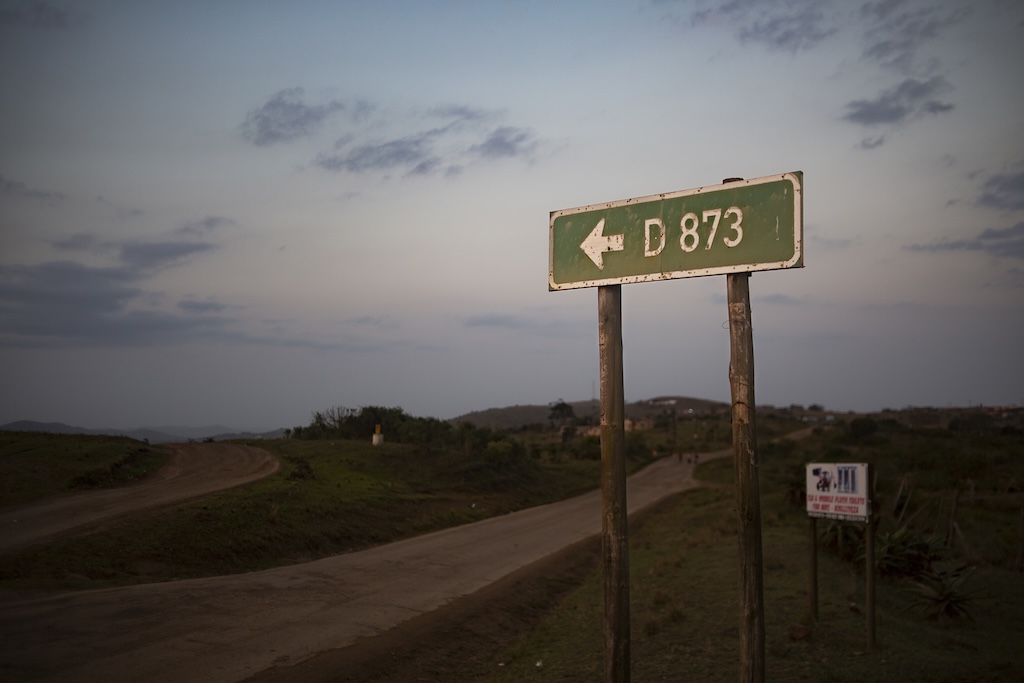
A weathered road sign along Clinic Road in the Nyonini Reserve (Cinci Reserve), near Mtubatuba, in an area where land governance is under scrutiny amid Imvukuzane Resources’ coal-prospecting plans. Photo: Mafutha Enkehle
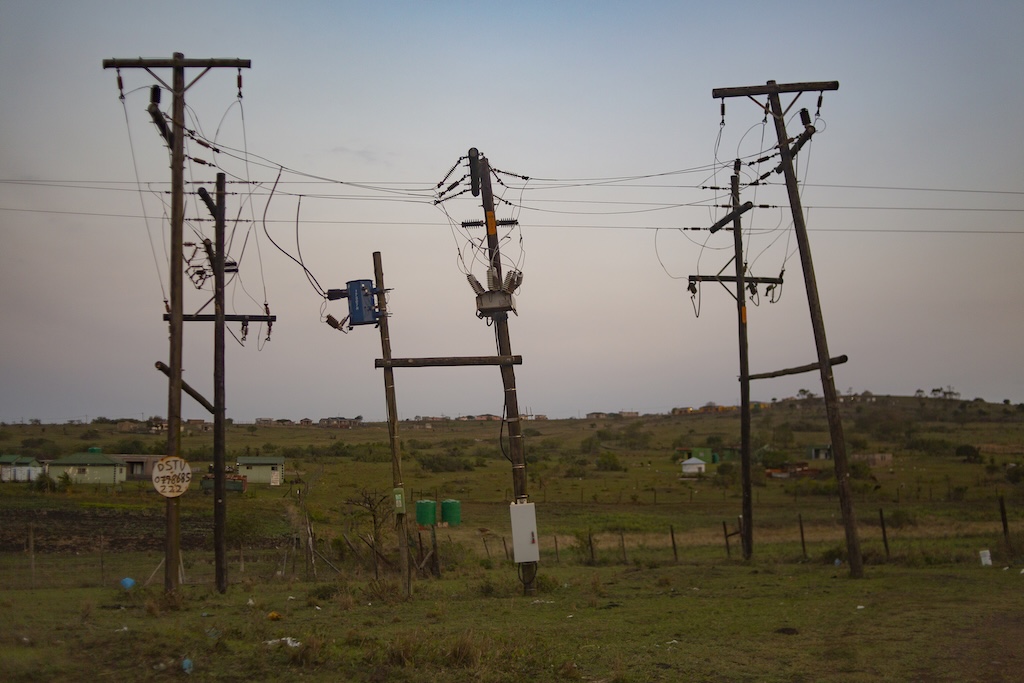
Power lines and utility poles in the rural village of Mahlabathini, in the Fuleni region, where Imvukuzane Resources plans to expand coal prospecting. Photo: Mafutha Enkehle
A conflict of interest?
There’s an unresolved governance question at the heart of Imvukuzane’s planned expansion. Jerome Ngwenya sits on the board of Imvukuzane Resources and is a former chairperson of the Ingonyama Trust Board, the statutory body mandated to hold land in trust for Zulu communities, including in the Fuleni area.
It remains unclear whether Ngwenya declared this conflict of interest to the Ingonyama Trust Board. Oxpeckers phoned Ngwenya on September 16 2026, and followed up with several attempts to get his comment. He did not respond.
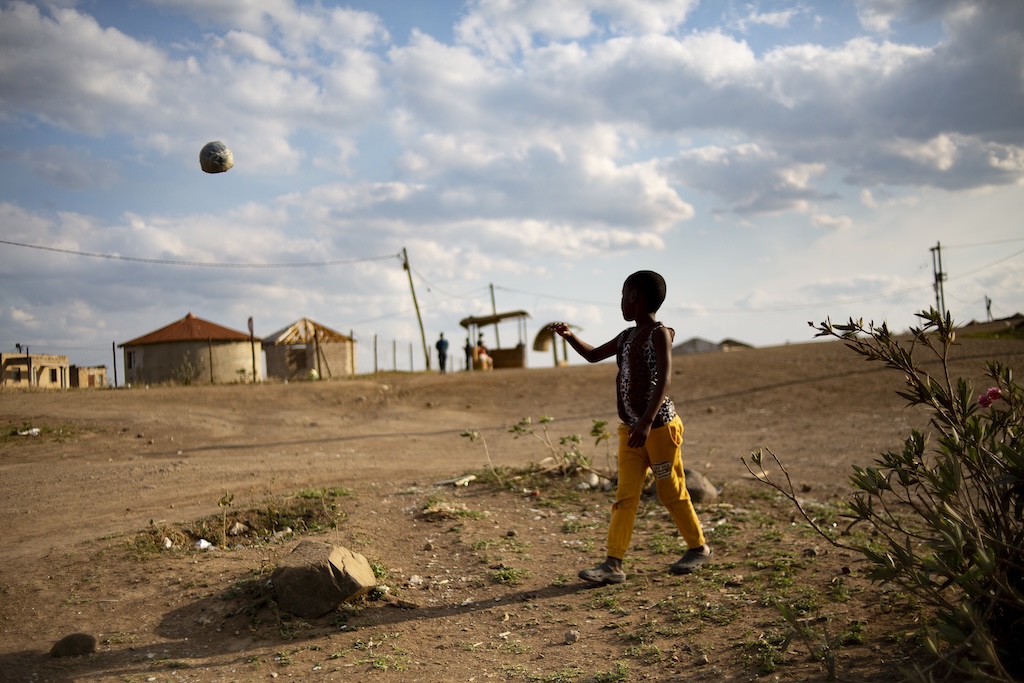
A young boy plays with a makeshift ball in the Fuleni region of uMkhanyakude District, where communities face the prospect of further coal mining. Photo: Mafutha Enkehle
Not-so-just transitions
The Menar Group positions itself as an investor in South Africa’s future. In 2023, it pledged R1.4-billion at the South Africa Investment Conference (SAIC) to develop two new coal mines in Mpumalanga, the Thuso Mining Project and Gugulethu Colliery.
The pledge was accepted at the SAIC even as South Africa was actively negotiating with international partners to secure additional funding commitments under its Just Energy Transition Partnership (JETP), raising questions about the government’s willingness to endorse new coal developments while seeking international support for its transition away from coal.
Menar Group told Oxpeckers that South Africa has not prohibited coal mining and continues to licence and regulate coal-mining activities through its established legislative and regulatory framework.
“Although we are not responsible for the beneficiation of coal, we support the government’s policies in this regard,” it said.
“We will continue to invest in coal mining. However, should the South African government determine that certain mining projects or operations should no longer proceed, Menar would comply with the applicable directives and regulatory requirements.”
To understand what accountability mechanisms exist for companies to expand coal mining while the energy transition is under way, Oxpeckers spoke to Mining Affected Communities United in Action’s (MACUA) national coordinator Sabelo Mnguni.
His response was blunt: “The only mechanism is around environmental impact assessment consultations. There is no department or mining companies that will take 100% responsibility for environmental destruction and declining local economies.”
The Presidential Climate Commission (PCC) declined to comment on the due diligence process applied to SAIC investment pledges. Head of communications Blessing Manale said the PCC could only implore the government to ensure responsible investors were brought to the table.
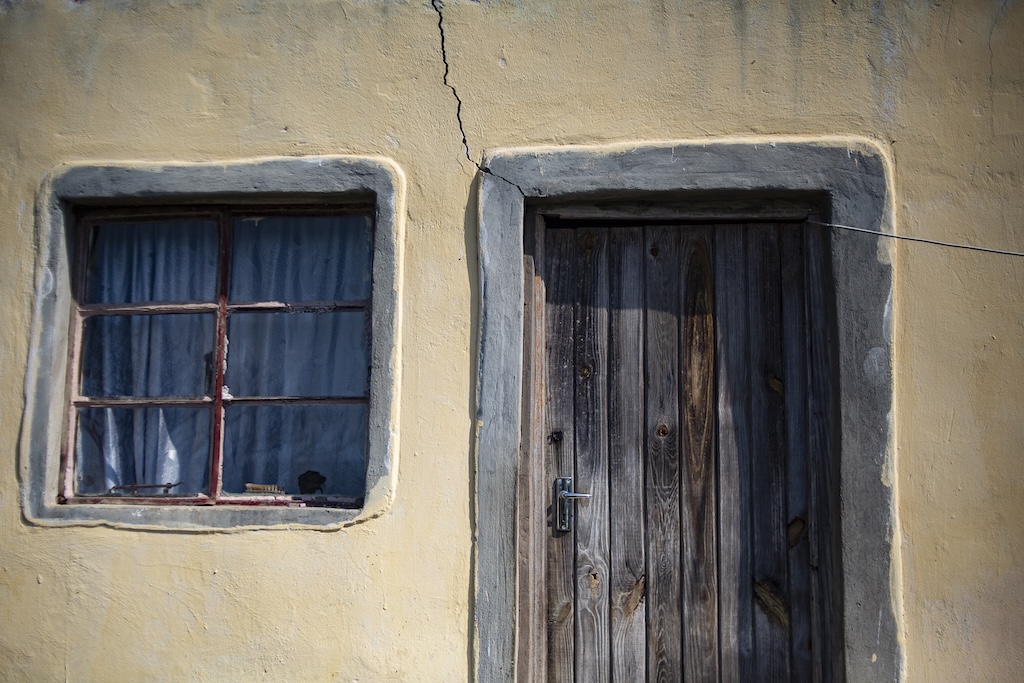
Cracks in the walls of Nelisiwe Buthelezi’s home in KwaMyeki village, Mtubatuba, attributed to nearby mine blasting. Photo: Mafutha Enkehle
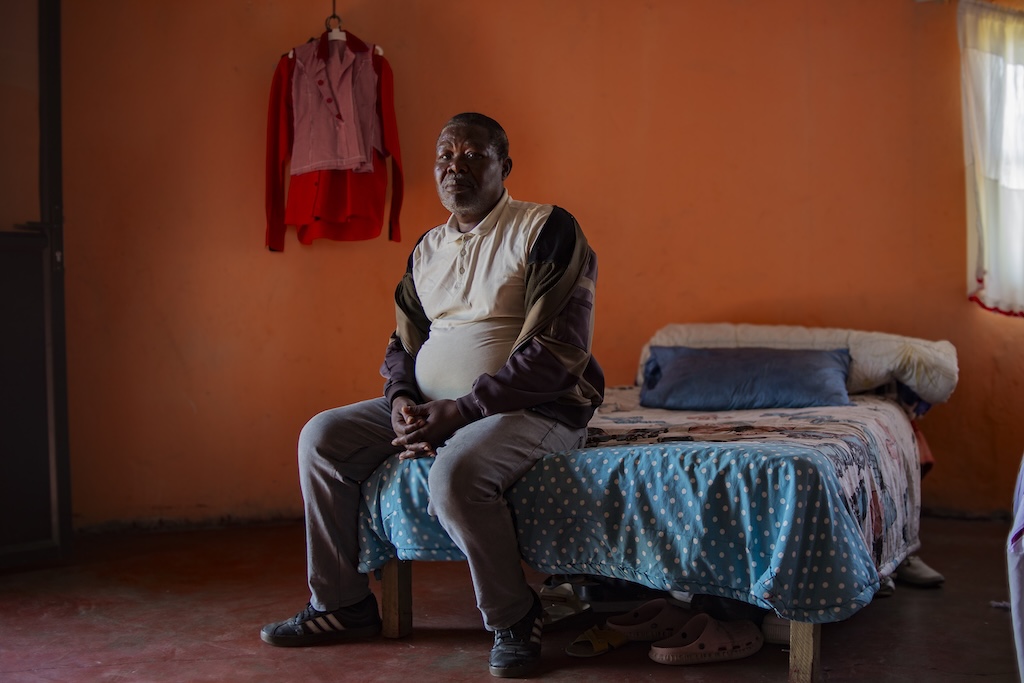
Dumisani Ntombela, who lives in Somkhele, says mining companies must acknowledge wrongdoing and compensate communities affected by their operations. Photo: Mafutha Enkehle
What does accountability look like?
For the communities living along the Black Umfolozi River, accountability is not an abstract concept. Dumisani Ntombela, who lives in Somkhele, said mining companies need to admit when wrongdoing occurs and compensate those affected.
Research suggests that those effects run deep.
Everything for Dust: the Collective Trauma of Opencast Coal Mining on Residents in Somkhele, KwaZulu-Natal, a psychological report released by All Rise Attorneys in October 2022, examined how opencast coal mining has traumatised the Somkhele community.
The findings show that this trauma is worsened by a sense of institutional betrayal when mining companies are perceived as perpetuating harm, treating families unfairly and not responding adequately to the stress their presence causes. That includes processes associated with relocations, the loss of land, destruction of ancestral graves, housing-related issues, and environmental suffering.
As Imvukuzane seeks to mine in the Fuleni area, those opposing the plan wonder whether anyone in authority will act before it’s too late.
MACUA, which has been involved in numerous community engagements, has many questions for those with the power to halt or better oversee mining activities: “What about the value of the cattle grazing on that land? The food produced by small-scale farmers? The water sustaining households? The cultural and spiritual significance of ancestral graves? And the generations of livelihoods that could be destroyed in the pursuit of short-term mineral extraction? Who calculates these losses, and who ultimately carries their costs?”
*On 18 September 2026 Oxpeckers filed a PAIA request to the Department of Water and Sanitation (DWS)’s responsible officer, Dr Sean Phillip. We asked for all water use licences granted to Zululand Anthracite Colliery (ZAC), Menar Group, Canyon Coal, or Imvukuzane Resources since January 2022, including the names of the authorising officials, the current compliance status of all pollution control dams at ZAC and all water monitoring data for the Black Umfolozi River system collected by DWS since January 2022, in the area downstream of ZAC. The department acknowledged the request and promised to process it and revert within the prescribed statutory period of 30 days.
This investigation is part of the Oxpeckers #MineAlert Transition Minerals programme, supported by the Sheikh Tamim Bin Hamad Al-Thani International Anti-Corruption Excellence Award
.
The post Imvukuzane: The coal ‘mole’ with its sights on Africa’s last wilderness first appeared on Oxpeckers.
Check this story
Ask the guide
The guide explains what to check and where. It cannot see this article or recent news.
Is this AI-made?
AI checkers give a likelihood, not proof.