DHS Was Designed as a Weapon
A fresh wave of outrage over the Trump administration’s use of Immigration and Customs Enforcement has surged after two high-profile events involving ICE in the span of a week: the shooting of a young father in New York City last Thursday, and the Monday morning Homeland Security Investigations raid on Rep. Ilhan Omar’s home.
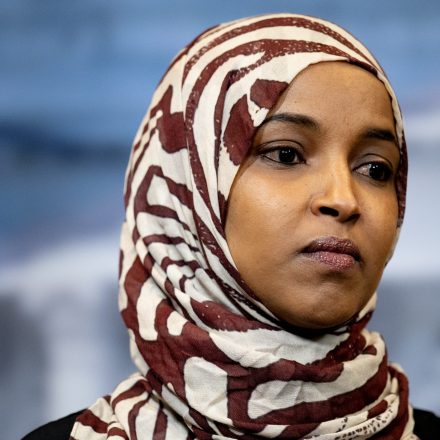
Reporting from the Wall Street Journal suggests that the raid was a part of an ongoing effort by the Trump administration to strip the Minnesota Democrat of her U.S. citizenship. Omar arrived in the United States as a child refugee from Somalia and became a naturalized citizen in 2000, long before the start of her political career. The outspoken progressive congresswoman has since become a foe of President Donald Trump; in a statement, her spokesperson condemned the raid on her home as “an unprecedented escalation in the weaponization of federal law enforcement to target political enemies.”
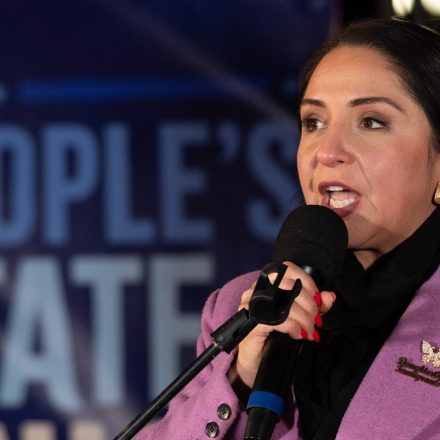
Omar’s House colleague, Rep. Delia Ramirez, D-Ill., argues this sort of weaponization is an inherent feature of the Department of Homeland Security, which was established in 2003 as part of the George W. Bush administration’s mounting war on terror. This week on The Intercept Briefing, host Jessica Washington speaks with Ramirez about a new bill she introduced on Tuesday to abolish DHS and what the raid on Omar’s home reveals about the department.
“The Department of Homeland Security cannot be reformed. It should be dismantled,” said Ramirez. “What they did — just three weeks from an election — was to attempt to create such paralysis on everyday people. … If they can do this to one of my colleagues, they can do that to anyone. And it should concern everyone.”
Washington also speaks with Rozina Ali — a journalist covering the war on terror, Islamophobia, the Middle East, South Asia, and literature — and Will Sommer, a senior reporter covering right-wing media and conspiracy theories at The Bulwark.
Ali and Sommer unpack the role of conspiracy theories and anti-Muslim propaganda in the attacks on Omar, and how DHS has been historically weaponized against Muslims in the United States.
“Over the last 30 years, we have been conditioned to believe that Muslims, and now more broadly immigrants, are not just a threat to national security, but a threat to the American way of life,” said Ali.
“The right has been really eager to denaturalize Ilhan Omar for really going back a decade almost to the first Trump administration,” said Sommer. He called the investigation into Omar “one of the most striking examples we’ve seen of how the Trump administration is willing to use law enforcement to achieve its political aims and to sort of threaten its enemies.”
For more, listen to the full conversation of The Intercept Briefing on Apple Podcasts, Spotify, YouTube, or wherever you listen to podcasts.
Transcript
Jessica Washington: Welcome to The Intercept Briefing. I’m Jessica Washington, politics reporter at The Intercept. On Monday, Homeland Security Investigation agents searched the home of Minnesota Congresswoman Ilhan Omar. Reporting from the Washington Post suggests that the probe centers on allegations that Omar’s late father lied on immigration paperwork decades ago when Omar was a teenager.
According to a source familiar with the case who spoke to the paper, the Department of Homeland Security had previously declined to move ahead with an investigation years prior based on similar allegations. There still weren’t many details out as of Wednesday. The Department of Justice has vaguely described a “federal criminal investigation,” but Omar has long been a political foe of President Donald Trump.
In a statement to The Intercept, Omar called the raid “an outrageous abuse of power and an unprecedented escalation in the weaponization of federal law enforcement to target political enemies.” The raid on Omar’s home comes days after an Immigration and Customs Enforcement agent shot 28-year-old Oscar Belgal in the neck in New York City, with his 5-year-old son in the back seat.
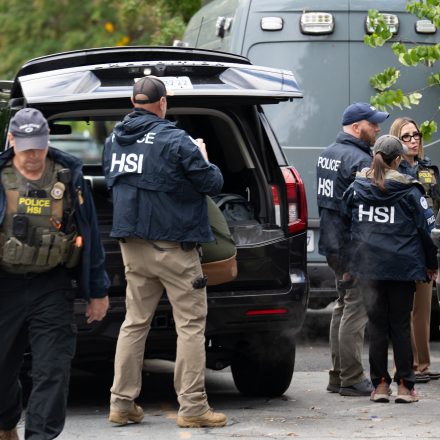
The incidents have reignited concerns about the violent weaponization of the Department of Homeland Security by President Donald Trump against immigrants and the administration’s perceived political enemies.
The group Democracy Defenders Fund filed a complaint over the raid on Tuesday, arguing it violates the Hatch Act, a federal law that restricts political activity by members of the government’s executive branch. With early voting in Minnesota scheduled to start Friday, the group says the raid “appears to be timed to influence voters in the upcoming midterm election.”
Rep. Delia Ramirez, a Democrat from Illinois, introduced a new bill this week to dismantle the Department of Homeland Security and abolish immigrant detention in the United States. I’m speaking to her on Wednesday, October 14. Congresswoman Ramirez, welcome back to The Intercept Briefing.
Rep. Delia Ramirez: Oh, happy to be on.
JW: First, I wanna get your reaction to the Homeland Security Investigation search of Representative Ilhan Omar’s home on Monday. Were you surprised by the news? And what do you think it tells us about how the Department of Homeland Security is operating under President Donald Trump?
DR: I’m gonna tell you that, unfortunately, I’m not surprised by what happened — but it is still bone-chilling.
You’re talking about a department that was created to have full authority to violate civil rights every single day, now weaponized against a sitting member of Congress — sending, I don’t know, 20 HSI agents into her home at 4:30 in the morning.
Cruelty, complete control, and authoritarianism, and demonstrating their ability to get away with whatever they think they can, was the point of what they just did.
And it is clearly the embodiment of abuse of power. But it also shows us exactly why the Department of Homeland Security cannot be reformed. It should be dismantled. And that what they did — just three weeks from an election — was to attempt to create such paralysis on everyday people to believe that if they can do this to one of my colleagues, that they can do that to anyone. And it should concern everyone.
“Demonstrating their ability to get away with whatever they think they can, was the point of what they just did.”
Anyone that cares deeply about our democracy, about our ability to exercise our freedom of speech, or to be protected from being harmed by the federal government should see what is happening to my colleague Ilhan Omar as a clear indicator that this could also happen to them, if we don’t stop them.
And that justice is not just that she gets her phone back, or they leave her alone. Justice is holding accountable the leadership that made that terrorizing experience for Ilhan happen.
JW: Speaking of stopping them, I want to get into the bill that you introduced on Tuesday, the Reimagining Safety Act, which would abolish the Department of Homeland Security, eliminate all immigrant detention, and repeal “duplicative and overreaching terrorism laws.”
Now, there has been some forward momentum on the movement to abolish Immigration and Customs Enforcement, at least from progressives — but this bill would get rid of all of DHS. Can you talk about how that would work and why, in your opinion, it’s not enough to just abolish ICE?
DR: I just mentioned to you what’s happening to Congresswoman Omar, and to me, it’s a clear indicator of the greatest threat to our security: It’s not immigrants; it’s the Department of Homeland Security.
And I know that a lot of people say, DHS is “rogue,” we need to address this “rogue” organization. But it’s not rogue. I wanna be clear with people. DHS did not exist my entire lifetime. As a matter of fact, it’s been operating less than 23 years. And it was built exactly to do what it’s doing right now: to violate our rights under pretense of securing our safety, and it’s been, in fact, empowered to act with impunity, which is why people keep saying like, “How can they possibly get away with what they’re doing, and why can’t Congress stop them?”

Because frankly, since its inception, DHS has been utilized by the government to target and persecute people that they consider the public enemy. And we know that fascism always requires a public enemy. Muslim Americans, Latinos, Haitians, protesters. DHS has never kept us safe. And 24 years ago, Americans, Republicans, and Democrats alike, let’s be clear, raised a flag about how DHS would constitute unprecedented consolidation of power, and yet this agency was still formed under the United States Congress.
“The greatest threat to our security is not immigrants; it’s the Department of Homeland Security.”
DHS has been a problem of the administration for its entirety. And administration after administration has demonstrated to us that this agency needs to be completely dismantled piece by piece. And when you have people like Donald Trump with very authoritarian tendencies, you have clearly seen what they’re capable of doing. And frankly, I don’t think we’ve seen the full extent of what they could do.
So this is a moment for us to ask ourselves: What kind of world do we wanna live in? And do we want to continue to live with the fear that this agency can be weaponized against you, to persecute you, to arrest you, to detain you, to denaturalize you, to attempt to question your own citizenship, to kill you?
And at the same time, ask ourselves: If FEMA and TSA and cybersecurity and the Coast Guard and other critical programs are important for us, how can we allow them to be politicized by this agency that constantly keeps taking away the resources that these critical programs need? And so for me, this is the moment that we don’t just abolish ICE or abolish CBP — we take on the institution that was created to allow ICE and CBP to operate in the way that it does.
“Do we want to continue to live with the fear that this agency can be weaponized against you, to persecute you, to arrest you, to detain you, to denaturalize you, to attempt to question your own citizenship, to kill you?”
JW: To your point, there are all of these other functions of the Department of Homeland Security, from federal disaster relief to TSA screenings to customs enforcement. What happens to all those other functions if DHS is dismantled?
DR: I’m glad you asked me that question ’cause people keep saying, “Do you not care about FEMA?” Actually, because I care about FEMA, I want to dismantle the Department of Homeland Security.
H.R. 10803, the Reimagining Safety Act, it’s a first of its kind bill, and for the very first time, it’s a bill that community stakeholders spent months designing a Cabinet-level department. Because the Reimagining Safety Act would actually establish another department, the Department of Community Safety, that in fact is about protecting our communities.

It would dismantle DHS by preserving the Cybersecurity and Infrastructure Security Agency — we call it CISA, that was created under the Department of Homeland Security; protecting and expanding the Federal Emergency Management Agency; protecting and redirecting the Transportation Security Agency and custom functions into the Department of Transportation; while abolishing ICE and CBP and reinvesting funds in community.
And, certainly, I think the other piece of that is the surveillance: limiting government surveillance and reining in the unlawful abuses of data and curb the militarized enforcement that you’re seeing under DHS while beginning the process of taking what we call USCIS, that’s also under the Department of Homeland Security, and establishing it as its own separate civil immigration system that no longer operates under this agency that could call Renee Good, Alex Pretti, or Silverio Villegas terrorists.
JW: Thinking about your bill — obviously, Republicans currently control every lever of power, and only a handful of Democrats support abolishing ICE, and fewer still have called to abolish the Department of Homeland Security. Why introduce this bill now, knowing that it likely can’t pass this current Congress, much less get signed by President Donald Trump?
DR: Every single issue, whether it’s talking about universal healthcare, Medicare for All, whether it’s talking about raising wages — and now I introduced Living Wage for All — or blocking bombs and ending endless wars, oftentimes the assumption has been it is too early, or Republicans control, or Democrats have not arrived.
The people have arrived to where we are. They believe that this agency is the biggest threat to their well-being. And for me, this is an opportunity to provide a roadmap on how we actually in fact address the problem and then create a solution that centers people’s safety — and not just rhetoric of protecting the homeland under the guise of protecting us from terrorism, so that they can terrorize us.
Jessica, I am clear that this bill is not gonna pass overnight, but I am also clear that our community expects for us to propose something that is tangible, something that is comprehensive, and something that gets to the root of the problem by creating a permanent solution, so that we’re never here again.
“Our community expects for us to propose something that is tangible … that gets to the root of the problem.”
That means that over the next few months, and perhaps over the next year, we are building the support and changing the conversation in such way where in the same way only nine or 10 of my colleagues were willing to, out loud, say “Abolish ICE” two months ago, now we have actually more like 45, 50 of them, that we are in the same place when we’re talking about reimagining safety in this country.
Furthermore, every single poll that you look at ICE, CBP, [ousted former CBP head Greg] Bovino, [ousted former DHS head Kristi] Noem, immigration enforcement, and the fear of surveillance and losing our civil rights is top concern for the American people.
I am providing a bill that begins to respond to what our communities are demanding. I’m hoping that Congress doesn’t continue to be behind the ball of what the people are asking of them. And now I’m giving them something that they could actually in fact use.

I wanna tell you too that, look, in 2002, people expressed concerns about DHS. And 25 years later, those warnings have been validated as we watch what they’re doing. It’s a weapon pointed at anyone that the state considers a public enemy, whether it’s Congresswoman LaMonica McIver, whether it’s Congresswoman Omar, or the millions of people in this precise moment that are living in fear because of the way that this agency was created.
I think this is also an opportunity, Jessica, for us to actually educate the world around the fact that DHS was not created as a Cabinet department from our Founding Fathers — that we were OK before 2003 without DHS, and we can live in a life without it as well.
“We were OK before 2003 without DHS, and we can live in a life without it as well.”
JW: On the subject of looking to the future, if Democrats take one or both houses of Congress in the upcoming midterms, I’m curious what else you’re thinking about in terms of reining in DHS, and if you have any other priorities for the next session.
DR: Let me just come back to this bill, ’cause I think it’s really important — my own bottom line on it. The Reimagining Safety Act takes apart DHS and creates a new agency, a new agency that responds to what people are asking for — for we the people that they’ve elected to represent them, to keep them safe, to protect the mission of community safety, and to protect the public.
And it means that dismantling DHS is doing the work Congress should have done actually 24 years ago, to actually look at these agencies, all agencies under this department, but also how DOJ has been weaponized against us. How we created a Department of War. Just think about that: We’ve created a department where we want to spend more money on war than we want to actually spend on housing, on healthcare, on wages, and on infrastructure.
So for me, this is a moment for us to actually demonstrate that we’re going to fight like hell for accountability, to take on corruption, to end the terror, while also creating tangible ways to address the issues.
And one of those, and I’m going to be introducing a resolution [Thursday] around what should our positioning be when it comes to immigration. Because this agency is about what is wrong and what needs to stop so that we can actually have safety, but then we also need to talk about how we restore our systems of asylum, how we actually in fact establish legal pathways, and how do we bring 11 million people who are in fear, in the shadows, crying daily, to finally come out of the shadows into a justice status.
I am gonna be working really hard to make that front and center with our leadership, and I’m disappointed that our leadership isn’t centering that as one of the very first things that they wanna work on in the first 100 days. Because unfortunately, that is telling the people that have been under siege by this administration: Being an immigrant or being brown or being a protester isn’t the top priority of people that need to be protected.
When our leadership is talking about first 100 days of many important things, but not a word around immigration, and not a word around real accountability to what has happened under ICE and CBP.
JW: Thank you, Congresswoman. We’re gonna leave it there, but people can read more about your bill, the Reimagining Safety Act, at theintercept.com, where we have a story out about it. And thank you so much for joining The Intercept Briefing.
DR: Thank you. Appreciate it.
Jessica Washington: Next, I speak with Rozina Ali, a journalist covering the war on terror, Islamophobia, the Middle East, South Asia, and literature; and Will Sommer, a senior reporter covering right-wing media and conspiracy theories at The Bulwark. Will, welcome to the Intercept Briefing, and Rozina, welcome back.
Will Sommer: Thanks for having me.
Rozina Ali: Thank you so much for having us.
JW: Rozina, I want to start with you. In your new book, “Seasons of Fury: Four Families and the Rise of Islamophobia in America,” you discuss the history of how immigration enforcement has been weaponized against Muslims in the United States. And while I want to preface by saying that there’s still a lot we don’t know about the raid on Congresswoman Ilhan Omar’s home, we do know that Omar is outspoken, Muslim, Black, and an immigrant. She’s also been a consistent target of Trump and his allies.
How might this relate to the broader history of how the Department of Homeland Security has been weaponized against Muslims in the United States?
RA: Well, I really appreciate this question. There’s a very long history when it comes to using immigration enforcement to target Muslims and the Muslim community in the United States, and I just wanna go back a little bit before 9/11 to the late 1990s.
One thing that was happening was the use of secret evidence against Muslim immigrants, a lot of Arabs and South Asians, and a lot of Muslim immigrants, to, essentially, detain them and deport them. And what that meant was actually using classified evidence that the government brought forward that the defendant could not see.
And it actually kind of reminds me of what’s happening with Ilhan Omar now, is that we don’t actually know what the allegations are. We don’t know what the case is hinged on.
What the DHS did after 9/11 was actually broaden out its use of immigration enforcement to target Muslim communities. One of the things it did was actually institute a registry called the National Security Entry-Exit Registration System. That essentially allowed the U.S. government to detain thousands of Muslim immigrants and eventually deport them — even though they had no criminal charges.
One of the things that protects Ilhan Omar is that she is a U.S. citizen, but one of the things that does chill me is there is this longer, broader history of the government using immigration enforcement in order to deport people and detain people, even if they have not been guilty of any criminal charges.
JW: That makes a lot of sense, the concern, because we know there’s history of this power being used in secretive ways, kind of similar to what’s potentially happening now. And I do, again, want to caution that we do not have all the details on this case at the moment. But Will, I wanted to bring you in to kind of get into the origins at least where some of these conspiracy theories that have been swirling around Congresswoman Omar.
You wrote about this in September, kind of where you found that many in MAGA world were frustrated that after nearly a decade of conspiracy theories — some of which were pushed by Trump about alleged immigration fraud from Omar — she remains not only in the United States, but in Congress.
Will, can you explain some of the conspiracy theories that are fueling this push to deport Omar? Is there any evidence for them? And do we know if they had anything to do with the raid on her home?
WS: The right has been really eager to denaturalize Ilhan Omar for really going back a decade, almost to the first Trump administration. A lot of it was fueled by this idea that she had married her brother as some kind of immigration scheme, or essentially that this man she was married to was secretly her brother.
Now, I looked into the origins of this at the time. I thought, “Well, is this true? Could it be?” No, it’s not. In fact, it all started on some random kinda Somali Minnesotan message board where someone said, “Yeah, she’s married to her brother.” And then from there, once she became more prominent as a Democratic figure, people on the right kinda dug through that and sort of built this whole conspiracy theory based off of this one post.

Essentially, now that Trump is back in power, there’s this demand on the right because, as with other conspiracy theories, they’ve come to believe this. So they’re saying, you know, “Oh man, when are we finally gonna deport Ilhan Omar?” So Markwayne Mullin, the head of DHS, has been under this pressure, and he gave this interview at the Republican convention to [right-wing YouTuber] Benny Johnson, and he said, “Oh yeah, she married her brother.”
And Benny Johnson said, “Well, OK. Are you gonna deport her?” Now, you kinda can’t deport her anyway, even if she had married her brother. But there’s all this demand. And so what we’re seeing with this latest investigation is it’s not even related to the brother thing, reportedly. It’s — according to the Washington Post and some other outlets — related to this idea that Ilhan Omar’s father, who is dead now, misstated her age on a citizenship application.
Essentially, she was 17, according to the official record. But had she been a year older, 18, it would’ve kind of complicate it because she would’ve been an adult. It would’ve made it harder for her to get citizenship. This is this idea that’s been pushed by her Republican opponents in elections in the past. It’s really thin, and we can kinda get into it in a second. But this is some thin gruel, essentially, that they’re trying to manufacture this whole effort to pull her citizenship.
JW: I really wanna get more into the conspiracy theory of it and what’s being pushed here. And I think it’s interesting that it’s almost like they’re kind of grasping at any little thing they can get their hands on.
At first, it’s the brother-marriage of it all, which, as you pointed out, has very thin evidence, essentially no evidence. And then it’s pulling at these other threads about her dad, which have all been swirling in the ecosystem for a while.
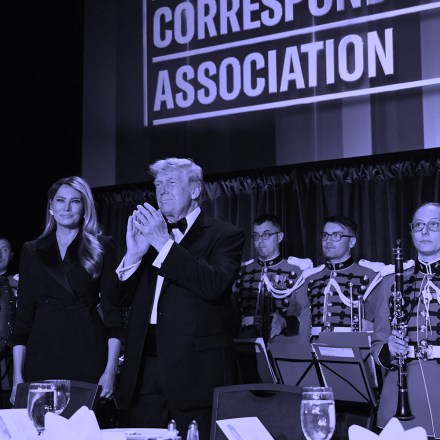
I want to get a little bit deeper into what conspiracy theories, what role they have here, and I want to talk about what Donald Trump said on Monday night after the raid. He spoke at an Ohio rally pushing more conspiracy theories about Rep. Ilhan Omar and the Somali community in Minnesota in general. Let’s hear that clip now.
Trump: Just look at what’s happening in the once great state of Minnesota. What a mess they have done. Somalia, wonderful, wonderful. And that Ilhan, somebody was asking me, I don’t know what they’re doing with her, but I can tell you this: She’s a disaster. She comes in from a country without laws, without police, without military, without — all they do is shoot each other. And she comes into our country, and she says, “I have a constitutional right.” She’s got a constitutional right. She’s telling us about the Constitution, and she comes from one of the worst countries anywhere on the planet. Last week, savage Somali gang members shot two people in the high school parking lot in the middle of a football game. Just days later, a few miles away, the FBI arrested a radicalized Somalian who was planning to carry out an ISIS-style terrorist attack at the Mall of America, aiming to kill as many as possible, in his words. This is not what we want in this country.
Crowd: Deport! Deport! Deport! Deport!
Trump: What they have done to Minnesota.
JW: Rozina, this isn’t the first time we’ve seen the administration spread conspiracy theories about Muslims. Ahead of Operation Metro Surge in Minneapolis, for example, we heard similar rhetoric about the Somali community. What role have conspiracy theories played in the targeting of Muslims in the United States?
RA: Oh, where to start?
JW: Yeah, there’s a lot.
RA: There is a lot. I think one of the most enduring theories of Muslim communities is that there are radical elements that are living among Muslim neighborhoods, among Muslim communities. And that is a conspiracy theory born out of, obviously, the war on terror framework.
But one of the things that we saw in the aughts, especially under the Obama administration and especially as Trump rose in power, was this notion that Muslims, not just foreign elements, but Muslims living inside the United States are secretly hiding their agenda.
And this is something that we hear with regards to Abdul El-Sayed, that basically any Muslim that you meet is hiding a secret agenda, and what they wanna do is enact Sharia law in the United States. No one has yet to explain what Sharia law means and what that would mean to enact it, but this is one of the things that keeps coming up over and over again.
What is so interesting about this speech that Trump made recently is that he is actually throwing every theory against the wall that he can. That he mentions ISIS — something we haven’t heard for a long time. He mentions radicalization. He mentions fraud. And so all of these things that have been talking points that have been used against Muslim communities, particularly against the Somali community in Minnesota, he is using all at once in this one speech.
“What is so interesting about this speech that Trump made recently is that he is actually throwing every theory against the wall that he can.”
I will say, this is also the talking points — well, fraud is a new one — but when it comes to radicalization and when it comes to the notion of radical elements threatening the security and Western way of life of the United States, these are talking points he was peddling back in 2015 when he eventually called for a Muslim ban.
As we may remember, one of his first executive orders when he became president in January 2017 was to sign an executive order banning immigrants from Muslim-majority countries.
This is actually something that we see Donald Trump doing a lot, which is, he peddles conspiracy theories. He puts them on the main stage. His allies reinforce them and regurgitate them, and he gives them legitimacy, right? He legitimizes them by using a government framework to offer some veneer of truth to them. And unfortunately, as we know, one iteration of the Muslim ban was eventually upheld by the Supreme Court.
JW: As Rozina said, fraud is kind of a newer iteration of these kind of Muslim conspiracy theories. Where did it originate from, and why has it become such a powerful talking point on the right when targeting particularly the Somali community in Minnesota?
WS: I should say: Minnesota has a very — despite being a Democratic state — it has a very intense Republican activist and kind of like quasi-journalist scene going on. And so a lot of that has been built around, again, building, talking about Ilhan Omar. And now we’ve seen it kinda going after the Somali community in various ways.

But really, this hit a new level in January with this young man named Nick Shirley, who’s like a YouTuber. He went around, he was led around by one of these Minnesota conservative journalist types to various daycares, and they said,”Look at the fraud here.”
Now look, there are some criminal fraud cases that are being prosecuted in Minnesota. But there was this broader sense created by this video of, like the Somali community are parasitic, that they’re up to no good, they’re stealing all this money, what have you.
And then in fact, that helped justify then — at least in the view of the Trump administration — the ICE surge into Minneapolis. And so this has created this idea of constant Somali American fraud, not just in Minnesota, but all over the place. And so obviously it dovetails with the Ilhan Omar idea as well, that she forged her citizenship, she somehow faked that.
JW: That makes a lot of sense. It is really interesting to see the way the administration targeted Minnesota, both because of the Somali community, which was particularly vulnerable, because as we’ve mentioned this is both a Black, immigrant, and Muslim community, so this trifecta of areas that the Trump administration is targeting. And then also you had Ilhan Omar, who was this image that the administration could attack and go after, and it was really popular to their base to do so.
Rozina, when we’re talking about the stories that kind of stick when it comes to conspiracy theories, what sort of stuff has really stuck and why? I’m curious to understand why in the imagination of so many people in the U.S. these conspiracy theories have really stuck.
RA: I think one of the most enduring theories that keeps coming up over and over again and that really has stuck is this notion that, as I mentioned, that Muslims have nefarious secret agendas, but also that they have ties to foreign organizations and foreign elements.
And one of the things that we hear with regards to Ilhan Omar, too, is that — and I think I’ve heard this from some right-wing talking points in the previous days — is that there might be allegations that she has some financial ties or connections to foreign groups. This is something we have heard about Zohran Mandani. This is something we have heard about Abdul El-Sayed. This is actually something that has been a part of the American narrative about Muslims for decades.
One of the crucial things that was happening in the ’90s was that the U.S. government was looking for financial ties to foreign organizations among the Muslim community. And one of the things that happened immediately after 9/11 was that the United States government shut down the biggest Muslim charity in the United States, called the Holy Land Foundation, because of alleged nefarious ties to militant groups abroad.
Because there has been a government framework for this, I think it is really easy for a lot of conspiracy theorists and for a lot of Islamophobes, frankly, to keep regurgitating this notion that “just look at the financial ties of Muslims.” And one of the lasting shifts that we have seen in the last 25 years is that that scrutiny is not just against Muslim immigrants or visa holders, but also against Muslim Americans and citizens of the United States. And I don’t think we’re actually going to be able to break out of those conspiracy theories so easily if we don’t actually start discussing and reckoning with how we think about what terrorism is.
So for example, with the Holy Land Foundation case, that is a case that keeps coming up over and over again. A lot of those ties, financial ties, it’s a really complicated case, but a lot of those financial ties were related to Hamas, but it’s also relevant to remember that Hamas at the time was a governing body in Gaza that was supplying aid to people.

And essentially, the way we talk about terrorism, the way we talk about countries abroad, has a real impact for how we think about the Muslim community at home. So I just wanna go back to Abdul El-Sayed for just really quickly, is that one of the biggest talking points peddled against him these days is that his mother is connected to the Muslim Brotherhood.
Now, there’s very little understanding of what it had meant to be a supporter of the Muslim Brotherhood in Egypt, right? Because we just see that through the lens of terrorism, it’s completely dismissing all the political dynamics on the ground in those countries abroad. And I think what a lot of conspiracy theorists and Islamophobes have done so effectively is forever tie Muslim communities in the U.S. to what Americans largely think of as nefarious elements in other countries.
JW: I think that’s all really important, recognizing, to your point, that none of these conspiracy theories — I mean, again, they had taken new iterations — but that conspiracy theories against Muslims in the United States is not a new phenomenon. I guess I am curious if we’re moving into a new phase though, of danger, essentially, from the administration.
Will, coming back to your September piece, in it you compare the calls to deport Rep. Ilhan Omar to the Department of Justice’s attempts at convicting the president’s political enemies. And those have, for the most part failed, in terms of getting these convictions, “locking up” his enemies, as he’s said he wants to do.
Does this raid of a sitting congresswoman’s home signal a new, more dangerous era from the White House when it comes to threats against the administration’s perceived political enemies? Are we entering a new, more dangerous phase?
WS: I think the raid represents sort of the confluence of two alarming trends. One is what we’ve been talking about, which is the growing, second tide of Islamophobia that we’re seeing from this administration, that I think was sort of on the back burner as there was so much promotion on the right about fears about immigration from Latin America. Now, we see in Texas there’s so much anger at Muslim communities in that area in particular.
We’re also seeing though, as you said, the politicization of the Justice Department. I mean, this raid falls within the 60 days. Typically, the DOJ doesn’t raid politicians this close to an election, particularly something that’s about a 30-years-old child immigration case. Clearly, it’s political. It’s an attempt to make Ilhan Omar the face of the Democratic Party, suggest all this fraud.
Look, a lot of those attacks, those political lawfare, what have you, is related to Israel and Palestine, people like Fergie Chambers, Max Blumenthal, have either faced indictments or had their devices seized, in Max Blumenthal’s case. Certainly a lot of it aimed at campus activists as well.
I think the Ilhan Omar thing is really one of the most striking examples we’ve seen of how the Trump administration is willing to use law enforcement to achieve its political aims and to threaten its enemies.
“The Ilhan Omar [raid] is one of the most striking examples we’ve seen of how the Trump administration is willing to use law enforcement to achieve its political aims and threaten its enemies.”
JW: You mentioned that post-Watergate 60-day rule, which is an unwritten policy designating a blackout period effectively before elections during which the Department of Justice is not supposed to conduct activity which could influence voters. There’s also the Hatch Act, which states that government employees cannot use their authority or influence to interfere with or affect an election. There was actually a Hatch Act complaint filed yesterday by a watchdog group over the raid on Ilhan Omar’s house.

At this point, Will, with an administration that has already done so much over the years without consequence, does the Hatch Act and do these other kind of long-standing norms serve any purpose or any protection?
WS: No. At this point, unfortunately, I think the Hatch Act is a dead letter in terms of, no one’s gonna enforce it, at least until Democrats retake some kind of power. Look, the administration is using government money to buy political ads, outright political ads. And so certainly, I think they’re going to unfortunately be able to get away with things like raiding a congresswoman’s house.
I think really it’s just become, the idea that they would use Justice Department or DHS to achieve political aims is just understood now that that’s something Trump is gonna do.
JW: And Rozina, from your perspective, does this raid to you signal a kind of new, more dangerous era, for not just the president’s political enemies, but also disfavored groups?
RA: Yeah, I want to just go back specifically to the Somali community living in the United States. It is telling that President Trump disparaged the country of Somalia as he also bombs this country with hundreds of airstrikes in the past year alone, displacing more people and causing more people to search for refuge abroad.

We mentioned the ICE Operation Metro Surge in Minnesota last December. Trump was talking about the Somali community in Minnesota, and ostensibly fraud was the reason, one of the reasons, for which he sent ICE agents into the city.
One of the things that the government learned very quickly was that a lot of Somalis living in Minnesota are actually citizens. They are naturalized or that they were born here, and they could not be easily picked up and detained or deported, even though there were some who were. Yet what happened in the months after Operation Metro Surge was that it really chilled the Somali community living in the city. Even though there were so many people who did go out and protest and help each other, there were a lot who basically stayed at home. And I actually spoke with several people who would not leave their house for months.
Now, one of the things that really frightens me about what the DOJ and DHS did with regards to Ilhan Omar is that it is actually expanding the war against Somalis. It’s now seeing ways in which to not just frighten asylum-seekers and refugees and visa holders, but also naturalized citizens.
“What this administration has done so effectively is actually telling everyone that there are some communities who are no longer protected the way they used to be.”
And I think what this administration has done so effectively is actually telling everyone that there are some communities who are no longer protected the way they used to be. And we saw that also in the context of, for example, the arrest of Mahmoud Khalil and pro-Palestine protesters. We are seeing a level in which government is used to target people who before would have protections from the government, and now they are being told that they are actually vulnerable.
And Ilhan Omar, it’s possible that nothing comes of this raid, and things will just go back to normal. But what worries me is the larger chilling effect on the community, including now naturalized citizens.
JW: Trump aside, the Trump administration aside, Rozina, is this just the logical endpoint of effectively decades of crafting a federal domestic surveillance and police state that is laser-focused on immigrants and Muslim Americans?
RA: Yes, it is, right? One of the things that has happened over the 20, or last 25 years has been one immense power that has been concentrated in the executive branch. This notion that when it comes to national security, the government has a lot of leeway to violate people’s civil rights But the other thing — one of the other enduring legacies of the last 30 years — is precisely what the American public is willing to accept.
“We have been conditioned to believe that Muslims … are not just a threat to national security, but a threat to American way of life.”
And over the last 30 years, we have been conditioned to believe that Muslims, and now more broadly immigrants, are not just a threat to national security, but a threat to American way of life.
And again, Trump is able to throw everything — when it comes to Ilhan Omar and the Somali community — throw everything at them. They’re a threat to national security. They are threatening how we live in this country. They are threatening what it means to be American. They are taking away our money and our dollars, and he is using all of these talking points to help build up public support for this agenda against the Somali community. I don’t think such a blatant targeting and explicit targeting would have been met with such support even in, for example, October or November 2001.
JW: I think those are all very good points. I hate when people say this is the only form of acceptable bigotry, because I can frankly say that there are many forms of acceptable bigotry. But the extent to which Islamophobia is a part of American culture is accepted, I think is not just troubling, it’s decades of conditioning, as you’ve pointed out. It is decades of feeding these conspiracy theories, of repeating them until they feel almost natural to so many of us.
But I want to give you both an opportunity to just share any final thoughts. Will, I want to start with you. Is there anything else that you’d wanna add?
WS: As this case goes forward, it’ll be interesting to see what it looks like. But the idea that Ilhan Omar lied about her birthday or whatever is all based on, there was this one congressional website that said she was born in 1981 instead of 1982. And so Republicans have seized on this. Look, it’s one website, right? I looked in the court records, all this stuff. Before she became famous, she was listing her birthday as 1982, all this stuff. And so if that’s gonna be the crux of it, that one website had a typo, I don’t think the administration’s gonna have a lot to run on here.
JW: There’s very thin evidence for some of these conspiracy theories, although people will take very thin evidence and run with them. Rozina, any final thoughts from you?
“What does this mean for denaturalization efforts across the board?”
RA: I agree with Will, I don’t think that the government has that much to go on. It seems to be very thin evidence. But again, it is government resources that are being used to basically go on a, what appears to be for right now, a witch hunt. But again, what worries me is the more lasting effects of this, which is, what does this mean for denaturalization efforts across the board? And there seems to be not just support for it, but also a deliberate desire to run with such an agenda.
JW: And we’re gonna leave it there. But Will, Rozina, thank you both so much for joining me on The Intercept Briefing.
WS: Thank you.
RA: Thank you.
JW: That does it for this episode. We wanna hear from you. Tell us what you’re following or want to see more coverage of. Email us at podcasts@theintercept.com, or leave us a voicemail at 530-PODCAST. That’s 530-763-2278. This episode was produced by Andrew Stelzer. Laura Flynn is our supervising producer. Jordan Uhl is our social media producer.
Ben Muessig is our editor in chief. Maia Hibbett is our managing editor. Nara Shin is our copy editor. William Stanton mixed our show. Legal review by David Bralow. Slipstream provided our theme music. This show and our reporting at The Intercept do not exist without you. Your donation, no matter the amount, makes a real difference.
Keep our investigations free and fearless at theintercept.com/join. And if you haven’t already, please subscribe to The Intercept Briefing wherever you listen to podcasts. Do leave us a rating or review. It helps other listeners find our reporting. Until next time.
The post DHS Was Designed as a Weapon appeared first on The Intercept.
Check this story
Ask the guide
The guide explains what to check and where. It cannot see this article or recent news.
Is this AI-made?
AI checkers give a likelihood, not proof.