The Architects of Transition: Women shaping South Africa’s energy future
South Africa is building a new energy economy, but who gets to build, lead and own it? #PowerTracker meets five women navigating the transition from coal to renewable energy, and explores the barriers that still stand in their way
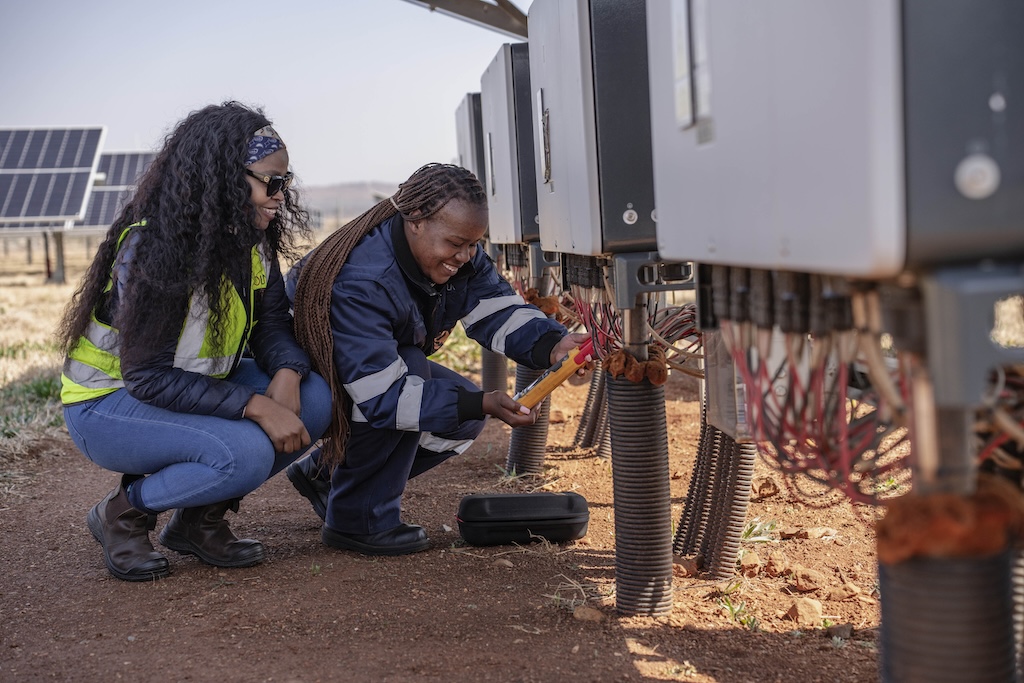
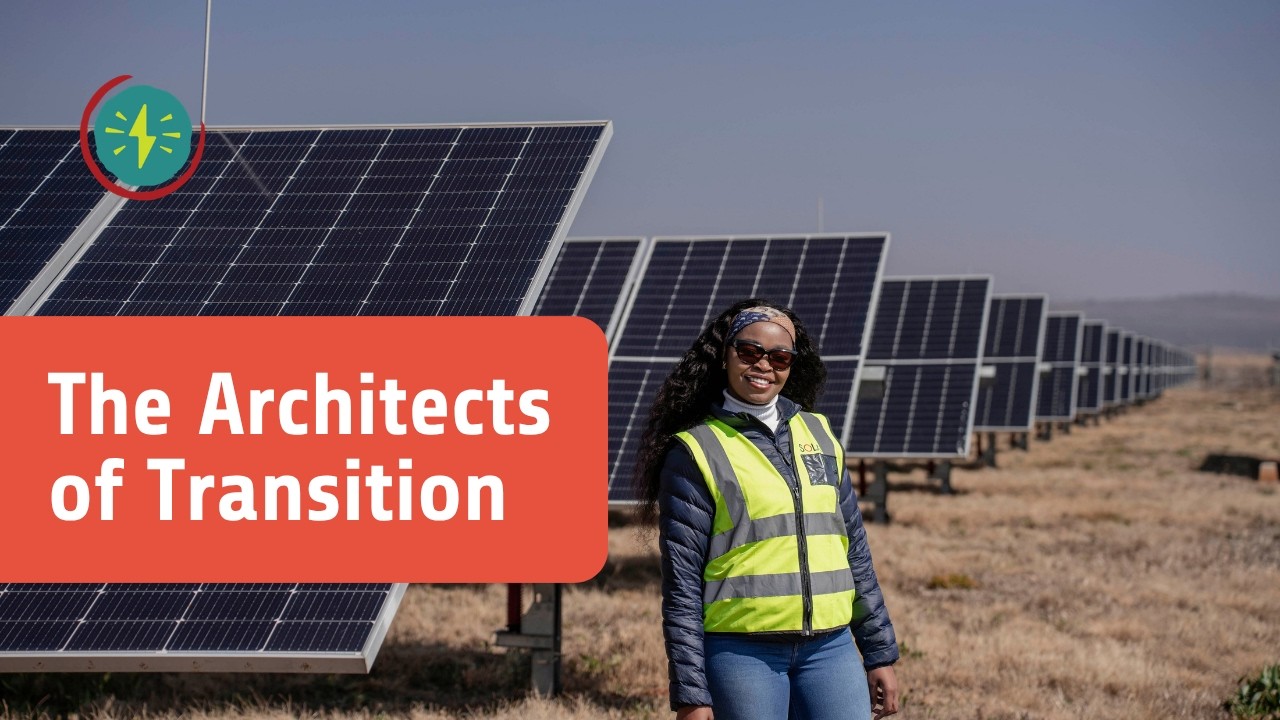
Nondumiso Ngema (left), the director of operations and maintenance at SOLA Group, with site electrician Sphesihle Xaso at the Heineken Solar PV installation in Sedibeng, Midvaal. Photo: Ihsaan Haffejee
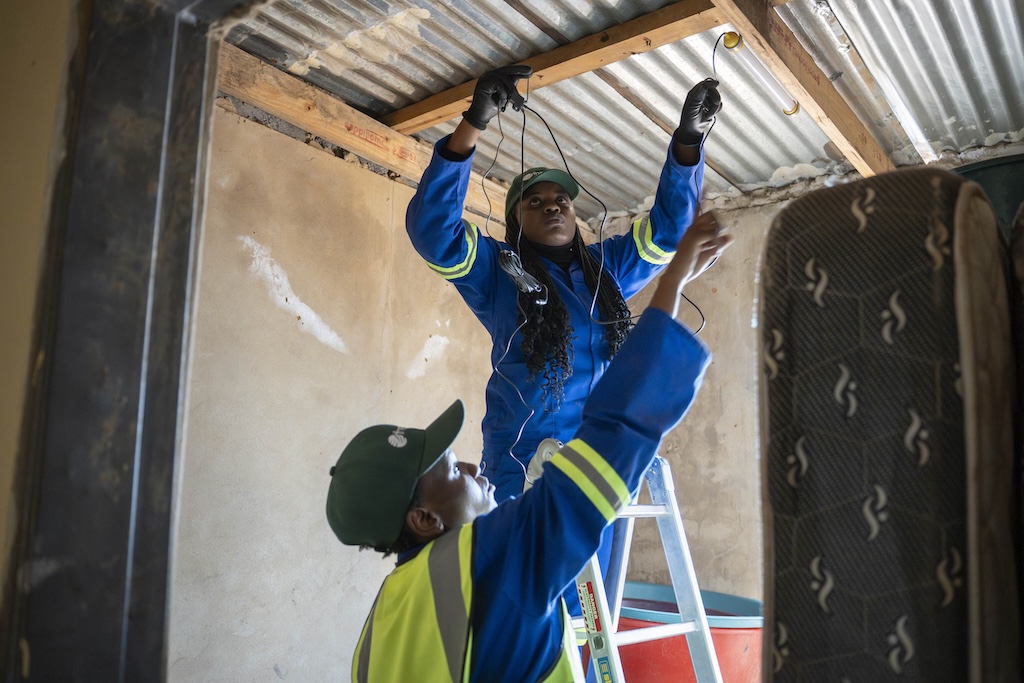
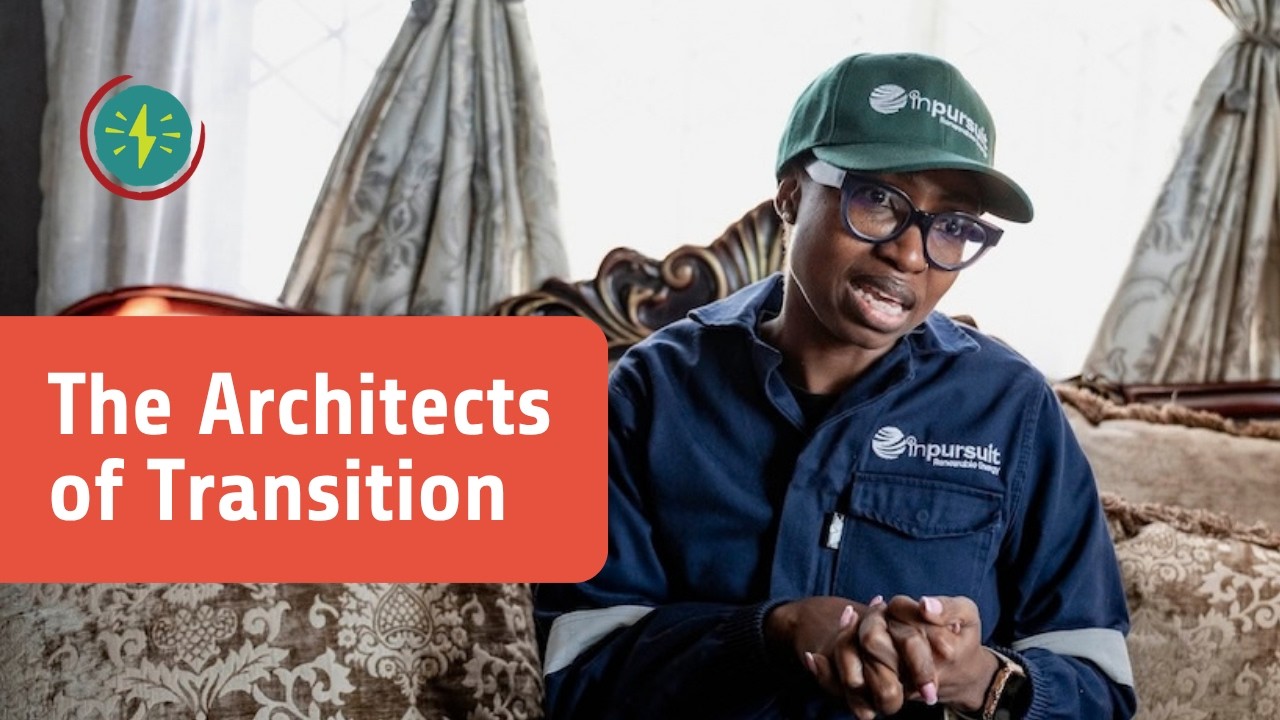
Dineo Rantho (left) and Beatrice Maswanganyi (right), who work as technicians for In Pursuit Renewable Energy, busy with a solar installation at a client’s home in Ennerdale, south of Johannesburg. Photo: Ihsaan Haffejee
South Africa’s shift from coal to renewable energy is reshaping the country’s energy economy, creating new opportunities in engineering, finance, business and technology. But women remain underrepresented in the technical, leadership and ownership positions that will determine who shapes and benefits from the transition.
Women make up about 21% of South Africa’s combined wind and solar workforce, according to the Gender Diversity Guideline for the Renewable Energy Industry, developed by the South African Wind Energy Association and the South African Photovoltaic Industry Association.
Their representation drops to 12% in engineering and technical positions, and to 14% in executive and senior-management roles.
The numbers point to a pattern: women are entering the industry, but far fewer are reaching the positions where technical decisions are made, businesses are led and assets are controlled.
#PowerTracker spoke to five women working across the energy transition to examine how opportunities are changing, what barriers remain, and what it will take for women to have a greater role in shaping and owning South Africa’s energy future.
A natural filtering
For Joanne Bate, an energy and infrastructure finance specialist whose career has spanned commercial banking, development finance, consulting, utilities and asset management, the growth of renewable energy has created opportunities that were harder to access in South Africa’s coal-dominated energy industry.
“The energy transition has been pivotal in bringing women to the forefront,” Bate said.
The coal industry was historically dominated by men, she said, while renewable energy has created new fields where women can participate on a more equal footing.
“It gave an opportunity to transition away from that male-dominated field to start new fields completely on an equal playing ground, equal footing,” she said.
But Bate cautions against equating opportunity with equality.
Women are increasingly visible in finance, legal services, engineering, consulting and technical services, but their representation becomes thinner as they move towards senior management and board positions.
“There’s a natural filtering which happens,” she said, describing the progression from junior positions into middle and senior management before reaching executive and board level.
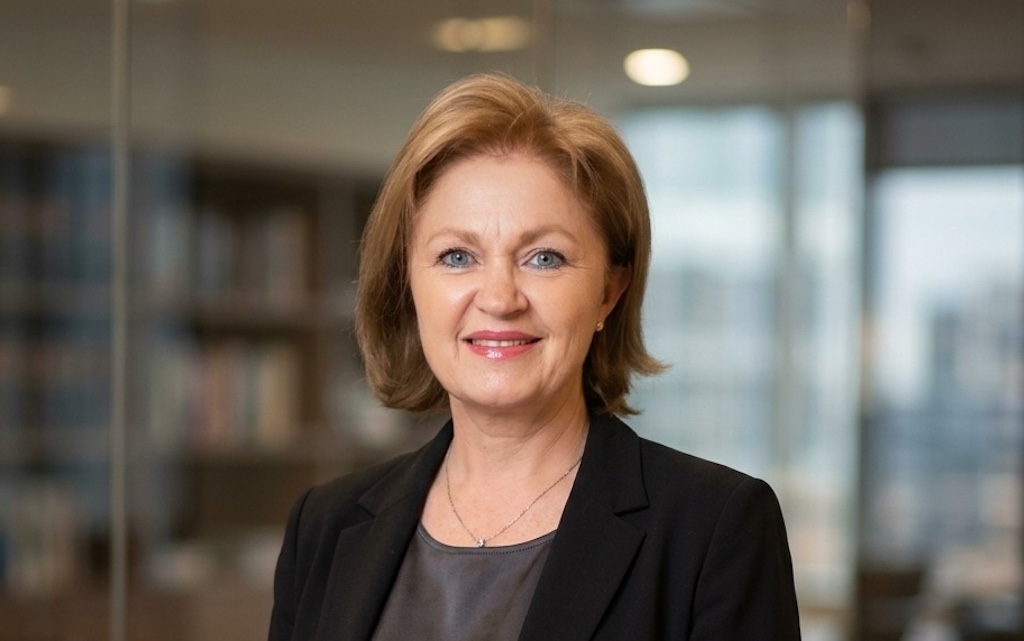
The renewable energy transition has opened doors for women, says energy financier Joanne Bate, but a ‘natural filtering’ sees their representation thin out as they move into senior roles. Photo: Supplied
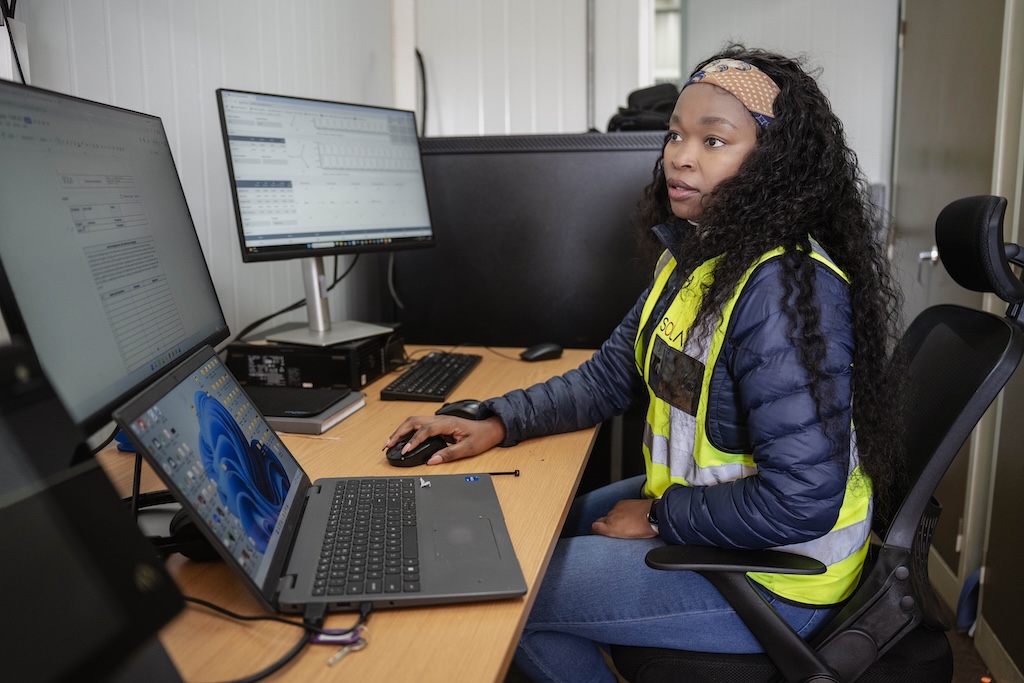
Nondumiso Ngema’s leadership role at SOLA Group highlights the opportunities women can build in renewable energy, though reaching senior positions remains a challenge for many women entering the sector. Photo: Ihsaan Haffejee
Career interruptions
Lungile Mashele, an energy and infrastructure specialist with experience in finance, investment and the energy sector, also identified progression as a problem.
Women can be found across finance, legal services, engineering, technical services and consulting, Mashele said, but few reach the highest levels of decision-making. The sector needs to look more closely at what happens after women enter the industry and what prevents them from progressing.
Countrywise figures reflect that gap. Women account for about one in five workers across wind and solar, but only about one in eight engineering and technical workers, and one in seven executive and senior-management positions.
For Bate, part of the filtering is linked to career interruptions associated with starting families. Women can lose career momentum when they take time away from work while male colleagues continue progressing, she said.
But the barriers are not limited to career interruptions. For women working at the technical end of the sector, the transition has also meant confronting assumptions about who belongs in the room.
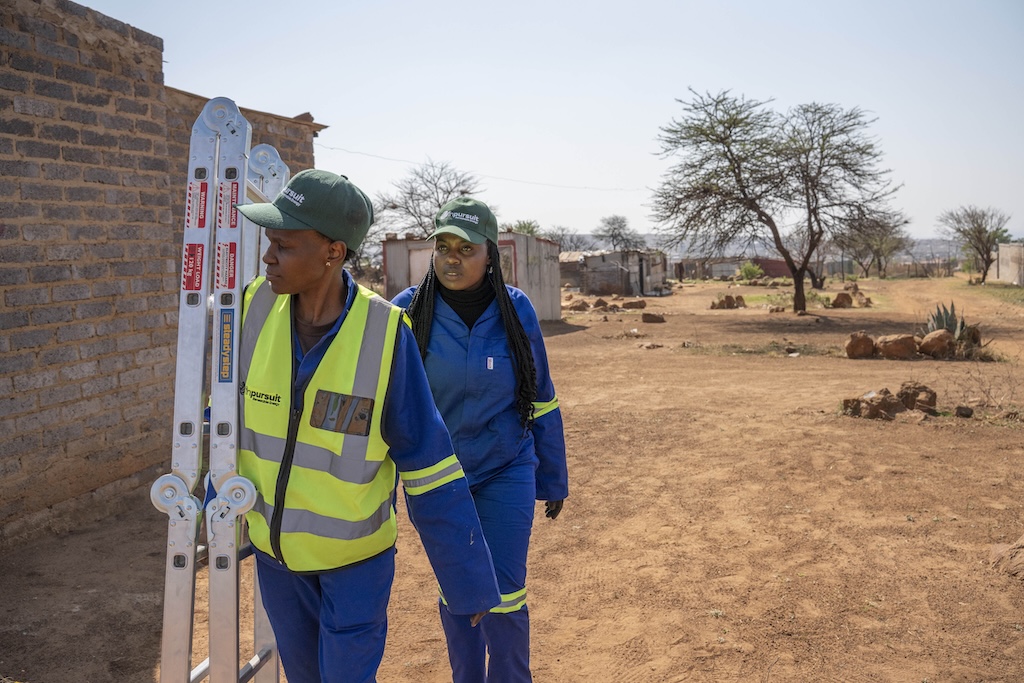
Technicians Dineo Rantho (left) and Beatrice Maswanganyi (right) are challenging the notion of a male-dominated industry by taking on technical roles historically held by men. Photo: Ihsaan Haffejee
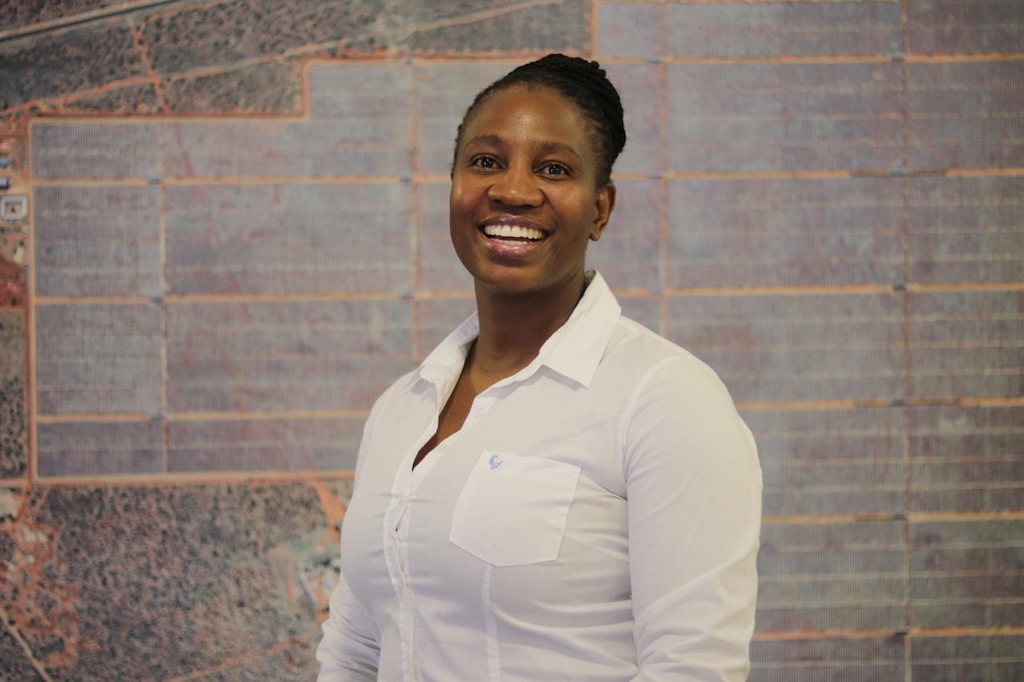
Nomfundo Mbijekana has commissioned about 350MW of renewable energy projects at SOLA Group, building a career in a sector where women are still challenging stereotypes about who belongs in technical roles. Photo: Supplied
Taking up space
Nomfundo Mbijekana, head of asset management at SOLA Group, began her career at Eskom’s Kendal Power Station before moving into distribution and then renewable energy.
She joined the renewable-energy sector in 2016 and has since worked across construction, operations and maintenance and technical management. She has commissioned about 350MW of projects at SOLA Group.
While previously working in coal generation, Mbijekana said she became convinced there had to be a cleaner way to produce electricity “from a technology point of view”.
Her career since then illustrates one of the opportunities created by the transition: women who might previously have entered a male-dominated coal industry can now find space in a new and expanding energy sector.
But changing the technology does not automatically change the culture around it. Mbijekana said women entering technical roles still encounter stereotypes about their abilities and temperament.
“In my view, women are just misunderstood and misinterpreted,” she said.
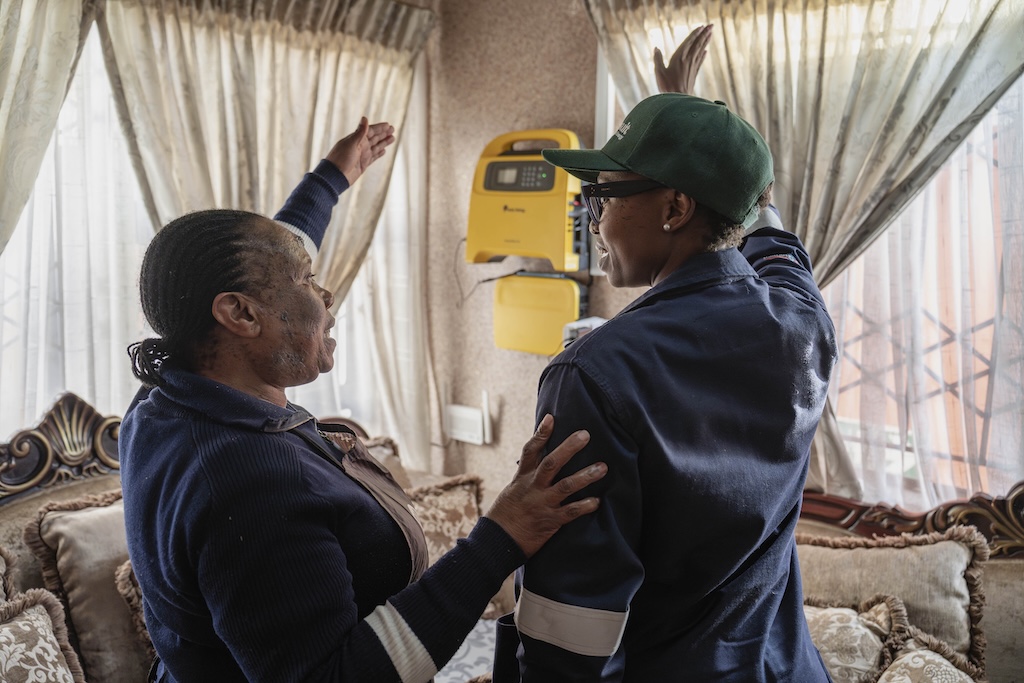
Hleziphi Siyothula-Mtshizane (right), founder of InPursuit Renewable Energy, discusses a newly installed system with a customer in Tembisa. Photo: Ihsaan Haffejee
Technical abilities
Mbijekana said women need to establish themselves through their technical abilities while being willing to claim space in workplaces historically dominated by men.
“What is important for girls is to show up, because what is needed is for someone to own their space,” she said. “For me, it’s two things: collaboration, but more than anything, women must just take the space.”
Globally, women account for 32% of the renewable-energy workforce, according to the International Renewable Energy Agency. Yet their representation falls to 28% in science, technology, engineering and mathematics (STEM)-related positions, 22% in installation and construction, and 19% in senior management and board positions.
The local experience reflects the wider pattern: women are entering the renewable-energy workforce, but their representation decreases as roles become more technical and senior.
Taking up space is only part of the challenge. Progression also requires women to move from being technically competent participants to decision-makers and leaders.
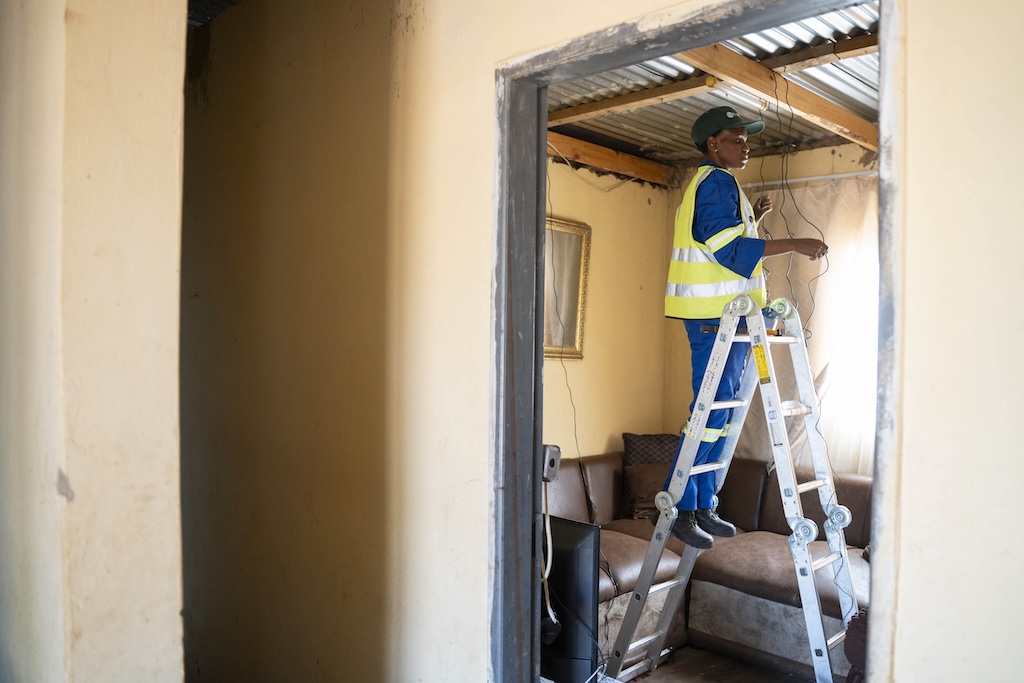
Dineo Rantho is building her career through the technical skills and expertise needed to power South Africa’s renewable-energy future. Photo: Ihsaan Haffejee
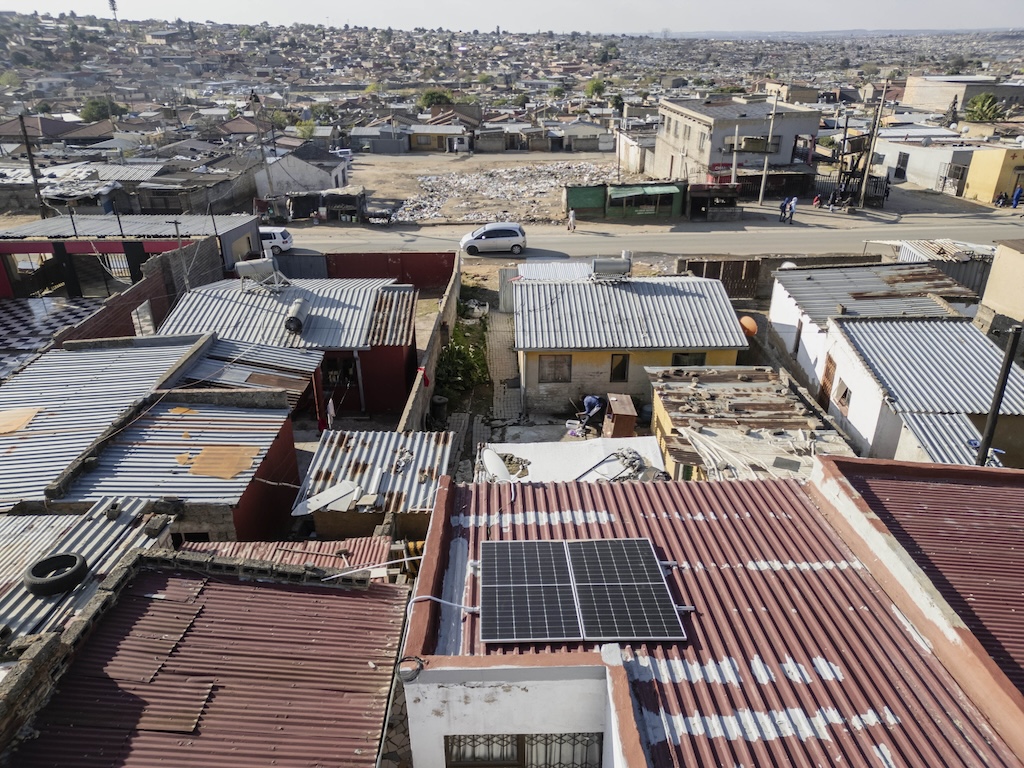
A view of the solar system installed by Hleziphi Siyothula-Mtshizane and her team in Tembisa. Photo: Ihsaan Haffejee
Leadership gap
Nondumiso Ngema, operations director (Pr Eng) at SOLA Group, experienced that shift herself.
“As you step up the ladder, you need to be a leader who’s able to balance between providing an output and also understanding that you’re working with people,” she said.
Ngema studied a master of business administration (MBA) degree after she was professionally registered as an engineer because she wanted to strengthen her ability to lead, influence and make decisions, she said.
Emerging ownership
Bate said she has seen a gradual change in renewable-energy ownership, with more young black people, including women, becoming owners of energy businesses and assets.
“We’re also seeing the face of ownership changing,” she said. “I think in the past, ownership was male-dominated and it was white male. Now we are seeing young black people participating, young black women being owners also.”
There are no national figures showing the proportion of renewable-energy businesses owned by black women, but broader B-BBEE data indicates that black women’s ownership remains low across the economy, at about 12% to 14%.
For women who have moved from technical roles into business ownership, those opportunities come with another set of barriers.
Hleziphi Siyothula-Mtshizane, an electrical engineer and founder of InPursuit Renewable Energy, a company that develops and implements renewable-energy projects, is one example of a woman moving from technical work into ownership.
Siyothula-Mtshizane entered the renewable-energy industry in 2013 and established InPursuit in 2017 after identifying an opportunity for African engineering expertise to play a greater role in the emerging industry.
She said InPursuit has completed more than 100 assignments, more than 90 involving renewable energy, ranging from household and small-business systems to larger commercial and utility-scale projects.
Operating as a black female engineer in a male-dominated industry has required resilience, she said. This means understanding the environment in which she operates and finding ways to succeed within it.
“Being in a challenging environment has become a space where I’m able to manoeuvre,” she said.
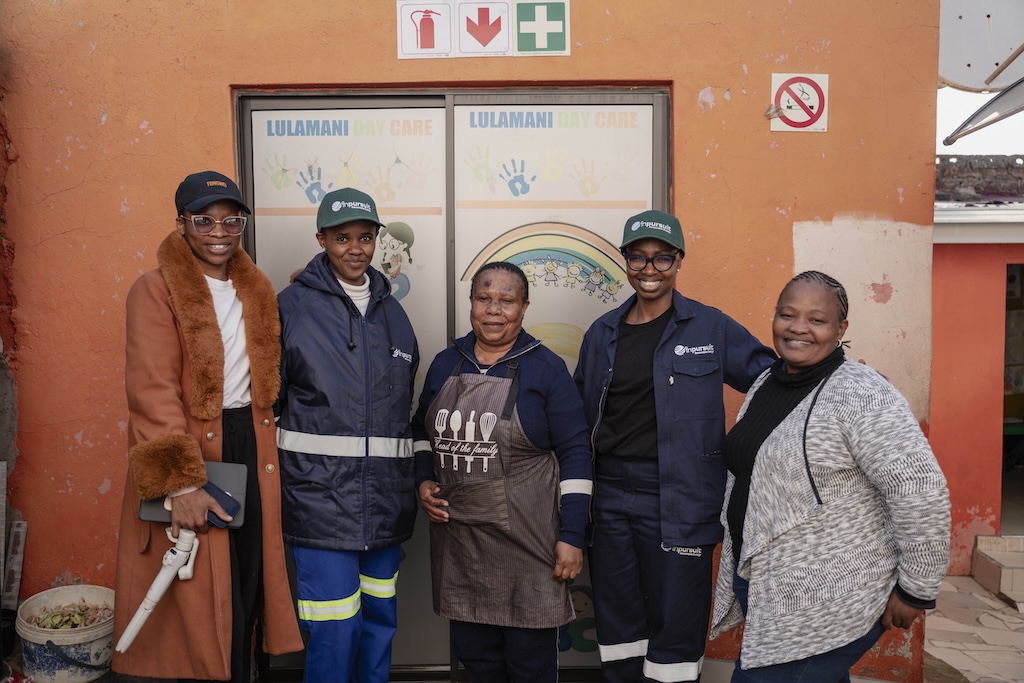
Hleziphi Siyothula-Mtshizane (left) and her team are bringing solar power to a Tembisa crèche while creating opportunities for women in technical roles. Photo: Ihsaan Haffejee
The right support
Her work also takes the energy transition beyond large utility-scale projects.
In Tembisa, InPursuit is working on a project providing solar electricity to a crèche in Kanana informal settlement, for example. The system is designed to support more than lighting, including appliances used for refrigeration, washing and cooking.
The project illustrates how renewable-energy businesses can take different approaches to supplying electricity to communities and businesses, while also creating opportunities for women to participate in the technical work.
But for those opportunities to expand, the pipeline needs to be strengthened long before women reach the workplace, according to Mtshizane. She argued that girls need earlier exposure to STEM training if they are to see themselves in the technical careers that will shape the energy transition.
According to Bate, the situation requires deliberate action from companies and institutions.
“Everybody has to be intentional about it,” she said. “The question is, are they able to progress? Are we giving them the right support to progress? Are we giving them the right exposure? Are we putting them in the right rooms?”
This Oxpeckers #PowerTracker investigation is a collaboration with Explain News, and was produced with support from the New Economy Hub and Ford Foundation
.
The post The Architects of Transition: Women shaping South Africa’s energy future first appeared on Oxpeckers.
Check this story
Is this AI-made?
AI checkers give a likelihood, not proof.