How cities are going to lose all control over housing development, soon
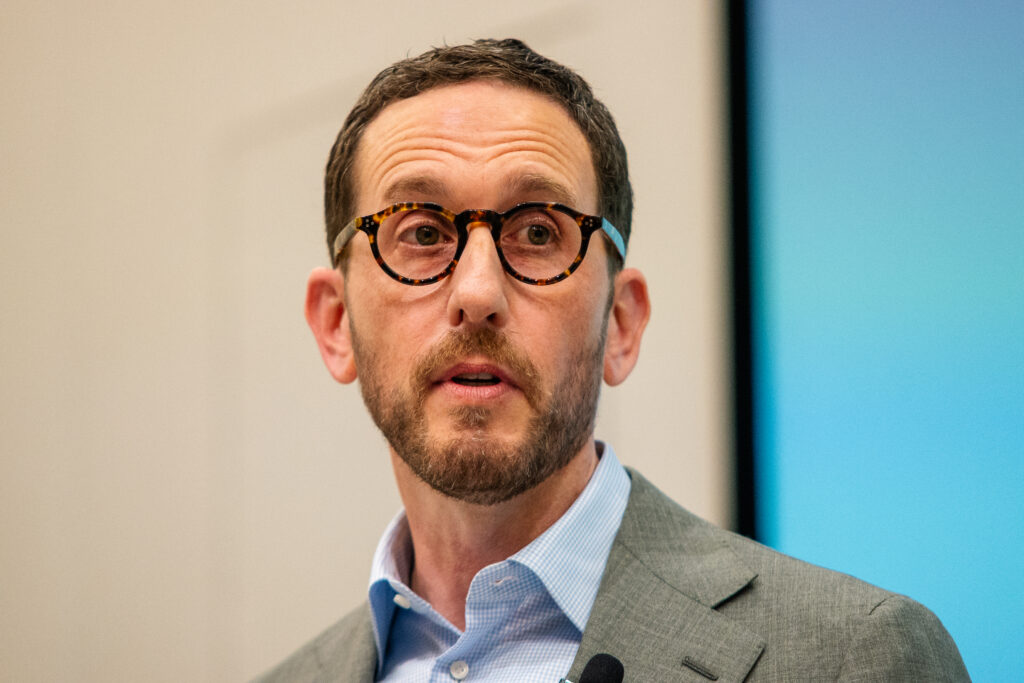
In 2018, State Senator and YIMBY champion Scott Wiener weaponized the Regional Housing Needs Allocation (RHNA). The most recent and largest victim is a six-county area of Southern California that holds almost half of the state’s population. In July, state law required the residents to hand over their control of local housing policy to Wiener’s benefactors, the developers and other real estate interests who have helped shape his career.
RHNA is state-mandated program that requires detailed eight-year housing plans from most of California’s 482 cities and 58 counties (a few rural jurisdictions are on a five-year cycle). Wiener converted RHNA, now in its sixth iteration, into a housing-policy time bomb with a pair of bills, SB 35 (2017) and SB 828 (2018). The latter was co-sponsored by the Bay Area Council and the Silicon Valley Leadership Group. For the details, see this 48 Hills article.
SB 35 added punitive measures to the RHNA process. If developers did not pull enough building permits in the first four years of the RHNA cycle, cities and counties were then required to rubber stamp multifamily developer permits “ministerially.” That means city councils could not require public meetings or planning and zoning reviews. Localities could only review plans to confirm they were consistent with a limited set of zoning rules and objective design standards.
SB 35 gas separate goals for subsidized low-income housing and more expensive market-rate housing. But cities seldom met the low-income targets because affordable housing developers couldn’t find enough federal and state subsidies to start building. Whether or not cities were forced to accept ministerial approvals wasn’t significant because there we so few of them.
The market-rate housing goals were based on population and household projections by the demographers in the Department of Finance. The work of these professionals led to reasonable targets that many cities were able to achieve in the fifth RHNA cycle and in previous ones.
Wiener’s punitive ministerial approvals were not triggered often enough, so Wiener, working with the Bay Area Council, figured out a way to juice the targets—SB 828. That bill created an additional layer of ad hoc adjustments on top of the Dept. of Finance demographers’ work and handed the authority for these adjustments to the more politicized Dept. of Housing and Community Development. The bill created unrealistic housing targets, setting up cities and counties to fail, thus forcing them into the state’s Streamlined Ministerial Approval Process.
The RHNA cycles are staggered so the midpoint time bombs strike different regions in different years. In 2025, the midpoint reviews hit San Diego County and the six counties in the Sacramento region. This year, in July, they struck the six counties of the Southern California Association of Governments—Los Angeles, Orange, Riverside, San Bernadino, Ventura and Imperial. In 2027, the nine-county Bay Area will take the hit.
The RHNA targets for the SCAG region were grossly exaggerated. The building permits goals more than tripled between the fifth and sixth RHNA cycles, from 411,953 to 1,341,827 housing units. Yet during the previous decade, the population of the region had grown only by about 4.3 percent.
Only three out of 197 cities and counties in the SCAG region escaped the state’s penalties. The region houses 46.3 percent of the state’s population. There, 15.7 million residents have lost democratic control of their market-rate housing policies. Another 2.7 million residents in localities that met the market-rate targets but have lost control of their low-income affordable housing policies.
In Sacramento, the Wiener/YIMBY supply-side orthodoxy has dominated the state Legislature’s housing policy for several years. It would be one thing if the implicit promise made by the legislature—less local democracy, more housing—had been kept. But it hasn’t. After about 200 housing bills, housing production is still mired at early 90s levels. Wiener and the YIMBYs have been flogging a dead horse all these years. Recent research from economists at the Federal Reserve Bank of San Francisco confirms this. Also see this report.
During the last decade, the editorial boards of the state’s major newspapers, especially the San Francisco Chronicle and the Los Angeles Times, have acted more like YIMBY cheerleaders than responsible journalists. But after several years of failed housing production promises, a handful of more thoughtful reporters are beginning to question Sacramento’s housing orthodoxy.
In an article dated Dec. 11, 2024, SF Chronicle Staff Writer J.K. Dineen noted:
But not everyone, even those who work in the housing development industry, think California’s heavy-handed approach and sky-high mandates are productive. Land use attorney Riley Hurd said the state-imposed housing goals are “so unrealistic that it actually makes you want to give up.”
“There is a disconnect between lawmakers and actual developers. They need to be having some conversations about the realities of development right now,” Hurd said, referencing the high cost of construction.
In an article dated July 5, 2026, SF Chronicle Staff Writer Olivia Borgula noted a conversation with David Garcia, deputy director of policy at the Terner Center for Housing Innovation:
Garcia said the number of homes permitted in a city largely depends on the area’s economics, including construction costs and the availability of subsidies for low-income housing.
“A city can have a perfectly good housing element, perfectly good zoning, all geared toward getting housing built, but if the market is not really working for developers, then that stuff just doesn’t get built,” he said.
In an article dated August 11, 2026, CalMatters Housing Reporter Ben Christopher wrote:
Critics of the state’s planning process have long stressed that California’s targets are unrealistic and that local governments can only do so much.
“Cities cannot require developers to develop and cities don’t build housing,” said Jason Rhine, a lobbyist with the League of California Cities. You can lead a developer to a rezoned plot of land, in other words, but you can’t make them build.”
In a written statement, housing department spokesperson Jennifer Hanson said there are many reasons developers may or may not choose to build in a particular location. Some are in the power of local and state governments, like zoning and building codes, permitting timelines and fees. But many are not, said Hanson.
“Whether a project moves forward depends on interest rates, construction and land costs, access to capital, insurance and expected rents or sale prices,” she said.
It’s good to finally hear someone from HCD state that many factors that affect housing production are not in the power of governments. It might even provide a bit of satisfaction to Jason Rhine of the League of California Cities, who used very similar words in the League’s veto request to Gov. Jerry Brown in 2017, nine years ago. Rhine wrote that SB 35 should:
“Require the trigger for ministerial approval of housing projects to be based on the number of entitled and approved applications, a process that a local agency actually controls, rather than building permits, which a developer controls and will not pull until they are ready to construct a project.”
If that is the case, then why continue to punish citizens and their local governments for things they don’t control? When will state legislators start to correct the damage done by bills like SB 828? And when, if ever, will we hear an apology from The LA Times, the SF Chronicle, the Terner Center for their years of misinformation?
RHNA, meanwhile, has become a bureaucratic wasteland. In a recent HCD web seminar, at 08:00, a staff member stated that more than 43,078 units submitted to the streamlined ministerial approval process from 2018 to 2025, and 27,961 were approved and entitled.
For comparison, between 2020 and 2025, 540,000 net new housing units were built in California, bringing the state’s total number of housing units above 15 million. These figure dwarf RHNA’s contribution. Although an official estimate has not been calculated, easily $1 billion or more has been spent on the 6th cycle RHNA, including local jurisdiction staff time, consulting fees, unfunded mandates, and large increases in HCD staffing. How many housing units could have been built if the state had instead used that funding to build housing directly, or used it to subsidize affordable housing construction?
We may never find out. Because of a little-understood aspect of Wiener’s changes to RHNA, the ministerial approvals we’ve seen for the SCAG area are likely to become permanent for most of California’s 540 cities and counties. Under SB 35, jurisdictions must be reviewed every four years, at the midpoint and then at the end of each eight-year RHNA cycle. For Los Angeles and the other cities in the SCAG region, if they have not reach 100 percent of their targets by 2030, they remain under RHNA’s ministerial approvals for the next four years, which will take them to the midpoint of the seventh RHNA cycle in 2034.
If the seventh cycle targets and subsequent ones are as absurd as the current one, SCAG cities and counties will remain under streamlined ministerial approvals indefinitely, along with most of the rest of the state. Unless the legislature corrects the faults of SB 828, or it allows SB 423 (2023) (the updated version of SB 35) to sunset in 2036, almost all California cities and counties will never regain control of their land use decisions.
The nine-county Bay Area’s RHNA midpoint will be in July 2027, less than one year from now. The region houses 7.68 million people, almost 20 percent of the state’s population. As in Southern California’s SCAG region, most of the Bay Area’s 101 cities and nine counties will fail to meet the exaggerated RHNA goals.
But there is one exception. When Wiener introduced SB 423, the updated version of SB 35, he gratuitously added a line that managed to survive several rounds of committee reviews of the bill on its way to the desk of Governor Gavin Newsom, who signed it. Can you spot the added line in the bill text below?
(12) (A) “Reporting period” means either of the following:
(i) The first half of the regional housing needs assessment cycle.
(ii) The last half of the regional housing needs assessment cycle.
(B) Notwithstanding subparagraph (A), “reporting period” means annually for the City and County of San Francisco.
.
Now the YIMBY crew is making it difficult for Mayor Daniel Lurie’s Family Zoning Plan. Even if you don’t like that plan, it was a reasonable effort on the part of the San Francisco Planning Department to do the impossible—to satisfy the state’s unrealistic RHNA requirements. Lurie’s plan seemed to be working, at least until another incompetent Wiener bill, SB 79 (2025), threw a wrench into the mayor’s planning machinery. Now the lawsuits from Wiener’s YIMBY allies are adding sand to the gears.
It’s just going to get worse.
Full disclosure: Tim Redmond edited this story, and his independent adult daughter works on the Connie Chan for Congress campaign.
The post How cities are going to lose all control over housing development, soon appeared first on 48 hills.
Check this story
Ask the guide
The guide explains what to check and where. It cannot see this article or recent news.
Is this AI-made?
AI checkers give a likelihood, not proof.