City to Launch New Call Center for NYCHA Tenants in Need of Repairs
The new “Critical Repair Initiative” will be modeled after the Mold and Leaks Ombudsperson Call Center, which residents say has added an extra layer of accountability and coordination to NYCHA’s slow, multi-part repair process.
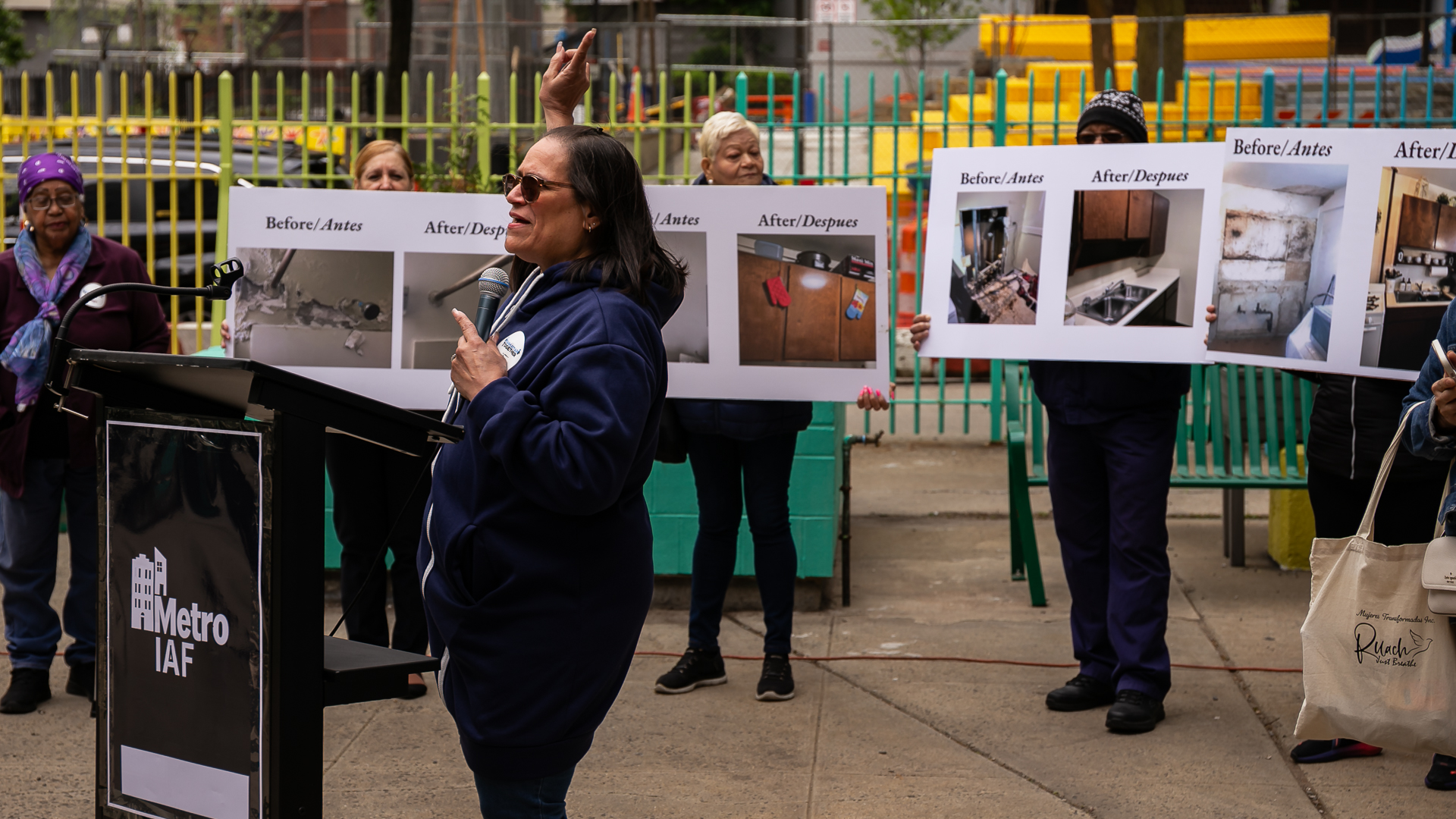
Earlier this spring, the knob on Betty Potts’ shower broke off, and water was “shooting out,” she recalled. A longtime tenant at NYCHA’s Harborview Terrace in Hell’s Kitchen, Potts contacted the housing authority, which sent a worker out to stop the spray—but in doing so, left a gaping hole in the wall of her shower.
She called NYCHA again, and said she was told they would schedule another worker to come out to repair the hole—in six months.
“I was frustrated. Because how can you do that? I didn’t know what to do,” Potts recalled during a recent interview with City Limits.
Then someone told her about the Ombudsperson Call Center (OCC), which NYCHA tenants can contact for help if they’re dealing with mold or leaks in their homes that the housing authority has failed to fix. Potts was skeptical, but called anyway.
“The very next day, the carpenter came to my door,” she said. “I got an email, I got a text. I never get those things from NYCHA.”
Potts is among the public housing residents who lodge an average of 300 calls per month to the OCC, an initiative launched in 2019 as part of a settlement in an earlier class-action lawsuit, in which a group of tenants sued NYCHA over its failure to fix mold infestations in their apartments.
Residents who’ve used the OCC—which operates independently of NYCHA, and is overseen by a court-appointed attorney—say it’s greatly improved how the housing authority deals with mold and leak fixes, adding an extra layer of accountability and coordination to NYCHA’s slow, multi-part repair process.
Now, the city is looking to build on that model. In his “Block by Block” housing plan unveiled last month, Mayor Zohran Mamdani announced the new “Critical Repairs Initiative,” which would work similarly to the OCC but handle issues beyond mold and leaks.
The CRI will “serve public housing residents who are experiencing critical, long standing conditions in their homes that impact habitability, including major structural damage, missing or unusable fixtures or cabinetry, significant floor or ceiling damage, or other serious deficiencies,” the plan reads.
“A NYCHA resident experiencing one of these critical, long-standing repair issues can call the CRI and expect clear communication and stronger case management to ensure that repairs are completed,” it adds.
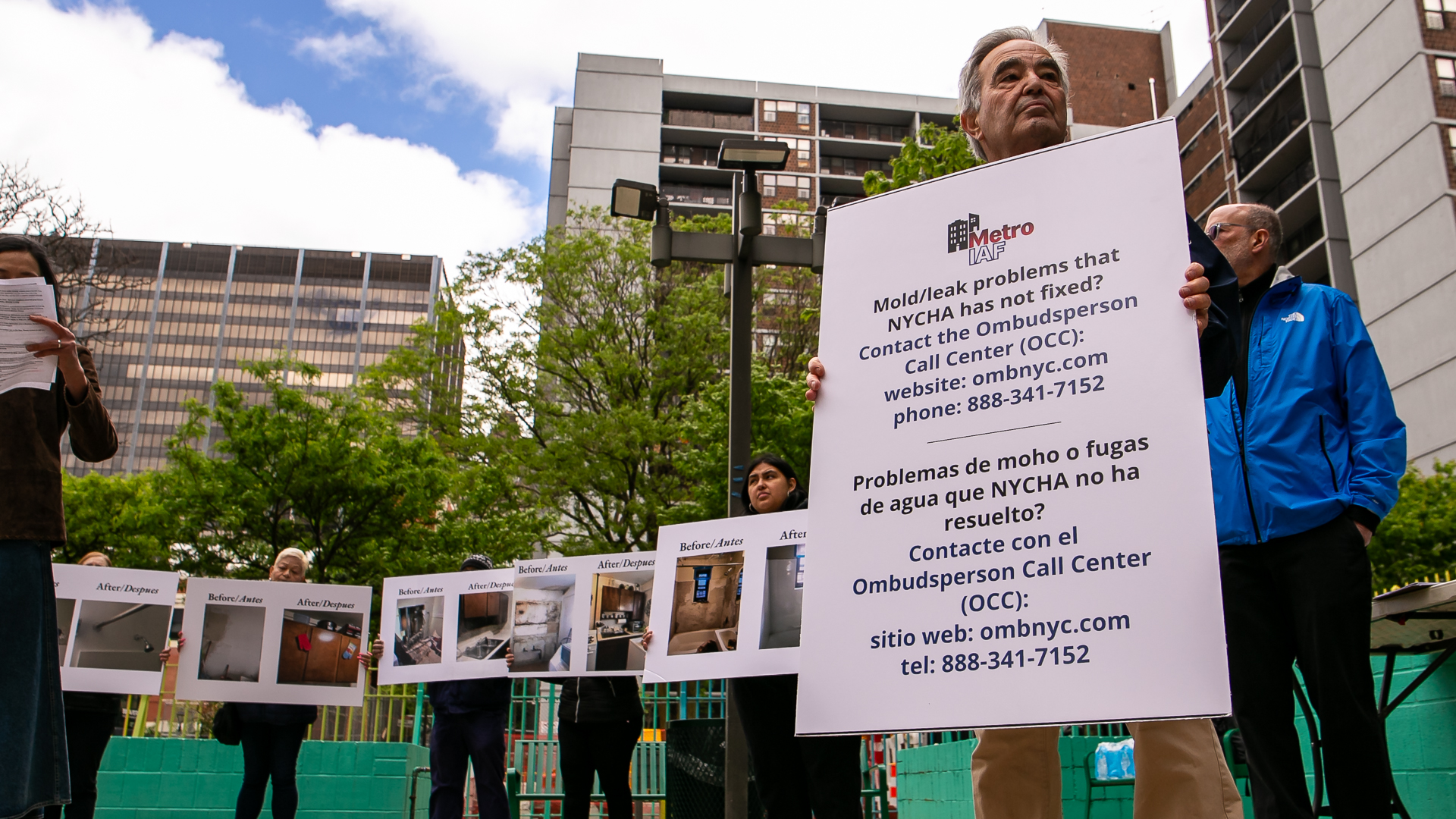
Tenants and advocates cheered the announcement. “This is the most substantial step taken by a New York City Mayor to improve public housing residents’ quality of life in decades,” Rev. Getulio Cruz, a leader with the advocacy group Metro IAF—which helped organize tenants in the class-action lawsuit that established the OCC—said in a statement to City Limits.
Long plagued by underfunding, the housing authority now faces an estimated $78 billion in needed capital renovations across its more than 2,400 buildings. There were more than 599,000 open work orders across the system in May. NYCHA’s own video overview of its repair process acknowledges this backlog, and apologizes to tenants for “long repair wait times.”
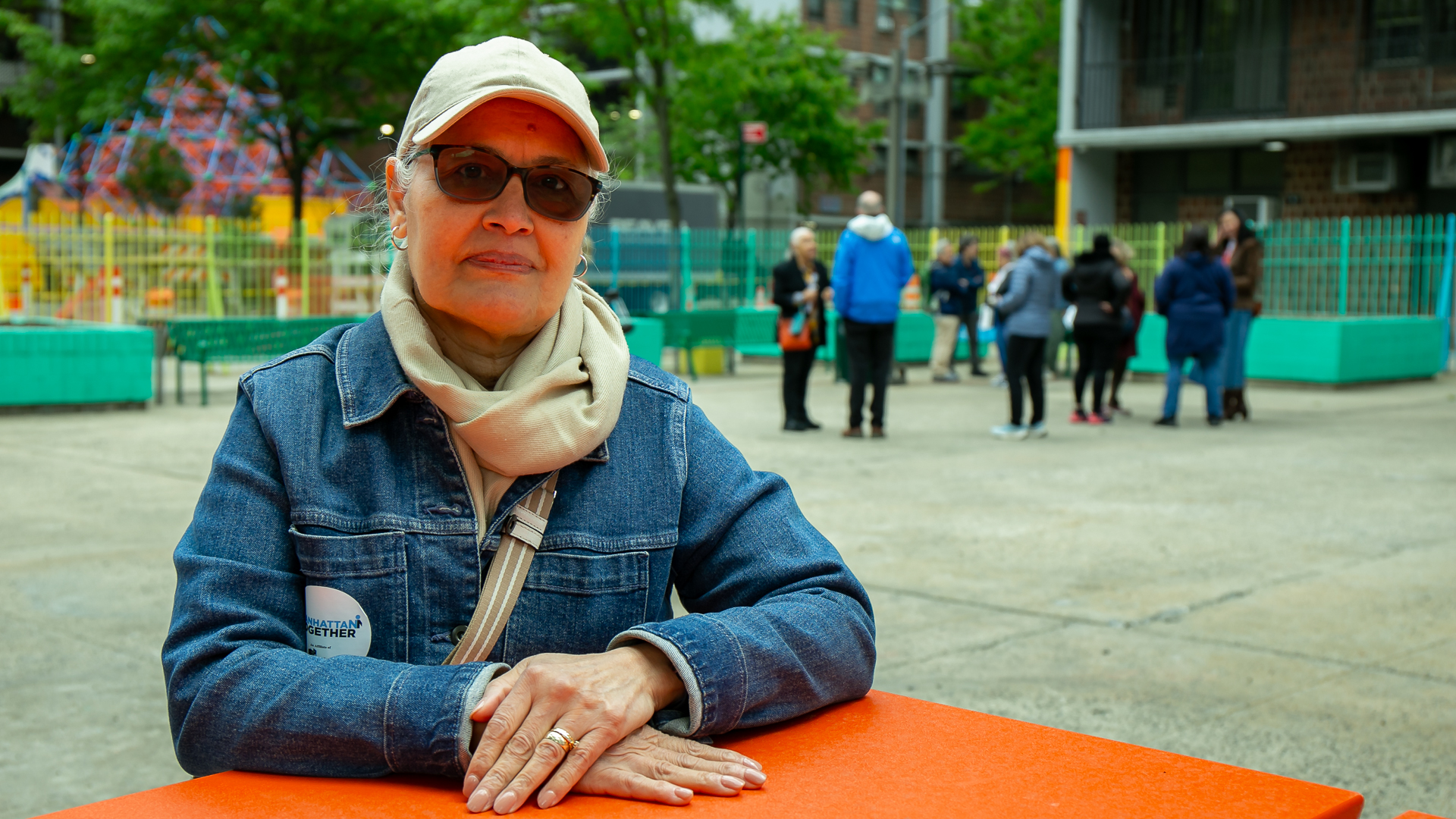
“Mold and leaks aren’t the only problem we have,” said Blanca Ramos, a retired teacher and leader with the group Manhattan Together who’s lived at Jacob Riis Houses for almost 45 years,
She said she’s helped dozens of her neighbors navigate repairs through the OCC since its launch seven years ago. The call center staff, she explained, acts as a liaison between tenants and NYCHA maintenance. It helps deal with many of the most common complaints residents have about the repair process: long waits for appointments, multiple steps that require the involvement of workers across NYCHA’s different “skilled trade” departments, and lack of communication about what to expect next.
“My neighbors and I got used to NYCHA not fixing problems,” said Ramos. She recalled helping one elderly neighbor who’d been waiting nearly a year for a replacement sink and cabinets in her kitchen. After the OCC intervened, the work was done within a few weeks.
“She called me saying, ‘Thank you.’ She’s in tears. She’s excited, she’s grateful. She said, ‘I waited so long, and you’re a miracle worker,’” Ramos said.
“There’s always an excuse. But for some reason, when OCC calls them, they can get on board, and they start doing what they’re supposed to do,” she added.
Mamdani’s executive budget proposes $15 million for the Critical Repairs Initiative over the next two years. Advocates have pressed for more, though: Metro IAF called for $102 million for the effort, funds that would cover staffing the new call center as well as the repair work it would oversee. A budget deal is due July 1.
City officials say the new CRI will operate “entirely separately” from the OCC, which will continue to monitor mold and leak repair problems.
“It is modeled off the successful program of the Ombudsman Call Center, or OCC, but this is a new, separate initiative, where we’ve taken a lot of the lessons learned from that, and are building in it,” NYCHA’s Chief Operating Officer Eva Trimble told lawmakers at a recent City Council hearing.
“We do expect to use the same initial call center that OCC is using to help support the intake, but then we will have additional case management services provided by NYCHA staff, as well as additional skill trades dedicated to actually doing the work and closing the cases,” she said.
To reach the editor, contact Jeanmarie@citylimits.org
Want to republish this story? Find City Limits’ reprint policy here.
The post City to Launch New Call Center for NYCHA Tenants in Need of Repairs appeared first on City Limits.