Manchester’s lowest-ever election turnout results broken down
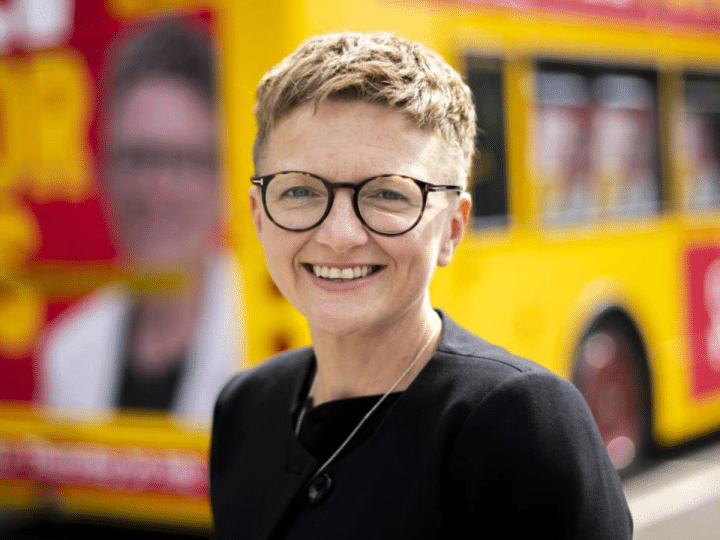
After a string of high-profile elections, Greater Manchester has elected another Labour mayor in Bev Craig. On the face of things, that might seem like nothing much of a change.
But having been around Gorton and Denton, local elections, Makerfield and the mayoral, I can assure readers that things have changed in the region. For progressives, that change isn’t looking too great.
Burnham got over 420k votes last time so 251,449 is not good for Labour.
— Lady Jane Simkins
(@JaneSim66) July 31, 2026


Manchester experiences poor voter turnout
The most striking statistic is undoubtedly dire voter turnout on Thursday. Only 25% of the total possible electorate bothered to show up, which was as low as 22% in Wigan and Oldham. That’s a bad indictment of all mayoral options.
To be sure, it’s never been a strong show. It peaked at 34.7% in 2021, with lockdown-weary voters desperate for an excuse to leave their house, and dipped to 32.1% in 2024. But even when the mayoral role was brand-new in 2017, some 28.9% still voted. So what’s happened?
It’s possible that voters across Greater Manchester are fed up with elections, by-elections, and all the fleeting national attention these bring. I experienced this firsthand in Makerfield, with multiple voters offering me statements like, “I’ll be glad when it’s over” and “I want it all to be over!” In fairness to them, at least these ones came out to vote on the day that ultimately, decided our new prime minister.
No doubt these voters felt rather exasperated returning to the polls scarcely six weeks later, not even 12 weeks after local elections. But it’s also reflective of wider national phenomena.
Keir Starmer’s “loveless landslide” majority of over 400 MPs was elected by a mere 52% of the voting-age population. This was the second-lowest turnout since universal suffrage, only beaten by 2001’s post-political haze.
Council election turnout has hovered between 33–34.5% in recent years, despite the most recent round in May feeling somewhat more momentous than usual.
This is not healthy for a supposedly representative democratic system. As one study puts it, published about a survey of Brighton and Hove County Council by the Institute of Development Studies:
Without participation in local elections, we run the risk of unrepresentative implementation of vast swathes of the welfare state and those behind these implementations not being held to account by most residents.
This is equally true, if not more so, for Greater Manchester. Especially as Andy Burnham promises to hand his successor and her peers greater devolved powers.
Burnham’s brainy protégé takes power
Labour candidate, Bev Craig, was elected mayor by Greater Manchester. She’s been Manchester City Council leader since 2021, a position that seems a natural predecessor to the big job.
In some ways, Craig could be a welcome development. She’s the first female Greater Manchester mayor, and is an out-and-proud lesbian in one of England’s most powerful jobs. She also said, at the Mill hustings, that she wears it as a “badge of honour” that the Telegraph smears her for standing by the trans community.
I was most impressed by Craig when she was asked about other cities she takes inspiration from. While other candidates floundered, Craig mentioned some solid examples of good governance. She lauded Barcelona’s combative approach to Airbnb rental takeovers and their ‘super-blocks’ method for traffic reduction.
She also cited Vienna’s world-class socialised housing model and the co-operative housing movement in Copenhagen. Craig looks to China for their sustainable ‘sponge parks’ programme too.
These aside, I’ve written about my reasons for doubting Bev Craig (here and here).
More on Burnham and Craig’s vote share
Craig has been alternately, not to mention rather confusingly, profiled as Andy Burnham’s protégé and also dubbed the “brains behind Burnham.” She says they’ve “worked very closely” since 2021 and admits there will be continuity.
However, for all their mutual respect and working relationship, Craig’s vote return was brutally low compared to Burnham’s prior successes.
In 2021, Burnham secured an almost unheard-of 67.3% in the mayoral vote. This only dropped marginally to 63.4% in 2024. Then he managed to persuade 55% of Makerfield voters to make him their MP, and our prime minister, and stop a double far-right threat from Reform UK and Restore Britain.
It’s no stretch to say that Burnham has unparalleled personal favourability in this neck of the woods. His successor, meanwhile, secured just 47.1% of the vote. Craig was the first to face a two-round run-off, where Burnham’s previously resounding popular vote had never necessitated a second vote count.
Perhaps worst for Craig, her mandate saw a real term voter drop of just over 40%. This means that far fewer people came out to support her than they ever did Burnham. Only about 12% of the electorate, in fact. She can take some solace from her second-choice share of 66% dwarfing that of Reform’s candidate.
In her acceptance speech, Craig at least promised to be a mayor for all Mancunians:
I will serve every single one of them, every single day.
Let’s hope she keeps true to that promise.
Labour and Reform dodge Manchester mayoral election community hustings
Green Party gains, but far right consolidates
I genuinely came to believe that Greens second place was plausible. Perhaps I spent too much time around Green Party activists on the campaign trail. Unfortunately, Reform’s Sian Astley took that spot.
All the same, the Greens’ candidate, Geraldine Coggins, managed to secure a solid third place vote. She came second in Manchester central, while Astley took second in most boroughs.
In real terms, the Greens gained about 19,000 voters. That was up to just shy of 65,000, up from almost 46,000 in 2024. But as a percentage of those motivated to vote, they gained a full 5%, now up to 12%. This mirrors much national polling.
I didn’t doubt that Labour would clear up on second round voting. They represent the less-bad middle way for both polarised Green and Reform/Restore Britain voters. In a way, tactical voting is just deferred with the second choice voting system, called ‘supplementary vote’. (Public information around the point of this new-fangled system — or how to vote smartly — was abysmal, if even existent.)
What is far more concerning to Canary readers, however, is the consolidation of the far-right vote. The semi-defunct Tory party was actually leapfrogged into fifth place by Restore Britain. From nowhere, Restore’s Marlon West took 9% — above where Greens were two years ago. This is a man cynically weaponising his daughter’s rape and abuse to demonise Pakistani and Muslim communities.
Meanwhile, Reform held second place and secured a full fifth of the popular first round vote with 21%. Then a full third of non-Labour, non-Restore first choice voters decided that Reform was a sensible second choice, which is baffling too. This consolidates their outer-borough gains from May’s council elections.
Combined with Restore’s gains, the far right finds itself comfortably ahead of the progressive, anti-status-quo left by some 250%. That should give Manchester serious pause for concern.
If one thing’s certain, there’s plenty of work to be done before we vote again.
Featured image via Anthony Devlin/ Getty Images
Check this story
Ask the guide
The guide explains what to check and where. It cannot see this article or recent news.
Is this AI-made?
AI checkers give a likelihood, not proof.