Inside the doomsday ‘cult’ spreading climate disinformation to global leaders
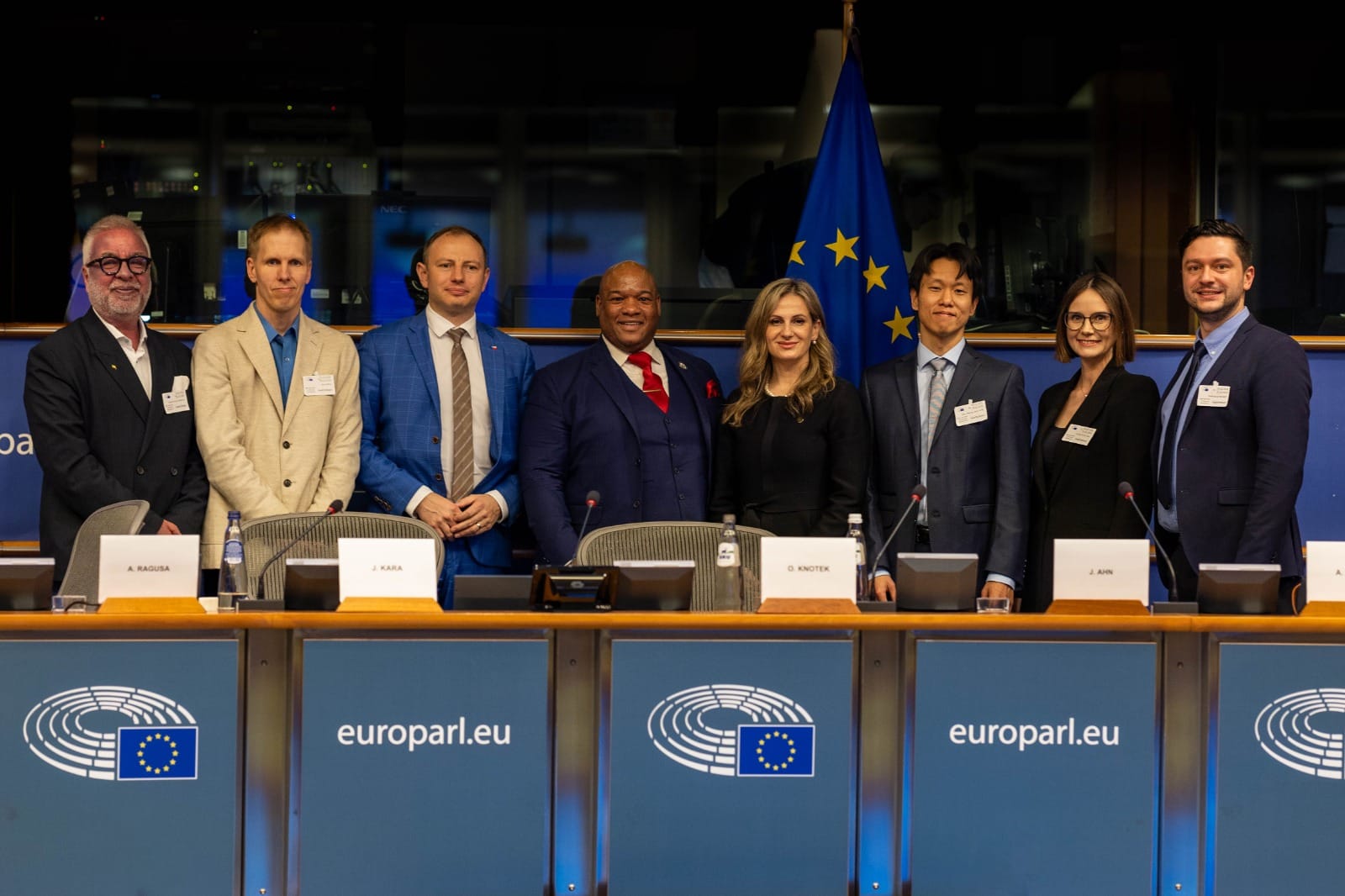
Earlier this year, a conference was held in the European Parliament to discuss the dangers of nanoplastics. Such an event would not be unusual, were it not for its co-host: a “religious cult” that predicts humanity will go extinct by 2036.
Founded in Ukraine in 2014 and now headquartered in the US, AllatRa presents itself as “a volunteer-driven initiative” studying the climate crisis and natural disasters. Yet its publications advance a radically different explanation for climate change than the scientific consensus. According to reports published by the group, the principal threat comes not from greenhouse gas emissions, but plastic pollution – combined with an “external cosmic” phenomenon that it says takes place every 12,000 years.
In materials that were removed from its website soon after openDemocracy approached for comment, AllatRa warned that “humanity’s very existence could be at serious risk” due to a possible escalation of natural disasters within the next ten years. One now-deleted report claimed that nanoplastics in the world’s oceans are preventing the Earth’s core from cooling, causing seismic activity that will rupture the Mariana Trench in the Pacific Ocean – Earth’s deepest point – and lead to a massive explosion that will destroy the Earth’s “atmosphere, oceans, and magnetic field”.
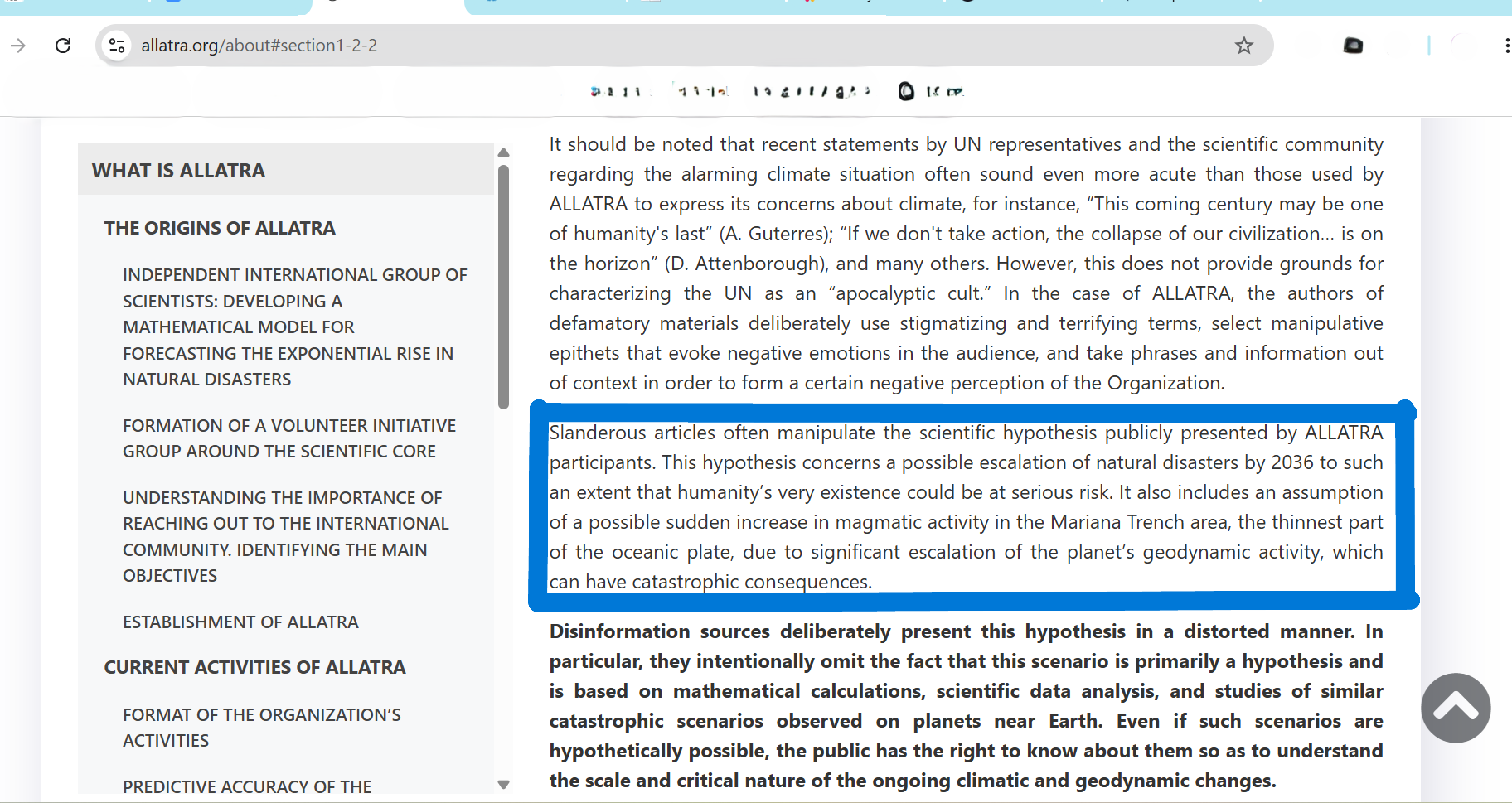
While scientists have dismissed this narrative as pseudoscience, AllatRa has secured a remarkable degree of access to influential members of the global far-right. Since 2024, the organisation has been welcomed into the US Capitol, the European Parliament, the US Congress, UN meetings and the Vatican – allowing it to spread its ‘scientific findings’ to global audiences and leaders.
Experts warn that pseudoscientific narratives like AllatRa’s are part of a growing wave of climate disinformation that is diverting attention away from trying to tackle the real causes of climate change and undermining public understanding of the crisis.
“Plastic production is not currently seen as a centre stage as a driver of climate change,” Richard Thompson, a marine biology professor at the University of Plymouth, told openDemocracy. “The prediction of the science is that the contribution of plastics towards climate change could become more important in the future if the other drivers of climate change, such as burning of fossil fuels, are reduced. Saying that microplastics are already becoming a driver of climate instability is, in my view, an overstatement.”
AllatRa’s climate disinformation creates an “epistemological crisis that generates perception problems”, said Polish academic Patrycja Sasnal, a member of the UN Human Rights Council Advisory Committee and a co-author of a report about environmental disinformation.
“Disinformation exploits the nature of science: we know that climate change is man-made and we’re affected by it,” Sasnal told openDemocracy. “There’s always a political interest behind every disinformation campaign. We don’t have time anymore to check information, and doomsday disinformation causes anxiety.”
Inside the European Parliament
In a press release on its website, AllatRa takes credit for co-hosting ‘Nanoplastics: Hidden connections and emerging risks’ in the European Parliament with far-right Czech MEP Ondřej Knotek in February of this year.
The conference featured panels that mixed real scientists and members of AllatRa Global Research Centre, the organisation’s think tank.
AllatRa frequently uses real scientists to give legitimacy to its work, sometimes manipulating their opinions to do so. Experts featured in one AllatRa documentary released last year say their comments on plastic’s impact on planetary health were twisted to support its predetermined pseudoscientific conclusions, such as a correlation “between the rise in oceanic plastic concentrations and the warming of ocean waters”.
One of those experts was Thompson of the University of Plymouth, who told openDemocracy that correlation doesn’t imply causality. “They [AllatRa] are splicing pieces of information together and reaching conclusions that are not supported by the science that sits behind them,” he said.
Another expert, Turkish marine biologist Sedat Gündoğdu, asked AllatRa to remove his interview from the documentary. “While it is true that they [AllatRa] have selectively highlighted studies addressing the potential risks of nanoplastics, it could perhaps be argued that they have disregarded research that raises questions about these risks”, he explained.
Gündoğdu also noted that AllatRa does not mention any mitigation strategies on plastic pollution, which adds confusion to its doomsday narrative. “Their so-called ‘papers’ on nanoplastics appear to be a simple summary of the existing literature – that is why I asked for my interview and involvement to be removed from the documentary,” he said.
Towards the end of the documentary, which is three hours and 20 minutes long, a section called “the age of intellectual extinction” claims that “our cognitive abilities are rapidly declining as a result of nanoplastics accumulating in our brains”.
Speaking to openDemocracy, Gündoğdu questioned the evidence for this claim. “Making such a baseless claim and then connecting it to nanoplastics is not scientific,” he said, later adding: “There are studies that link heavy metals and some persistent organic pollutants with cognitive capacity loss. However, in the light of our current knowledge, it is nonsense to establish a relationship between nanoplastics and what is claimed to be intellectual extinction.”
In a written statement to openDemocracy, AllatRa’s head of communications, partnerships and events, Valeria Smian, said that the language the organisation used in the film was “metaphorical and emphatic” and “intended to draw attention to a possible long-term neurological and cognitive dimension of micro- and nanoplastic exposure”.
Despite criticisms from the scientific community, AllatRa continues to disseminate climate disinformation. Posting a summary of a discussion that took place at the European conference on its website, the organisation said: “Knotek [the Czech MEP] reiterated that the problem of micro- and nanoplastics is politically ignored because it is not directly visible and at the same time undermines existing ideological frameworks, such as the interpretation of climate change closely linked to fossil fuels.”
It continued: “According to him, politicians are reluctant to change their positions because doing so would mean admitting that they did not tell the whole truth in the past, and they would risk losing support. [Knotek] noted that while in the business environment, adjusting strategy is a natural response to new findings, in politics, changing course is often perceived as a loss.” A copy of this press release was saved in a publicly available cloud.
While some MEPs made official complaints about the decision to platform AllatRa in the European Parliament, the body that oversees parliamentary administration found “no sufficient grounds to conduct an investigation”, according to Politico.
“It is no accident that the far right opens the door for this pseudo-scientific theatre. Sowing doubt about established science is their business model, and the Patriots are happy to hand over a parliamentary room to do it”, German MEP Michael Bloss, member of the European Parliament’s Greens Group, told openDemocracy. Bloss was referring to Knotek’s far-right cross-country Patriots Group, which also includes politicians from Rassemblement National in France, Fidesz in Hungary, and Vox in Spain.
A European Parliament spokesperson told openDemocracy that the conference “was not an official EP event”, and “MEPs, political groups, and the EP secretariat organise events each year”.
A message from Trump
One speaker at the event in the European Parliament was American evangelical pastor Mark Burns, who describes himself as a “spiritual advisor to President Donald J. Trump”. It was not the first time Burns and AllatRa had met in a key legislature this year – they also co-hosted two conferences in the US Capitol complex in January and February.
The first, titled ‘United in Liberty: The Rise of Spiritual Diplomats’, was attended by MAGA politicians and European far-right figures such as Romanian MP George Simion, a Trump fan who lost the presidential election in 2025. The US president himself even recorded a video address for the conference, in which he celebrated Burns’ endeavours.
“I just want to congratulate and thank pastor Mark Burns – he’s been my friend for a long time, and he’s been with me from the very beginning, and we very much appreciate him – on the great job that he’s done,” Trump said in the clip. “So many people believe so strongly in him, so God bless you, Pastor Burns, and keep going forward.”
Burns appears to have brought up his previous work with AllatRa while at the European Parliament weeks later. AllatRa’s summary of the European conference quotes the pastor as saying: “The global initiative, Spiritual Diplomacy, which I have the privilege to chair, has recognised the nanoplastics issue as one of the key areas of work […] Nanoplastics are not a left or right issue. Not religious or secular. We believe this is a moral obligation to protect life, to protect health, and to speak early – not after the cost becomes irreversible.”
Two weeks after the Spiritual Diplomats event, AllatRa and Burns co-hosted a second conference in the Capitol, this time called ‘Freedom has a name, and it’s called Ukraine’, which was attended by US officials, pro-Ukraine activists and Ukrainian legislators.
AllatRa’s embrace of Ukrainian freedom comes after Ukrainian officials accused its members of justifying Russia’s war and promoting the Kremlin’s desire for a “union of Slavic peoples”. A November 2023 police raid on AllatRa’s Ukrainian offices found guns, explosives, money, portraits of Russian president Vladimir Putin and MAGA hats. The following month, arrest warrants were issued against AllatRa’s Ukrainian co-founder, Igor Mikhailovich Danilov, and five other leaders, on charges including high treason, with investigations against the individuals ongoing as of March 2026, according to a police document seen by openDemocracy.

In February this year, a Ukrainian court of appeals ratified a lower court’s ruling that there is not enough evidence to ban AllatRa, which is also being investigated by the Czech police’s Department of Extremism and Terrorism for alleged pro-Russian disinformation. Confusingly, AllatRa has also been banned by the Supreme Court in Russia for being “extremist”, with the prosecutor’s office calling it an “undesirable organisation” engaged in pseudo-religious and “missionary” work.
In written responses to our questions, Burns’ representative said: “Pastor Burns was not aware of the allegations, investigations, or characterisations referenced in your email at the time of his participation in the events you identified. His participation was based on invitations to engage in discussions concerning all faith, peace, religious freedom, humanitarian concerns, and international dialogue.”
The representative added that neither Burns nor the Spiritual Diplomats initiative has “received financial compensation” from AllatRa or any of its affiliate organisations, and said that Burns “does not have a formal working relationship” with AllatRa or any of its affiliate organisations. “His attendance at certain events should not be construed as support for, adoption of, or agreement with every position held by event organisers, attendees, or affiliated entities.”
The spokesperson added: “Pastor Burns does not accept funding from foreign governments in connection with his ministry activities.”
After openDemocracy approached Burns, his office shared with us an email sent to AllatRa requesting “a signed statement” confirming that the organisation “is not backed, funded, directed, influenced, or supported, directly or indirectly, by any foreign government.”
Access to climate conferences
AllatRa has also had extraordinary access to the late Pope Francis and UN climate conferences since 2024.
That year, the organisation was invited to attend an event on AI organised by a Vatican foundation, during which AllatRa president Maryna Ovtsynova presented Francis with its pseudoscientific report on climate change. In May 2025, the month after Francis’s death, AllatRa’s registered lobbyist was a panellist at a conference organised by the same Vatican foundation. Francis’s successor, Pope Leo, who had been in the role for one week, addressed attendees at the event. The Vatican foundation did not answer our requests for comments.
AllatRa members have also participated in the two most recent UN summits on the climate crisis – COP29 in Azerbaijan, and COP30 in Brazil – as well as the 2025 Bonn climate conference and the UN conferences on biological diversity and desertification. Last year, they also attended sessions of the UN Human Rights Council in Geneva and events organised by the UN in Vienna.
AllatRa’s activists entered the climate conferences as delegates of an NGO called Egypt the Dream Foundation for Development and Innovation, according to UN records reviewed by openDemocracy.
Egypt the Dream Foundation has observer status at the UN’s COP conferences and submitted proposals for UN projects such as the work programme on climate finance and a $85m bid to host the Climate Technology Centre Secretariat in the Egyptian city of Port Said from 2027 to 2031.
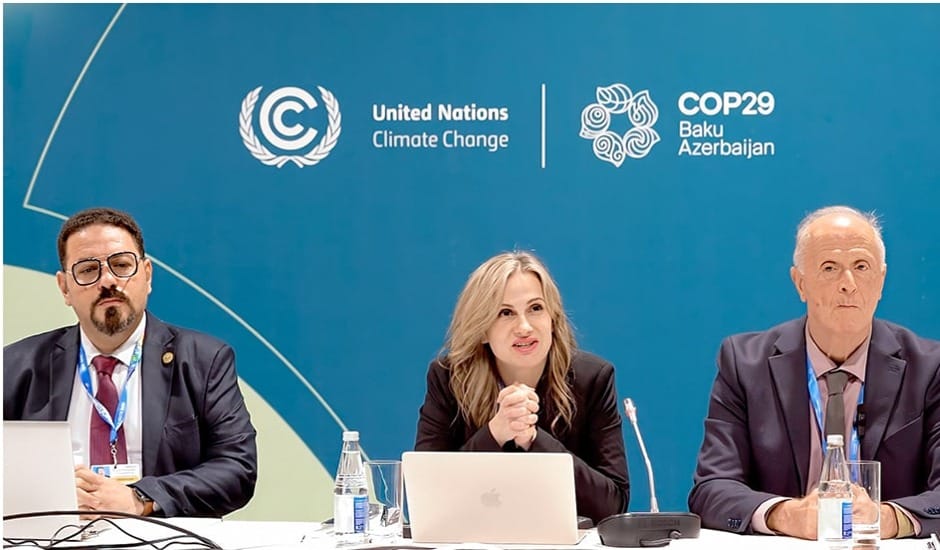
Asked why Egypt the Dream Foundation provided AllatRa members access to UN meetings, its chairman, Mohamed Haggag, told openDemocracy: “I believed they were real scientists and communicators, which is why I granted them badges to attend as part of our delegation to COP29, COP30 and the 2025 climate conference in Bonn”.
Haggag said he only met AllatRa activists in person once at the COP29, and was unaware of police investigations in Ukraine and in Czechia. Haggag said he would not provide badges to them in the future, but still considered AllatRa’s work “very scientific”.
In 2019, AllatRa established Creative Society, an international activist group that denies that the climate crisis is caused by human activity. The organisation, which has labelled the globally accepted scientific consensus that greenhouse gases cause global warming as a conspiracy and “CO2 fraud”, is led by two AllatRa members: Ovtsynova, AllatRa’s president, is its vice-president, while AllatRa member Olga Schmidt is the president.
A 2023 video by the Creative Society, which was posted on its social media channels, asks: “Why are we wasting so much resources on green energy?” It continues: “Wherever solar and wind energy is implemented, there’s no benefit for people. It destroys more land, generates enormous waste, makes energy expensive and unreliable.” The video promotes an “alternative solution” that it says viewers can learn more about at its online forum, called ‘Global Crisis: There is a Way Out’. The webpage for that forum is no longer available.
Responding to our findings on AllatRa’s access to influential summits, Petra Mlejnková, a researcher on security and radicalisation at Masaryk University in Czechia, said: “To the casual observer, it seems bizarre that an organisation with roots in esotericism and impending apocalypse would knock on the doors of the European Parliament or UN climate summits.
“However, from a radicalisation and influence perspective, this strategy serves a critical objective. Such organisations desperately crave mainstream validation to shield themselves from being labelled as dangerous or sectarian.”
In a written statement, Smian told us: “ALLATRA recognises the key role of anthropogenic greenhouse gas emissions, including CO2, in contemporary climate change.”
She added that the organisation “supports” the position of the Intergovernmental Panel on Climate Change (IPCC) – the UN body responsible for assessing the science related to climate change – that “human activities, principally through emissions of greenhouse gases, have unequivocally caused global warming, while also supporting further research into additional risk factors that may intensify climate, geodynamic or environmental risks. Studying additional risk factors is not “climate disinformation” or “climate denial” and should not be misrepresented as such.”
The IPCC is not mentioned in AllatRa’s 296-page report on nanoplastics nor in its 87-page report on the progression of climate disasters.
The secretariat of the UN Convention on Climate Change declined to answer our questions on whether they knew climate disinformation activists were accessing COPs as observers through a third-party organisation. They referred us to background information that states that organisations with observer status at COP choose which individuals should represent them without input from the secretariat.
Influence on social media
A now-removed section of AllatRa’s website said the organisation’s origins lie in the mid-1990s, when a group of unnamed international scientists came together to “conduct extensive interdisciplinary research across a wide range of topics, including studies related to natural disasters and geodynamic changes on Earth”. The group’s name refers to the divine feminine and masculine principles, Allat and Ra, respectively, according to the group’s foundational Russian-language book, AllatRa, by Anastasia Novykh, which appears to be a pseudonym. This and Novykh’s other books claim that a united Slavic peoples will lead the world to a peaceful global society.
A former member of AllatRa in Czechia, Eva Hronová, denounced the group’s ideology in 2023, including its belief in extraterrestrial civilisations, pro-Russian pan-Slavism, and the promotion of eugenics.
AllatRa’s HQ moved to the US state of Georgia in 2017, when Maryna Ovtsynova became its president. In an interview with openDemocracy, Ovtsynova said the group’s mission is to “translate science to a language that policymakers, religious leaders and common people can understand”. She refused to answer our questions about the organisation’s apocalyptic narrative.
In its new home in the US, AllatRa has a tax-exempt status as a small nonprofit with an annual income of $50,000 or less, meaning it is not required to detail its funders or spending. Its think tank, AllatRa Global Research Center, operates under the legal framework of its US organisation and “entirely on a volunteer basis”, according to its registry in the EU Transparency Register.
US filings seen by openDemocracy reveal that, between mid-2024 and October 2025, AllatRa paid Egon Cholakian as a “lobbyist” and “foreign agent” to prepare or disseminate informational materials on its behalf aimed at dispelling the “religious cult” label imposed on it by the Ukrainian and Russian governments. Cholakian received a quarterly lobbying fee of $6,000 and an annual budget of $150,000 to prepare or disseminate informational materials on its behalf.
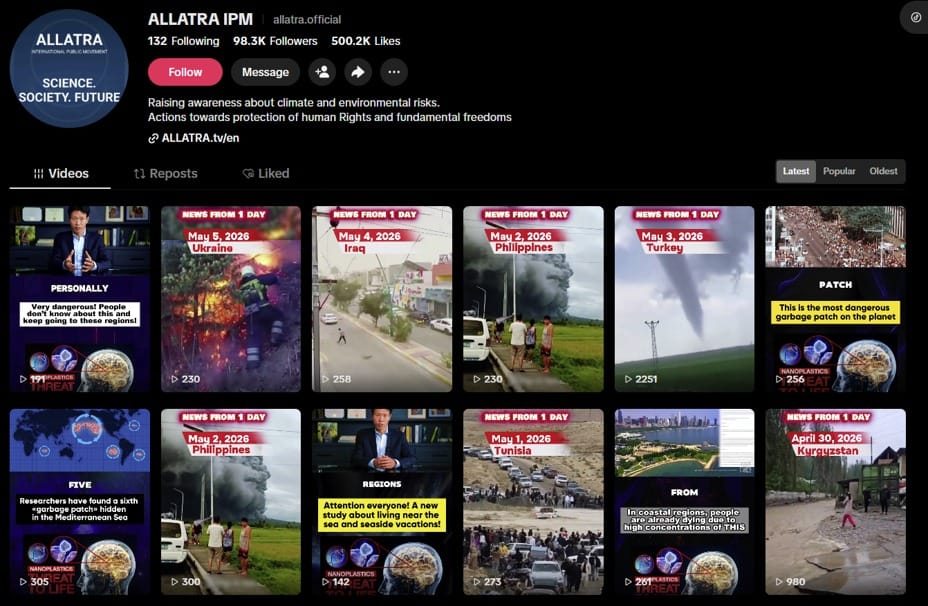
Cholakian fronts many of the videos AllatRa posts on its social media accounts to share its pseudo-scientific findings. The organisation’s main English-language TikTok account has almost 100,000 followers, and its other accounts – including its non-official ‘history channels’, volunteers’ accounts, and those sharing its videos in Spanish and German – have a total of three million likes. In February last year, Cholakian had to issue a public apology for stating in a video that “nanoplastic concentration in the Mediterranean is worse than Chernobyl”.
While Cholakian didn’t answer our requests for comments, AllatRa’s Smian said in a written statement: “A single rhetorically overstated comparison should not substitute for discussion of micro- and nanoplastics based on data and specific claims”.
AllatRa’s partner organisation, Creative Society, also appears influential on social media, with its main TikTok account having one million likes and its Spanish version having almost 10 million. The organisation says it has volunteers in 180 countries, who act “with no financial obligations, fees or regulations”.
Creative Society was registered as a nonprofit in California in 2022. Its website says its “dream” is: “After overcoming the climate crisis, which is the most serious challenge of our time, we, the volunteers of the Creative Society project, dream of creating a united civilisation, where human life will be the main value.”
According to a now-deleted About section on Creative Society’s website, in the “transition period” to such a society, every adult person would receive “by birthright” a monthly universal basic income of $10,000 and a “one-time payment equivalent to $100,000 upon the birth of the first child, $200,000 upon the birth of the second child, and so on”. The section was removed after openDemocracy contacted AllatRa for questions.
Creative Society’s 2024 financial filing reveals it is a source of funding for AllatRa, having given the organisation $51,425 to support “charitable and educational activities related to scientific research and public awareness initiatives addressing climate-related risks and environmental sustainability”.
After our interview with Ovtsynova, AllatRa spokesperson Valeria Smian answered all the written questions openDemocracy sent to the organisation. She refused to name AllatRa’s funders and told us: “For the past three fiscal years, AllatRa’s annual income was $29,000.” Elsewhere, she said that Creative Society “is a separate partner project with its own activities and objectives”.
Asked about the removal of the About section on its website that warned of a doomsday by 2036, Smian wrote: “The sentence is from an older version of an article on ALLATRA’s website and is not ALLATRA’s current position”. She added: “The About page is under scientific and editorial review to ensure that earlier formulations correspond to the current state of evidence, expert feedback, and methodology.”
A similar answer was given about the removal of the catastrophic report on climate change. “It is routine to update and clarify research in light of relevant new scientific developments,” Smian wrote.
She also said: “ALLATRA categorically rejects the characterisation of our work as ‘climate disinformation’ or promotion of ‘doomsday’ messaging.”
‘A climate-delay narrative’
AllatRa and Creative Society appear to have gained particular influence in Europe.
In 2022, Slovak MEP Milan Uhrík of the far-right Republika Movement gave an interview to Creative Society, in which he questioned the European Union’s emissions reduction goals and wondered what would happen if CO2 were not removed from the atmosphere.
The following year, Czech journalists using open source intelligence found AllatRa’s co-founder, Danilov, in a small town in the east of Slovakia, and even managed to interview him.
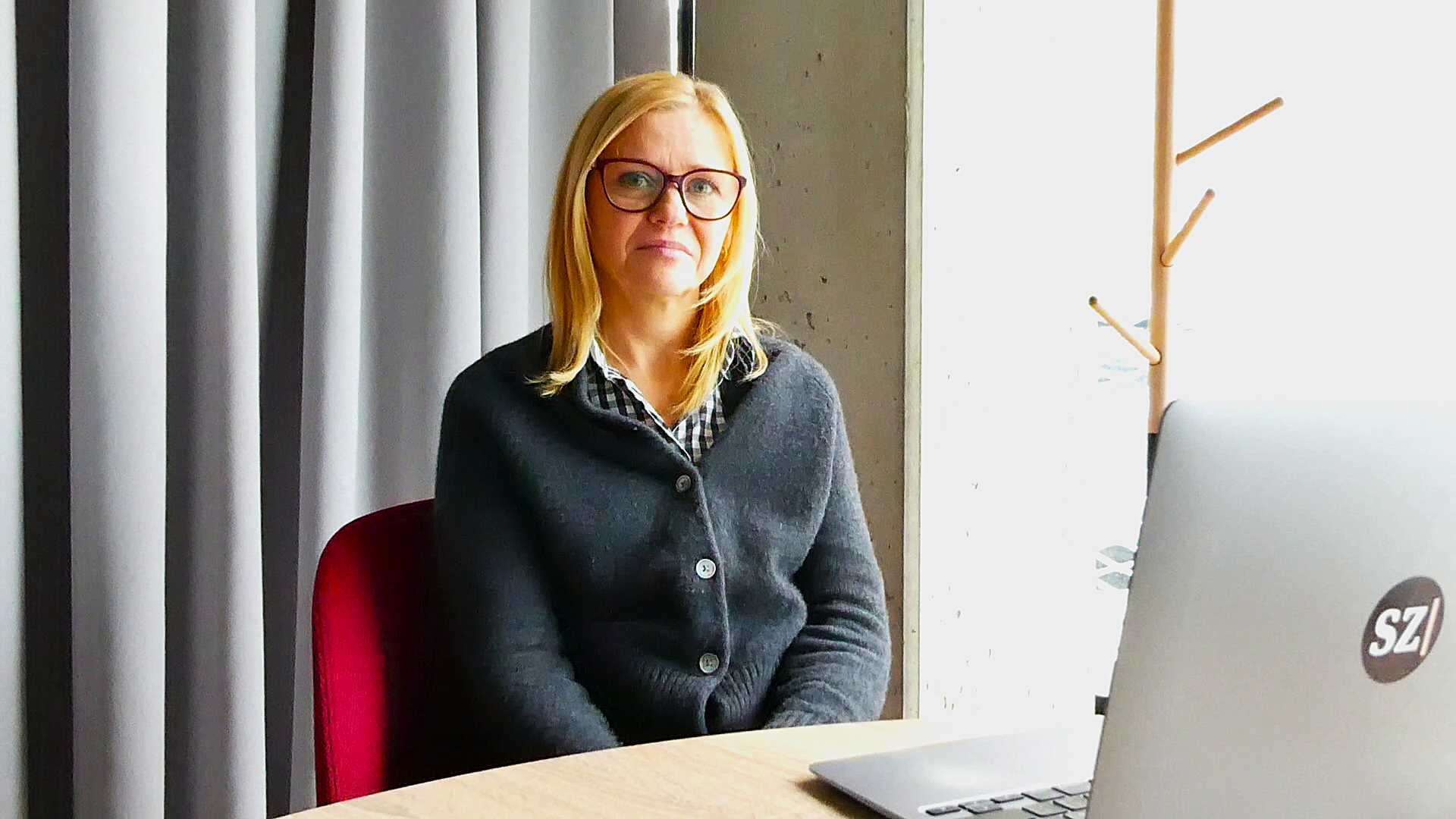
“I asked him why he fled his country in 2023; he simply said that he was sick and not fit for military service. When I asked about the guns found in AllatRa’s headquarters in Kyiv, he answered that they were used for hunting,” Kristina Cirokova, the investigative journalist who led the reporting, told openDemocracy.
As a consequence of this reporting, Cirokova was prosecuted for alleged “suspicious activities” by a Slovak public attorney whose colleagues said she had links to AllatRa. Charges against Cirokova were dropped within months, and the prosecutor was subjected to a disciplinary process and finally acquitted.
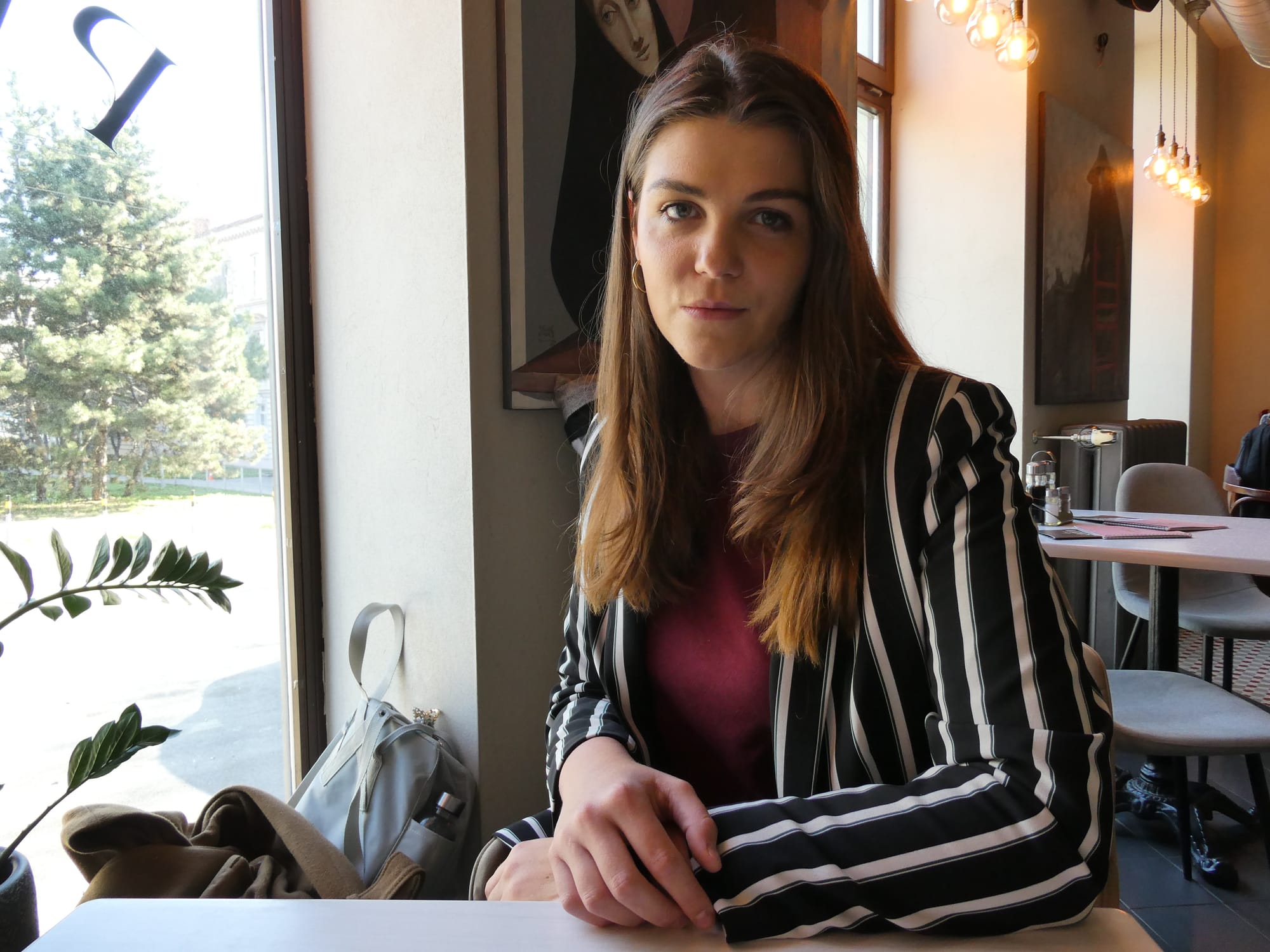
Another Slovak journalist, Karolína Kiripolská, was interrogated by the authorities about her investigation into the cult in 2024. “The National Criminal Police contacted me before my article on AllatRa was published, and I was asked to provide information about my sources”, Kiripolská told openDemocracy in Bratislava. The International Federation of Journalists warned in a statement that questioning the rights of journalists in Slovakia had direct implications for the entire European media.
AllatRa also has influence in Slovenia, where local media reported that the organisation’s volunteers were interviewed and able to spread their ideas on Radio Prlek, a popular regional radio station that is part of the Ormož Information Institute, where MP Andrej Kosi sits on the board.
Meanwhile, in Romania, AllatRa has a powerful friend: former presidential candidate George Simion, the leader of the Alliance for the Union of Romanians. Simion was one of the speakers at the US Capitol event co-hosted by AllatRa and Trump’s pastor, where he claimed the 2025 election had been stolen from him – a claim debunked by Romania’s Constitutional Court – and said that Romanian “democracy has been annulled” by those who “don’t like Donald Trump”.
But other lawmakers in Europe are increasingly concerned about how AllatRa’s pseudoscience is being amplified by other politicians and given credence by the group’s presence in parliaments.
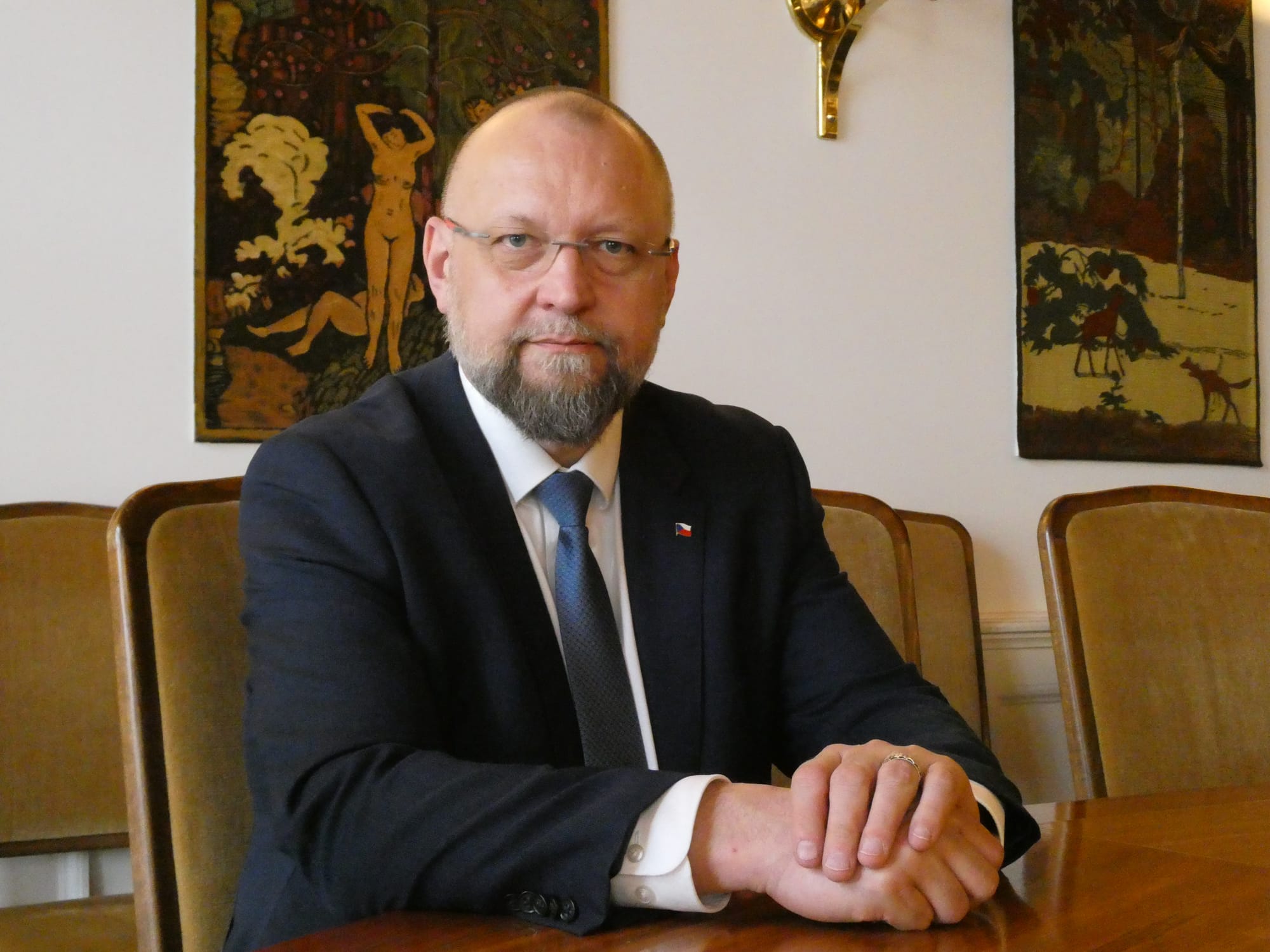
“We are watching [AllatRa] closely and have consulted with former cult members and Ukrainian authorities about their modus operandi”, Czesch legislator Jan Bartosek, of the Christian and Democratic Union party, told openDemocracy at his parliamentary office in Prague.
“This hybrid strategy to spread poison through populist pseudoscience is being legitimised at the EU Parliament and is destroying social cohesion on common beliefs and official authorities”.
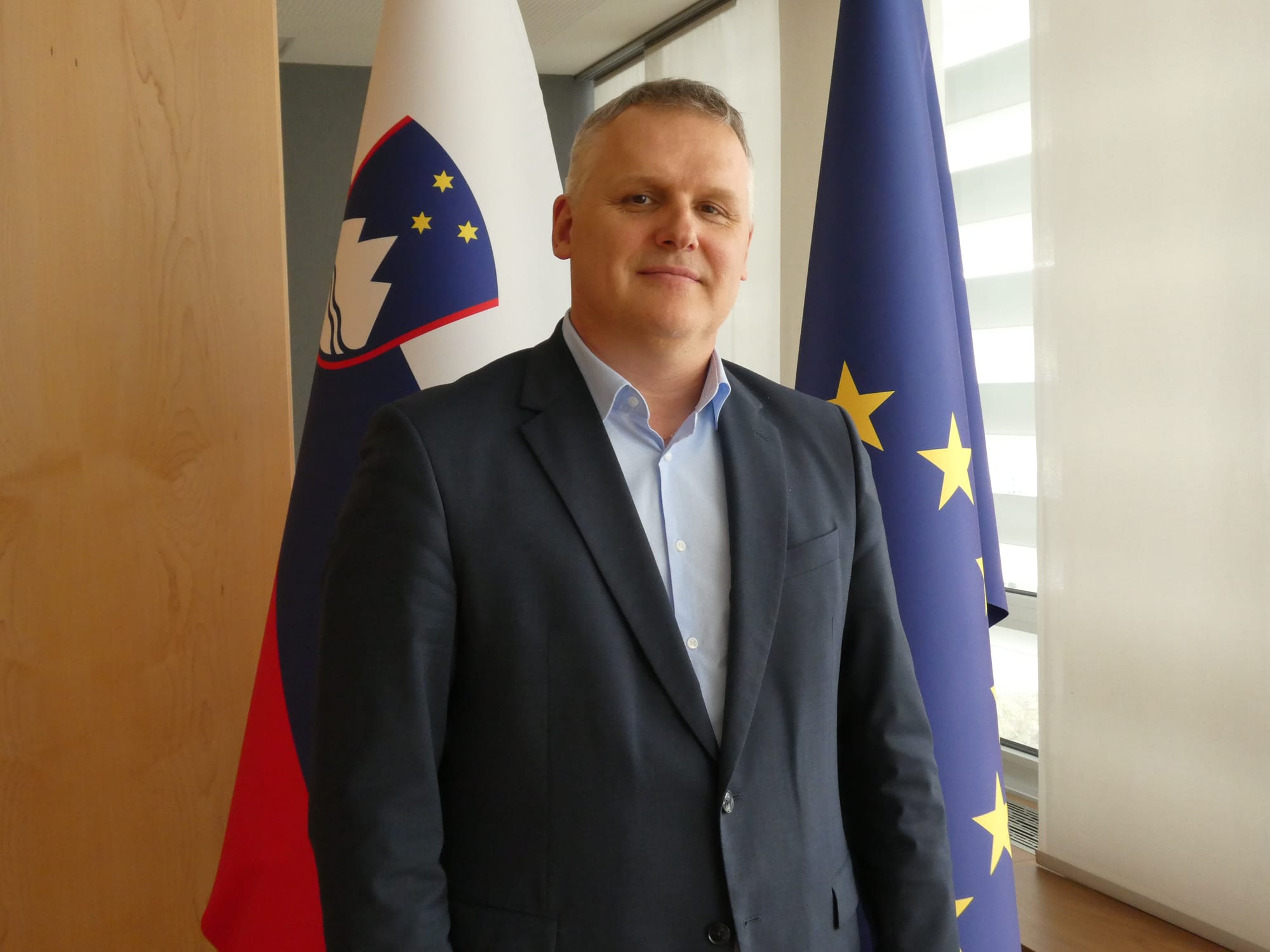
This was echoed by Borjan Kumer, Slovenia’s former minister of the environment, back in March, when he was still in office. “Climate deniers want to slow down our policies, it’s a climate-delay narrative,” Kumer told openDemocracy in Ljubljana. “Results from the green transition are not immediate: we need mitigation policies to avoid climate adaptation, which means, for the case of Slovenia, enhancing resilience to droughts, floods and other natural disasters.”
AllatRa’s climate disinformation is particularly worrying given trends we are seeing on social media. As a 2025 UNESCO report found, platforms are increasingly polarised and their algorithms reward disinformation; in this climate, the report warns, “fact-checking loses relevance, and editors at traditional media outlets are no longer gatekeepers, leaving users now guarding their own doors”.
This reporting was supported by the Environmental Investigation Agency.
Julián Reingold is an Investigative journalist based in Athens and Brussels, covering the environment, climate and technology. Member of the Society of Environmental Journalists (SEJ) and former grantee of the Pulitzer Center. Reported on several UN and international climate and environment meetings, and conducted fieldwork across critical geographies in Latin America, Africa and Asia. IG: @julianreingold.
Ignacio Conese is an independent journalist and photographer based in Argentina, specializing in the social and environmental consequences of extractive activities. His work has been published in Spanish and English in media outlets including El País, Vice, TRT World, Climate Home News, Dialogue Earth and Mongabay. IG: @ignacioconese.
Check this story
Ask the guide
The guide explains what to check and where. It cannot see this article or recent news.
Is this AI-made?
AI checkers give a likelihood, not proof.