Who’s Gonna Buy All the AI Stuff?
Friends,
Through the end of June, about $3.2 trillion in AI deals have occurred this year. That’s a 45 percent jump from a year earlier, according to Dealogic, a data provider. It’s the most spent on deal-making over a half-year period in at least a decade.
Many of these were truly giant deals — 44 were larger than $10 billion, including takeovers.
Is this a bubble that’s going to burst?
Because I’m located in the Bay Area, I often come across people who are deeply involved in AI. They rhapsodize over it.
But when I ask them who’s going to buy all the wondrous AI products and services — especially after AI destroys millions of jobs and decimates the American middle class —they have no answer.
And AI will destroy millions of jobs and decimate the middle class. Already, Cisco, Block, Coinbase, HP, IBM, and Salesforce have cited AI as a reason for mass layoffs.
Two weeks ago, Anthropic CEO Dario Amodei published a sweeping policy memo warning that AI will produce labor market disruptions larger and longer-lasting than any previous technological shift.
Earlier this week, noted short-seller Carson Block predicted that AI-driven job losses could eliminate 15 percent of knowledge worker positions within three years. He warned that this disruption could rival the worst economic crises in modern history.
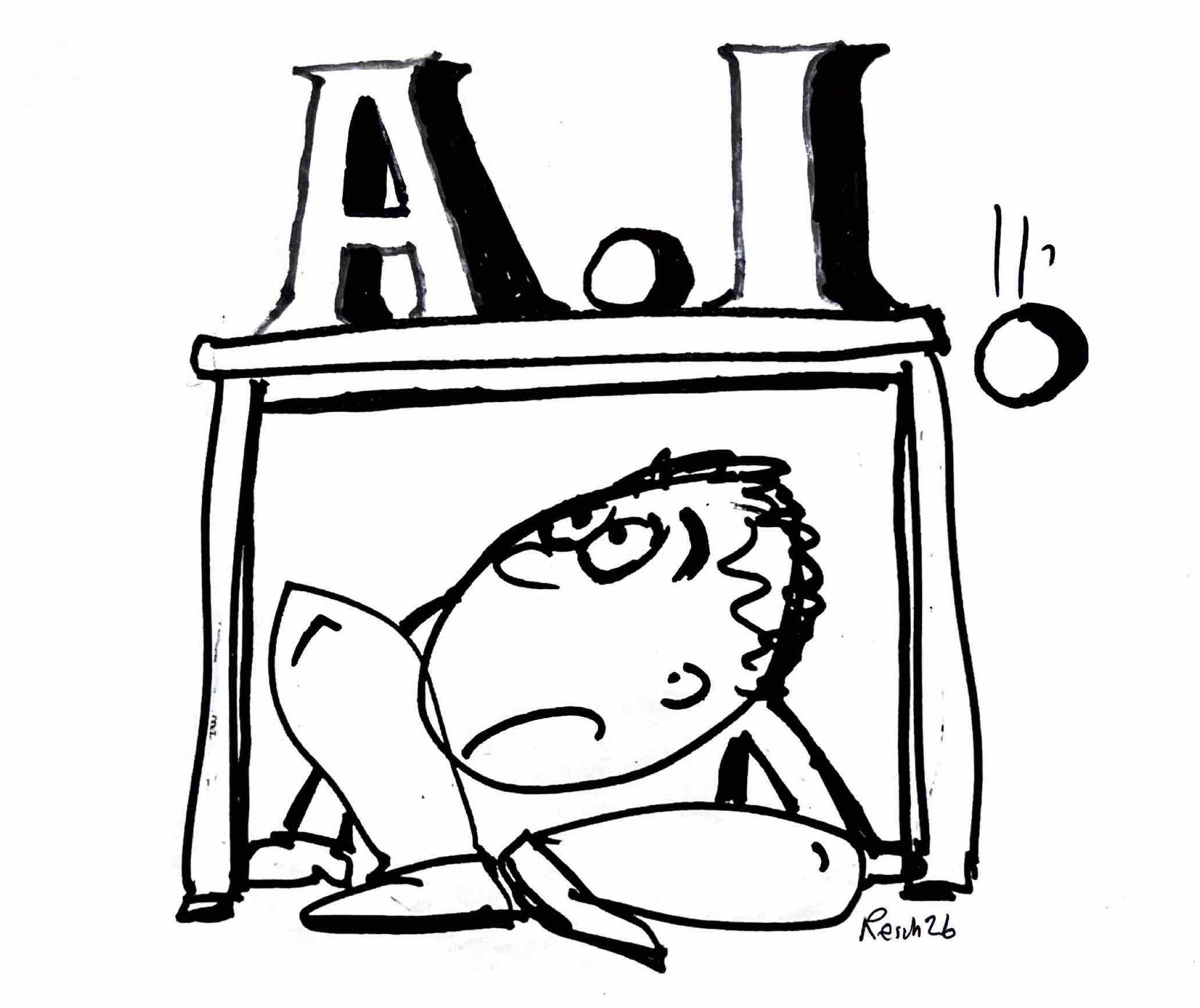
AI corporations are of little value without enough demand for AI products and services. Yet unless people have enough income, they won’t be able to afford AI products and services.
Where will the demand for AI come from if AI erodes what remains of the American middle class and much of the working class?
I’m told we’ll just need to reduce work hours. But this answer doesn’t solve the riddle, because corporations aren’t going to reduce hours and continue to pay the same weekly or yearly salaries they paid before. They’ll pay less.
Zoom’s Eric Yuan told The New York Times that “A.I. can make all of our lives better, why do we need to work for five days a week? Every company will support three days, four days a week. I think this ultimately frees up everyone’s time.”
Jamie Dimon, CEO of JPMorgan Chase, says advancing technology could push the workweek down to just three and a half days. Microsoft co-founder Bill Gates openly wonders whether a two-day workweek could be the future.
Elon Musk pushes the idea to the extreme (as he does everything else): “In less than 20 years — but maybe even as little as 10 or 15 years — the advancements in AI and robotics will bring us to the point where working is optional.” Even better: “There will be no poverty in the future and so no need to save money,” says Musk. “There will be universal high income.”
All of this is pure rubbish. Even if AI yields big productivity gains, it’s far from clear that workers will see much, if any, of the benefits.
If productivity rises, as it’s supposed to do when the workplace becomes immersed in AI, each worker will generate more value, by definition. And supposedly with more value, we’re all better off.
Not so. Although worker productivity has been rising for years, the median wage has barely risen, when adjusted for inflation.
Here’s the truth: the four-day workweek will most likely come with four days’ worth of pay. The three-day workweek, with three days’ worth. And so on.
So, as AI takes over much of their current work, workers will get poorer or have to take additional jobs to maintain their current pay.
So, back to my question: Where will the demand for AI come from when most of us won’t be able to afford it?
You’d think that Amodei or Sam Altman (CEO of Open AI) or even Elon Musk would take the lead in trying to come up with an answer to this riddle. But so far, nothing. Nor is there any conversation about what we should be doing to help the next generation of young people survive the specter of mass technological unemployment.
The distribution issue can’t be ignored. Unless the broader American public gets a share in the productivity gains from AI, profits will go to an ever-smaller circle of owners — leaving the rest of us with less money to buy what can be produced.
We may see a dazzling array of products and services spawned by AI, but few of us will be able to buy them.
There’s no shortage of ideas for how AI’s productivity gains might be redistributed. Those gains could be redistributed through wealth taxes financing childcare, elder care, and healthcare.
Or they could be redistributed via a sovereign wealth fund owning half of all AI shares of stock, that distributes yearly dividends to every citizen.
Or a Universal Basic Income financed by high taxes on the profits of America’s biggest corporations.
There are lots of ways to do it. The real question is where the political will is expected to come from to do it.
Surely part of the answer depends on the leaders of AI realizing how much they will need a consuming public with enough income and wealth to buy all the wondrous things AI will be able to deliver.