Where to see the groundbreaking work of late artist Betye Saar in LA now
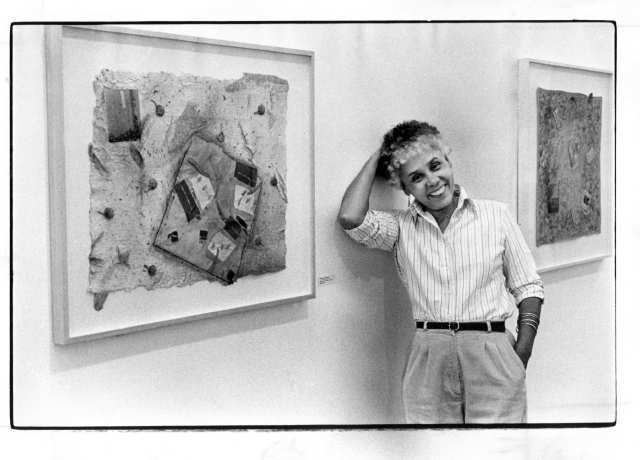
Betye Saar’s long art career was the subject of media profiles and art shows in the years and months leading up to a milestone birthday this week. She died Sunday, July 26, four days before she would have turned 100.

Saar had deep roots in Southern California. She was born, raised and educated in the Los Angeles area. She was firmly rooted in the region and in various Black communities, but her art was not provincial.
Saar took on the global, national and regional issues that affected Black Americans in her drawings, paintings and assemblages. She redefined, broke apart and juxtaposed issues related to stereotypes and racism, as well as mysticism and spirituality.
She exhibited widely in the U.S., and her pieces are in the permanent collections of many museums including the Los Angeles County Museum of Art and the Museum of Modern Art in New York.
The next few weeks provide a unique opportunity for people who live in or are visiting L.A. to see a wide spectrum of Saar’s work — from the fashion, jewelry and costume designs she created early in her art career to the final commissioned piece she made a few years before her death.
It’s a work that takes on the concepts of memory and transition.
A piece in the museum Betye Saar grew up going to
Saar grew up in Pasadena, and when she was young, she frequented The Huntington in nearby San Marino. In 2023 the museum unveiled one of Saar’s pieces, titled “Drifting Toward Twilight,” on display through Nov. 30, 2027.
To create the work, Saar used found objects, metal cages and animal horns, and placed them inside a wooden canoe. The vessel rests on a bed of branches and twigs she collected from the grounds of The Huntington. The piece is displayed in a room where the walls have been painted in three shades of blue and where the lights subtly change, illuminating seven shapes representing the stages of the moon.
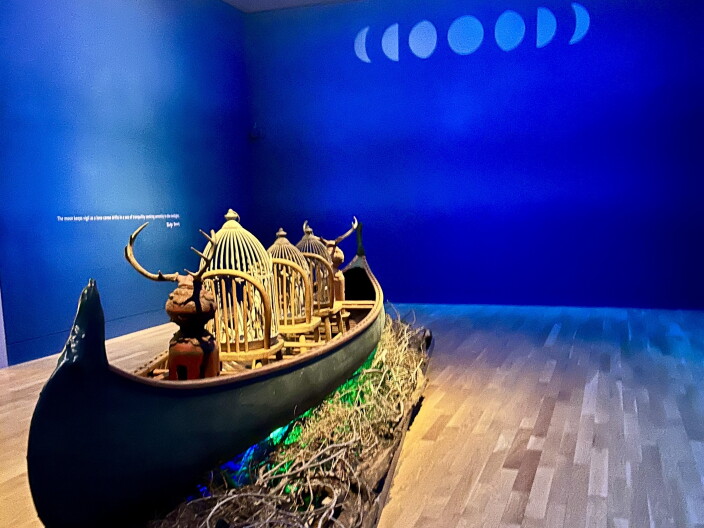
“She’s basically drawing up a scene for us in our minds, so that as we engage with the installation,” said Lauren Cross, the Huntington’s associate curator of American decorative arts. “We are in the canoe on a journey with her, traveling along, and experiencing the work with her.”
Cross said Saar was working with the idea of transitions, including spiritual transition related to death.
A 16-minute video created for this exhibit, based on Betye Saar’s life as an artist, plays in a room next to the gallery.
A mother and an artist
The exhibit that’s likely to give the deepest view of Saar’s art is on view for a few more weeks.
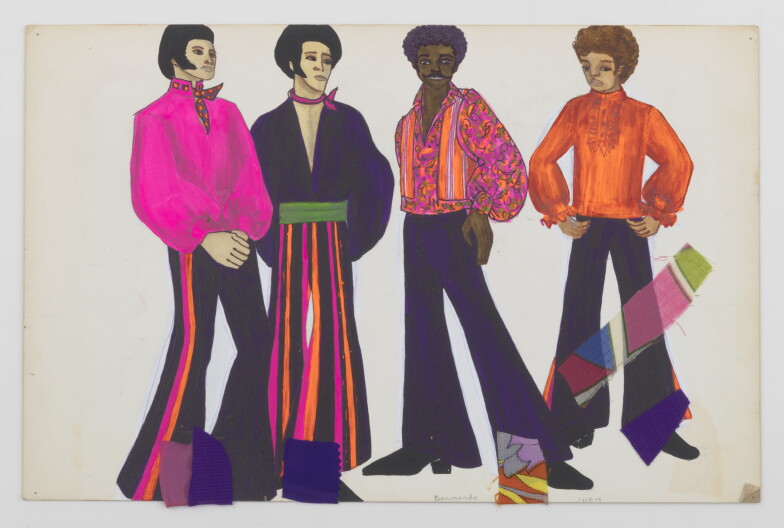
“Let’s Get It On: The Wearable Art of Betye Saar” is at Roberts Projects until Aug. 22. It features more than 200 objects, including costume designs, photographs, drawings, garments, jewelry, artworks and historic materials from the 1950s to the 1970s as Saar was becoming a nationally recognized artist.
The show demonstrates how deeply Saar created for stage productions in L.A. such as for the Inner City Cultural Center, a multicultural performing arts group started after the 1965 Watts Rebellion.
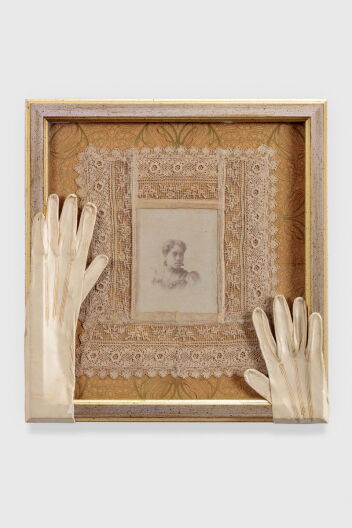
The decorative art she created would have defined a remarkable career, but then around the late 1960s she moved on to assemblages, works made with found objects. These works took on lifelong areas of interests such as spirituality and racism.
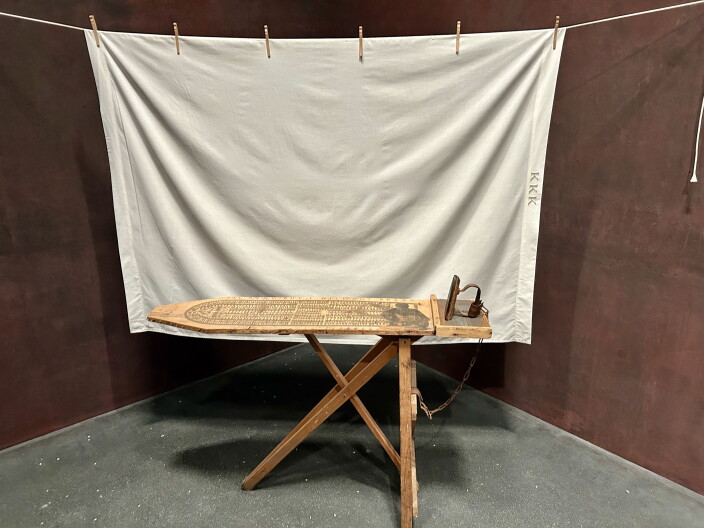
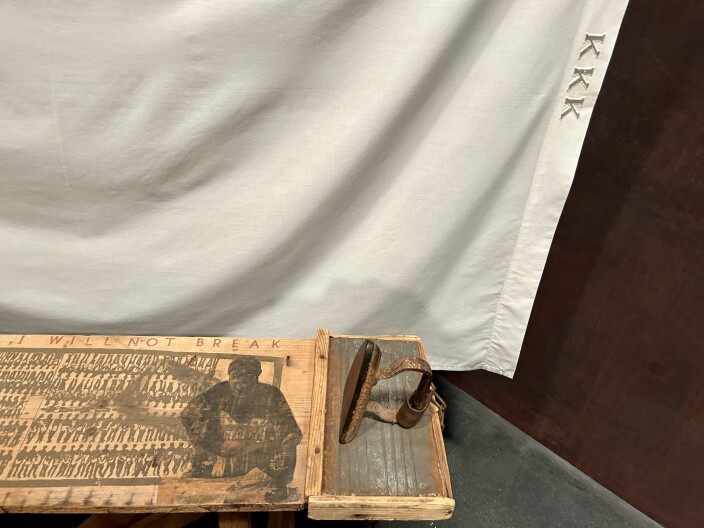
One of the most poignant pieces, titled “I’ll Bend But I Will Not Break,” from 1998, is on display at LACMA’s new David Geffen Galleries. Saar uses a vintage ironing board, wood clothespins, a flat iron and a white bedsheet to comment on women’s work, slavery’s dehumanization and the enduring racism that seems to infuse much of U.S. society.
“Betye is very much alive in her work,”said Carol S. Eliel, senior curator emerita of modern art at LACMA. “There’s so much of her personality, her fierceness … she had an iron spine. She was a very gentle, lovely, beautiful person, but you could not steamroll her and I think the work reflects that.

“It makes me happy that someone who had such a long and rich and productive career will live on through these amazing works,” she said.
The LACMA piece is part of the museum’s permanent collection. Much of the other work by Saar in L.A. will come down in the next month and a half.
Here’s a guide to help you plan a Betye Saar L.A. art tour.