‘We are in hell’: The lockdown limbo Arizona’s 3 women on death row faced this month
(Photo via Getty Images)
There are three women on Arizona’s death row, and they got there the usual way.
Wendi Andriano beat her terminally ill husband to death.
Shawna Forde formed an anti-immigrant militia, then staged a home invasion that left a man and his nine-year-old daughter dead.
Sammantha Uriarte and her husband, John Allen, locked a 10-year-old cousin in a plastic box as discipline, then left her to literally stew in the box overnight in a summertime-hot garage.
Their trials were media outrages, the crimes satisfied the state’s death-penalty laws, and the juries sentenced them to death.
As is often the case with death-row denizens, they all have tried to reinvent themselves — to redeem themselves, to atone for their crimes, if that were possible. They were model prisoners, and the Arizona Department of Corrections, Rehabilitation and Reentry gave them all low internal risk ratings. They accumulated few infractions. And they earned the right to live on a moderate security yard in the Lumley Unit at Perryville Prison where the cell doors were open much of the day, and they could work at jobs while they waited out their appeals and their eventual executions.
Forde cut hair and taught illiterate inmates to read. She taught yoga and skin care and opened an addiction room with a grant from an anti-death-penalty organization. Andriano and Uriarte were both trained to work as peer counselors, helping with other prisoners who were in crisis. They had friends and neighbors.
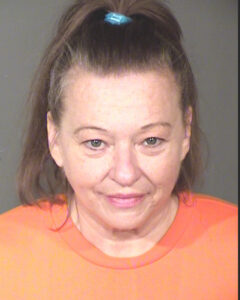
Then, sometime in June, a high-risk inmate who had history with at least one of them appeared on the yard. She had allegedly not been allowed to leave the unit for a training program and publicly confronted the death-sentenced women, asking why people who had committed horrific murders were allowed such lax confinement among prisoners with lesser sentences.
And she threatened to pull strings to get them locked down.
The next day, the three women were summoned by a warden and told to pack their belongings and move to a higher security unit, where they were no longer allowed the same liberties.
“I walked out of the office and went to (the angry inmate’s) door,” Andriano told the Arizona Mirror in an email. “I told her thanks for taking my freedom. She laughed and said DOC wouldn’t allow her to leave Lumley Unit for plumbing class, so she called (an ex-warden) and threatened a lawsuit for having (death row) housed with medium custody. (…) It’s unprofessional to see how one inmate can manipulate the system and rip us away from the only life we have”
“We are in hell,” she said.
Uriarte’s lament was similar.
“Where I am living now is really depressing,” Uriarte said. “Dark rooms, no handles on the doors inside, floor is not painted, the room is superhard to clean. It was filthy and the air does not work well. (…) The people in this living area are always high on medication. They overdo it daily. I went from a small group of sober friends to people that are high all the time.”
Forde was to-the-point.
“Many may feel ‘Who cares?,’” she said. “But it’s important the community understands the value we have put into the lives of women while fighting for our own life. Humanizing has a quality to it.”
Andriano and Forde both said that, if the current housing situation were permanent, they would consider dropping their remaining appeals. In other words: I give up, come and kill me and get it over with.
In the end they didn’t have to do that. Andriano filed a complaint. The Mirror asked questions. ADCRR Director Ryan Thornell came out to Perryville Prison to ask his own questions, according to sources there.
It was a month in lockdown limbo, but they got their lives back.
For now.
Six women in 86 years
Arizona hasn’t executed a woman in 86 years, and only six women have ever sat on death row in the Grand Canyon State.
The first — and only — woman put to death was Eva Dugan, whose five ex-husbands had all mysteriously disappeared. But it was the disappearance of a ranch hand, whose body was later dug up, that earned her a murder conviction and the death penalty. She was hanged in Florence in 1930, and it did not go well: When the scaffolding dropped away and the ample weight of her body pulled against the noose, her head popped right off.
Winnie Ruth Judd killed two people in 1931, cut up their bodies, loaded them in a trunk and took them to Los Angeles, earning the sobriquet of “Trunk Murderer.” She was sentenced to death, but then was judged to be insane and sent to an asylum. She died in 1998.
In 1989, Debra Milke was charged with the murder of her four-year-old son. She was hiding from her abusive husband at the home of another man who had romantic interest in her. She left her son with him while she went on a day trip out of town, and he and a friend took the boy to see Santa at the mall and then took him out to the desert and shot him in the head. A police detective claimed Milke had confessed to arranging the murder, but there was no recording of the confession, no witnesses, no notes. Milke denied making a confession and still insists on her innocence. She was convicted anyway and sentenced to death.
Milke spent nearly 23 years in solitary confinement on death row, which she described as like being locked in your bathroom all day, every day.
But the 9th U.S. Circuit Court of Appeals threw out her conviction and sentence in 2013 because of prosecutorial misconduct. Two years later, she went free after the Arizona Court of Appeals dismissed the charges against her to avoid double jeopardy.
Doris Carlson was sentenced to death for hiring someone to kill her mother-in-law in 1996. But in 2002, the Arizona Supreme Court reduced her sentence to natural life. Now 64, she is a low-risk inmate in the Lumley Unit.
Andriano, 56, managed an apartment complex in Ahwatukee where she lived with her husband, Joseph, who was dying of cancer. Inexplicably, rather than let him die, she tried to poison him — and when that didn’t work quickly, she stabbed and bludgeoned him to death.
Forde, 59, founded a vigilante border militia in southern Arizona and patrolled the desert looking for illegal immigrants. In 2007, she and two men hatched a plan to rip-off an Arivaca man they thought was a smuggler, hoping to score drugs and money to finance their operations. They kicked in the door, and one of the men killed Raul Flores and his nine-year-old daughter. They also shot and wounded the girl’s mother, who shot back, wounding one of the attackers and driving them off. As the mastermind, Forde was sentenced to death.
Uriarte, 38, went by her then-husband’s last name, Allen, when, in 2011, they and other members of her extended family decided to discipline her young cousin, Ame Deal, by closing her in a plastic box and forgetting about her. Both she and the husband were sentenced to death, and other family members went to prison, as well.
All but the Forde case were tried by the Maricopa County Attorney’s Office, which, along the way, also sought the death penalty for Jodi Arias for killing her ex-lover Travis Alexander in 2008, and for Marissa DeVault, who killed her husband with a hammer in 2009. Both were found guilty of murder, but juries could not unanimously agree to impose death sentences.
Until 1997, the all-male death row inmates were put to hard labor on prison grounds. But that year, the wife of one inmate showed up outside the fence from where her husband was working with an automatic weapon, hoping to free him. Husband and wife were both killed in the resultant shootout, and afterward, all death-row prisoners were kept in solitary confinement.
That remained the policy until 2017, when the Corrections Department settled a lawsuit brought by the Arizona Capital Representation Project. Prison officials agreed to rehouse all but the most dangerous death row prisoners in close custody. A “close” is a set of cells around an indoor courtyard, usually with access to its own yard, and the first for death row was in Florence. It has since been moved to Tucson.
The prisoners were allowed time out of their cells, had their own exercise yard, and ate meals together, which made for more efficient management and better mental health. Correctional officers have said that they preferred working on death row because the prisoners were calmer and less dangerous than many of the career criminals on the yards. With obvious exceptions, many of the inmates on death row are one-off criminals: They kill somebody while on drugs or alcohol or in a jealous rage, and then spend decades awaiting execution and trying to prove to themselves and others that they are not that person.
There are currently 105 men on Arizona death row. Most of them are in close custody, though some are in higher security housing.
I first met Debra Milke in an elevator of the Maricopa County Superior courthouse shortly after her release, but before her charges had been dropped. She was trying to adapt to being around people, and pressed herself against the back of the elevator in fear. I later visited her at her house, and she told me how she had to relearn how to be outside, venturing a few steps out her back door, working her way up to walking a block down the street, then two.
“I still to this day have issues with crowds,” she told the Mirror in a telephone interview. “You’ll never get me at a concert.”
“I was scared to think I could go crazy,” she said about solitary confinement. “It’s a horrible feeling that you’re cut off from the world. It does a lot to peoples’ mental health.”
But she also was afraid of what went on in the yard. From her cell window, she said, “I saw a girl light herself on fire. I saw a girl slice her own neck.”
Still, Milke said she resented being disrespected because she was sentenced to death.
“I got tired of hearing that,” she said. “There’s a lot of murderers on the yard. The crimes are the same, but the punishment is different.”
The long climb out of solitary
There are enough men on death row to designate a community-sized space to them. In theory, the women are also in close custody. But there are only three women, and so they are mixed in with other populations. The issue is exactly which segment of population they belong with and whether they are allowed to walk free outside of their cells.
The three women spoke for themselves in lengthy communications with the Mirror over the past two weeks.
Wendy Andriano was admitted to Perryville Prison in 2004.

“I spent my first 12 years in solitary confinement,” she wrote in an email. “In 2016, a lawsuit shut down female maximum custody and forced (Death Row) classification to close custody. (That) required that I house with a cellie, which allowed my first job as a math tutor, and I had some rec time each day.”
Shawna Forde was admitted in 2011 and also spent her first years in solitary.
“A-Yard was maximum, where death row was housed in single cells in solitary confinement. Where I lived in wing One, top rung for five years, above suicide watch cells where I had to witness brutal treatment of women on watch: daily pepper spray, women held down and their heads shaved while crying, dragged across hot cement naked by male officers, beat, kicked, denied showers, etc.”
Meanwhile, the Arizona Capital Representation Project litigation over keeping death row prisoners in solitary was finalized in 2017.
“After the lawsuit was won,” Forde continued, “the prison was forced to start letting women out and have classes. We were chained to tables as death row and our first interaction was with seriously mentally ill (inmates). I started teaching a few how to read and write. (…) It was the first time I truly met illiterate people, and I would go back and weep in my soul because I couldn’t imagine how a world looked if you couldn’t read.”
“From there I started to fight for more rights and more outside time.”
Eventually, she was allowed phone access and “then we were allowed to start going out at the same time with each other in cages outside our door, one hour a day. We never left our room without being stripped out and cuffed up.”
Forde convinced the administration to let them have access to the moderate custody yard. She also threatened to cancel her appeals, which, oddly became a bargaining chip.
She and Andriano were reclassified as model prisoners, or Phase 3. Uriarte was not yet in prison.
“I was able to get the (deputy warden) to start allowing phase 3’s out-of-cell time for phone calls,” Andriano said. “This was in place for a while when Forde presented a proposal for a privilege pod to be housed on the same yard as medium custody. The old director approved it. Whoever was phase 3 close custody was allowed to live in this wing, our cell doors open from 5am until 8pm (except during head count).”
“We were relieved,” Forde said, “because after we moved, B-yard turned into gangland and jumping, robbing, shanks, you name it.”
“We lived on that yard for the past 4-5 years,” Andriano continued. “At some point, maybe a year ago, the Deputy Warden at that time said, due to the murders in the male population, we could no longer leave our assigned yard without an officer escort. All was well; not one of us lost our Phase 3. We worked and contributed positively to our yard. Director (Ryan) Thornell had even allowed male Death Row to live on an open yard. All of (death row) are classified Close Custody. The only difference was the three female residents had access to the open yard privileges through living on a medium custody yard.”
Sammantha Uriarte was admitted to Perryville Prison after the lawsuit.
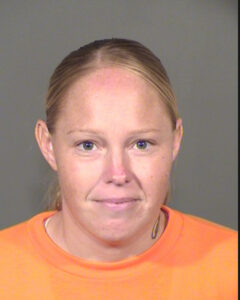
“In 2017 when I first came to prison I was put into the suicide watch,” Uriarte wrote. “I can’t fully remember how long I was there, but afterwards I was sent to intake for eight days then to a yard. On the yard I was taunted and assaulted almost daily. I came to prison from an abusive home to an abusive new environment. They called me names, pushed me around, beat me up, took all of my things, etc. I used to spend my days crying in an empty cell begging for an end. I was made to work with people in the kitchen. (…) I came in spineless and living in fear of everything and life.
“I don’t like that I saw my life for what it was,” Uriarte continued. “I was being abused and never knew this.
“I spend my days doing Paper Quilling and I am a Peer Support for my yard. I had to go through a training class to get certified to be peer support. I did multiple training classes to facilitate classes as well. I was teaching a few girls how to do Paper Quilling. It made me feel good to help others find coping skills that I found helpful for myself.
“I do what I can to be helpful for others. I love helping others. Now that I have been doing some work on myself I have found a back bone.”
An upset newcomer rocks the boat
Then it all went away.
A woman who had an antagonistic history with Andriano was newly assigned to the yard. She was a six-time convicted armed robber, and a pre-sentence report from 2006, the first time she went to prison, described her as bipolar, homeless and a methamphetamine addict.
Andriano, Forde and Uriarte — who are not friends — all independently described her as an informant with connections to prison management.
The new arrival “started targeting Wendi and Sammantha,” Forde wrote. “And when I told her I did not support her actions and she needs to grow up, she got mad and targeted death row and was yelling she was going to get us kicked off the yard.”
Andriano said that the alleged informant then “yelled to the whole yard about her beef with Forde, then got on the phone and told her mom to call (a prison administrator). Uriarte heard and lived through the same experience. When girls do ‘drama,’ they are loud about their intentions and half the yard heard (the informant) threaten Forde. The very next day we were moved.”
A witness on the yard
Here’s how it looked to another prisoner on the yard who asked that her name not be used so prison officials didn’t retaliate against her:
“Yes, (the alleged informant) takes credit. I asked her yesterday. … She seemed smug about it. I think she was really aiming for Shawna Forde and didn’t care that her actions would affect the other two women.
“I walked by their yard when they were packing up and it was total chaos. People were angry and screaming. I felt so bad for them, I cried. It was messed up to disrupt them like that. Those three women were not a risk to anyone. It’s horrifying enough that they’ve been sentenced to die…
“A few days after the three women moved to close custody, (the informant) was also moved back to close custody, her true classification. Everyone was citing karma.”
‘Like a coffin’
All of the death row women said the new housing was miserable, and each related the anguish it had created on their mental or physical health.
Andriano described her cell as “full of graffiti and old yellow paint, the light is painted over, the sockets don’t work… Someone painted over the two window slits to my cell so I have no access to light. This affects one’s mental health.
“I am given a job but not allowed out of my cell to perform it. I am locked in at all times, forced to stare at someone else’s hatred of life and can’t have sunlight. When you have a death sentence and are forced to live around these conditions, it feels like I’m in a coffin suffocating to death,” she wrote
And then there are the other inmates being held in the same high-security unit because they are actual security risks.
“A few days ago, a neighbor was beat up. Someone spit on an officer last night. For hours out of the day, cursing and yelling through cell doors is what I have to hear,” Andriano wrote.“When girls are treated like animals, they start acting like animals.”
Forde has a heart condition and was getting exercise walking in the early mornings before the heat set in, but couldn’t do so safely in the new unit, she said.
“So now my only option to breathe fresh air is to go out to the sand pit in a cage with my wing for two hours,” she wrote. “That’s not an option for my health. So now I’m basically locked down 24/7.”
Andriano filed a complaint with the Department of Corrections. Both she and Forde said they were contemplating dropping their appeals if they had to live out their sentences in the new unit. Saying so got Andriano put on suicide watch, though she said she is not suicidal.
Uriarte said her only plan “is to let my lawyer take the reins, ‘cause I have no idea what to do.”
The director’s visit
None of the attorneys for the women returned emails or phone calls requesting information. The Mirror also asked the Arizona Department of Corrections, Rehabilitation and Reentry to explain why the women were transferred to higher security housing, and we asked specifically about the inmate who allegedly triggered the transfer.
They are certainly aware of the correspondence between the death row women and this reporter because calls and emails — except for correspondence with attorneys — are monitored. On several occasions, the emails between the women and the Mirror were delayed for several days.
On July 17, the women’s attorneys, according to two of the inmates, were summoned to a meeting with ADC. On June 22, Thornell, the Corrections Director, talked with Andriano as he toured the prison. A deputy warden tried to pull him away, “but he wanted to hear what was happening on this unit,” Andriano said in a July 24 email.
“He was shocked we had been moved,” she said. “He was shocked about the conditions of confinement (under which) the close custody yard operates.”
The next day, all three women were moved back to their prior housing.
After this story was published, the Corrections Department emailed a short statement acknowledging the three women had been returned.
“Director Thornell was made aware this week, the issue was looked into and promptly addressed,” the statement said. “An investigation into the matter is underway.”
- 2:50 pmThis story has been updated with a comment from the Arizona Department of Corrections, Rehabilitation and Reentry