Taiwanese film hunters rescue ageing reels from bygone era
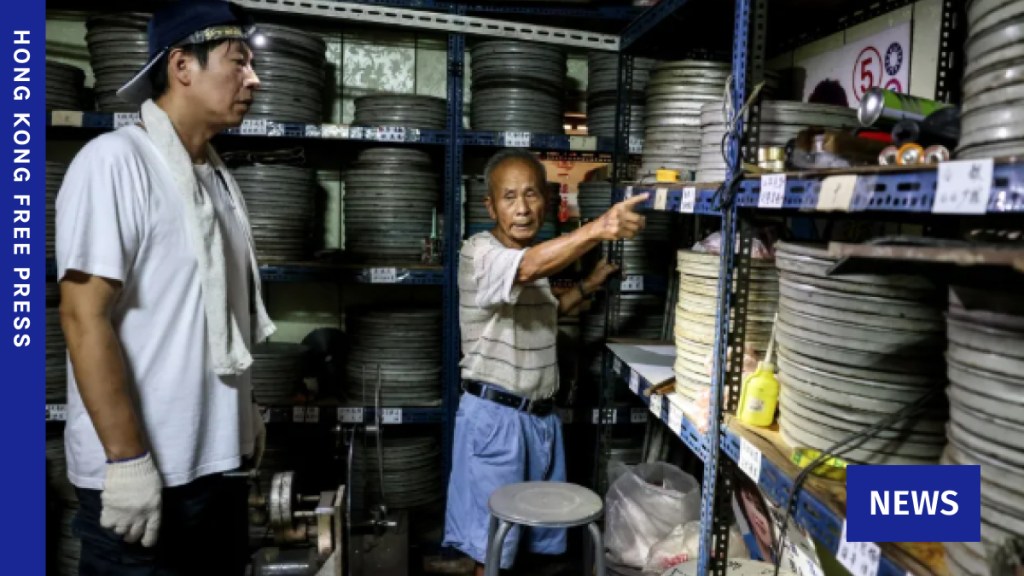
In a dimly lit red-brick house in central Taiwan, film hunter Wang Wei and his team haul out ageing film reels, salvaging the fragile remnants of a cinema boom that nearly vanished from history.
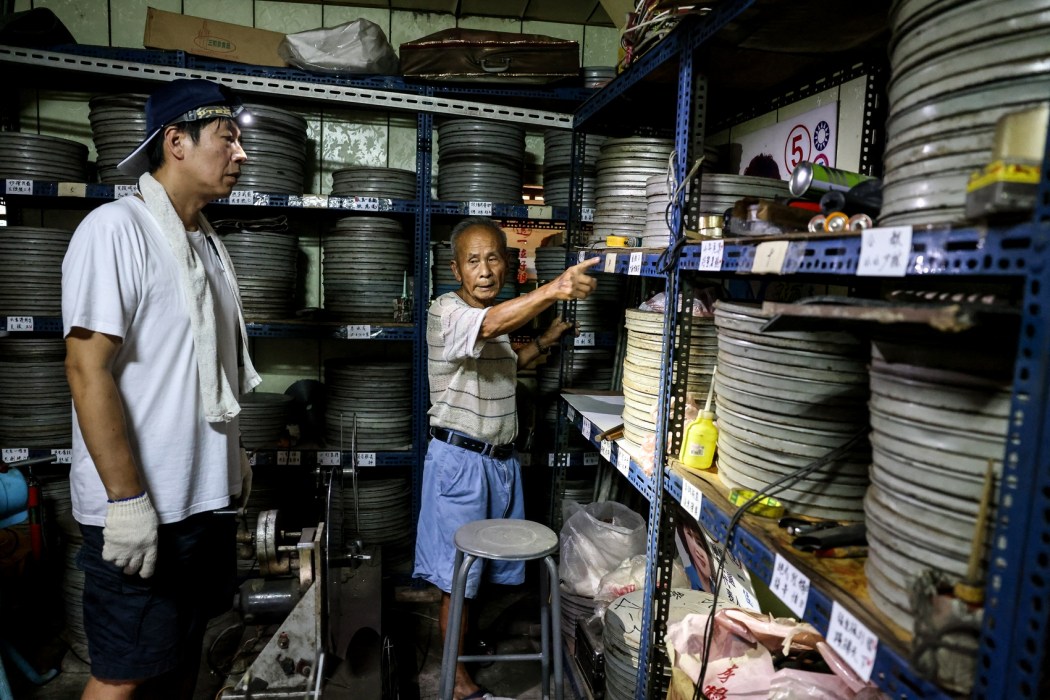
Rare Taiwanese-language films — known locally as “taiyupian” — flourished briefly from the mid-1950s to the late 1960s under the Kuomintang (KMT) government, which fled to Taiwan following its defeat by the Chinese Communist Party.
Until it lifted martial law in the late 1980s, the KMT promoted Mandarin as the official language of Taiwan and sidelined Taiwanese Hokkien, but independent and private producers still made the widely watched black-and-white movies.
Taiwan is now racing to restore the decades-old reels to preserve a chapter of its culture, with film preservers having salvaged fewer than a sixth of the estimated 1,200 films produced.
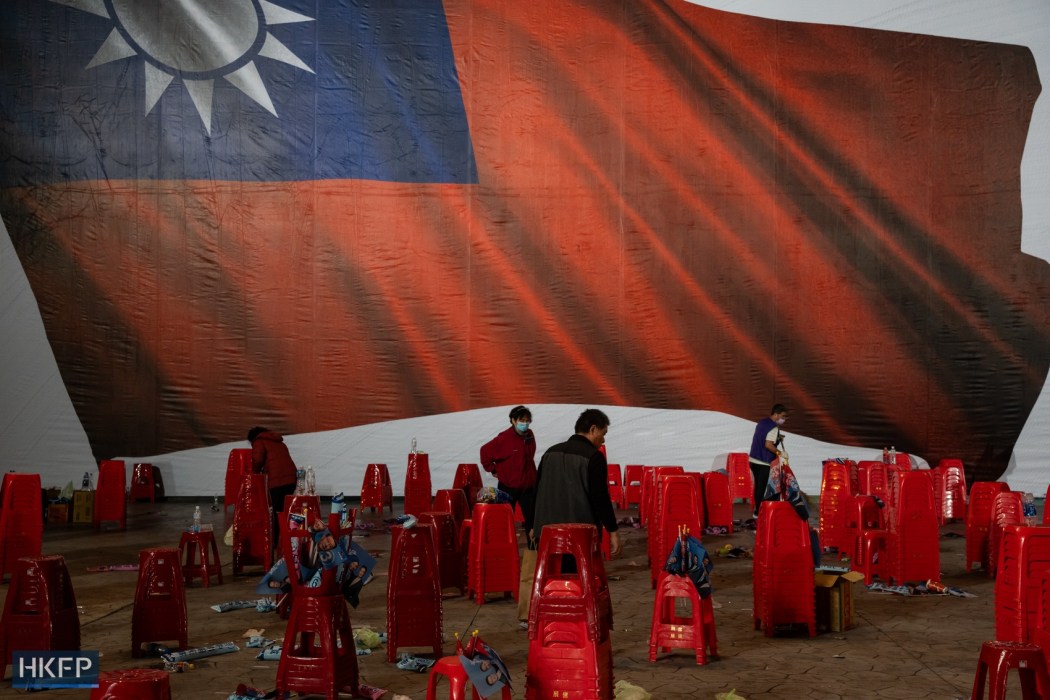
Their value lies in existing for “such a short period”, Arthur Chu, chairman of the Taiwan Film and Audiovisual Institute (TFAI) told AFP, adding that they represent “an almost-voiceless post-war generation”.
Wang said it is “meaningful” if the films can be rediscovered, a tribute to those “who worked so hard to make them and captured the images of Taiwan at that time”.
If the rare vintage reels are discarded or deteriorate, “there’s no way to bring them back”, he said as he directed a team wearing head torches to recover the reels.
“They’re gone forever.”
‘Beyond saving’
Finding Taiwanese-language films is “extremely difficult”, said Wang, who has chased the vintage movies for 10 years and once discovered rare celluloids at an old theatre in Los Angeles.
He works with the government-funded TFAI, which has spent nearly two decades tracking down surviving reels, many of which were lost or left to deteriorate in the island’s hot and humid climate.
The ageing cellulose acetate films are at risk of developing “vinegar syndrome”, a chemical decay that can make film brittle, warped or sticky.
The films must be kept in cold storage before they can be repaired by hand, scanned and then go through digital clean-up and correction.
Among those helping preserve the films is 86-year-old supplier Wang Chin-ting, who began working in the movie business in 1984 and bought a film company 12 years later.
Of the hundreds of reels he collected, only a handful are Taiwanese-language ones, now stored at his ancestral home in Changhua in central Taiwan, the brick house providing naturally cool, dry storage conditions.
Wang Chin-ting lifts each reel from its flat, circular metal can and threads it through a rewinding machine, a process that helps prevent the old films from deteriorating.
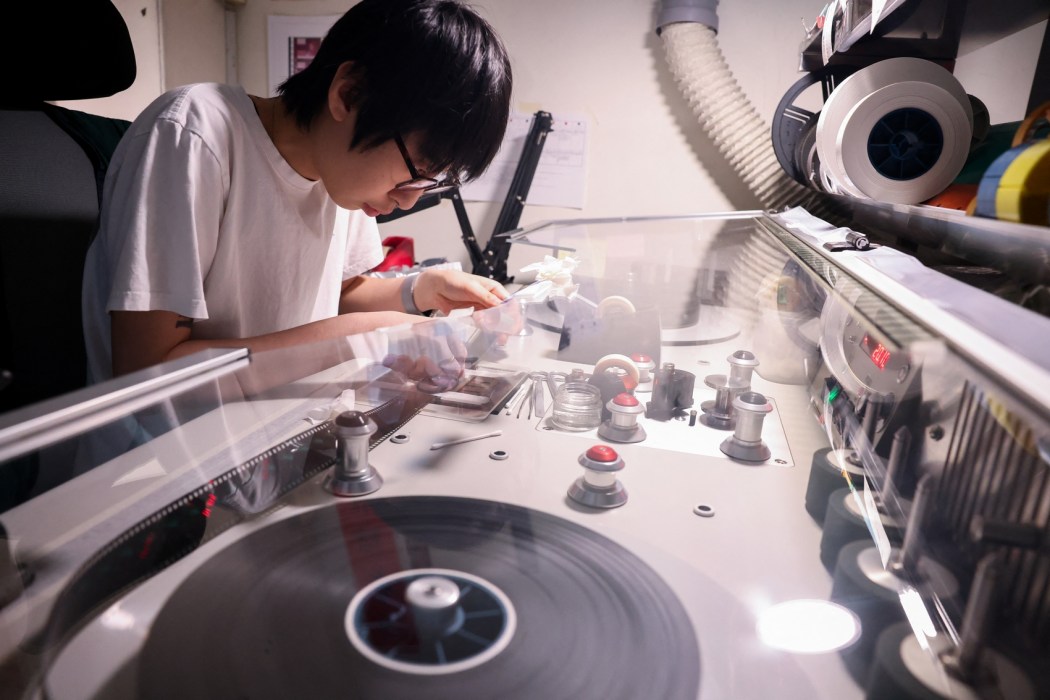
At TFAI’s restoration centre in New Taipei City, film restorer Wu Long-hao painstakingly repairs damaged reels by hand using tape, a scalpel and eucalyptus oil.
“Some reels are in such poor condition that we have to assume they may only survive a single pass through the scanner,” he said.
“If they snap, they are beyond saving.”
Touching hearts
Ranging from popular operas, thrillers, comedies and romance dramas — even Taiwanese versions of international blockbusters lsuch as James Bond and Tarzan — the films resonated with many Taiwanese who had been educated during Japan’s colonial rule and had limited Mandarin skills.
Produced quickly with limited budgets to meet booming demand, many taiyupian were “crude” or even “absurd”, the TFAI’s Chu said, but they provide a rare, visual record of everyday life in Taiwan at the time.
They also captured old Taiwanese dialogue and slang, and have become a valuable record for film researchers and linguists.
Although the last such film was made in 1981, the launch of television stations and the rise of Taiwanese and Mandarin-language TV dramas from the late 1960s triggered a sharp decline in the industry.
But the films gave the post-war generation that could neither understand nor read Mandarin Chinese “a deep sense of comfort and an emotional outlet”, Chu said.
People were willing to buy a ticket because the films spoke to them during years of repression and hardship, he said.
“The stories of joy, sorrow, love and loss touched their hearts.”