Oregon lawmaker says he’ll introduce bill to make state parks free to residents
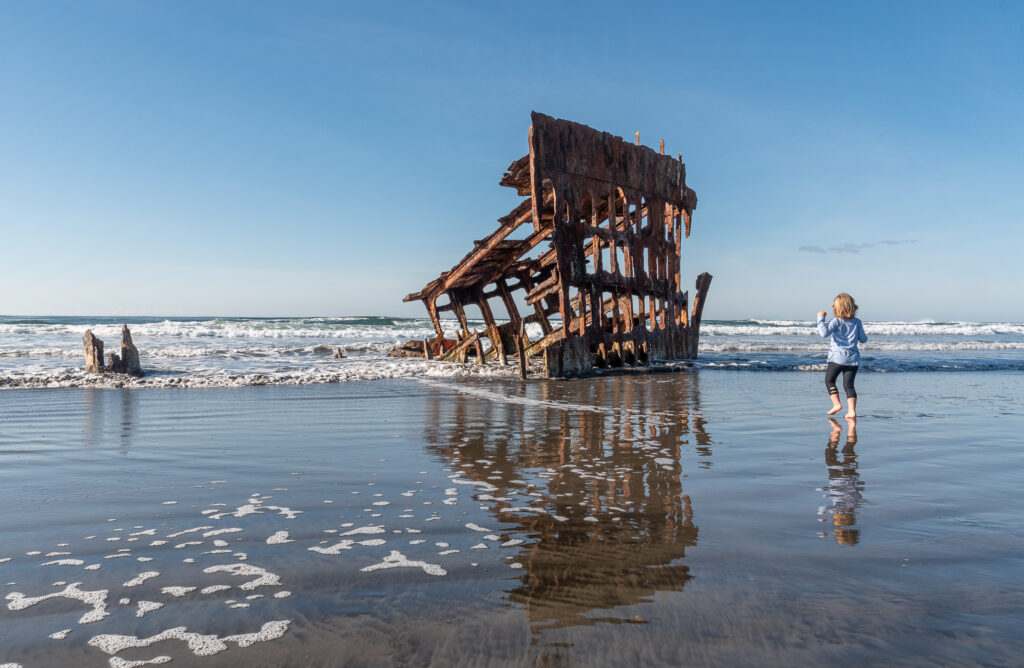
The Oregon Parks and Recreation Department manages 250 properties across the state, including Fort Stevens State Park near Astoria. The park is Oregon’s largest public campground. The 4,300-acre property has beach access, a freshwater lake, trails and the Peter Iredale shipwreck. (Oregon Parks and Recreation Department)
An Oregon lawmaker wants to make visiting state parks cheaper for residents.
Rep. Cyrus Javadi, D-Tillamook, last week floated the idea of introducing a bill to make parking at Oregon State Parks free for state residents.
Javadi, who is up for reelection in November in a politically split district along the North Coast, framed the idea as a way to make enjoying public land more affordable, particularly for low-income Oregonians. His district is home to several state parks, including Cape Lookout, Fort Stevens and Bob Straub.
“The idea is that state parks are a public good, a place that Oregonians can go and enjoy without additional fees, if possible, especially the Oregonians who don’t have a lot of extra disposable income,” he told the Capital Chronicle.
State parks already face budget constraints
The Oregon Parks and Recreation Department oversees 250 state park properties across more than 113,000 acres, including 362 miles on the coast. It’s one of the country’s most popular state park systems, receiving the third most visitors for day-use out of any state park system, according to the agency.
The agency mostly relies on lottery funds and user fees, including day-use parking fees of $10 for in-state residents and $12 for out-of-state visitors at many popular sites.
“Free parking would create a substantial gap in the agency’s budget that would have to be filled by a stable source of funding that can address current and future needs,” agency spokesperson Lauren Wirtis said in an email. “The Oregon Parks and Recreation Department is not aware of any such source.”
About half of the agency’s $393.4 million two-year budget comes from lottery funds, a funding system voters passed in 1998 when they voted in favor of a ballot measure splitting 15% of state lottery proceeds between state parks, beaches and wildlife conservation efforts. A third of the agency’s budget relies on money generated through camping, day-use and RV registration fees. Federal funds make up the remainder of the budget.
Last summer, the agency faced a 14% budget shortfall because of increasing costs, record visitation, and declining lottery funds. In response, it increased several of its fees, including day-use fees that only exist at the most visited parks.
It’s too soon to tell whether these changes have stabilized the budget, Wirtis said, but it’s the only option the agency has to address budget constraints.
Javadi doesn’t have a concrete proposal yet, but he said he doesn’t want to defund the agency either.
“Oregon’s state parks are underfunded, so I do not think we can simply eliminate parking fees without replacing that revenue,” he said.
He said he’s open to realigning the programs that receive lottery funds, using the transient lodging tax lawmakers recently increased to fund state park operations or potentially increasing or adding day-use and camping fees for out-of-state residents at all of Oregon’s state parks. Another option he said he’d consider is making state park access free during the week.
Past proposal looks to other states
Residents in at least a dozen states, including Montana, Idaho and Michigan, can buy an annual state parks pass at the time of registering a vehicle.
Oregon doesn’t have an option to buy a state parks pass while registering a car. Instead, it offers an annual day-use state parks pass for $60 for state residents and $75 for out-of-state residents for purchase on the agency’s website or in person at some parks.
Rep. Rob Nosse, D-Portland, introduced a bill in 2025 offering to eliminate day-use state park passes with an option for Oregonians to donate $19 to the park system. The bill didn’t receive a hearing and died in the committee process. In an interview, Nosse said the bill wasn’t a priority then as the Oregon Legislature grappled with an impending transportation budget crisis.
The goal of the bill wasn’t necessarily to make state parks free, but to support a more robust funding system for the agency as long as Oregon could maintain a certain threshold of participation, said Justin Boyle, a conservation advocate for Environment Oregon who worked on the bill.
“It is really just a more convenient way to purchase an annual pass,” Boyle said, adding that he’s planning to work on legislators in 2027 for a similar proposal.
Existing free options to visit Oregon State Parks
More than 150 of Oregon’s 250 state parks are free to visit.
Additionally, the agency last month launched a Library Pass Program, allowing families to borrow any of the 200 day-use parking permits handed out to 82 libraries statewide. Each participating library has at least four parking permits, while libraries closest to state parks have more passes.
The agency also offers special access passes for free camping four nights per month and free parking year-round for foster families, veterans with disabilities and active-duty military on official leave.
Javadi said he is considering ways to expand free state park access to Oregonians who qualify for the Oregon Health Plan or the Supplemental Nutrition Assistance Program.