Oregon governor declares state of emergency over wildfire threat
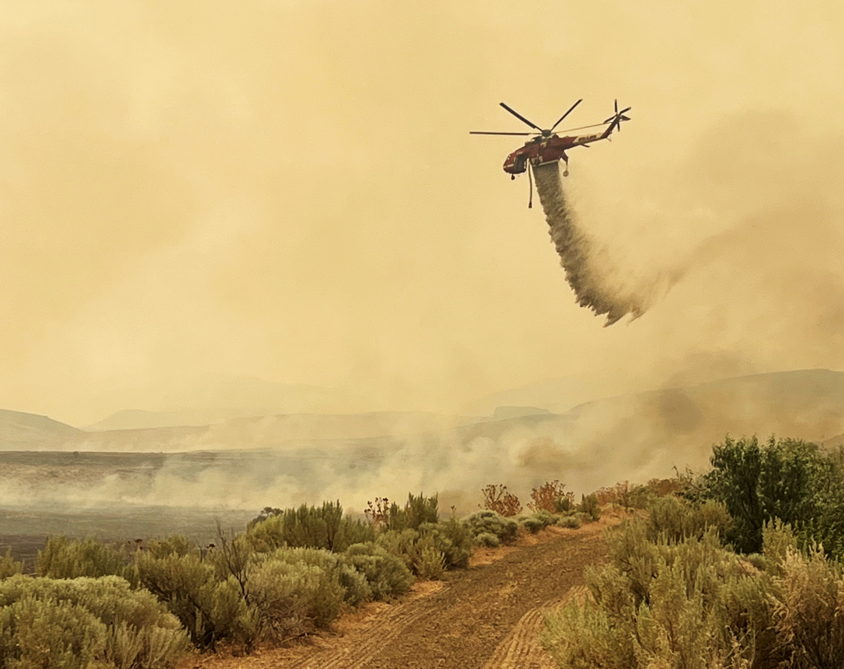
A helicopter drops flame retardant on the Cow Valley Fire in eastern Oregon on July 12, 2024. Scientists expect wildfires to continue to intensify with climate change. (Photo by Matt Fisher of Umatilla Task Force/Northwest Interagency Coordination Center)
While Oregon’s first 2026 heatwave is winding down Tuesday, heat and drought are expected to worsen through the summer and will heighten wildfire risks across Oregon, spurring Gov. Tina Kotek to declare a state of emergency.
Kotek made the declaration Tuesday in an executive order, which will make it easier for local and state fire authorities to access “all available resources” including various firefighting crews, aerial support, ground resources, and emergency personnel to prevent and respond to fires. The emergency will last until the end of the year or the end of the fire season, which is expected to last through October.
“Increasing heat, dry vegetation and shifting winds continue to align and create dangerous conditions that demand immediate action,” Kotek said in a statement. “Throughout the summer, it will get hotter and drier. Oregon has record-setting low snowpack and nearly half of our counties are facing persistent drought conditions. On average, 70% of wildfires in Oregon are human-caused. Prevention starts with every Oregonian — at home, at work and out and about enjoying our great state.”
Kotek also advised Oregonians to sign up for the statewide emergency alert system OR-Alert, to have an evacuation plan and to have an emergency “go kit” ready.
Since March, Kotek has declared drought in 17 of Oregon’s 36 counties, mostly in southern and eastern Oregon. More than 400 wildfires so far this year have burned more than 8,000 acres, and several caused temporary evacuations.
The declaration directs state agencies and the National Guard to collaborate on wildfire response and prevention by sharing personnel, equipment and resources. It also directs those agencies and Guard troops to meet requests coming from the state’s primary fire agencies — the Oregon Department of Forestry and the State Fire Marshal — and local and tribal governments.