Olvera Street shopkeepers thought LA’s World Cup would revive business — it hasn’t
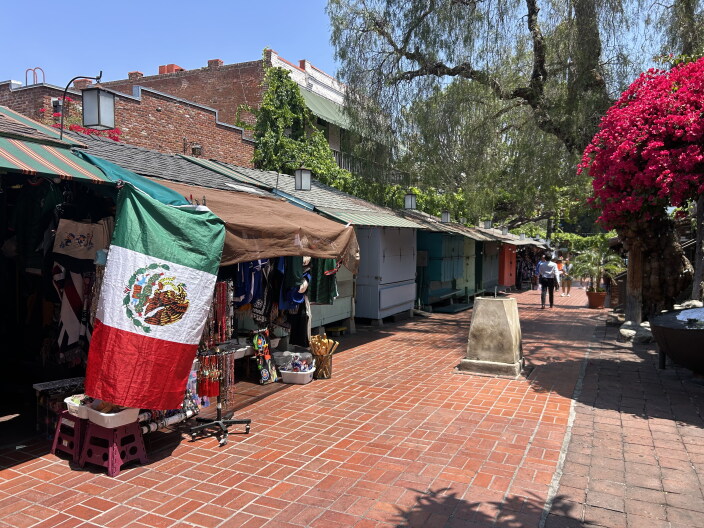
Olvera Street sits in the oldest plaza in California — the heart of El Pueblo de Los Ángeles.
The vibrant stalls that line the terracotta cobblestone road sell Mexican goods, like leather guaraches, talavera pottery, and woven blankets.
They were once a tourist hotspot, packed with locals and visitors alike shuffling between the many restaurants, shops and museums. But on a weekday during the World Cup, before one of the most anticipated matches in L.A. between Mexico and South Korea, the corridor was quiet.
Maria Naranjo operates a stall and sells T-shirts, traditional dishes, ponchos, and more. She’s worked at Olvera Street for more than 16 years.
Naranjo told LAist that she and other shopkeepers thought the World Cup would provide a lifeline to Olvera Street with an influx of visitors and their business. Hopes were high after a devastating year of federal immigration enforcement, a slowing economy and lasting impacts from the COVID-19 shutdown.
“Estábamos esperando eso para ver si venía mucha más gente porque entre la semana, si te fijas, está solo,” Naranjo said. “Fin de semana un poquito, pero no es como que ‘wow’.”
Weekdays are lonely, Naranjo said, and on weekends, traffic picks up a bit, but barely.
“Yo trabajo aquí nomás como tres días a la semana de los siete días que se abrían. Muchos puestos han cerrado por lo mismo,” Naranjo said.
Naranjo said she only works three days out of the week. Especially after the ICE raids, many shops had to close down because Olvera Street was mostly deserted. Folks struggled to recuperate.
Xochitl Rios was setting up shop on a Tuesday afternoon — a booth her family has operated since the 1960s. The street was quiet aside from a few locals and other stores setting up for the day.
Rios told LAist that most shop owners are unable to pay for employees for a full day of work, let alone a full week.
“In the ’60s, we used to close, probably around 11 o’clock,” Rios said. “Coming in 8 o’clock in the morning. Right now, you can come in at 10 [a.m.] and leave no later than three or four.”
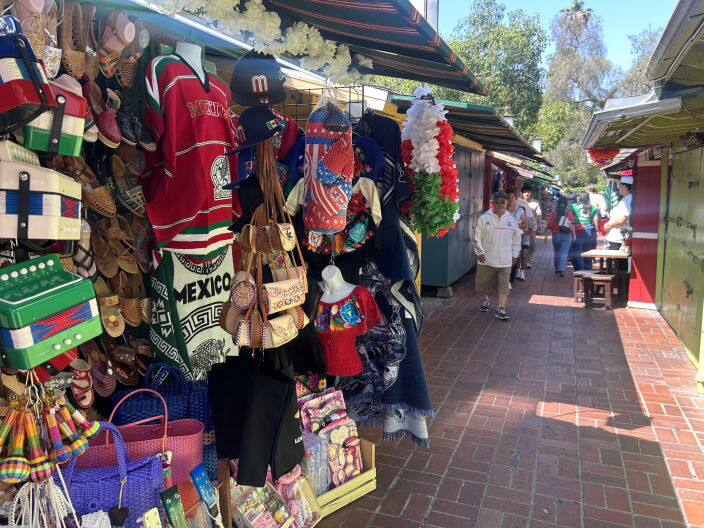
You can’t tell the World Cup is in town
Rios said city officials made it seem like World Cup hype would trickle down to Olvera Street, whether it was through watch parties or an increase in tourism. But Rios said that isn’t the case so far.
“Everybody was so happy, but it’s not happening,” Rios said, adding that she sees tourists mostly run through the area for the restroom before getting back on their tour buses.
Jasmin Lopez of South L.A. has been working on Olvera Street for eight years. As she set up the candy stall, Lopez told LAist that the city is having events as promised, but she sees most traffic go to La Plaza de Cultura y Artes, the home base for Casa México during the tournament.
“We could have done more. They do look for bars, parties, and I send them to Little Tokyo or Chinatown, because that’s where I know the bars are,” Lopez said. “We could have organized better.”
Lopez said she would like to see more efforts from local leaders to keep Olvera Street alive.
“This is a historic landmark. We have the oldest house here in L.A.,” Lopez added. “You would think, because this is a historic landmark, they would put a little bit more effort. Isn’t that what you do when something is supposed to be part of history? You try to preserve it. Maybe they should try a little bit harder.”
Some vendors try to capture the moment
Some shopkeepers slightly upgraded their inventory to try attracting soccer fans with jerseys or World Cup T-shirts.
Diana Diaz is a newer addition to the corridor. At her hot pink kiosk, you can find embroidered button-ups, colorful jewelry, and her most recent addition — soccer leather handbags. She told LAist that she uses social media, such as TikTok, to reach new shoppers.
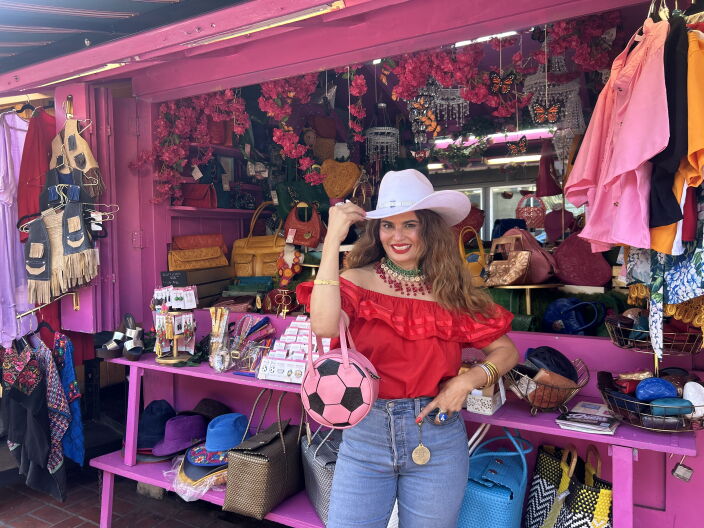
“People are coming to Olvera Street just to buy the soccer bag for the World Cup,” Diaz said. “I’m trying to capitalize on that and also create beautiful memories and beautiful images for people that want to look back on World Cup 2026 and feel good about the celebration that the city collectively organized.”
Shopping local is critical, Diaz added.
“By investing in small businesses, you’re investing in the community,” Diaz said. “You help businesses grow, especially businesses that are contributing to the growth of our local economy, that are invested in our youth, that are invested in hiring local, that are invested in really showcasing the diverse cultural landscape that exists within L.A. It’s powerful.”
How did we get here?
Vendors say it’s a culmination of things — the pandemic, immigration enforcement and a struggling local economy, people are struggling to pay for basic needs, like groceries and rent.
Michael Mariscal now owns a shop that he says has been passed down through generations.
“The immigration stuff chased away half of our base, because half of our base is the local Latino community,” Mariscal told LAist. “Even when parts of their family come to visit, first place they’d to come (to) is Olvera Street. We’ve lost a lot of that.”
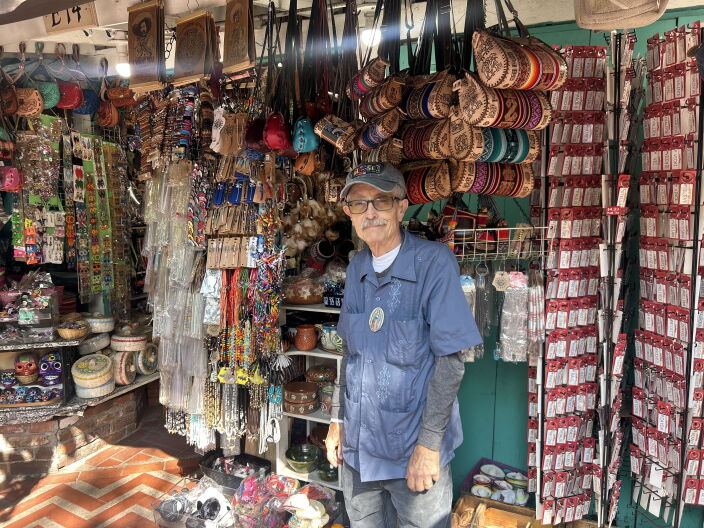
Mariscal said he takes the good with the bad.
“We work hard. The Lord provides. It’ll be what it’ll be,” Mariscal added. “I expect it to be better the last two or three weeks, because that’s the end of it. People may be taking souvenirs back. It just also depends the teams that are coming and where they’re playing, and where they’re going to be watched at.”
What does the city say?
Councilmember Ysabel Jurado represents the district that includes El Pueblo. Jurado’s office did not respond to LAist’s requests for comment.
Domenika Lynch, general manager of El Pueblo de Los Ángeles Historical Monument, said the Olvera Street story is a comeback one, but that’s going to take some time.
“We have seen increased traffic since before the World Cup, but are they shopping as we wish that they would? I think that is where the challenge lies,” Lynch told LAist. “I sympathize. The venue is cleaner, it’s safer. We need Angelenos to come back.”
“I’m a firm believer that people will come. We just have to give people a reason to come back,” she added.
Lynch said her job for the last eight months has been to improve foot traffic and create activities with a very limited budget.
“I’m addressing a lot of the neglect that happened. There’s a lot of different maintenance needed, so we are addressing it. I know our best days are ahead,” Lynch said. “The World Cup, it’s one of those moments where we’re better today than we were eight months ago, but is that enough? Absolutely not, and we are working on it every single day.”