Mayes tells federal court it’s too early to block Prop. 314, says no one has been arrested yet
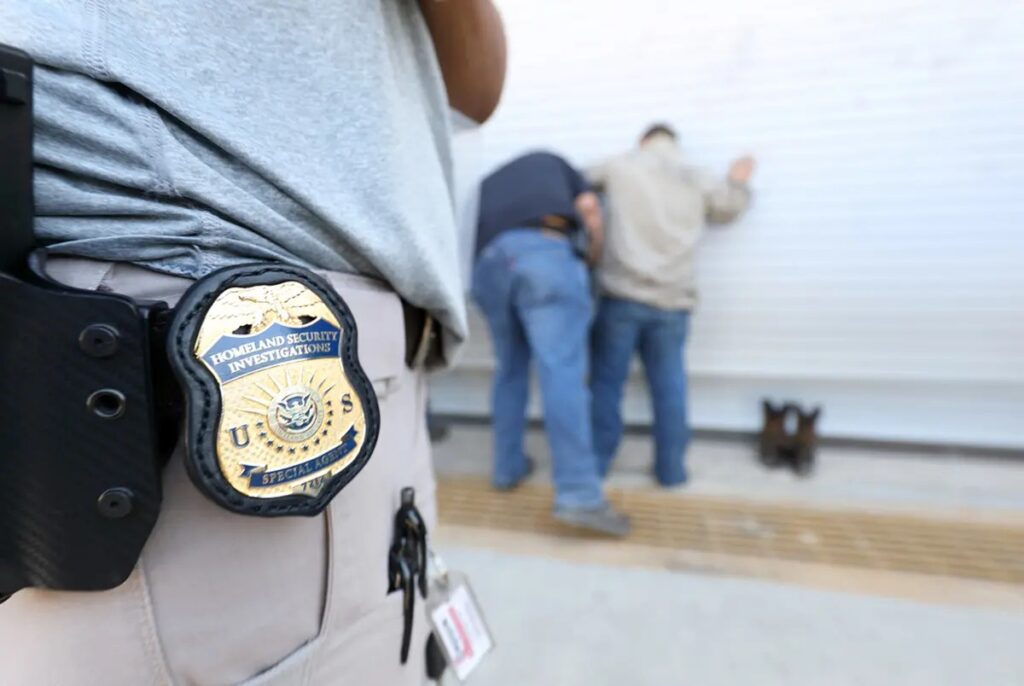
(Photo by U.S. Immigration and Customs Enforcement)
Arizona Attorney General Kris Mayes says it’s too soon for a lawsuit to be filed against a 2024 law that would allow local police officers to arrest unauthorized immigrants because no one has been arrested under it yet.
Earlier this month, the Florence Immigrant and Refugee Rights Project, a legal nonprofit that offers pro bono defense for people facing deportation proceedings, filed a lawsuit against the law, arguing that it flies in the face of federal authority and should be permanently blocked. The group requested that the law be paused while litigation continues, but Mayes and Republican legislative leaders, who are all defending the 2024 law, argue that doing so would be the wrong move.
Two years ago, 61% of voters sided with Proposition 314, also called the “Secure the Border Act.” The ballot measure enshrined new criminal penalties into state law, including one that punishes people who use fraudulent documentation to apply for public benefits or employment and another that carries a prison sentence for those convicted of knowingly selling lethal fentanyl.
The most controversial provision, known in court filings as “Section 5,” makes it a state crime for someone to cross Arizona’s southern border without authorization anywhere but at an official port of entry. First time offenders face a class 1 misdemeanor, which means up to six months in jail.
The Republican lawmakers who wrote Prop. 314 anticipated a legal challenge, so they froze Section 5’s effective date until 60 days after a similar law in Texas, itself mired in litigation at the time, was implemented. A federal appeals court revived the Texas law in May, putting Arizona’s version back in play on July 14.
Mayes, who is mounting a defense of the law in court despite her vocal criticism while the ballot measure was being crafted, said too much is still unknown for the law to be challenged. The Democrat pointed out that the Florence Project doesn’t have any clients who have been charged under Section 5, putting the legal group’s ability to contest the law in doubt and rendering its arguments that the law will lead to unconstitutional arrests purely speculative.
“Because Section 5 has barely gone into effect, Florence Project has not shown and likely cannot show that anyone has been subject to arrest, detention, or prosecution for violating the illegal entry provision,” wrote Assistant Attorney General Timothy Horley.
To establish their legal standing in the case, the Florence Project warned the court that implementing the law could result in a wave of arrests across the state and force its attorneys to take on more cases or travel longer distances, jeopardizing the legal group’s ability to provide services to its clients and potentially resulting in missing critical hearings.
But Mayes rebutted that it’s too early to know what impact the state crime provision could have. She argued that arrests could just as likely be concentrated in the southern part of the state.
The law outlines a list of criteria for arrests. That list includes a law enforcement officer witnessing a suspected illegal border crossing, video footage of someone doing so or other “constitutionally sufficient indicia of probable cause,” which critics have said is too vague to prevent discriminatory arrests.
Mayes, however, was unconvinced by assertions from the Florence Project that anyone, even immigrants who’ve lived in the state for years or citizens could be targeted, saying that the law’s delayed deadline means its penalties only apply to people suspected of crossing the border on or after July 14. Mayes added that it’s also unclear how much of their resources law enforcement agencies will choose to devote to monitoring the southern border or looking for people who may be eligible for arrest under the law.
Instead, Mayes warned the court that blocking the law would amount to undermining the will of Arizonans who voted for it two years ago and tying the hands of law enforcement officials.
“There is a strong public interest in preventing dangerous cross-border crimes, like human trafficking and drug smuggling,” reads the brief. “Restraining Section 5 will take away from law enforcement authorities a method that the Legislature and the voters of Arizona have decided would make the state safer.”