Local advocates respond to SCOTUS ruling on refugees: ‘How do you prepare to say goodbye?’
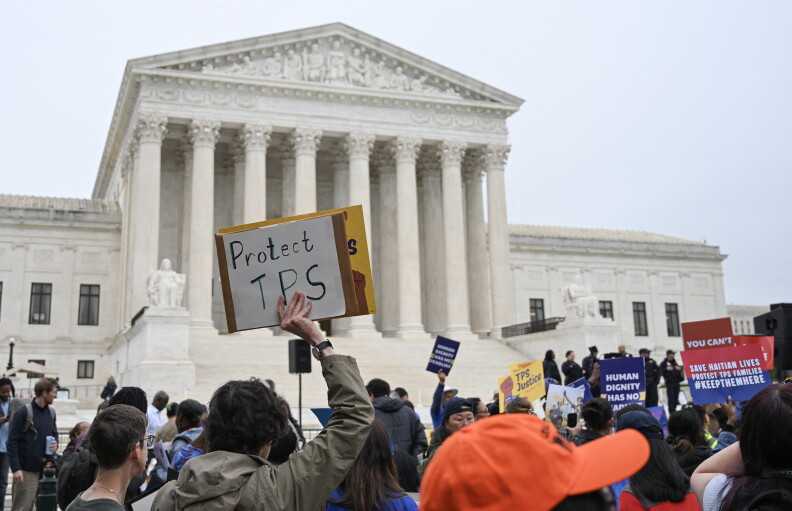
The Supreme Court today ruled that the Trump administration can revoke Temporary Protective Status from hundreds of thousands of Syrian and Haitian refugees.
The TPS program was created by Congress in 1990, forming a pathway for vetted refugees who need protection to live and work in the United States. There are about 330,000 displaced Haitians and 3,800 Syrians living in the U.S. today.
California is home to nearly 80,000 TPS holders as of March 31, 2025, according to the Forum, a nationwide coalition of immigration-related groups. Not all of the TPS holders in California are from Syria or Haiti.
Jose Serrano, executive director of the Orange County Office of Immigrant and Refugee Affairs, said it’s heartbreaking to continue to receive notifications like these.
“They’re contributors to our communities. They’re local leaders. It’s more than just unfortunate,” Serrano said.
Many people could be deported, Serrano added. He said his group will continue “to remind folks that they are part of our communities … and providing the appropriate guidance, so that they feel as if they’re not abandoned.”
What does this mean?
Jessica Bansal, attorney with the National Day Laborer Network, told LAist’s AirTalk that Haitian and Syrian TPS holders will soon lose their work authorization and lawful immigration status.
“The timeline isn’t super clear, but we’re talking days or weeks,” Bansal said. “TPS holders, even if they have a U.S. citizen child, even if they have a U.S. citizen spouse, even if they’ve been here for 20 years, unless they have been lawfully admitted at some point — and TPS is not a lawful admission — they can’t adjust their status.”
For Honduran TPS holders who lost their status last year, Bansal added, “ the lives that they built here are just gone on 60 days’ notice.”
Given today’s ruling, some refugees are already preparing for the possibility of self-deportation.
“People have been preparing, but how do you prepare to say goodbye to your citizen children? How do you prepare to bring them to a country where you think they’re not safe?” Bansal said. “You can’t prepare for something like this, no matter how much you try or know it might be coming.”
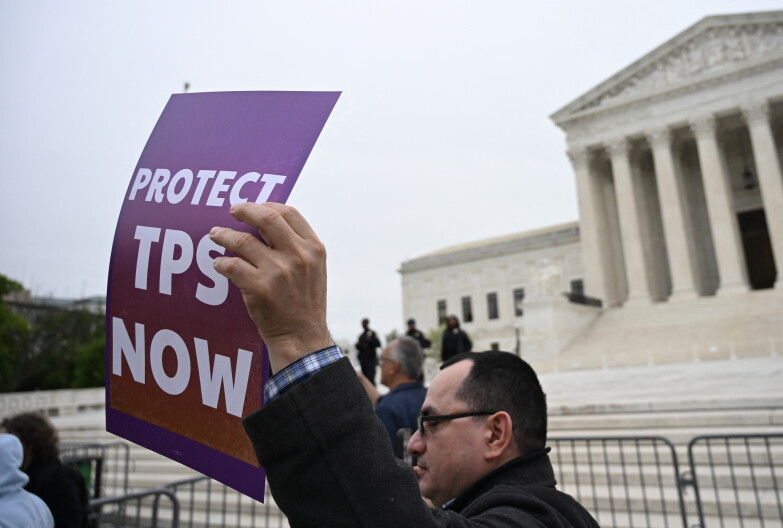
Who are TPS holders?
The designation is granted to immigrants from countries hit by crises, such as natural disasters or war. The federal government typically renewed the deportation protection every 18 months.
“ These are people who have lived here [and] have a justifiable reason for coming to the United States. [They] are entitled to work based on work permits, are paying taxes, and are not committing crimes,” said Stacy Tolchin, an immigration attorney based in Pasadena. “These are the folks that we want in this country.”
TPS holders lose their protections with a conviction for one felony or two misdemeanors, regardless of the type of offense.
Since 2025, when Trump returned to the White House, the administration has attempted to strip TPS from 13 of the 17 countries.
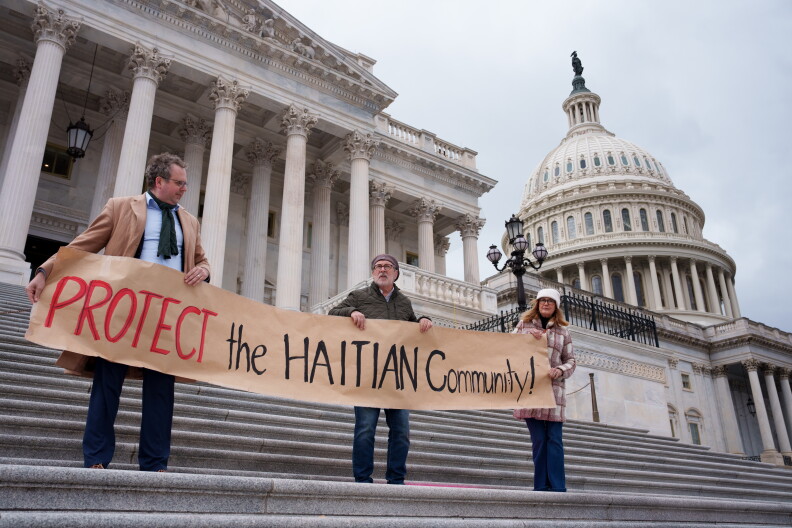
What could this mean for TPS holders from other countries?
The ruling is specific to those from Haiti and Syria, but the remaining countries that fall under the TPS program, including Ukraine, Lebanon, Sudan and El Salvador, could lose their TPS designation when they come up for renewal in the fall.
Sergio Perez, executive director at the Center for Human Rights and Constitutional Law, told LAist that the ruling is a warning sign for anyone with TPS protections.
“They all now need to understand that they are in a riskier and less safe position now,” Perez said. “So it presents a real risk, a real risk to our refugee neighbors.”
Oksana Pashko Reeves, president of Ukrainians in Orange County, told LAist the ruling is not good news.
“Especially for people who do not have homes to go back to because they were destroyed or are under Russian occupation,” Reeves said, “I hope exceptions will be made.”
Carlos Perea, executive director of the Harbor Institute OC, called the ruling shameful.
“Orange County has large populations of Arab communities and refugee communities, and so I wouldn’t be surprised to see that there’s a big impact, particularly to Orange County,” Perea told LAist. “This is going to have a large impact not only in the TPS community but in general on human rights and due process.”
What’s next?
Perez said pushing back against the administration will look different for everybody. For attorneys and advocates, it means finding the pressure points to push back against the campaign against immigrants.
“It means taking care of your neighbors,” Perez said. “It means putting your time and your money to work in every way possible, so that folks who are in the target range of this administration are protected by their networks in their communities.”
Serrano recommends that TPS holders contact nonprofits, legal experts and advocates for information and resources.
“It is really important to walk alongside each other,” Serrano said. “Remembering that behind every person who came here seeking safety or refuge is a story of hope, it’s a story of humanity, it’s a story of potential.”
LAist correspondent Jared Bennett contributed to this report.