LA therapists are seeing more young patients with gambling problems. They blame Kalshi
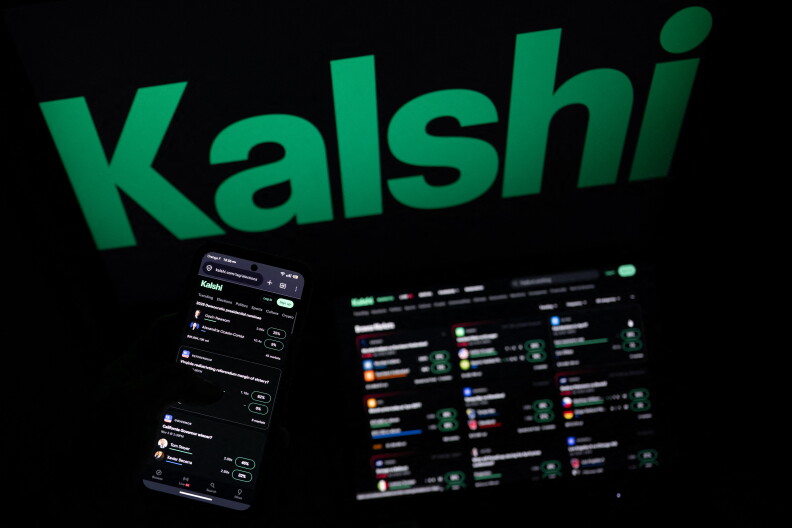
With a week left in the World Cup, fans may have noticed ads with soccer stars telling them they could win tickets to the final using their sports knowledge.
Those ads are for Kalshi, a prediction market that accounts for 90% of the U.S. market share. Right now, $1.1 billion worth of contracts are trading on who will win the World Cup. And it’s not just sports — Kalshi contracts can get as fine-grained as the exact margin of victory between Spencer Pratt and Nithya Raman in the L.A. mayoral primary.
Jack Such, a spokesperson for the company, told LAist that the platform’s trading volume has skyrocketed over the past three months.
“It’s just been going up and up and up,” he said.
Sports betting is illegal in California, but prediction markets like Kalshi aren’t. That’s because users buy and sell contracts among themselves, instead of placing bets against a house. The distinction allows platforms to operate under federal rules for financial exchanges, rather than state gambling laws.
Although other states have taken prediction markets to court, saying they should be held to state regulation, California hasn’t initiated legal action of its own.
Some L.A. gambling addiction clinicians say that they’re already seeing the consequences of what they call unregulated betting, especially among young people.
An uptick in patients dealing with gambling addiction
Dan Field, a licensed social worker and the clinical director of Westside Gambling Treatment in L.A., said he’s seeing “a lot more young sports bettors who are just going straight to Kalshi … and getting sucked in very easily.”
One of Field’s patients moved to California hoping the state’s sports betting laws would help him manage his recovery from gambling addiction.
“For almost two years, he was largely gambling free, and when Kalshi hit, he picked up right where he left off,” Field told LAist.
Dr. Timothy Fong, an addiction psychiatrist and co-director of UCLA’s Gambling Studies program, said that as prediction markets have taken off, his program has “definitely seen an increase in the number of folks coming into treatment.”
He told LAist that for many now seeking help, online prediction markets were their first experience with gambling behavior. They’d never set foot in a brick-and-mortar casino, and began using prediction markets because of their interest in sports and investing, not betting.
Why some are drawn to prediction markets
Yisroel Solomon, 32, said he began sports betting when he was 22 when he was living in New York. After he relocated to California, he told LAist that he started using prediction markets because they were the primary legal option.
But Solomon said prediction markets have the capacity to suck users in far beyond what traditional sports books, or even other apps, can do.
Because prices update almost instantaneously, in response to real-time information, “that gives an extra sense of dopamine, extra fear of missing out, extra sense of chasing,” he told LAist.
Field, the clinical director, noted that the constant price checking that comes with using prediction markets is “incredibly attention-grabbing and addictive.”
Jacob Hofflich, a San Diego resident and sophomore at the University of Michigan, began using Kalshi when he turned 18. He said the platform’s visual design makes it hard to look away. Flashing green and red lines, and a running log of which bets are being placed, make the app appear “like the stock market,” he told LAist.
“It’s enticing you to get in on the action,” he explained.
“There’s always new opportunities to bet. [With] sportsbooks, you’re confined to just sports… But with futures markets, the market’s open 24/7,” Solomon said.
Both Solomon and Hofflich say they have stopped gambling, with Hofflich adding that he has been working with Field.
What does this have to do with young people?
Prediction markets are available to users as young as 18 because the platforms don’t have to follow the minimum gambling age set by the state.
Kalshi is growing access to the 18- to 20-year-old demographic through aggressive advertising, according to some experts.
“I’ve seen some of the ads, and there are scenarios where people are partying with friends in a bar in a college environment and betting,” Field said. He explained that this kind of advertising can help normalize using prediction markets and make the platforms seem less dangerous than they are to young people.
Such, the Kalshi spokesperson, said the company isn’t responsible for initiating young people into gambling.
“The idea that Kalshi is somehow the entity that is changing the availability from 21 to 18 is not true,” he said.
Such did not respond to a request for comment regarding the company’s advertising practices.
Deborah Buhaj, a gambling addiction therapist based in L.A., said that recently, she’s had parents reaching out to her who “suddenly don’t recognize their 22-year-old” after they started using Kalshi.
Some users are starting even younger.
Fong, the co-director of UCLA’s Gambling Studies, told LAist that he has patients under 18, who get around prediction markets ID checks by using their parents’ credentials. He said he’s working with a 14-year-old whose mother created a Kalshi account for him thinking it was a video game.
Fong emphasized that although the platforms might appear harmless, allowing minors to use them is “no different than giving them access to where the gun is or where prescription drugs are or where the cannabis is.”
Kalshi did not immediately respond to requests for comment on additional features to prevent minors from using the platform.
A fanbase on college campuses
According to a recent UCLA Gambling Studies Program survey on gambling culture in Greek Life organizations at the university, 13% of respondents said they’d placed a bet on a prediction market site.
Over 90% of all respondents said they’d needed help with living expenses as a result of their gambling losses.
Fong told LAist that one of his patients rushed a fraternity his freshman year of college where members quickly taught him to use prediction markets. For the first few months, he made money, but things took a dramatic turn.
“A year and a half later … he ended up spending over $150,000 of his own college money,” Fong said.
Louie Latosquin, a senior at UCLA and president of the university’s Interfraternity Council, said he notices UCLA’s gambling culture is mostly focused on card games like poker, baccarat and blackjack. He explained that prediction markets are more common in groups where “people already gamble pretty intensely.” Latosquin also helped conduct the Greek Life survey.
Outreach is changing
L.A. clinicians say they’ve adjusted their outreach to deal with the popularity of prediction markets.
Stop Betting Sports, an organization that offers free resources and webinars for gambling addiction, has created material geared towards high school students.
Fong also encouraged anyone curious about gambling and prediction markets to speak with a licensed professional before they start.
“It is certainly worth meeting with a professional therapist to explore and make sure things don’t get out of hand,” he said.
Fong also does outreach work at fraternities at UCLA. Recently, they’ve had special sessions about digital platforms.
Latosquin said they encourage students to think about more “economically reinforcing” places they can spend their money, like education, self-improvement and professional development.