Kotek’s prosperity council pushes Oregon lawmakers to revisit tax cuts, leaves details up in air
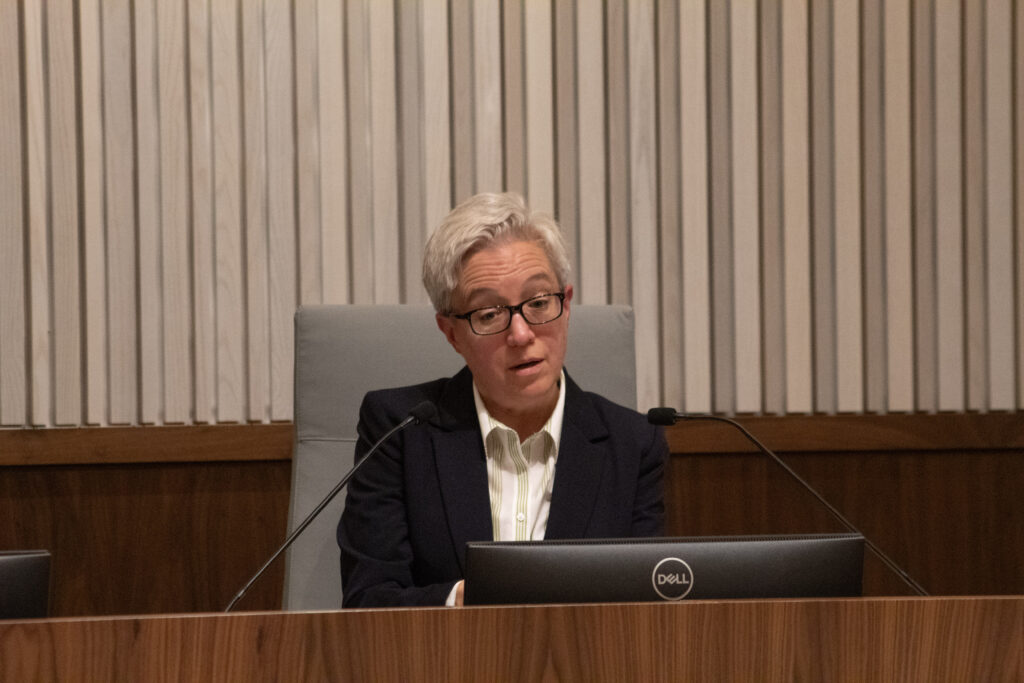
Gov. Tina Kotek discusses legislative priorities in the 2026 short session in a meeting with reporters at the Oregon State Capitol on Jan. 28, 2026. A new report released by her economic advisers makes several recommendations about how to boost the state’s economy. (Photo by Mia Maldonado/Oregon Capital Chronicle)
This is a developing story and may be updated.
To jumpstart Oregon’s economic development, the state should cut taxes, eliminate a key state climate program and allocate a quarter of a billion state dollars for business infrastructure needs every two years, according to a new report from Gov. Tina Kotek’s economic advisers.
The numbers Kotek’s prosperity council put forth in its 33-page report on Thursday paint a negative picture of Oregon’s economy: The state is second-to-last in the nation when it comes to increases in employment, 41% of Oregonians live either below the federal poverty level or are unable to afford basic needs, and the state’s unemployment rate is at 5.2%, a figure that has remained above the national average for months. The report comes as U.S. Bureau of Labor Statistics data identifies Oregon as the only West Coast state to lose jobs overall since last year.
But while the report identifies 10 key solutions for Oregon Gov. Tina Kotek, it defers to the Oregon Legislature when it comes to changing what it calls a “one-and-a-half-legged stool” system reliant on personal income taxes and property tax to fund state revenues. It’s an issue even the council couldn’t agree on, according to Curtis Robinhold, executive director of the Port of Portland and co-chair of the council.
“We are not equipped to come up with the right answer on the tax code. It deserves a really good look…but boy, it’s complicated, and you know, I think we probably each could imagine a system that would be better,” he told the Capital Chronicle. “What we really need is the governor and the Legislature to get their heads together on what will get us the outcomes we want.”
Another major suggestion: The report argues the governor should repeal the state’s Climate Protection Program, which allows state environmental regulators to set declining emissions caps. Republicans have long characterized the program as excessively burdensome for businesses, and other states such as California and Washington have adopted cap-and-trade programs instead seeking to push polluters to pay for their emissions.
The report stressed that the below changes to Oregon’s tax code should be revenue neutral:
- Expand Oregon’s Research & Development tax credit through incentives such as a 15% credit for company-led research and development and 2% for projects within Oregon universities.
- Increase the estate tax exemption threshold from $1 million to $3 to $5 million.
- Increase the filing and taxability threshold for Oregon’s Corporate Activity Tax, which now applies to businesses with $1 million in Oregon commercial activity. Businesses now pay $250 plus 0.57% of their Oregon taxable commercial activity above $1 million. The prosperity council urged raising that threshold to $2 million and allowing businesses to completely deduct the cost of creating or providing a service or product.
- Reconnect the state tax code to a portion of the federal 2025 tax law that allows non-corporate investors to exempt their small business stock sales from capital gains tax. Disconnecting from this exemption saved Oregon nearly $40 million in revenue for the current two-year budget cycle.
- Establish a work group that can by 2029 deliver a long-term proposal to the governor addressing issues such as expiring federal state and local tax provisions, the corporate activity tax, local government funding and reducing the burden of personal income taxes.
Revisiting such issues would likely leave state lawmakers figuring out how to balance state revenues while changing the systems that fund hundreds of millions of dollars in state revenue at a time when political capital for tax increases is low. Oregonians at the ballot box in May sharply rejected transportation tax increases passed by Democrats last year, but state lawmakers also unsuccessfully attempted to increase the exemption threshold for the estate tax in Oregon this year.
“Every single one of these recommendations is in the context of ‘What do other people do? How are we different? Are we better? Are we worse?’” said Renée James, founder of semiconductor company Ampere Computing and council co-chair.
Kotek established the prosperity council last year amid concern about the state’s economic development climate hampering her reelection campaign. But competing factions within the council sparred over how far the state should go when it comes to slashing taxes to incentivize business development.
A key point of contention was her decision to tap former Senate Republican Leader Tim Knopp as her chief prosperity officer. Some council members also disagreed over the extent to which the state should replicate federal tax cuts.
Prosperity council leaders acknowledged that disconnect legislation fueled disagreement among the council, but they said that they did find a “supermajority” of consensus on every issue aside from taxes. Missing from the report are detailed recommendations on improving the state’s K-12 education outcomes, an issue that council leaders said was outside the scope of their duties.
“I think there’s a misnomer in the dialogue that it’s all about rich people wanting tax cuts,” Robinhold said. “And I want to make sure, because this is super important for the Legislature to hear in this report, we need to holistically look at our tax code, because we are hurting, we’re hurting our middle- and lower-income Oregonians just as much, if not more.”
The report also acknowledges similar disagreements, noting that two council members “disagreed with some of the short-term tax changes and expressed concerns about the necessity of broader business incentives and their long-term impacts to the state.” It’s a likely nod to when two labor-affiliated members of the council in April issued a public rebuke of business groups in the state and argued that tax breaks would only harm Oregon’s economic development further.
“They agree that Oregon must strengthen its long-term competitiveness but believe increasing investments in talent and quality of life is more effective for enhancing the state’s economy,” the report reads.
Other recommendations include:
- Transform Oregon’s economic development agency, Business Oregon, into the Oregon Commerce Authority. It would be governed by business and innovation leaders alongside the governor.
- Establish statewide permitting timelines and guardrails by requiring agencies to approve or deny applications within clear timelines.
- Reduce regulatory and administrative burdens by 20% by 2029 by removing old and excessive regulations.
- Create a dedicated site readiness and infrastructure fund of $250 million for each two-year budget cycle.
- Create a Governor’s Cabinet of Economic & Talent Development to lead a strategy to attract talent to the state and promote its competitiveness.
- Bring Oregon in alignment with other West Coast states’ higher education funding policies and commit $20 million to a fund for innovative university research.