Jewish Film Fest takes on AIDS, abortion, experimental music
For 46 years, the San Francisco Jewish Film Festival has championed films and performances that embrace complexity. This year’s program (running through Aug. 2) continues that tradition with stories of memory, silence, and identity.
Three standout selections approach those ideas from remarkably different directions. A family drama revisits the AIDS crisis through the eyes of a son struggling to understand his father. A sociopolitical documentary challenges decades of Hollywood myths surrounding abortion and reproductive healthcare. An immersive multimedia performance blends percussion, moving images, and spoken text into a meditation on wilderness and revelation.
Together, they reveal a festival interested in the big-picture questions that linger long after the credits—or, in one case, the final note.
One of this year’s centerpieces is the opening-night film Tell Me Everything (Thu/16, Herbst Theatre; Wed/29, Piedmont Theatre), award-winning writer-director Moshe Rosenthal’s deeply affecting Hebrew-language drama about a family living with a secret that quietly shapes two generations.
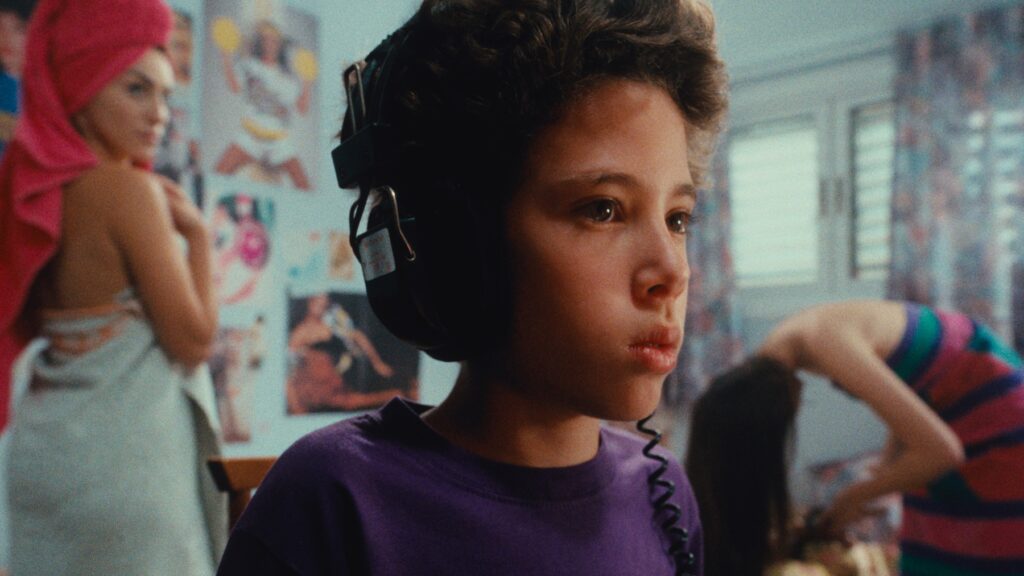
Set in 1987, when fear surrounding HIV and AIDS fueled misinformation and stigma around the world, the film follows 12-year-old Boaz as he begins to sense that something about his father, Meir, remains just beyond his understanding. Years later, as an adult, Boaz returns to those memories with new insight, revealing how childhood confusion can harden into anger before eventually giving way to compassion.
“I wanted to explore memory through the lonely, unsettling, and often terrifying perspective of a child trying to make sense of a world of adults he cannot yet understand,” Rosenthal tells 48 Hills. “Cinematically, this allowed me to draw inspiration from genres like horror and fantasy, because that’s how I remember my own childhood—where imagination filled the gaps left by confusion and fear.”
Although the film unfolds against the backdrop of the AIDS epidemic, Rosenthal resisted turning history into a lesson or his characters into symbols. He waited years before making the film because he believed audiences first needed stories centered on those who lived through the epidemic most directly.
“Only once those stories had been told did I feel there was room to reflect on what that period meant for others—people whose fear manifested itself as homophobia,” he says.
Instead of assigning blame, Tell Me Everything explores the complicated ways love, fear, and obligation collide inside families.
“I have no interest in creating villains in my films,” Rosenthal says. “What interests me are people—their contradictions, their blind spots, and the ways love can lead them to make devastating choices.”
That complexity extends to the film’s quietest moments. Family members struggle to say what they feel, allowing pauses and unfinished conversations to carry as much emotional weight as dialogue.
“I find that the tension between what is said and what remains unspoken can often reveal more about a character than an open confrontation ever could,” he says.
The film’s most emotionally charged father-son conversation became one of the screenplay’s greatest challenges because shortening it felt emotionally dishonest.
“That process made me realize how difficult it can be for men to have truly vulnerable, honest conversations, and how much emotional struggle men are often taught to suppress.”
Returning to SFJFF after opening the 2022 festival with Karaoke, Rosenthal hopes audiences approach his latest film through its shared humanity rather than preconceived ideas about its country of origin.
“My only intention is to make films that are universal, deeply human, and full of complexity and nuance—films that resist simplification and cannot be reduced to a single political message,” he says. “San Francisco, and specifically this festival, is a great home for them.”
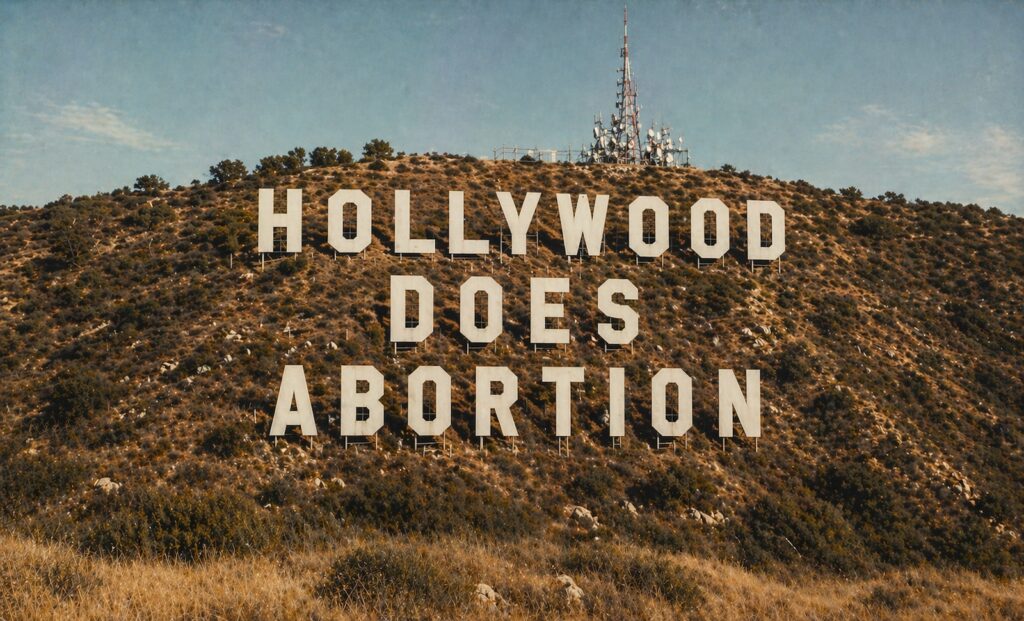
Rosenthal’s exploration of inherited stories resonates throughout this year’s festival, particularly in Hollywood Does Abortion (Sat/18, Castro Theatre; Fri/31, Piedmont Theatre), a documentary exploring how decades of film and television have shaped public understanding of reproductive healthcare.
Drawing on archival clips, industry history, and interviews with filmmakers, actors, physicians, and historians, the documentary reveals how abortion has repeatedly been portrayed through punishment, secrecy, and violence while rarely reflecting the experiences of the people who actually seek the procedure. It argues that those fictional portrayals have profoundly influenced public understanding of reproductive healthcare.
Those questions resonate with actress, writer, and producer Rachel Bloom, who will receive the festival’s Freedom of Expression Award (Sat/18; Castro Theatre). Bloom joined the documentary as an executive producer after production had wrapped, but its themes align with her advocacy for reproductive rights.
“I care deeply about women’s health and the dialogue around women’s health,” Bloom tells 48 Hills. “Women’s bodies have been so misunderstood and ignored for thousands of years.”
After the Supreme Court overturned Roe v. Wade, Bloom joined fellow television showrunners advocating for abortion protections for cast and crew working in states where reproductive healthcare had become increasingly restricted. Researching the medical consequences of abortion bans deepened her commitment to the issue.
“I started researching all of the dangerous medical implications of what happens when you restrict abortion,” she says. “It’s just awful.”
Bloom was particularly drawn to the documentary’s commitment to evidence over ideology.
“I revel in facts,” she says. “I understand facts can change as research changes, but what keeps me sane in this world is the people who are trying to find the truth.”
Like Rosenthal’s film, Hollywood Does Abortion asks audiences to reconsider the stories society accepts as truth—and the lasting consequences those narratives can have.
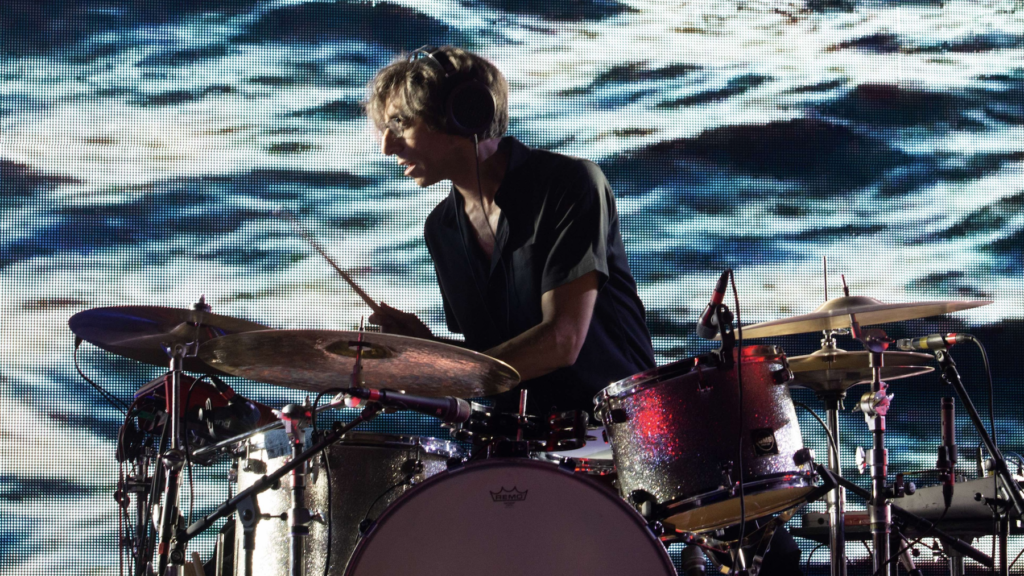
One of the festival’s most distinctive offerings moves beyond conventional cinema altogether. mdbr mdbr (co-presentated with 48 Hills, Sat/25, Roxie Theater), an original multimedia collaboration between Yeah Yeah Yeahs drummer and composer Brian Chase and San Francisco artist Annie Albagli, transforms the theater into an immersive environment in which live percussion, moving images, and spoken text unfold as equal partners.
Rather than illustrating one another, the three elements move in parallel, inviting audiences to slow down and listen.
The title comes from the Hebrew words medaber (“speaking”) and midbar (“wilderness”), which share the same linguistic root. Chase says that discovery became the conceptual foundation for the work as he and Albagli began collaborating during the annual Torah reading of Bamidbar and the approach of Shavuot, the holiday commemorating revelation through speech.
“What appealed to me foremost about the desert wilderness was an escapist quality—its environment of emptiness and openness, a kind of blank slate,” Chase says. “It felt like the exact opposite of the world we live in now—one filled with clutter, chaos, and confusion.”
For Chase, the desert suggested its own musical language.
“When I think of ‘wilderness,’ I think of its physical properties and their impressions,” he says. “When ‘translating’ these qualities to music, I am particularly drawn to the repetitiveness of the landscape—undulating hills of sand—as well as a feeling of looking up at an immense star-filled sky.”
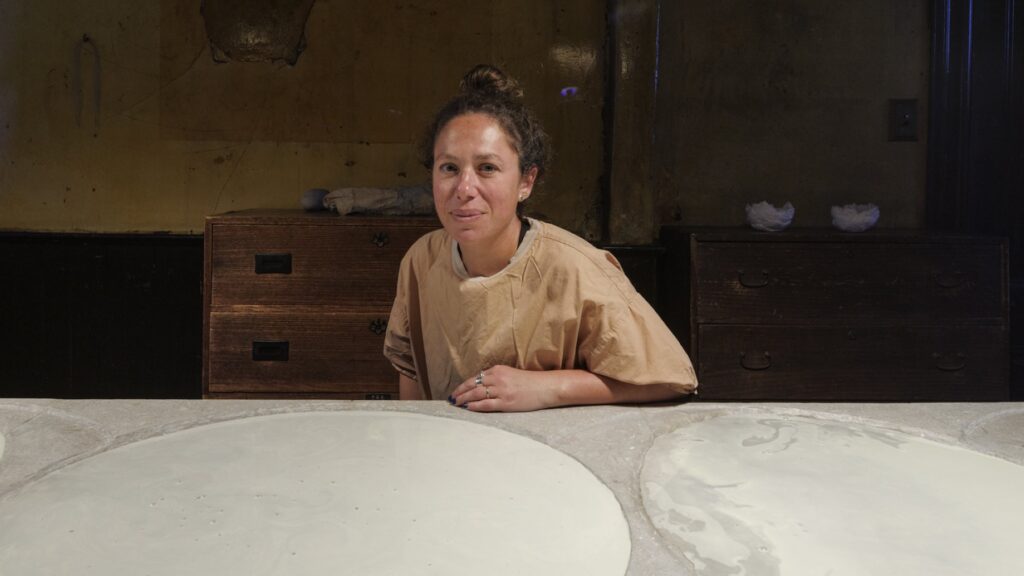
Albagli approached the collaboration through her own long-running exploration of history, place, and the body. Her work combines research, landscape, and personal narrative, and she describes mdbr mdbr as “sound, video, and spoken text, meditating on how we access wilderness, place, and people through our bodies.”
For Albagli, the performance reimagines the relationship between moving images, music, and the audience.
“The music is telling its own conceptual story in relation to the text,” she says. “They’re supporting each other while getting lost in this very hypnotic imagery.”
Chase draws on his long-running Drums and Drones project, exploring the harmonic possibilities hidden inside percussion. Instead of treating drums primarily as rhythmic instruments, he focuses on the layers of resonance and overtone that emerge through sustained listening.
“I gradually started to follow a path of deconstructing a drum’s sonic profile into its innumerable constituent tones,” he says. “Drums and Drones was created on the premise of identifying and bringing to the forefront the many individual tones that, when heard together, paint the picture of a drum’s overall sound.”
That philosophy carries into mdbr mdbr.
“Experimental music invites audiences to engage with the music on its own terms and to listen with open ears to what is being communicated,” says Chase.
Similarly, Rosenthal hopes audiences leave Tell Me Everything reflecting on “their own lives and journeys,” an invitation echoed throughout the 46th San Francisco Jewish Film Festival, where films and performances alike encourage audiences to listen more closely, look more deeply, and approach one another with greater empathy.
SFJFF46 runs through Aug. 2. For tickets and more info, go here.
The post Jewish Film Fest takes on AIDS, abortion, experimental music appeared first on 48 hills.