If ICE Detains Their Parents, This East Harlem ‘Madrina’ Will Step In
Since Trump returned to office in 2025, hundreds of immigrant families in the city have completed standby guardian designation forms—to ensure their children have an adult to care for them in case they’re detained by Immigration and Customs Enforcement (ICE).
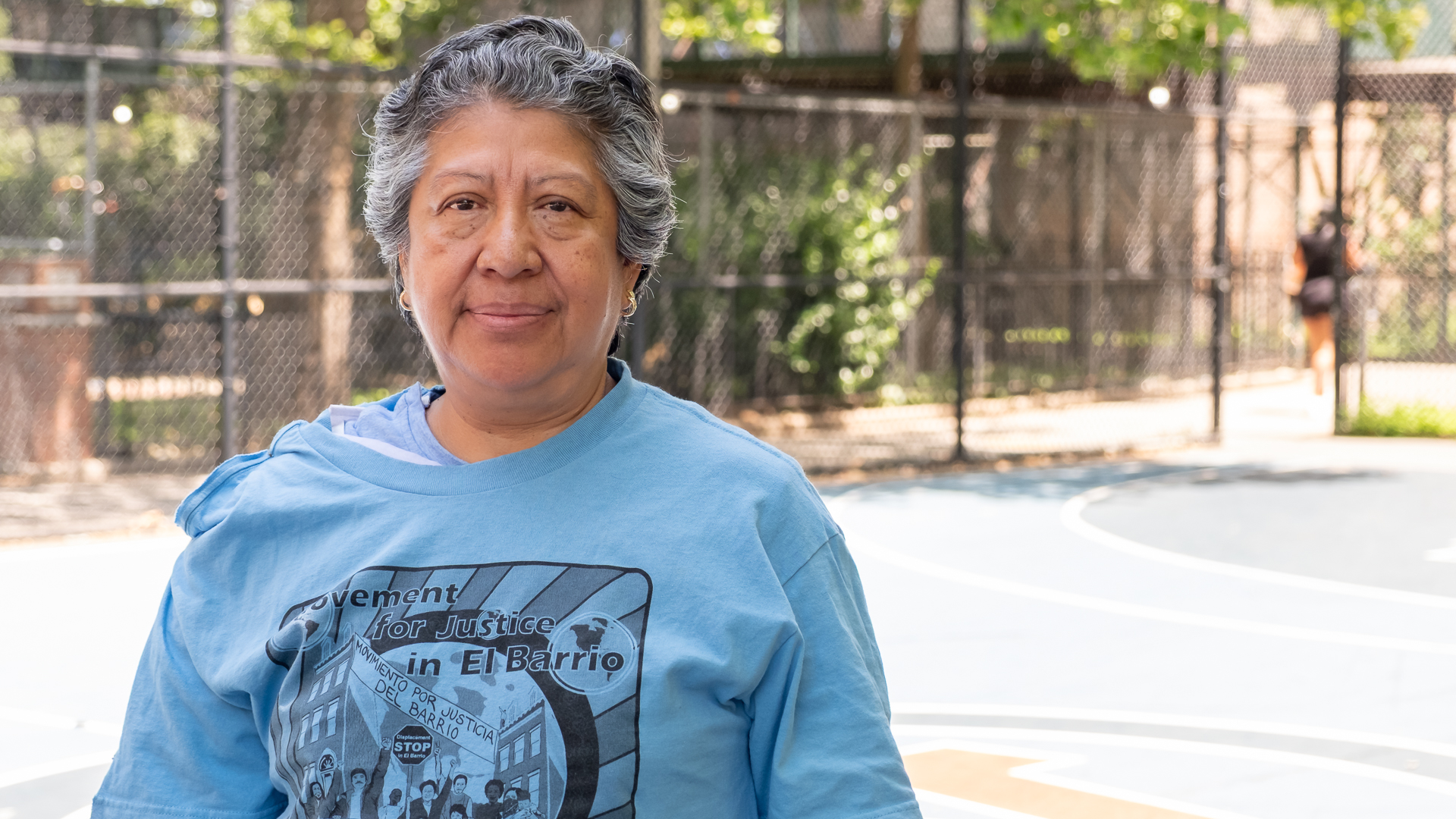
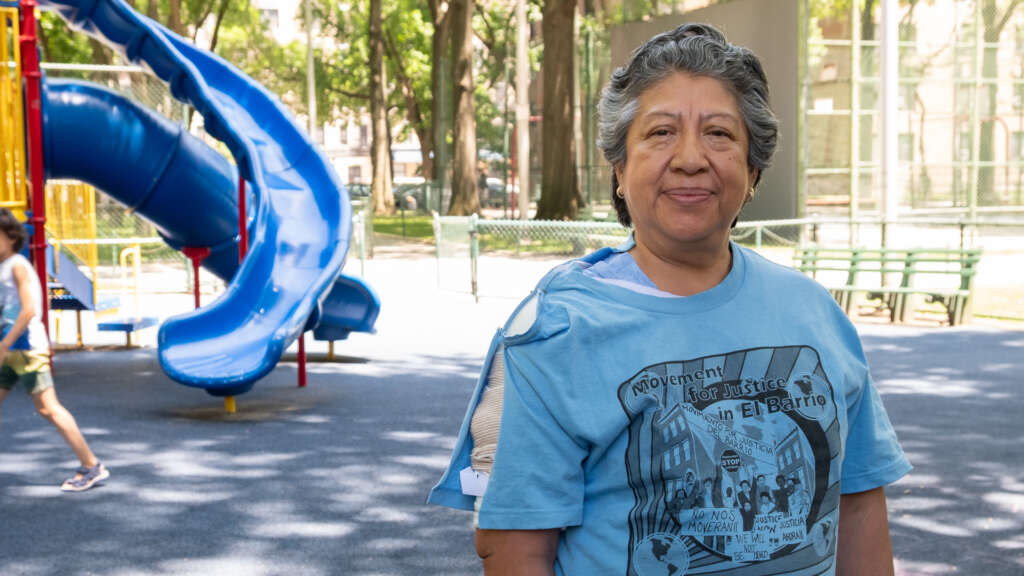
On Fridays, María Mercado, 65, looks after two of her friends’ daughters, who see her as their “madrina,” or godmother.
The girls’ parents—undocumented immigrants living in Harlem—have designated her the standby guardian, which would grant her custodial and caregiving rights in case something happens to them.
It’s a role that Mercado—an activist for more than two decades and a member of Movement for Justice in El Barrio—has played for four other New York City immigrant families over the last several years. In each case, the parents involved feared the same possibility: that they’d be detained by immigration enforcement, and their kids would have no one to look out for them.
“I showed solidarity with all these families,” Mercado told a City Limits reporter in Spanish during a recent interview, her arm in a brace after being hit by a scooter a few weeks ago. “Thank God, the parents of the families I guard were never caught by immigration enforcement; they were never taken away, but we did protect the children.”
Since the start of its second term last year, the Trump administration has intensified its immigration enforcement efforts, and agents have targeted Latino New Yorkers in particular, advocates say. Impacted families are pondering the agonizing choice of who could care for their children in case of an arrest, detention, or deportation, and provide stability during a traumatic family separation.
Local legal service providers that help immigrant families prepare for such scenarios—like creating an emergency kit in case of a parent’s arrest—say they’ve seen an increase in the number of people designating a standby guardian.
The New York Legal Assistance Group (NYLAG) received 194 calls to its standby guardianship hotline since launching it in January 2025. The organization has also held dozens of workshops explaining what guardianship means, trained more than 200 pro bono attorneys, and completed 401 “Designation of Standby Guardian” forms with families since the start of last year.
“It is one of the hardest things to do to talk to a parent about the fact that they need to complete this form,” said Luis Mancheno, director of immigrant justice at Legal Services NYC, which has helped an estimated 100 local families complete their designations.
‘With tears in their eyes’
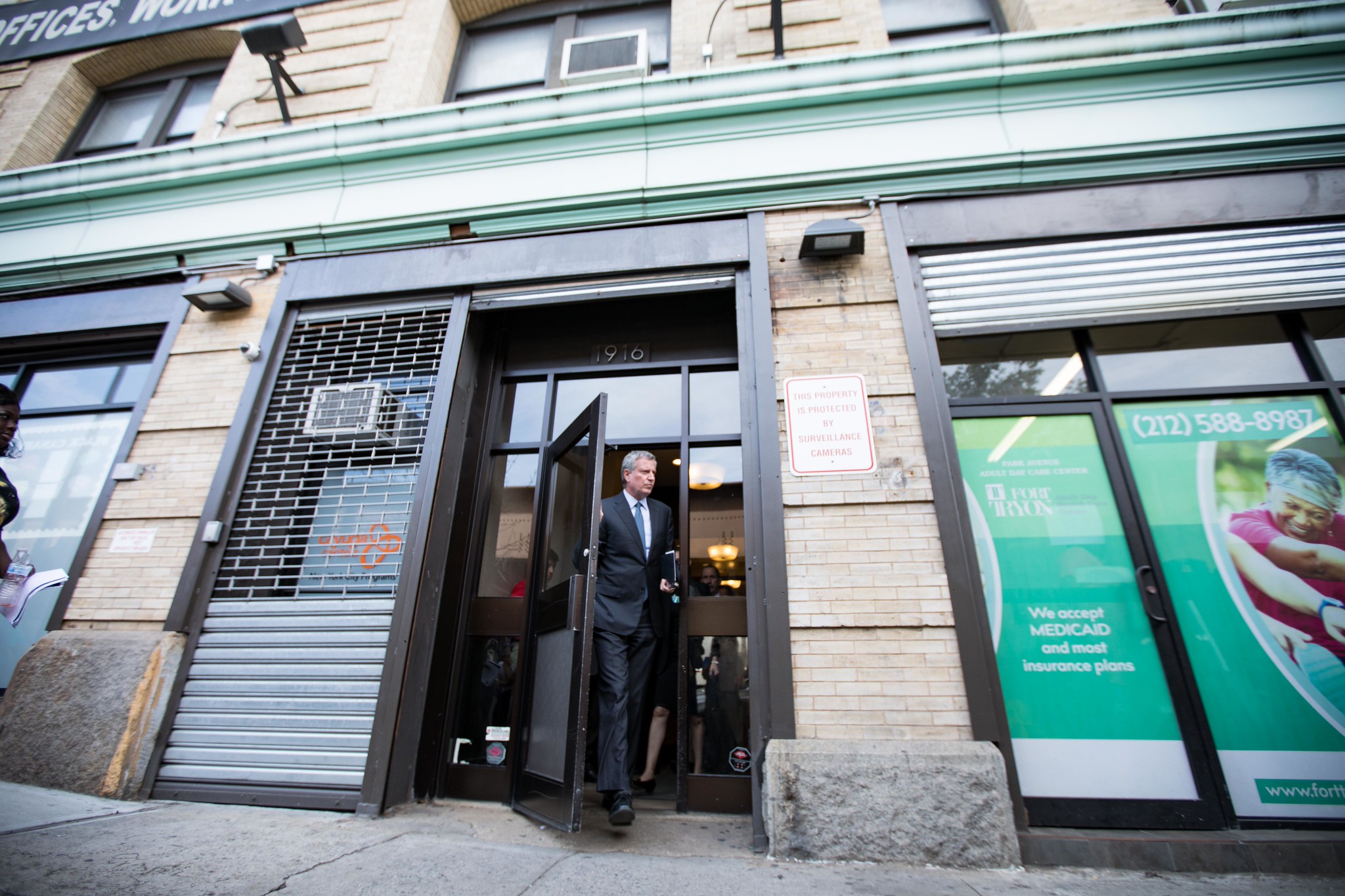
In 2018, as hundreds of separated migrant children arrived at the Cayuga Centers facility in East Harlem amid the Trump administration’s “zero tolerance” border policy, New York passed legislation to amend the state Surrogate’s Court Procedure Act so that families facing “administrative separation” could appoint a standby guardian.
The amendment allows parents fearing immigration actions (such as arrest, detention, or deportation) to legally designate a trusted adult to care for their children, without relinquishing their parental rights.
In 2019, Mercado, along with the Movement for Justice in El Barrio, a women-led community organization based in East Harlem, started organizing public workshops to help immigrant families understand the new provision.
“The biggest feeling in the room is a sense of relief,” explained Julie Babayeva, supervising attorney for NYLAG’s LegalHealth Unit. “Because immigrant families right now have so little control over what happens to them, and there is so much fear over being stopped on the street by ICE or being arrested at your next scheduled appointments or check-in with immigration, that you never used to fear going to, because it was really routine.”
Mercado became one of the first guardians in the city during the first Trump administration, when her friends—undocumented immigrants from Mexico with three American daughters, whom she takes care of once a week—signed the designation form.
“The parents, with tears in their eyes, signed,” Mercado recalled of the scene. “Those moments were really tough.”
There is no limit on the number of families someone can be a standby guardian for, though attorneys said it’s unusual for a person to do so multiple times, as in Mercado’s case.
When parents sign, they’re giving the guardian power over their children without terminating their parental rights. That’s one of the most common misconceptions, Babayeva explained. Completing the form only appoints the guardian, and parents can cancel the designation at any time.
Guardianship also only activates when a “triggering event” occurs and a parent is separated from their child. Should this happen, within the first two months, the designated guardian must file for official guardianship in court to continue the arrangement. Otherwise, their decision-making power ends after 60 days.
Although legal providers assist with the paperwork, they do not know how many guardians have stepped into this role, making it difficult to assess its use so far in the city. The New York State Unified Court System did not provide information about how many standby guardianship forms have been activated or denied in recent years.
Babayeva explained that one of the challenges in tracking such cases is that some guardians use the form only within the 60-day window. For example, a guardian might use their authority to reunify a child with a deported parent, so they don’t ultimately need to file for continued custody.
A trusted stranger
As a single mother, Mercado said she sympathized with immigrant families wondering what would happen to their children if ICE detains them.
If parents haven’t picked a standby guardian and they’re arrested, relatives or close family friends can still go to Family Court and file a regular guardianship petition. But without a signed standby guardianship document, there’s no clear record of the parents’ wishes, attorneys explained.
This can complicate things and make it harder for the judge to decide who should care for the child, and can increase the chance that they end up in foster care, even if only for a short time, while the system figures out who can legally take them home.
While many undocumented immigrants who have lived in the country for a long time have extended family nearby, many recent arrivals often lack those networks.
That’s how Mercado became the standby guardian for four other families. In those cases, the parents found her after attending the meetings she and the Movement for Justice in El Barrio organized, and then, out of desperation and fear, entrusted their children to her potential care.
“I can assure you before God, before the Bible, that I won’t mistreat your children, so you can rest easy. And no matter what happens, I’ll call you wherever you are, so you can feel safe knowing your children are with me,” Mercado recalled telling these parents to put their minds at ease. The parents declined to speak for this story out of privacy concerns.
“At first it’s hard, but then we started to build trust,” Mercado recalled. “They began to feel kind of relieved of that burden they carried in their hearts about their children—because nobody wants to leave their children in the hands of strangers. But after a while, we became closer friends; I’d visit them, they’d visit me, and our friendship just grew from there.”
In New York, standby guardianship can be traced back to the height of the AIDS crisis in 1992, when it helped sick parents designate a guardian for their children in case they became incapacitated or died.
NYLAG staff said they helped an undocumented mother recently diagnosed with a brain tumor to complete the guardianship form for her two foreign-born children, while her cognitive capacity was declining.
Both Mancheno and Danielle Hunter, from the standby guardianship project at NYLAG, highlighted the vulnerability of single immigrant parents without family support.
“When you are a single parent, you know the next in line to be able to take care of your children is the government. So, to avoid that, parents definitely need to do one of these forms and processes to make sure that it’s not the government that takes their children, but someone that they trust,” Mancheno said.
Since 2025, almost a quarter of the families NYLAG assisted with standby guardianships were single-parent households.
“We approach them with a lot of empathy, with a lot of care, and understanding that this is a hard thing to even imagine happening to your family,” said Babayeva.
Attorneys and Mercado explained that, after signing, families often express how grateful they are to have a plan in place, which, to a small extent, alleviates some of the mounting fear and uncertainty that has shadowed immigrant communities amid the federal crackdown.
“They tell me I’m their second mother—that’s what they call me—that I’m their second mother,” Mercado said, referring to the kids she has known over the years. “That I’m their grandma.”
To reach the reporter behind this story, contact Daniel@citylimits.org. To reach the editor, contact Jeanmarie@citylimits.org
Want to republish this story? Find City Limits’ reprint policy here.
The post If ICE Detains Their Parents, This East Harlem ‘Madrina’ Will Step In appeared first on City Limits.