Authorities say no cameras worn during dad’s murder, but ICE insiders say otherwise
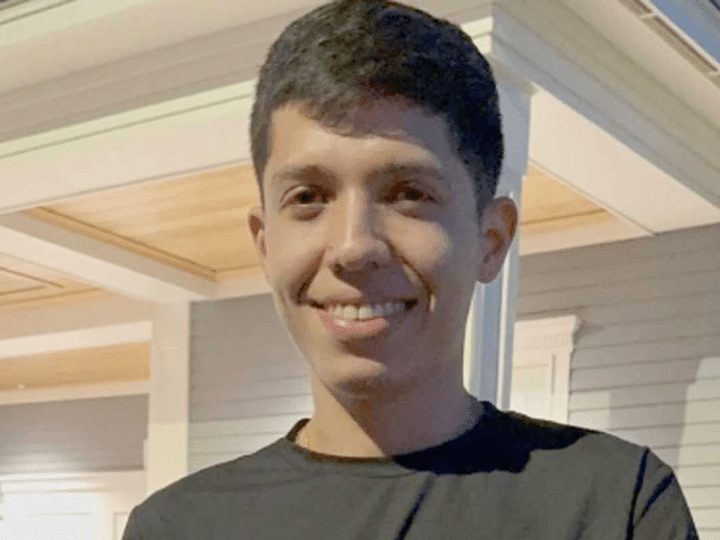
Donald Trump’s Immigration and Customs Enforcement (ICE) claim their paramilitaries were not wearing body cameras during the recent killing of Johan Sebastián Durán Guerrero. Yet ICE insiders are saying the opposite.
Meanwhile, new details have emerged about the background of one of the shooters, a former US soldier.
The Intercept reported this week:
Johan Sebastián Durán Guerrero, a 25-year-old father from Colombia, was driving slowly in Biddeford, Maine, when an agent shot into his vehicle.
According to secretary of homeland security, Markwayne Mullin, the officers involved in the shooting “were not wearing body cameras”.
However, ICE insiders familiar with the technology have told a different story:
ICE officials who spoke with The Intercept, all of whom requested anonymity to protect their livelihoods, identified cameras among the equipment worn by two ICE officers nearby in the immediate aftermath of the shooting.
Adding:
The body-worn devices were not designed solely to capture evidential video, and are used primarily as remote microphones for ICE officers’ radio communications.
ICE agents’ cameras present but switched off
Insiders reviewed other footage from the scene. They identified:
Motorola SVX Video Remote Speaker Microphones, a wireless radio mic with one other important feature: a camera.
The particular models are designed to “work as body cameras” but the “ICE official said the function isn’t used”.
The official said:
They have multiple functionalities. However, we are currently only using them as mics because of the AXON contract.
Axon (formerly Taser, of ‘non-lethal’ stun gun fame) is a firm that makes law enforcement technology. Another ICE official told the Intercept that the cameras could be seen with their covers still on, indicating they were not in use. Additionally, US president Trump has shares in the firm.
The Intercept reported:
The video-recording function on the SVX mic, however, requires a subscription.
During ICE’s early 2026 operations in Minnesota, which saw several people shot dead:
ICE announced that it would be purchasing and distributing body cameras to every arrest team in the agency.
However:
After the deaths of Durán Guerrero and Salgado Araujo [killed in Houston, Texas on 7 July] over the past week, however, the Trump administration said the distribution was incomplete.
Alleged shooter ‘never should have been put in uniform’
More details have emerged about the ICE officer who allegedly shot Durán Guerrero. Investigative journalist Spencer Ackerman, of Forever Wars, wrote:
Guerrero’s killer has been identified as David Brouillette—identified, astonishingly, by his ex-wife.
Brouillette was an US Army Afghanistan veteran who may have served as an interrogator:
Brouillette’s own family spoke about how he was the last person who should have the power of life or death over someone else.
In possibly the most chilling passages, Brouillette is described as “someone who never should have been put in uniform”.
But that wasn’t how the military saw it.
And:
According to his relative, recruiters initially rejected him “because of his mental health diagnoses,” but then they did something horrifically irresponsible. “[R]ecruiters encouraged him to go off his medications for a year and reapply, which he did.”
Cameras may or may not temper the actions of ICE, but their presence can hardly do any harm when it comes to the rafts of legal cases produced by Trump’s anti-migrant operations.
There being mentally unwell former soldiers in the organisation tells a bigger story about how the War on Terror, and its practices and norms, are coming home to roost in the US.
Featured image via People magazine
By Joe Glenton