‘Summer of ’94’: How the last World Cup on American soil changed US soccer forever
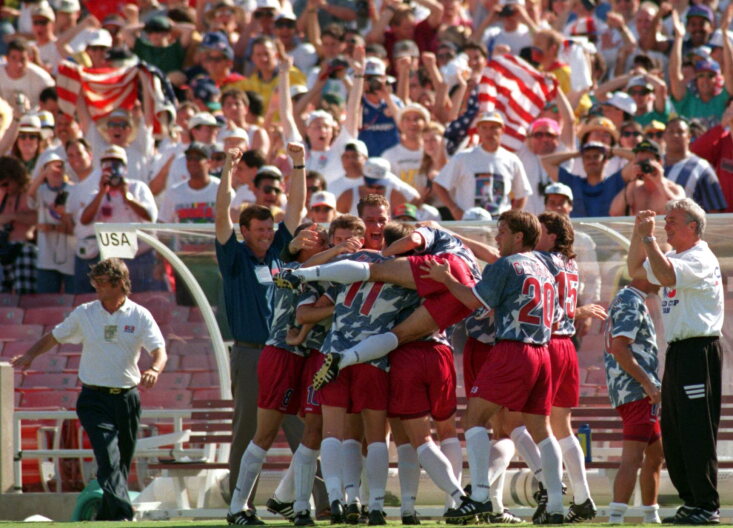
Although thousands have flocked to SoFi stadium for the World Cup, soccer wasn’t always a fan-favorite sport in the United States.
The sport’s rise to popularity began when the U.S. hosted its first World Cup in 1994. At that time, the men’s soccer team was virtually unknown.
Summer of ’94, a new documentary directed by Chad N. Walker and Dave LaMattina, chronicles the U.S. team’s unlikely run during their first home World Cup.
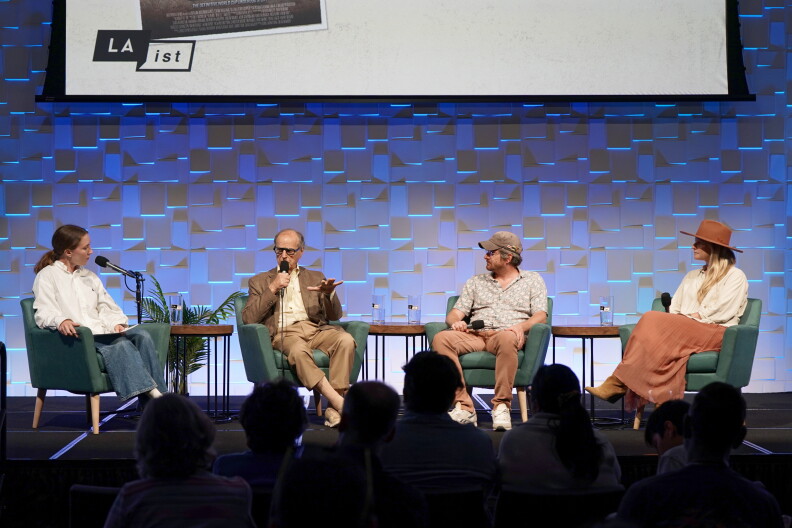
At a screening in LAist’s Crawford Family Forum Room, viewers got an early look at the film. LAist’s Libby Rainey later moderated a talkback with Alan Rothberg, the president of U.S. Soccer in the 1990s, and Chris Leggett and Amanda Farrand, both producers of the film.
An unlikely team and a wild-card coach
Rothberg recalled several of the team’s challenges, and also pointed to soccer’s low popularity as a spectator and player sport at the time of the World Cup.
He said that factored into his decision when choosing a wild-card coach, Velibor “Bora” Milutinović, to lead the 1994 team.
Rothberg said “there was a lot of pressure to hire an American coach” for the home team. But he said he “felt there was a necessity to have a coach with international experience.”
Milutinović also emerged as a centerpiece of the documentary, which the producers said they didn’t expect.
“We just started falling in love with Bora, and after one interview with him, where he started […] coaching the directors, we were like, this guy is magic,” Farrand said.
Leggett said that players were able to better understand Milutinović’s strategy through the documentary. He said that during the interview process, “what was very obvious was [the players] were really digesting and getting to understand Bora as well.”
What happened to U.S. soccer after 1994?
Rothberg said that since that World Cup, funding for U.S. soccer took off. The team’s performance, “enabled us to immediately follow up and create Major League Soccer,” he said.
At that time, the organization had a $50 million surplus, which Rothberg said they used to create a nonprofit for “underserved communities.”
In 1999, the U.S. hosted the Women’s World Cup in major stadiums.
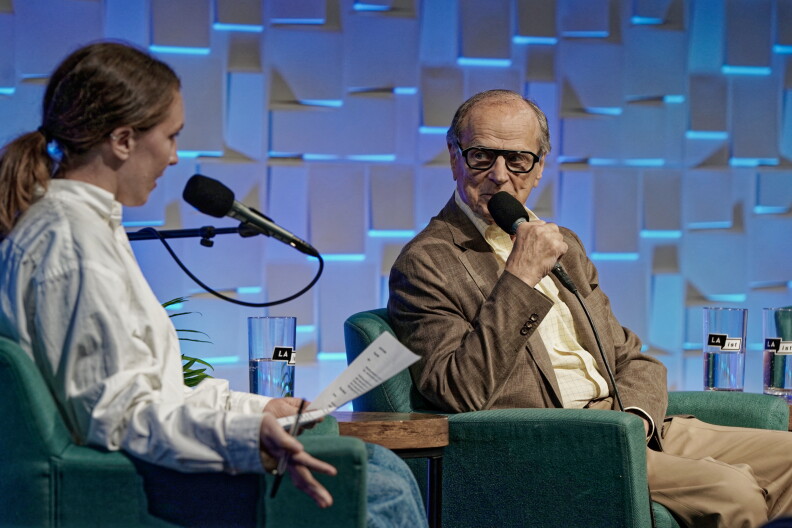
“[FIFA] had so little confidence in the women’s game at that time that they wanted us to play in small stadiums in the Northeast, and we persuaded them,” Rothberg recalled.
Now, Major League Soccer has invested over $11 billion in facilities and stadiums, and the U.S. is hosting the World Cup this summer, including eight matches in L.A.
Rothberg said that since that World Cup, public interest in soccer has only increased. Now, we might even be underselling how popular the sport is.
“Soccer has been underestimated to this day. It’s still the number one participant sport in the country,” he said.
Farrand said the film sought to inspire not just future players, but also volunteer coaches.
“If we could use this moment and this movie to inspire former players and parents to lean into coaching, we could really make a difference,” she said.
She added that volunteer coaching is “an act of civic participation,” which she encouraged attendees to consider ahead of the U.S.’s 250th anniversary of independence.
Both Rothberg and Farrand pointed to the Women’s World Cup, which will be hosted by the U.S. in 2031, as the next landmark event.
You can find where to stream on the documentary’s website.