Hong Kong Originals: Turning wood into the saints – the lost art of deity wood carving
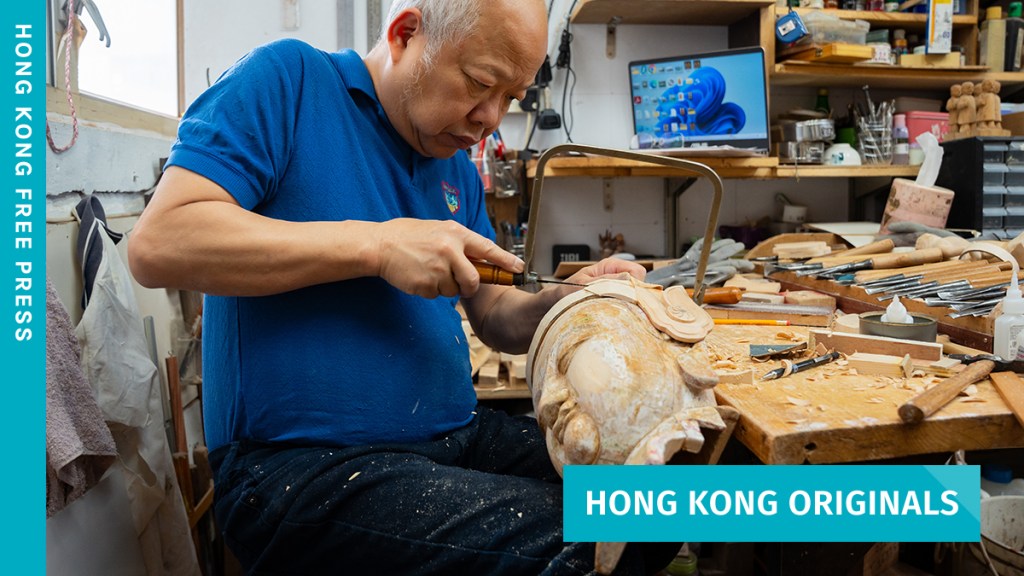
| As Hong Kong’s economic boom faded and manufacturing moved to China, some long-established, family-run companies preserved their traditions as others innovated to survive. In ongoing new series, HKFP documents the craftsmanship and spirit behind the goods that are still proudly “Made in Hong Kong.” |
There are around 600 Chinese temples across Hong Kong, each one guarded by Buddhas or one of the immortal Taoist deities. When the statues are in need of repair, they may be sent to a local master.
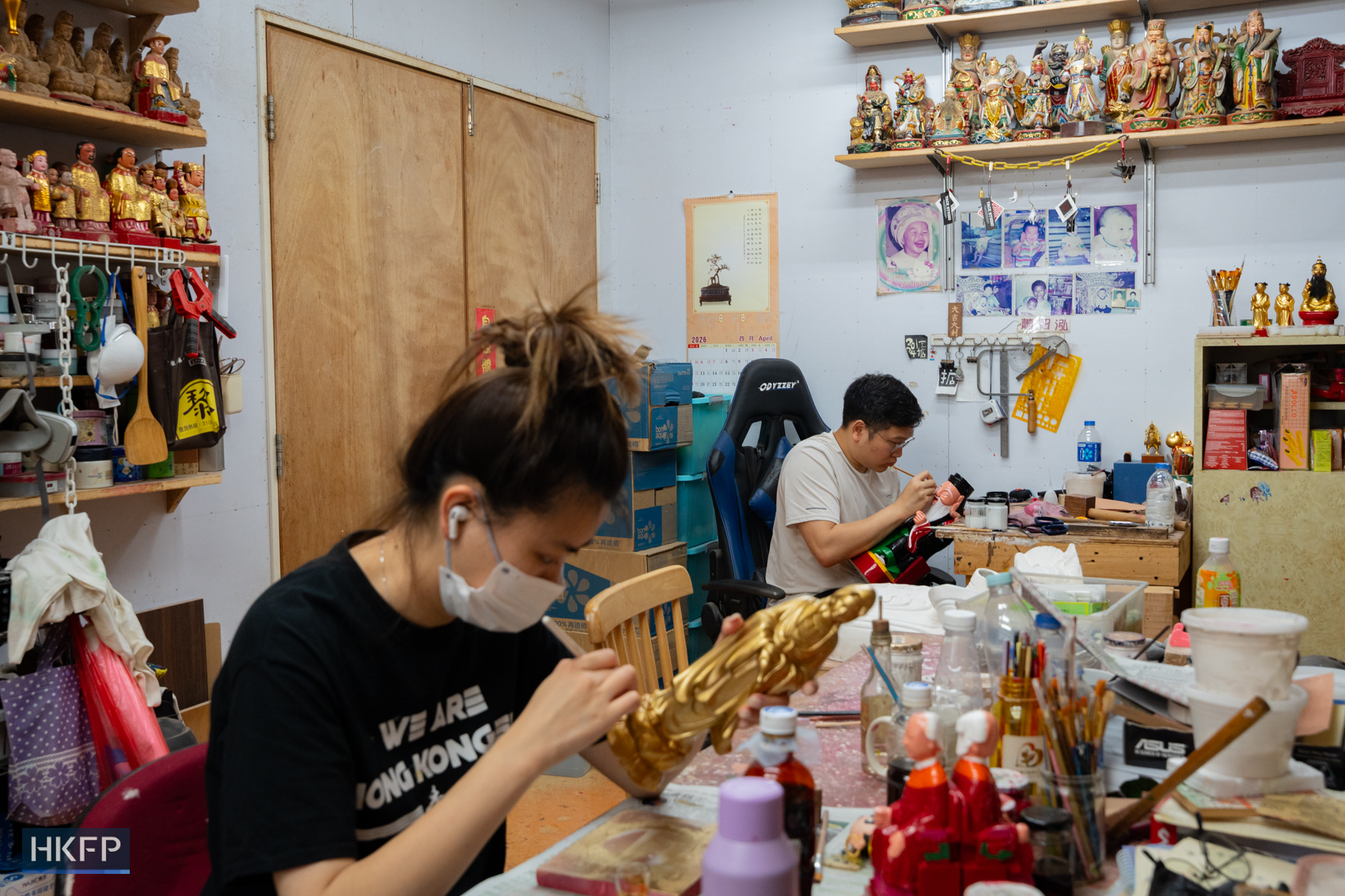
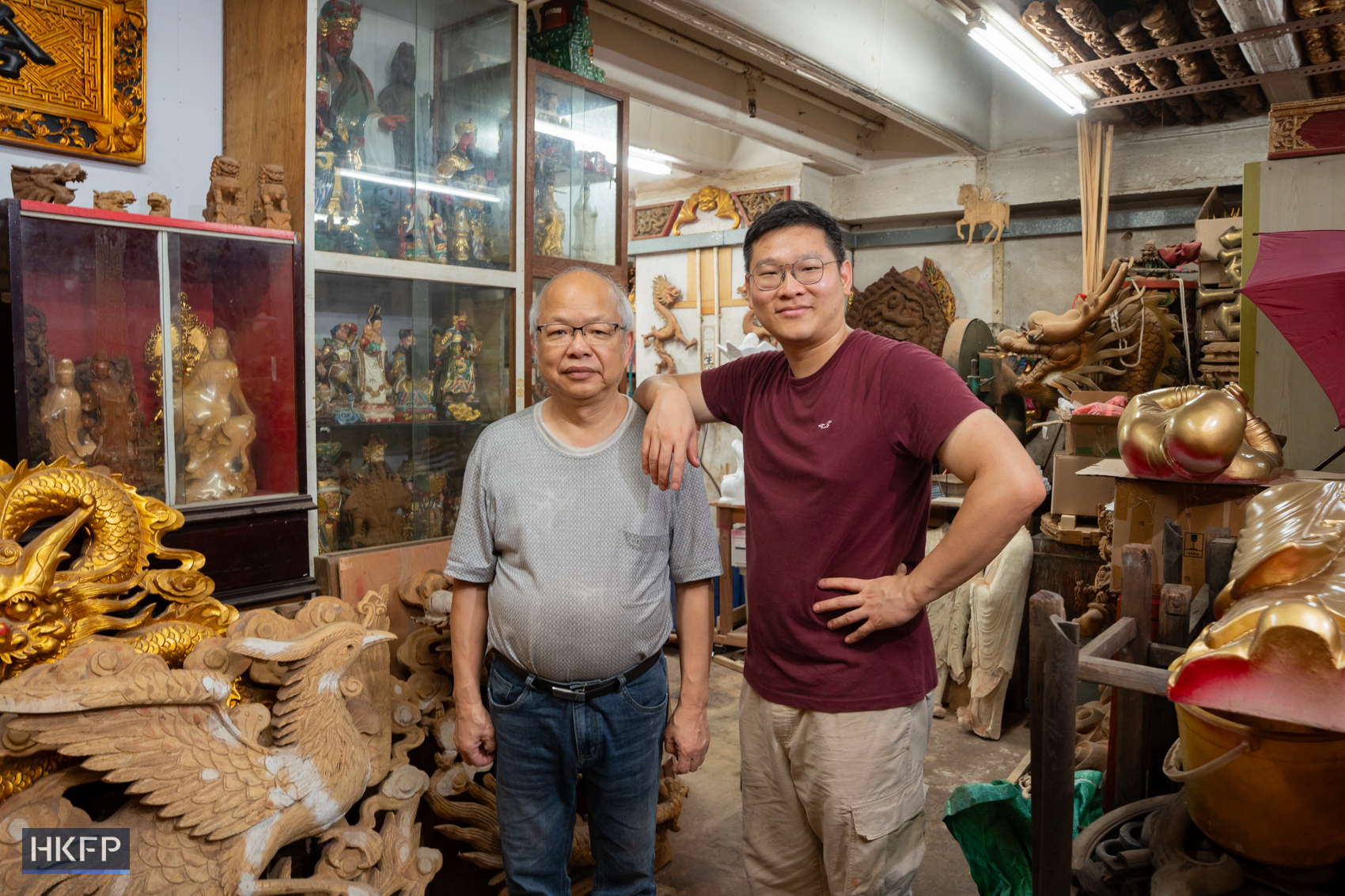
Vitus Siu, a sculptor specialising in wood carving for deities, turned 69 this year. Along with his wife, daughter-in-law and son Sylvester Siu, he runs Hop Keung Cheong Kee workshop, tucked in an industrial building in Kwai Fong.
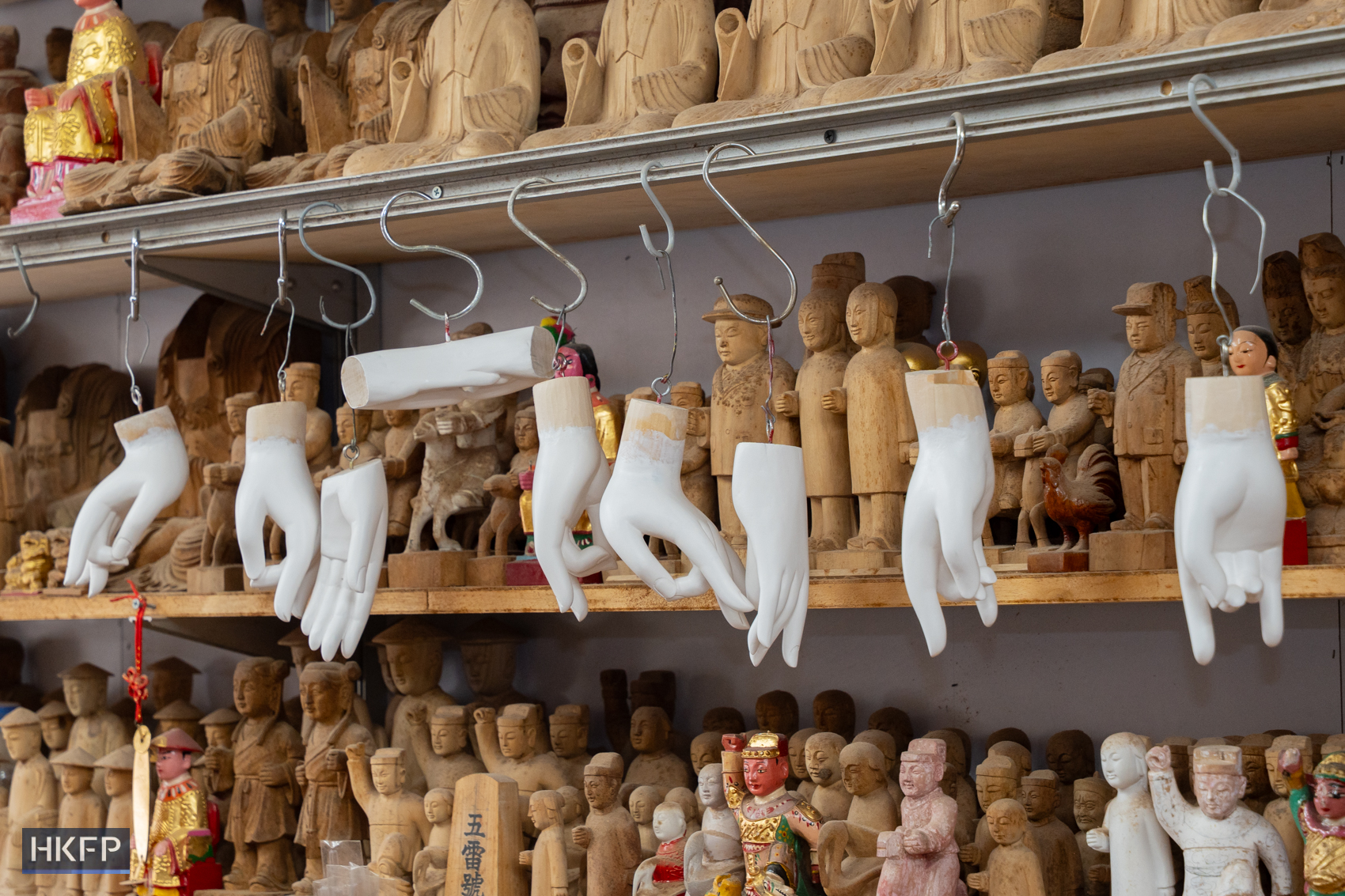
It is now the territory’s last deity wood carving workshop. Those paying a visit will be overwhelmed by statues of all shapes and sizes. Some will have been freshly carved from sandalwood, while others would be in the process of being gilded with gold leaf. The tradition of adorning Buddha statues is a demonstration of reverence.
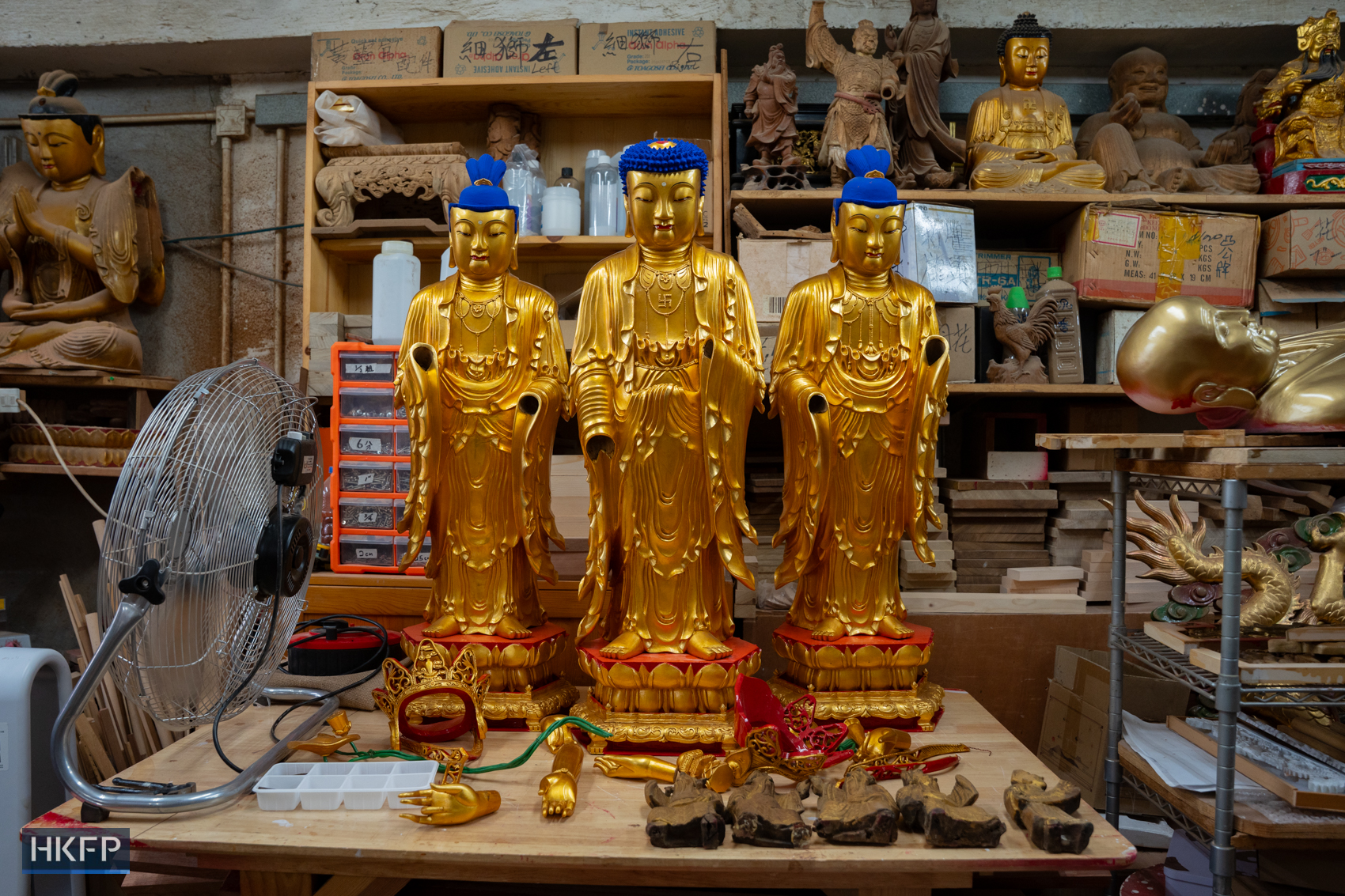
“Clothes make the man, and gold makes the Buddha,” Vitus Siu said in Cantonese at the workshop in late July.
The sculptor learnt the craft at his father’s workshop in the 1970s when he was just around eight years old. What was then a competitive industry has now become a fading art in Hong Kong.
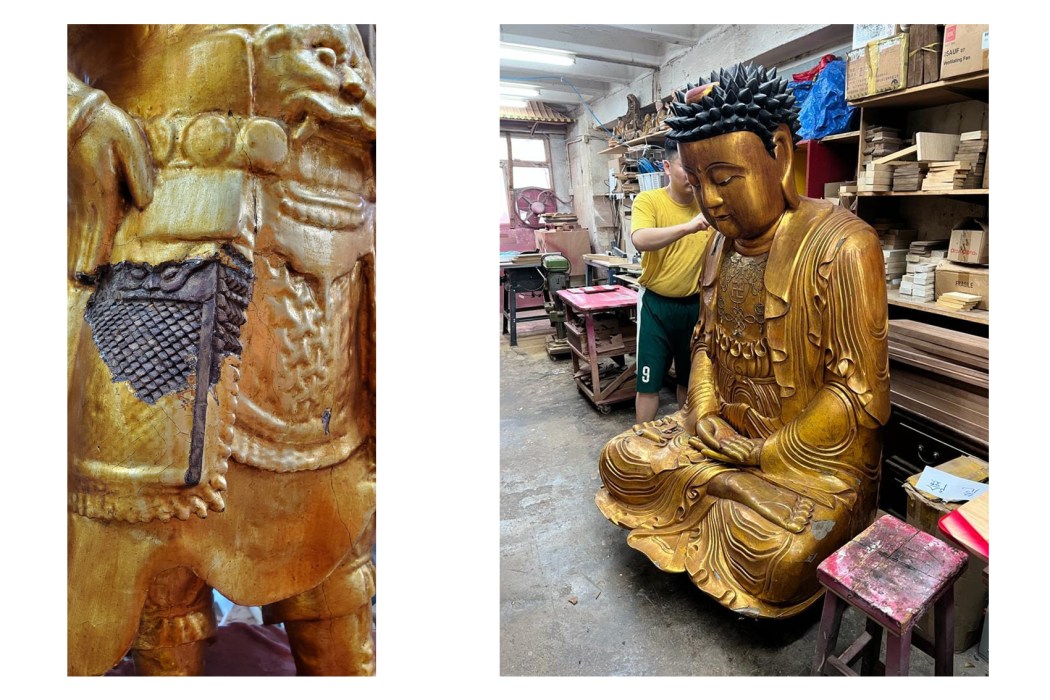
Today, while still carving new Buddhas and immortals for clients old and new, Hop Keung Cheong Kee focuses more on the restoration of deities and all other wooden sculptures from Chinese temples.
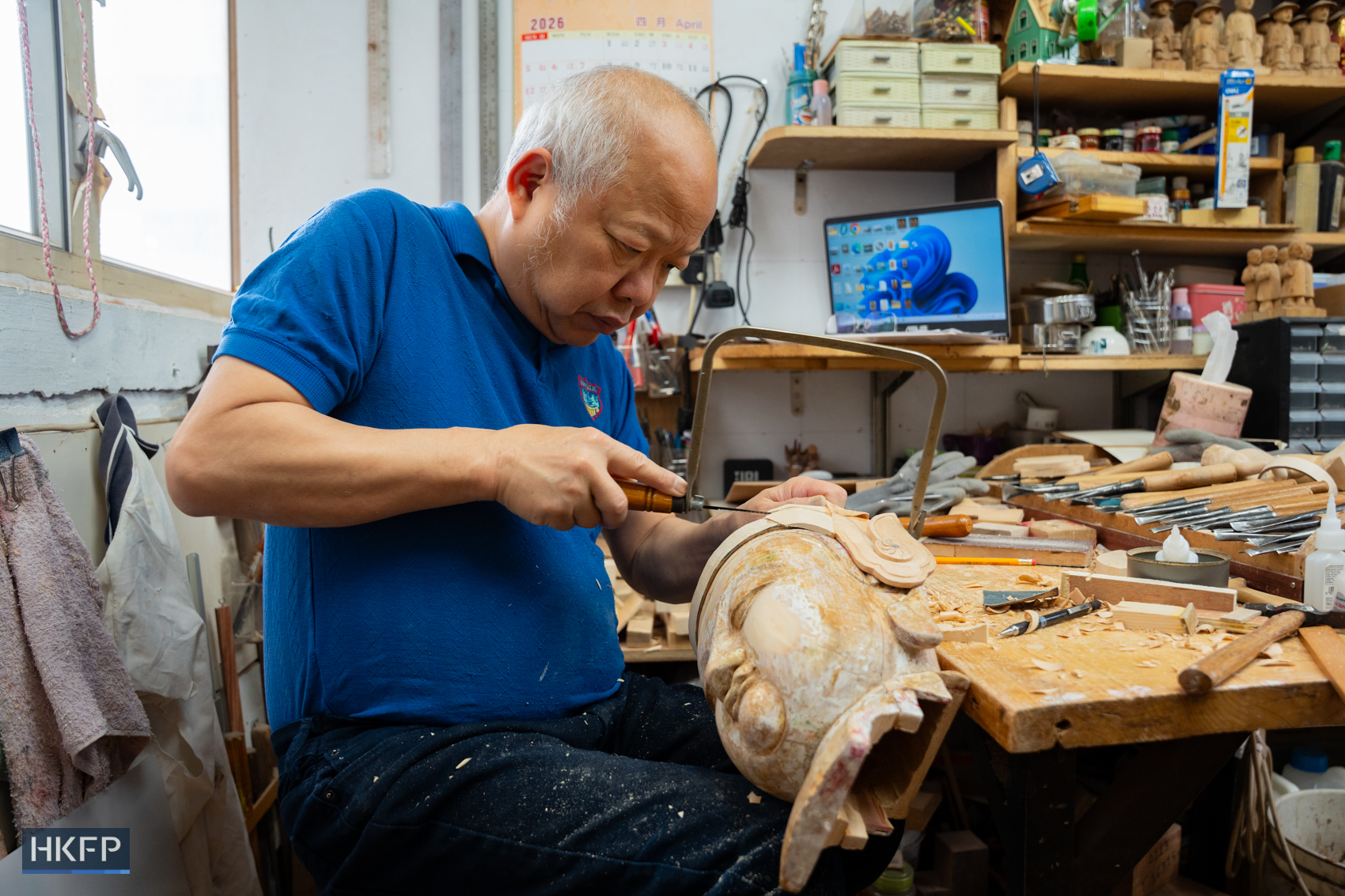
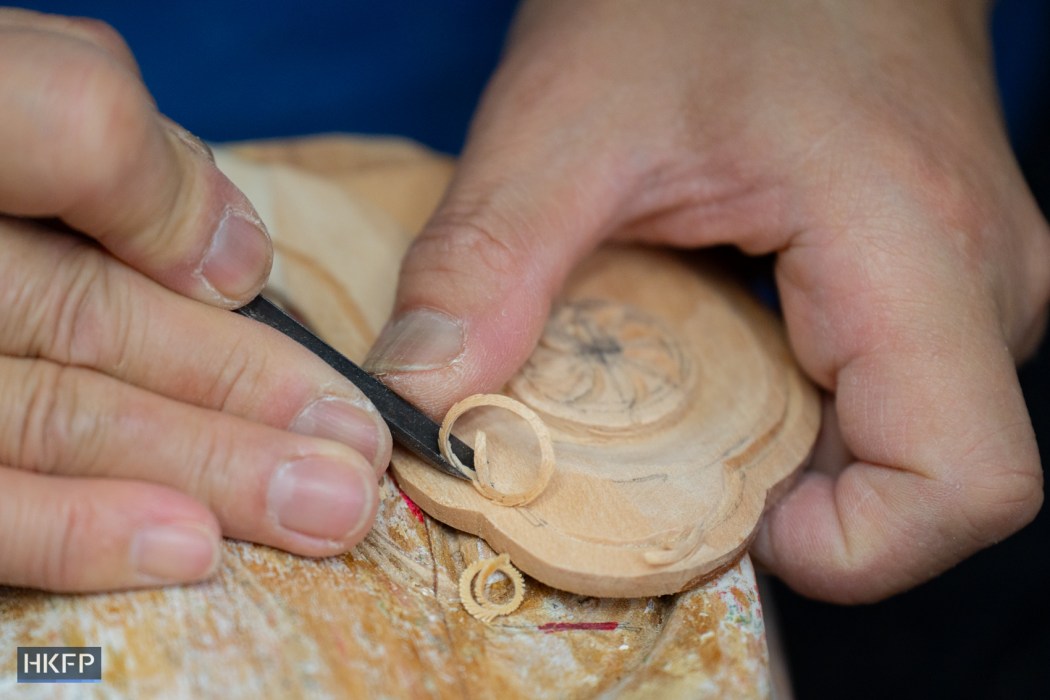
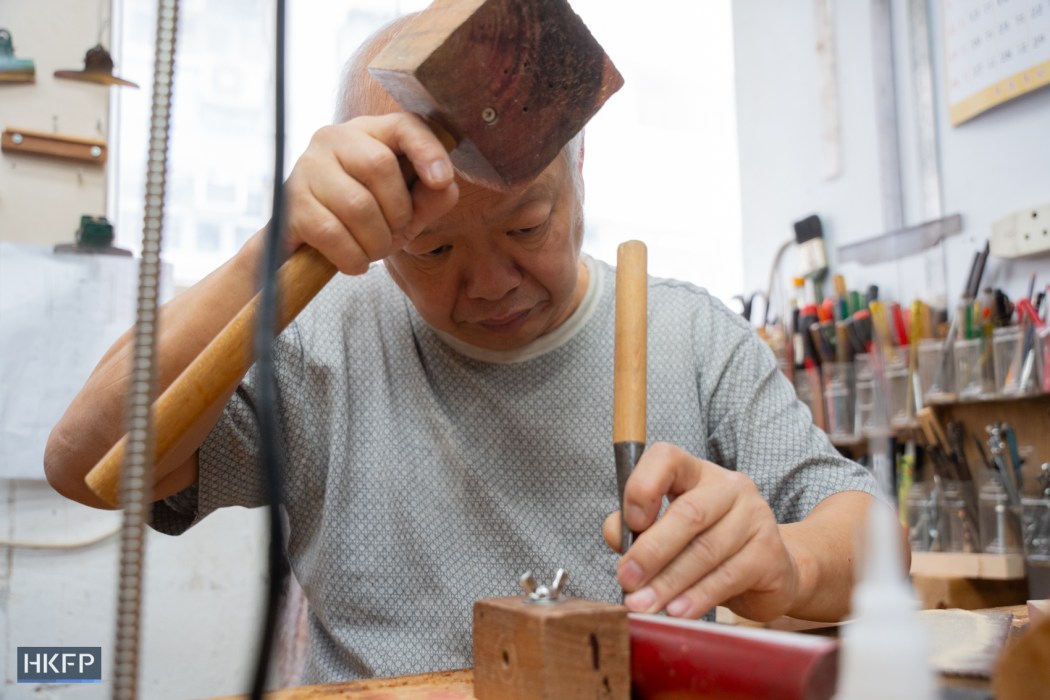
On a morning in late July, Vitus Siu was working to restore some antique dragon-shaped wood candles. With parts of the wood already decaying, he meticulously cut new pieces of sandalwood into precise shapes to fill in the missing areas.
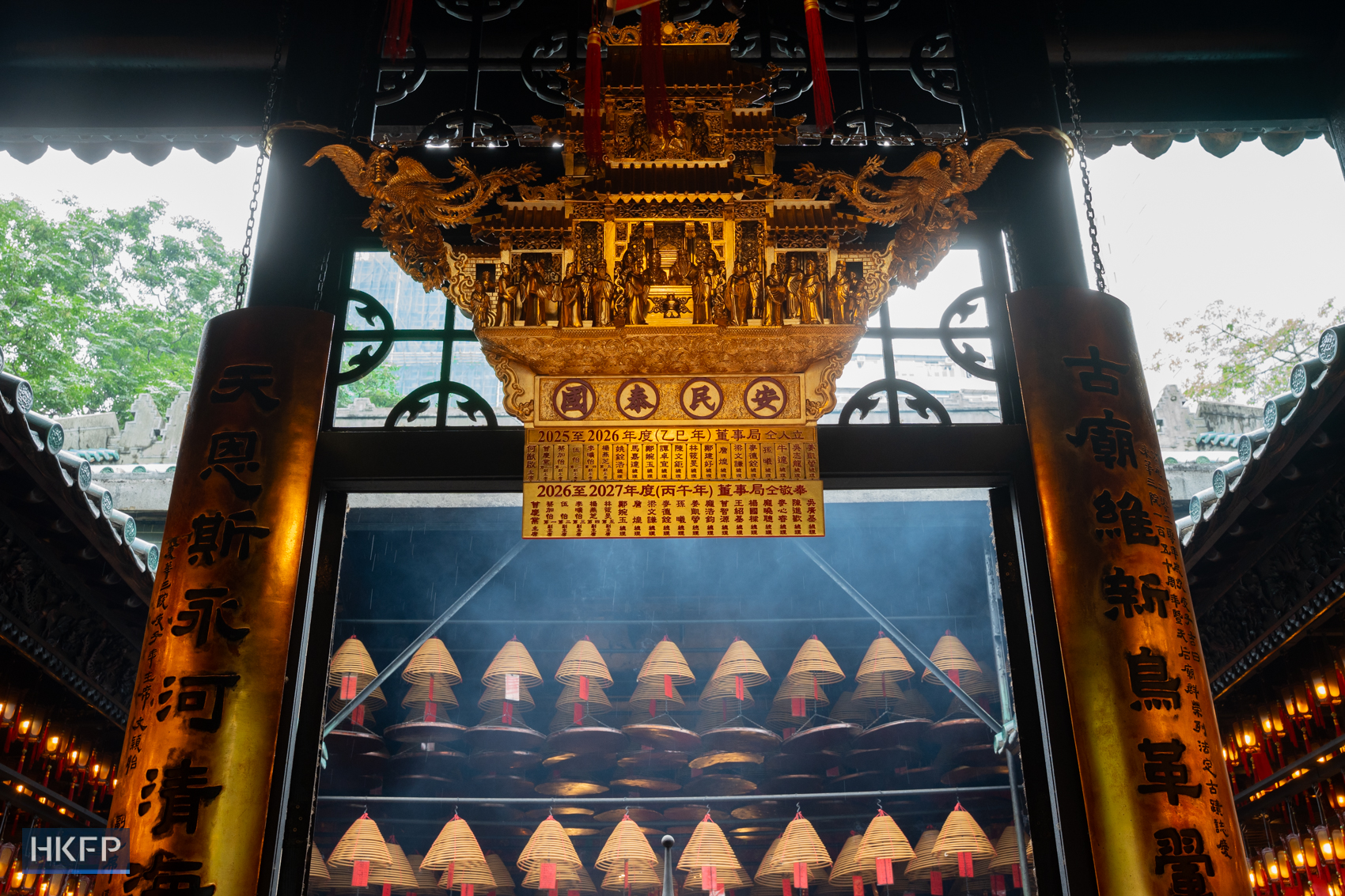
In another corner of the workshop, the son was checking on a large-scale Choi Moon – a carved wooden ceremonial arch usually hung high in Chinese temples. Hanging right above an incense burner in a Hong Kong temple, this arch had turned black from the incense smoke. Sylvester was thinking about the best approach to restore it.
“You can’t see the end of the world when you are learning the craft. You just have to keep learning,” Sylvester, who is now 37, told HKFP in Cantonese.
From ‘household Gods’ to Buddhas
The Siu family has a long history in the art of carving deity statues.
In 1938, the father of Vitus Siu immigrated from Guangdong province to Hong Kong. At first, he worked as an apprentice in a deity statue shop belonging to his uncle and, in 1959, he opened a small store named Cheong Kee on Reclamation Street in Yau Ma Tei.
At the time, the nearby Yau Ma Tei Typhoon Shelter was a hub for local fishermen, who were the main clientele for the shops along Reclamation Street.
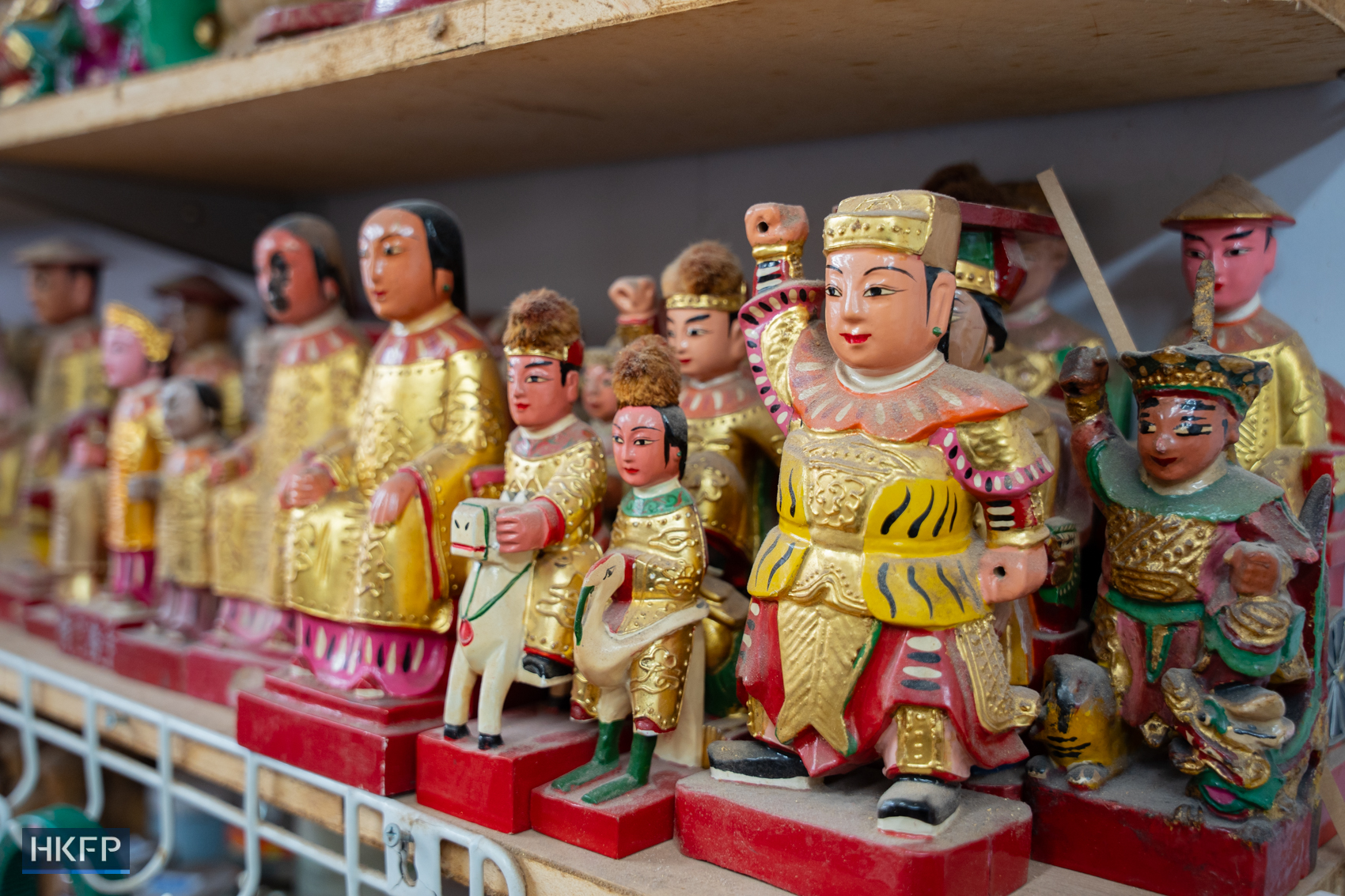
Fishermen worship deities such as the sea goddess Tin Hau. When family members die, they ask wood carvers to make small statues symbolising their relative. They worship them in their boats as a “household God.”
“Fishermen have a strict set of rules when commissioning these statues. They consult a spirit medium to learn the wishes of the deceased, and we carve the statues according to the medium’s description,” Vitus Siu recalled.
Vitus Siu is always full of curiosity. While his father’s woodcarving followed the Guangdong school, he was determined to learn the Ningbo school of carving, which is regarded as the pinnacle of Buddhist statue artistry.
“I feel a deep sense of fulfilment when I successfully restore a historic statue.”
Sylvester Siu
“Masters of the Ningbo school will never share secrets of the art with others except their own male family members,” Vitus Siu said. In the 1970s, an antique shop in Hollywood Road had a few antique Buddha statues carved by Ningbo masters and sent them to Cheong Kee for restoration.
“I kept those statues long after they had been restored. I studied the ratio of the Buddha and the carving art,” Siu said. He also read lots of picture books on the painting of Buddhas.
The first Buddha order he received was from a monk in Hong Kong. But when Vitus Siu presented the monk with his wood carving of the Buddha, the monk shook his head and asked him not to continue the job.
“I realised later that the face of the Buddha statue was just not right. Buddha should have a very full and serene face. I adjusted it until the monk said ‘let’s finish the gold gilding.’ I know he was satisfied,” Vitus Siu said.
From there, he began his specialisation with Buddha statues – a complex craft demanding skilful painting, mastery over precise proportions, delicate facial expressions, and meticulous gold leaf gilding to create a mirror-like finish.
The art of deity wood carving is recognised as an example of intangible cultural heritage in Hong Kong.
Dragons and phoenix
In 1985, Cheong Kee relocated to a larger shop on nearby Shanghai Street. Looking for a fresh start, Vitus Siu’s father suggested rebranding the workshop.
“The names of my brothers all carry the Chinese character ‘Keung,’ which means strong, so I suggested ‘Hop Keung,’ meaning to be strong together. And we don’t want to abandon the old name, and therefore it is Hop Keung Cheong Kee,” Vitus Siu said.
In the same year, the father retired and Vitus Siu took over the family business.
The trade was at a turning point at the time. As more and more fishermen moved onto land, their tradition evolved and there were fewer orders for “household Gods.”
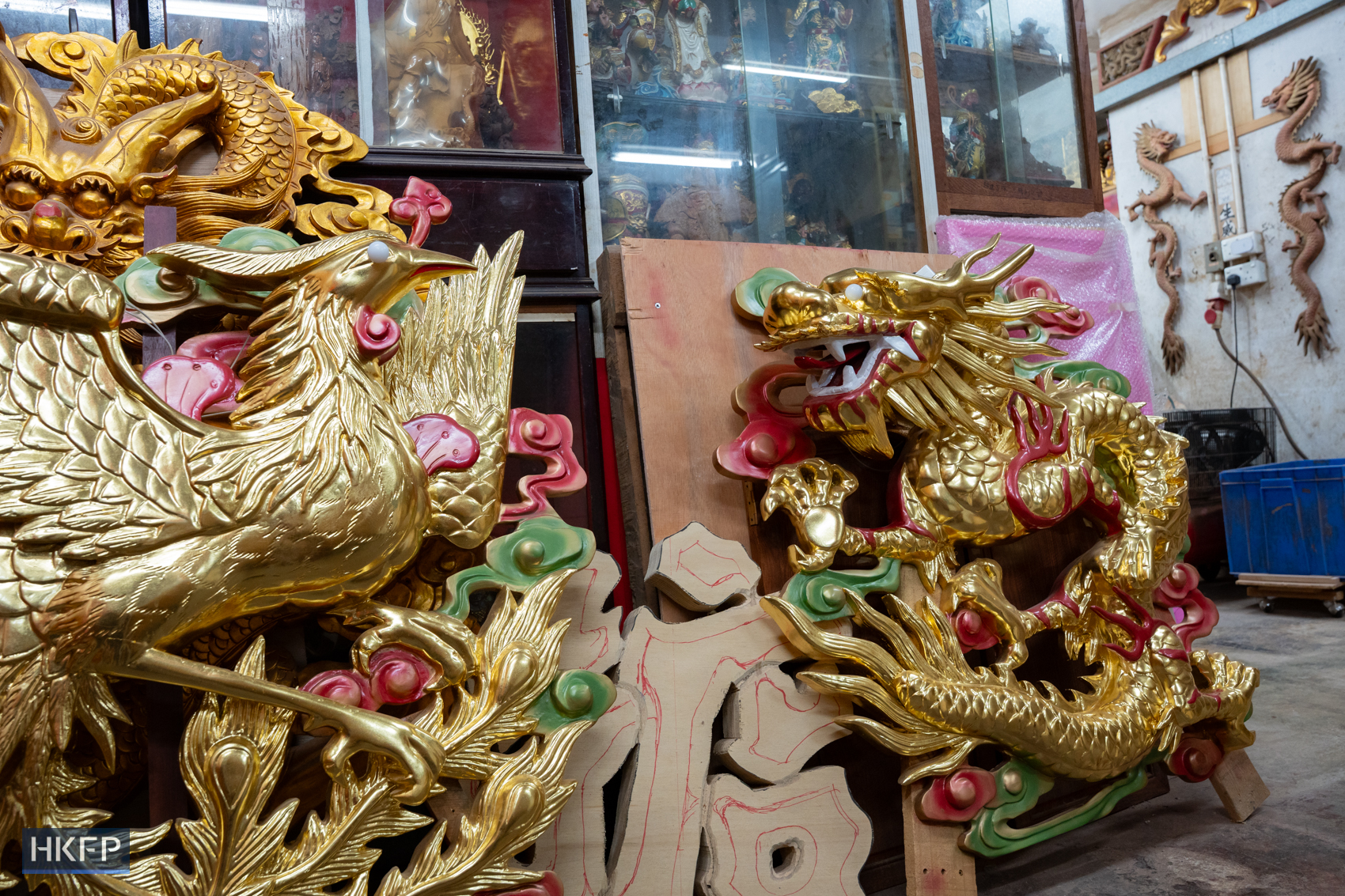
Meanwhile, a new business was growing. Many Chinese restaurants loved to decorate their halls with dragon and phoenix wood carvings at the time. As dragons symbolise male power and masculinity, and phoenixes symbolise feminine elegance, the decorations are perfect for traditional wedding halls.
“The trend kicked off in the 1970s, starting with the Diamond Restaurants. Many restaurants followed the trend and the Jumbo Kingdom took it to the extreme, covering almost every interior wall with elaborate dragon and phoenix motifs,” Vitus Siu recalled.
To ride the trend, Vitus Siu learned how to paint dragons and phoenixes by himself. However, the fashions again began to change at the turn of the millennium. Younger couples favoured Western-style hotel venues over traditional banquet halls, which were seen as outdated.
Yet, competing in the deity carving industry had become difficult long before 2000.
Following China’s economic reforms in 1978, mainland entrepreneurs began establishing carving factories staffed by local artisans. By the mid-1980s, lower-cost statues were entering the Hong Kong market.
“In the 1980s, a mainland master earned around 500 RMB a month, whereas a Hong Kong master was paid HK$180 to HK$250 a day. How could we compete?” Siu said. At the time, HK$100 was worth roughly 129 RMB.
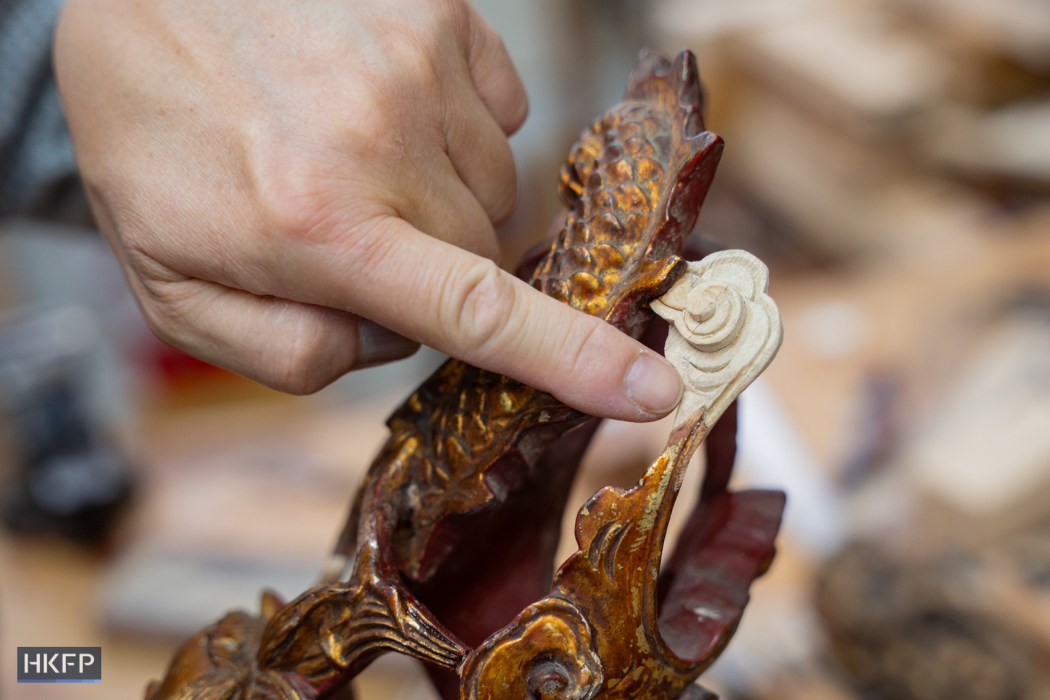
One by one, Hop Keung Cheong Kee’s local rivals faded away. The Siu family managed to carry on, though they were forced to downsize their workforce.
“We focused on what mainland factories couldn’t easily replicate, like delicate restoration work,” Siu said, noting that a loyal clientele still seeks them out for bespoke, high-quality religious figures.
Carrying on the father’s craft
Sylvester Siu recalled how he was not very interested in wood carving as a child, though he learned the basics of the craft at his father’s workshop. When he grew up, he first worked as a salesman.
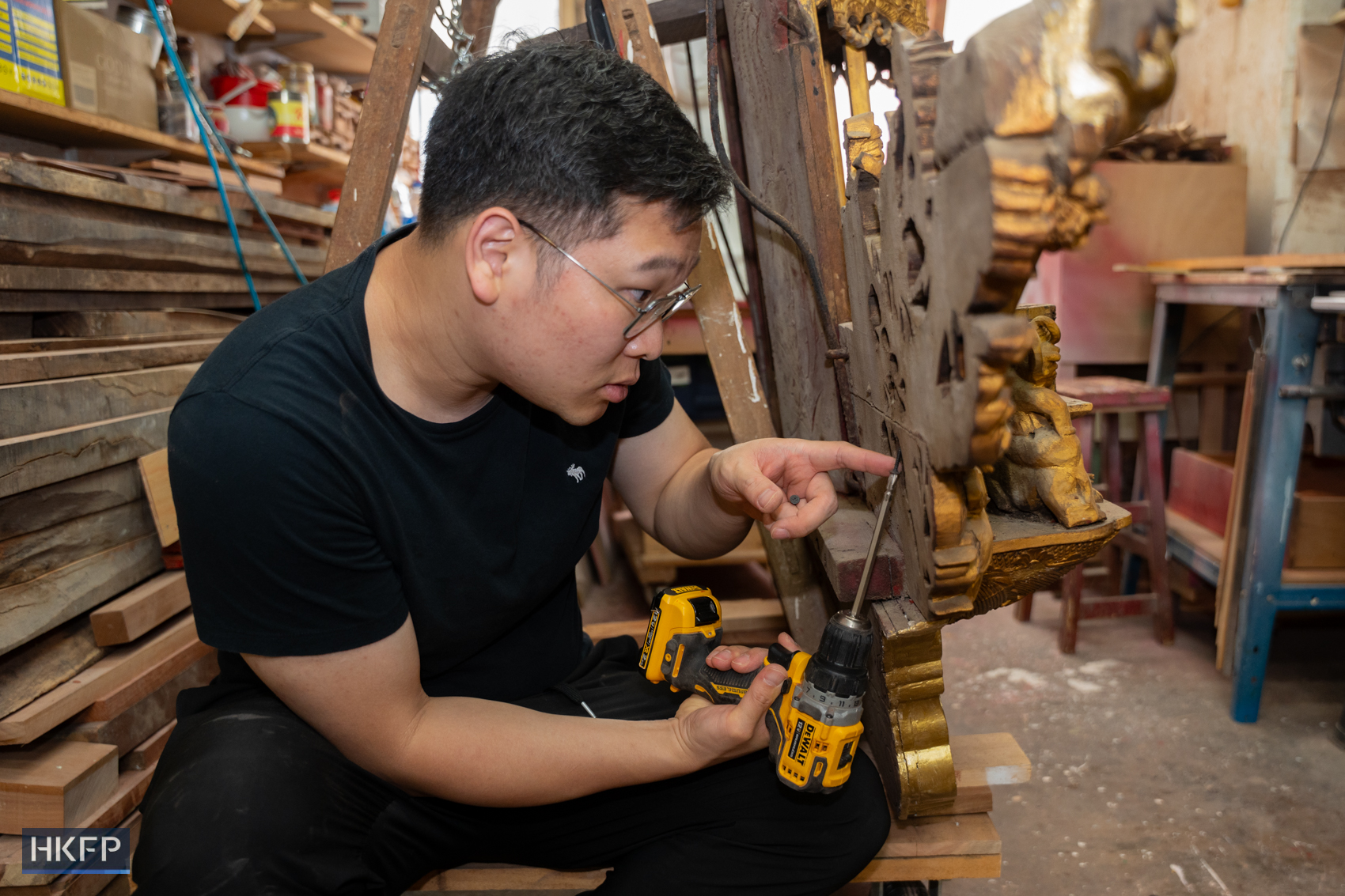
In 2014, he returned to the family business after Vitus Siu and his wife were injured in a car accident. He took it as a temporary job at first, but fell in love with the art of deity statue restoration.
“I feel a deep sense of fulfilment when I successfully restore a historic statue,” Sylvester Siu said.
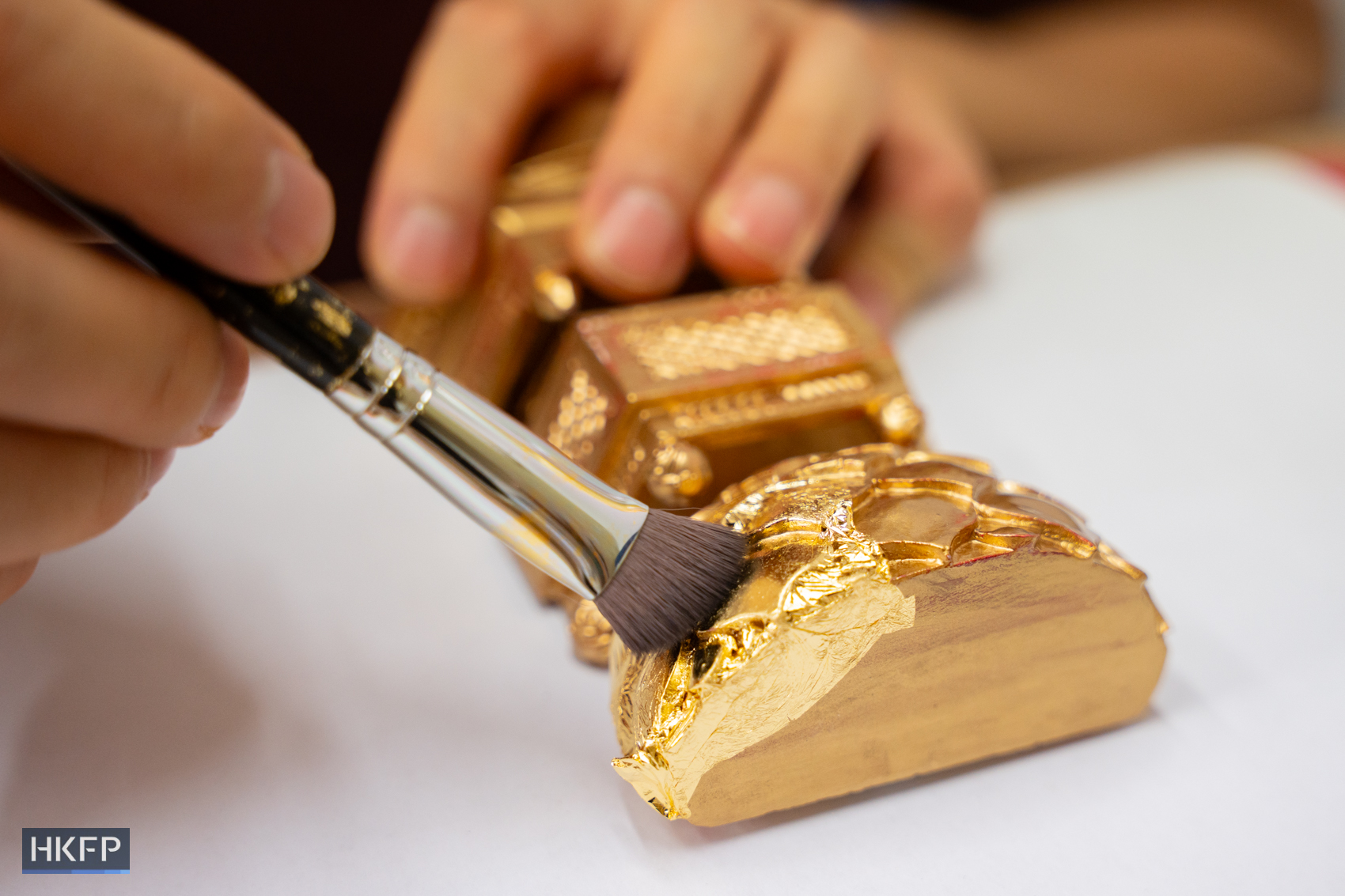
The most impressive job was the restoration of a Amitabha Buddha statue for Hong Kong’s famous Po Lin Monastery on Lantau. The piece, including the base, measured nearly six metres in height. Sylvester Siu felt proud when he sent back the restored statue to the monastery.
Even today, he has a picture of the restored Buddha as his phone wallpaper.
As a young man, he honed his skills, especially when it came to the art of gold gilding. He compared methods from mainland China and Japan and found the best ways of approaching it.
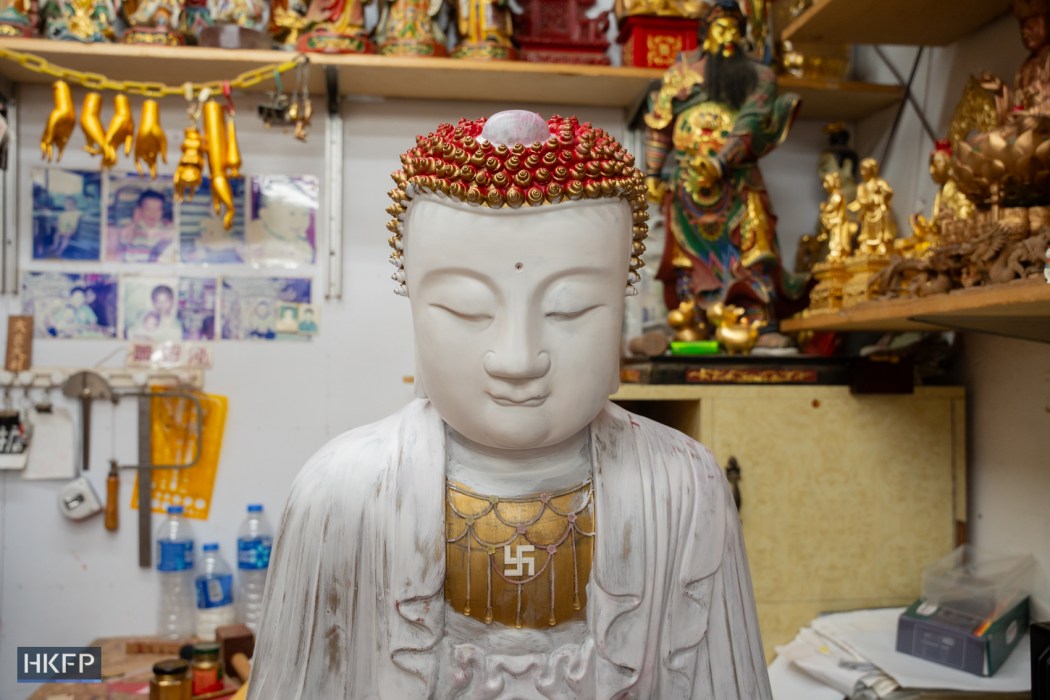
Currently, deity statue restoration accounts for 70-80 per cent of all the work at Hop Keung Cheong Kee. With many Chinese temples in Hong Kong designated as historic buildings, any restoration work on their fixtures or deities is closely monitored by the Antiquities and Monuments Office.
Complex restoration projects can take months to complete, Sylvester said, adding that their workshop is fully booked and unable to take on any new orders until next year.
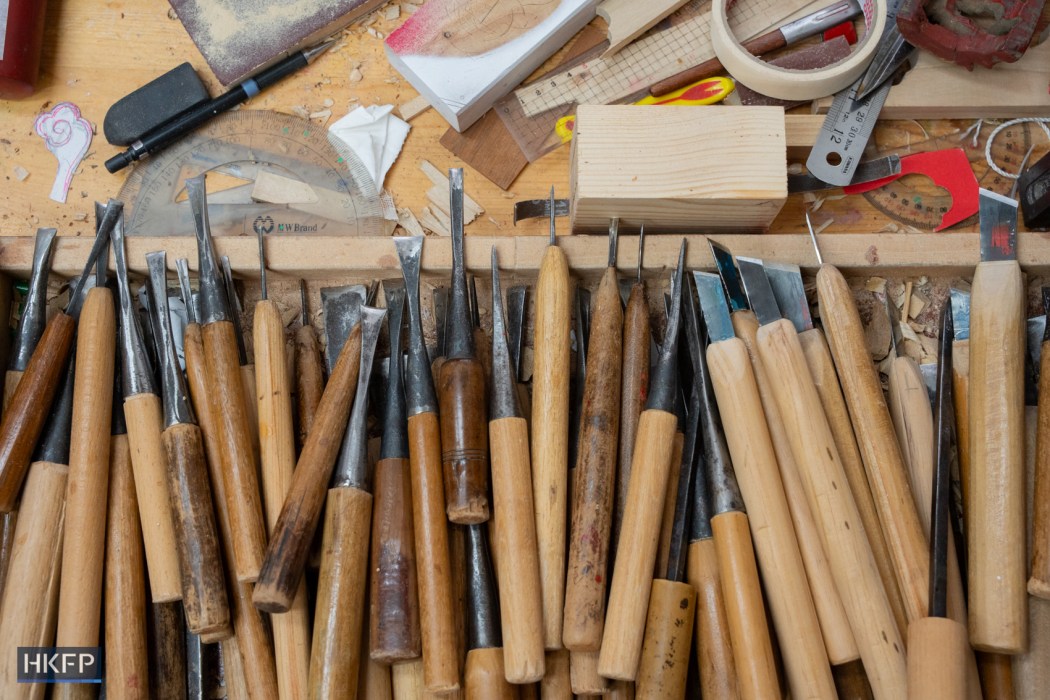
While the son remains devoted to antique restoration, the father is exploring new horizons. In recent years, Vitus Siu has become interested in making wooden artwork in a more creative way.
In collaboration with a local gallery, he made art pieces including handcrafted wooden mahjong tables.
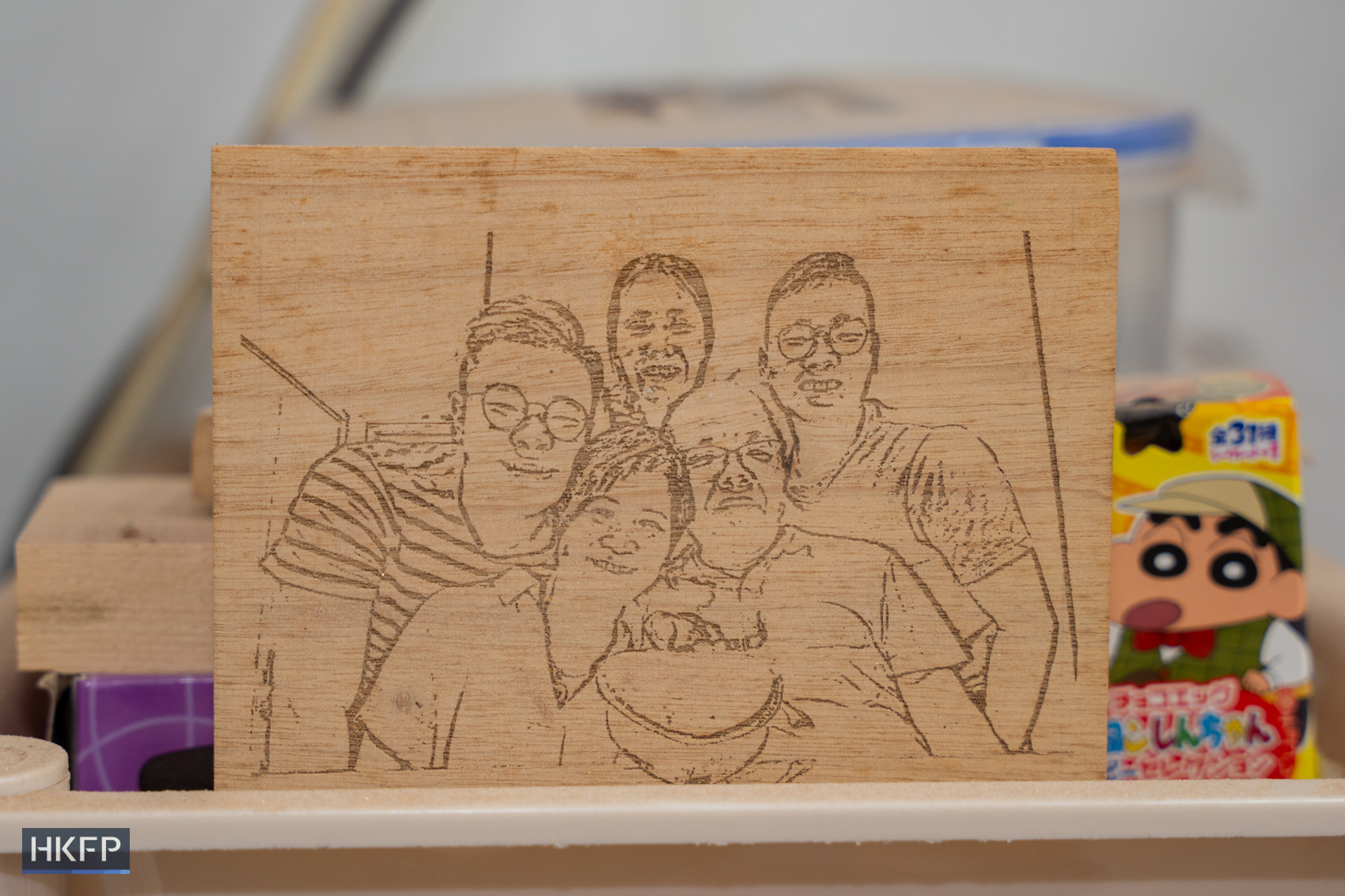
In early July, he also published a book documenting the history and traditional techniques of deity woodcarving.
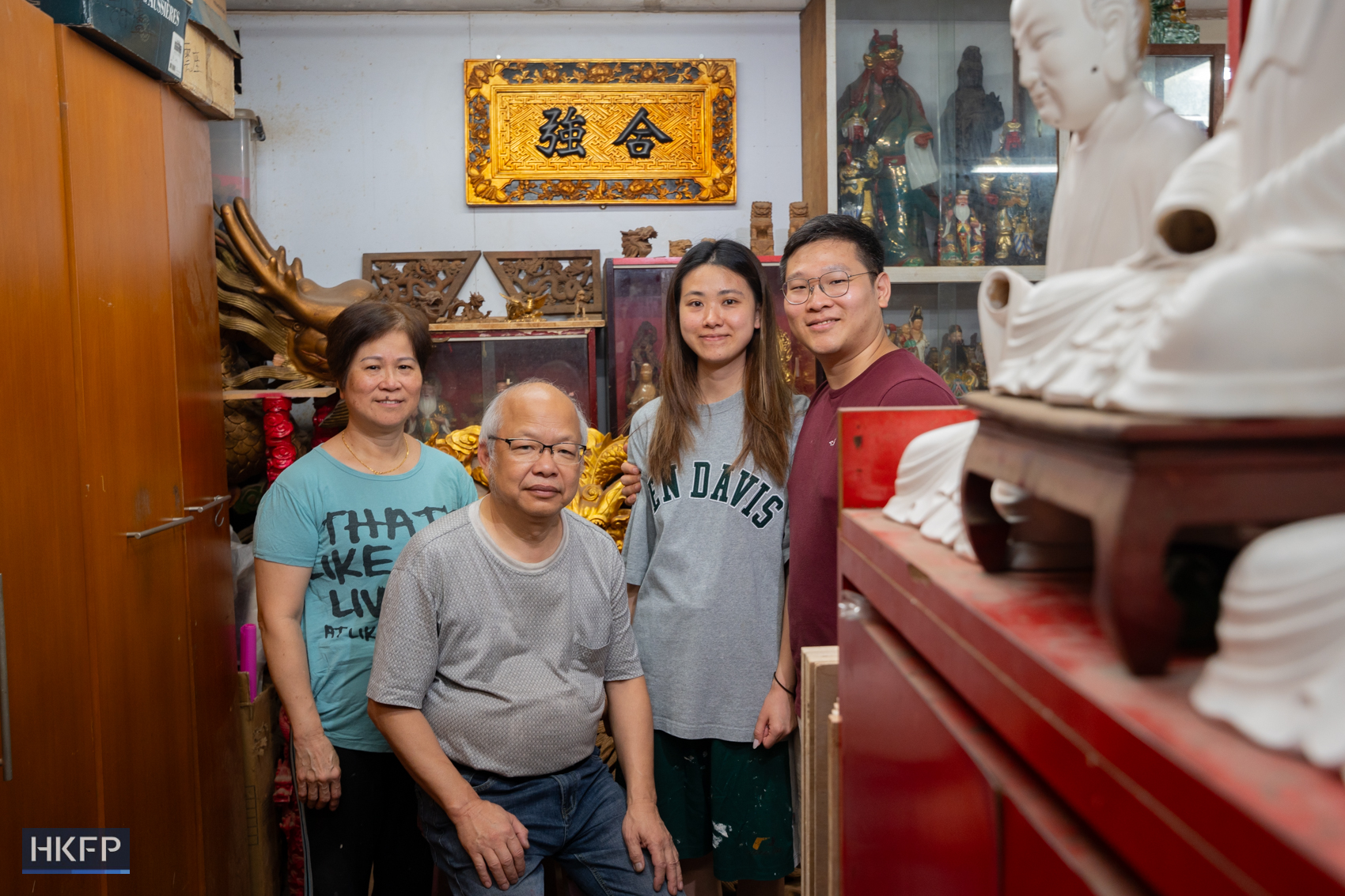
“There’s an old saying in our trade: those who carve Buddhas can never retire, or they’ll pass away quickly,” Vitus said, with a mysterious smile. “In truth, ‘retirement’ just isn’t in my dictionary.”