Hong Kong national security laws need constant improvement to close loopholes, ex-Beijing official says
Hong Kong’s national security laws must be constantly improved to close loopholes, a former top Beijing official on the city’s affairs has said.
Wang Zhenmin, former chief of the Hong Kong and Macao Affairs Office, said that other countries and regions are strengthening their national security laws and that Hong Kong is no exception.
Speaking at a seminar organised by the Chinese Association of Hong Kong and Macao Studies, a think tank that advises the central government, Wang said that developing a national security apparatus “is a long process” in any country.
Wang, who is vice-president of the think tank, said improving Hong Kong’s national security laws is an ongoing process and will never be completed.
“Whenever loopholes are found, laws or legislative amendments must be introduced promptly,” he said.
“Strengthening the legal system and the enforcement mechanisms for safeguarding national security is a question that must be answered,” Wang said, adding that improvements were a gradual process and cannot be done in a day.
New laws
Hong Kong has introduced new offences and provisions to its national security laws over the last year.
Last month, the government granted the chief executive power to certify any criminal act as a national security offence. In March, a new rule was introduced requiring suspects in national security investigations to surrender their passwords or face up to one year in jail.
Last year, subsidiary legislation was enacted under the Safeguarding National Security Ordinance, the homegrown national security legislation known as Article 23.
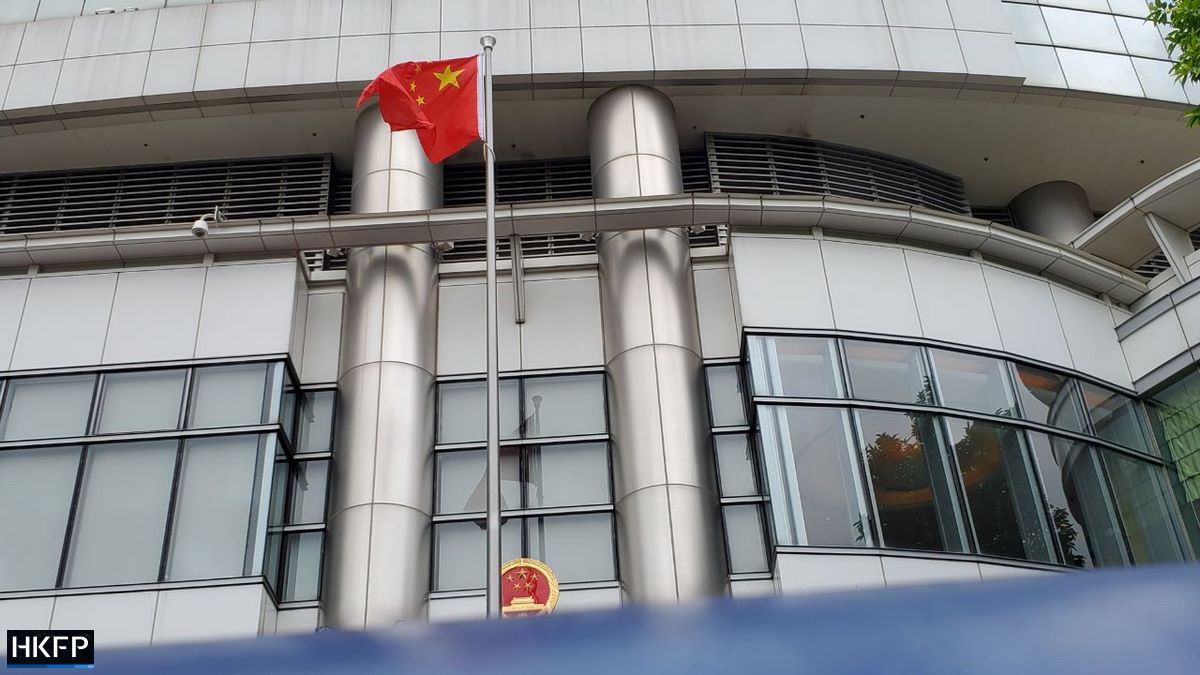
The update included declaring sites occupied by Beijing’s national security office as “prohibited places.” New offences carrying a maximum jail term of seven years were also added, including one that criminalises disclosing national security investigations.
At the Tuesday seminar, Wang said that Hong Kong’s national security laws were “milder” compared to those in the US, UK, and Singapore. Countries have been bolstering their national security laws amid growing volatility in international affairs and shifting global power dynamics, he said.
“Hong Kong’s national security laws are the world’s mildest, respects the rule of law the most, and protects human rights and freedoms the most out of any national security legislation in the world,” he said.
Separate from the 2020 Beijing-enacted security law, Article 23 targets treason, insurrection, sabotage, external interference, sedition, theft of state secrets and espionage.
It allows for pre-charge detention of up to 16 days, and suspects’ access to lawyers may be restricted, with penalties of up to life in prison.
Article 23 was shelved more than two decade ago in 2003 amid mass protests, remaining taboo for years. But, on March 23, 2024, it was enacted having been fast-tracked and unanimously approved at the city’s opposition-free legislature.