Federal judge temporarily blocks Paramount and Warner Bros. merger
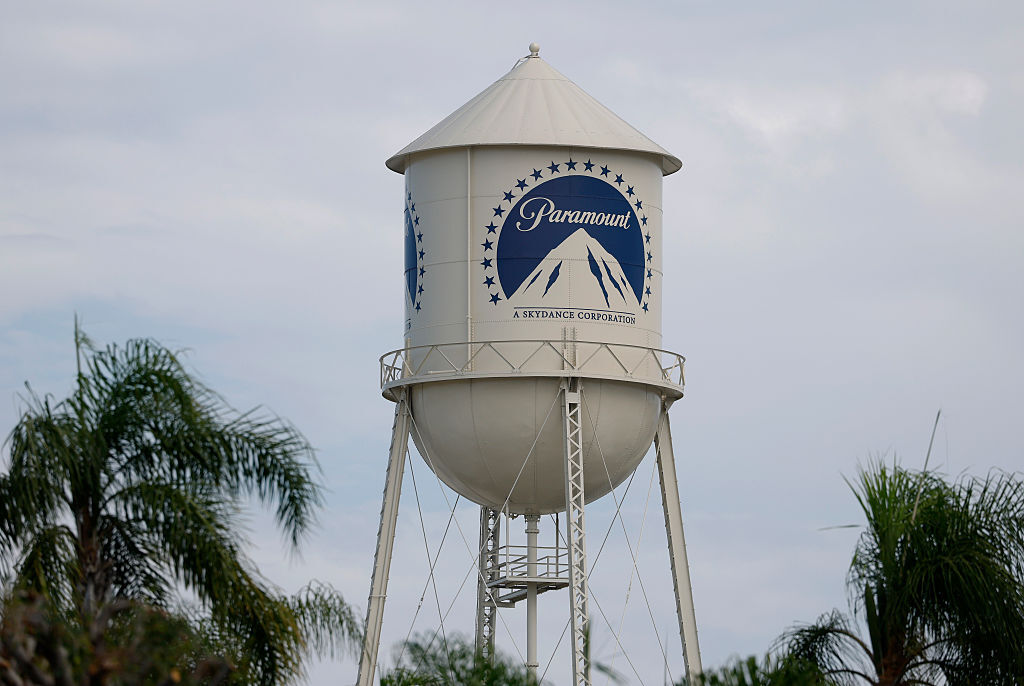
In an aerial view, the Paramount logo is displayed on a water tower at the Paramount Studios lot on July 13, 2026 in Los Angeles, California. Twelve state attorneys general, led by California, filed a lawsuit seeking to block Paramount Skydance’s proposed acquisition of Warner Bros. Discovery. They argue that the merger would violate the Clayton Act, an antitrust law that prevents anticompetitive practices. (Photo by Justin Sullivan/Getty Images)
A federal judge Monday temporarily blocked Paramount from moving forward with a $110 billion merger with Warner Bros. Discovery.
The decision came after 12 Democratic-led states, including Oregon, last week sued the company, alleging a merger would violate a federal law prohibiting mergers that lessen competition or create a monopoly. The states alleged a merger between the two media giants would eliminate competition in the film and cable industry and create a massive media company that would control nearly one-third of movies and cable programming in the U.S., resulting in higher prices, poorer quality media content and fewer movies and television shows.
U.S. District Judge Araceli Martínez-Olguín of the U.S. District Court for the Northern District of California granted the states their request for a temporary restraining order, which blocks the company from moving forward with a merger for 14 days while the states argue for a more permanent block.
Martínez-Olguín agreed with plaintiffs, saying a merger would likely violate antitrust laws.
“Here, Plaintiffs present compelling evidence that the combined firm resulting from the transaction will possess substantial market share in the wide-release theatrical distribution market,” she wrote in her decision.
Oregon, 11 other states sue to block Paramount-Warner Bros. merger
The plaintiffs include the attorneys general of California, Oregon, Arizona, Colorado, Connecticut, Massachusetts, Minnesota, Nevada, New Jersey, New Mexico, New York and Washington
“This proposed merger could mean real harm for Oregonians — for working families who will see higher costs and fewer options, for the small businesses and workers in our film and TV industry and for our local movie theaters,” said Oregon Attorney General Dan Rayfield. “Pausing this merger now will keep irreversible harm from happening.”
The plaintiffs will argue for a preliminary injunction, which would block the merger for the remainder of the lawsuit, on Aug. 3 at the Oakland division of the U.S. District Court for the Northern District of California.