Explainer: Hong Kong’s national security crackdown – month 72

Last month marked six years since the Beijing-imposed national security law took effect in Hong Kong.
The crackdown continued in June: an independent bookshop was raided, while its owner and her husband were arrested; activists and ordinary people were stopped and taken away in Causeway Bay on the 37th anniversary of the 1989 Tiananmen crackdown; a construction worker was sentenced to 10 months in jail after throwing “seditious leaflets” from his public housing unit, which led him to lose his flat.
Meanwhile, the government continued to update national security laws, giving the chief executive the power to certify any criminal act as a national security case.
June 4: Activists stopped, people taken away
On June 4 – the 37th anniversary of the 1989 Tiananmen crackdown – activists showed up in Causeway Bay. They defied a heavy police deployment at and around Victoria Park, the former site of Hong Kong’s annual commemorative Tiananmen vigils.
Large numbers of uniformed and plainclothes officers were seen in the park and around Causeway Bay that day.
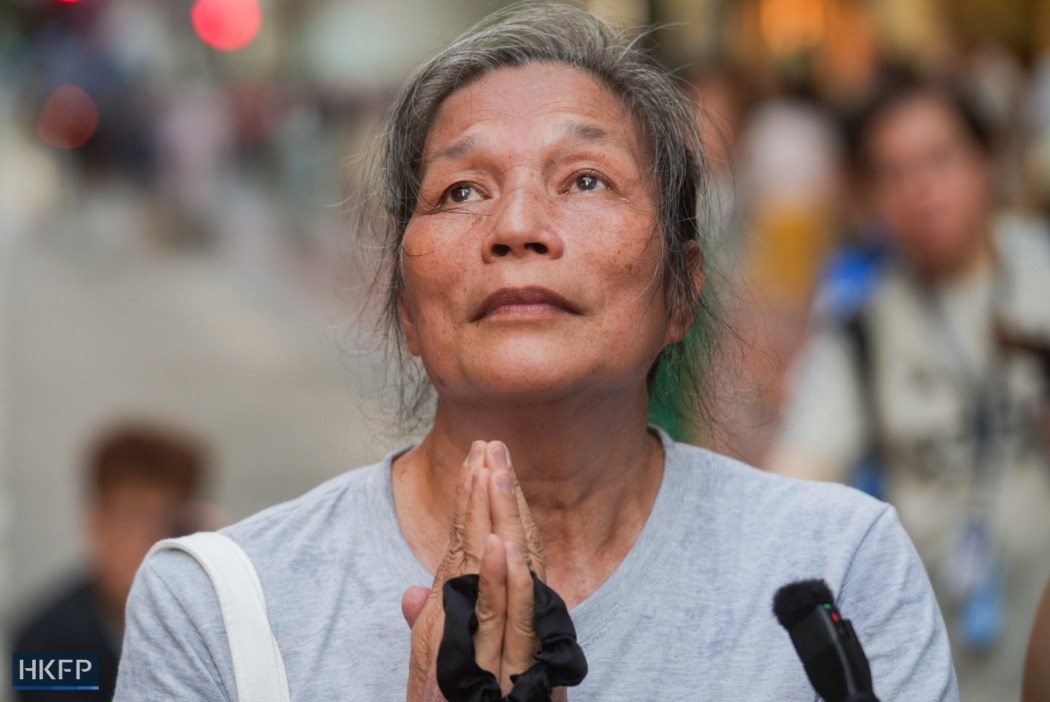
At around 5pm, activist Lui Yuk-lin walked from Great George Street in Causeway Bay towards Victoria Park. She pressed her hands, wrapped in a black cloth, in a prayer gesture, while chanting the Great Compassion Mantra.
Another woman was seen gesturing “six” and “four” with her hands at around 6pm on Great George Street in Causeway Bay, The Collective reported. Police officers at the scene warned her that her behaviour could be “seditious”. They pressed her hands down and took her away in a police vehicle.
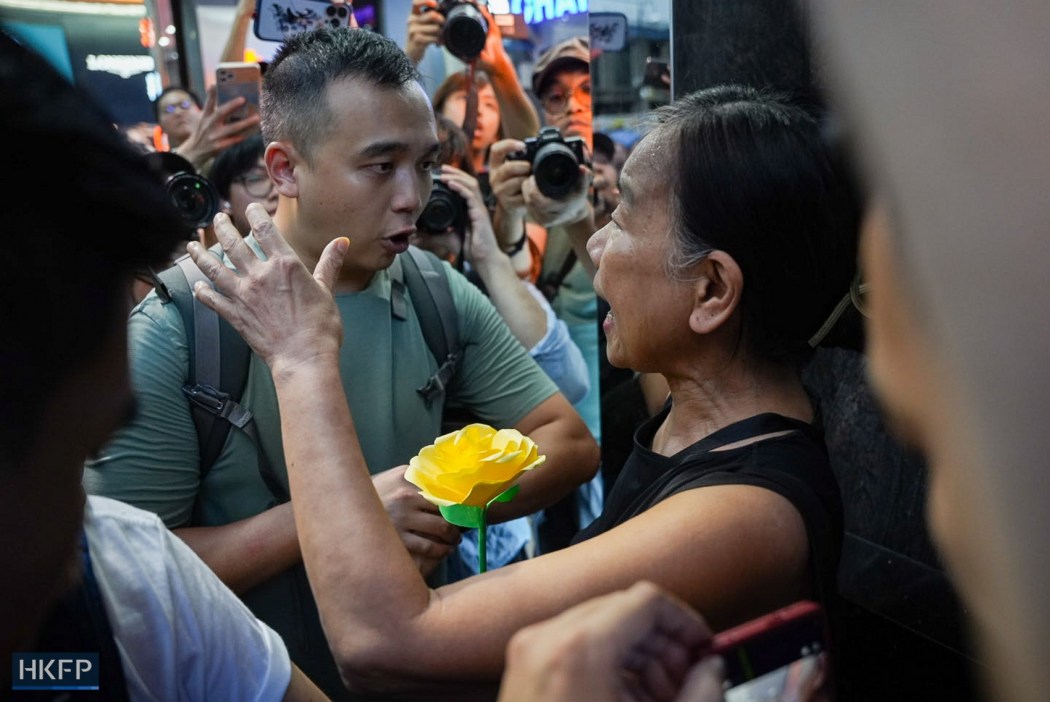
At around 6.30pm, Chan Po-ying, chairperson of the now-defunct League of Social Democrats, a pro-democracy party, appeared in Causeway Bay with a yellow paper flower.
Police at the scene warned Chan that her behaviour might constitute “disorder in public places” and told her to put the flower in her bag.
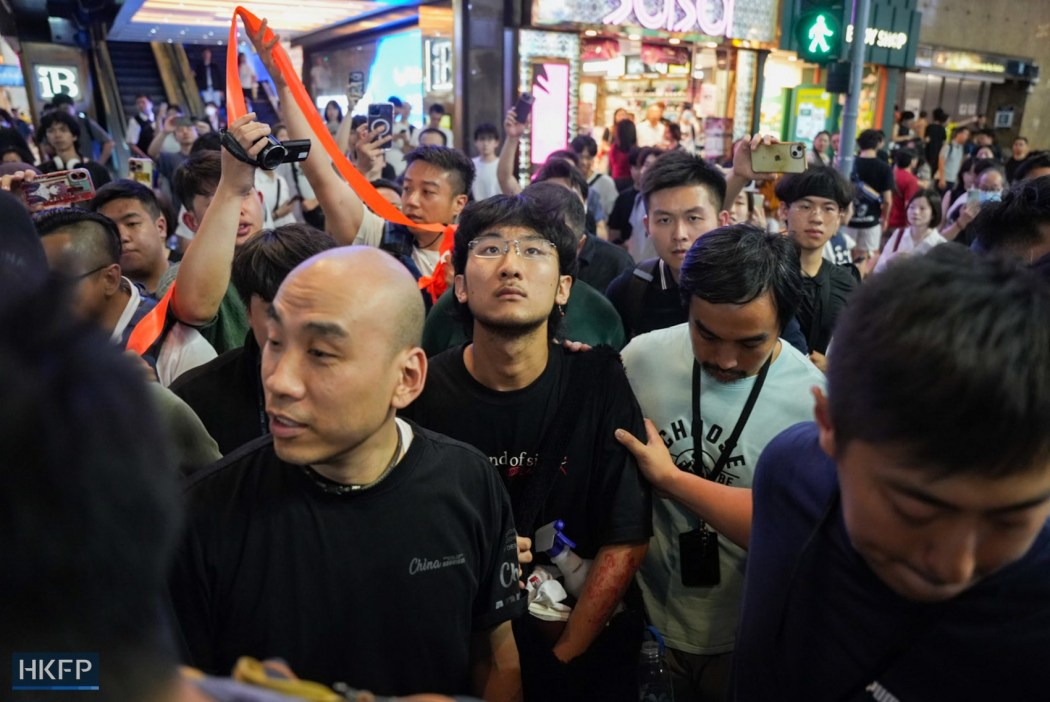
A young man in a black T-shirt was intercepted by police after he put on a blindfold and used a red marker pen to write on his arm outside the Sogo department store at around 7.15pm.
Police said a total of seven people – five men and two women, aged 17 to 79 – in Causeway Bay had been taken away in Causeway Bay on June 4. They were suspected of “disrupting order” near Great George Street and East Point Road.
Foreign missions mark Tiananmen crackdown
The US consulate in Hong Kong displayed commemorative candles in its windows on the 37th anniversary of the Tiananmen crackdown on June 4, while other diplomatic missions – such as the British, Canadian and Australian consulates in Hong kong – paid tribute with social media posts.
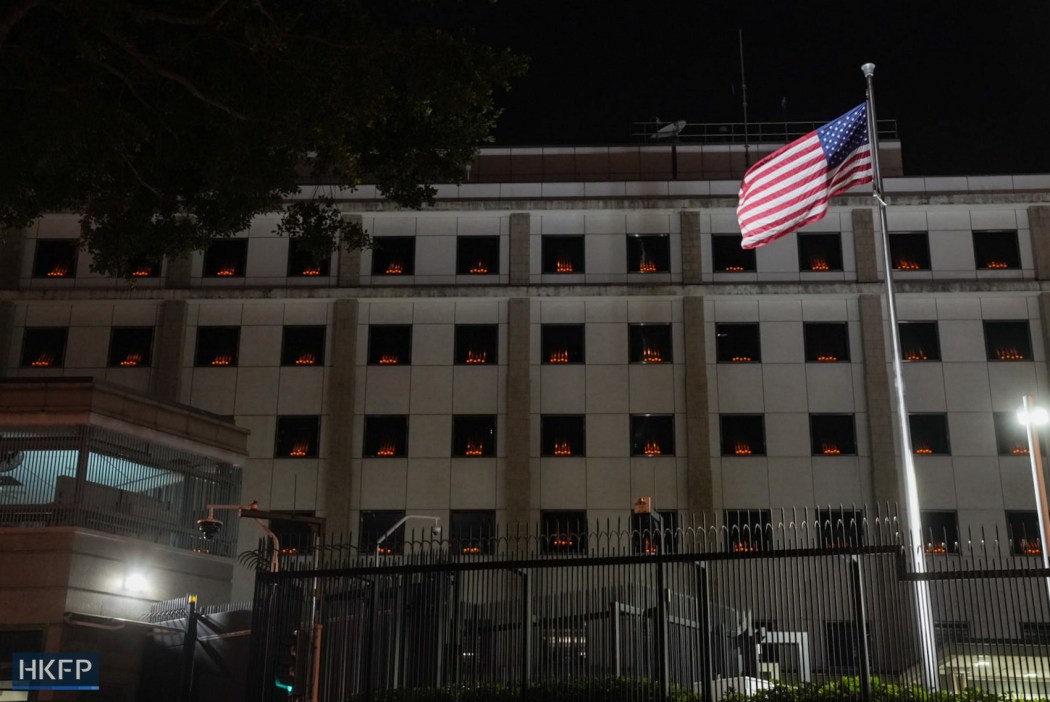
The annual move is often blasted by local and Chinese authorities, and has been cited by Beijing as “evidence” of foreign interference in a 6,300-word “fact sheet.”
Subsidiary legislation under Article 23 enacted
The government proposed in early June allowing the chief executive to certify any criminal act as a national security case – a legal update that would be binding on the city’s courts.
The new subsidiary legislation under Article 23 – Hong Kong’s homegrown national security ordinance – will empower the city’s leader to certify “other offences endangering national security under the law of the HKSAR,” according to a proposal submitted to the Legislative Council (LegCo) on June 8 by the Security Bureau and the Department of Justice.
The chief executive is already empowered to issue certificates to decide whether an act involves national security. However, according to the government, the new subsidiary legislation aims to “bring greater certainty” to the courts. There will no longer be room to debate whether an ordinary crime could be subject to national security procedures when a certificate is issued.
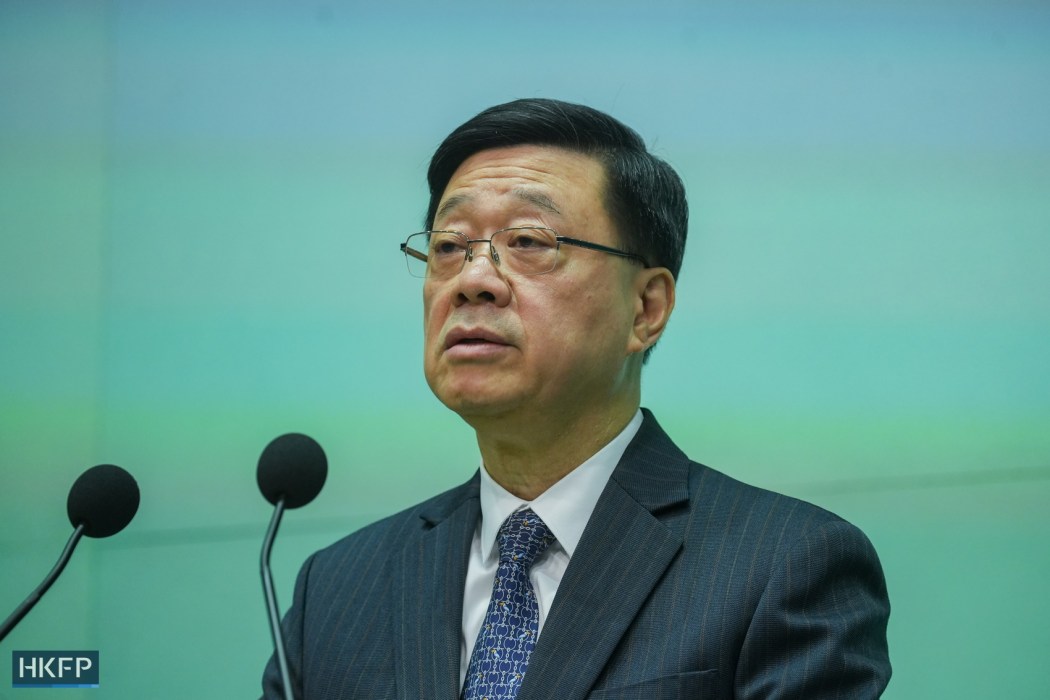
Moreover, later offences connected to an act classified as a national security offence would also face national security procedures.
The Safeguarding National Security (Procedural Matters) Regulation came into effect on June 9, one day after the government tabled the bill in LegCo. It was enacted through a “negative vetting” procedure, allowing it to be gazetted before being scrutinised by LegCo.
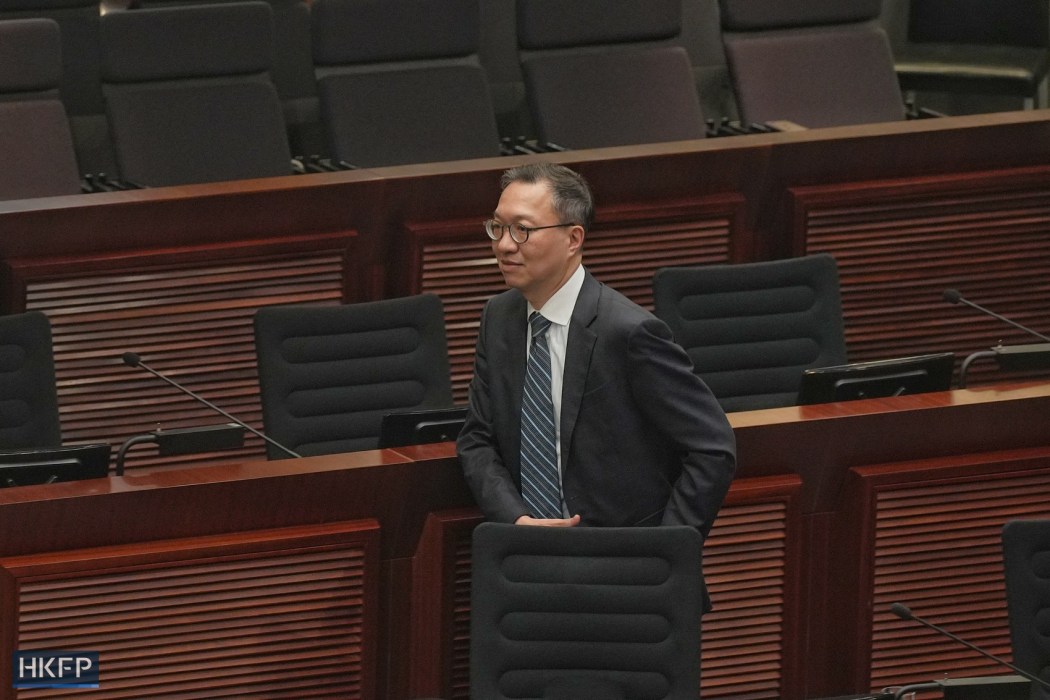
Days later, two ministers – Secretary for Security Chris Tang and Secretary for Justice Paul Lam – attended a legislative meeting to review the subsidiary legislation, during which they condemned “groundless accusations” against the regulation update.
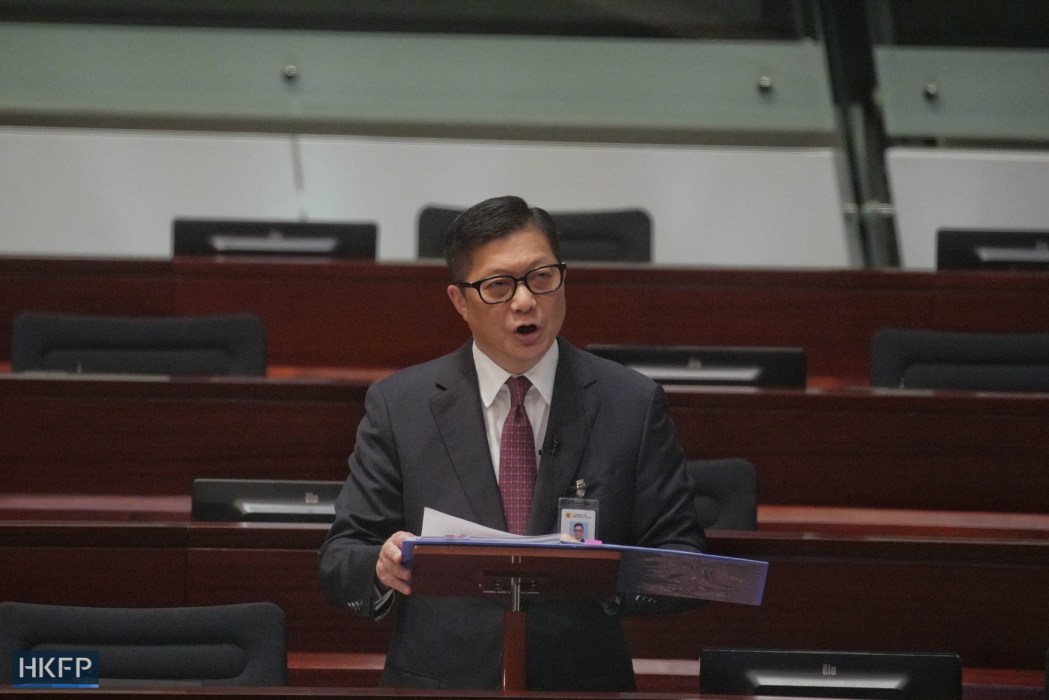
Tang told the Legislative Council (LegCo) that he noticed some people had misunderstood or “deliberately misinterpreted” the subsidiary legislation.
The security chief called the accusations “false, misleading, deceptive, and scaremongering” and said some people were attempting to incite hatred towards the government.
Lam said he noticed “some media outlets with ulterior motives, foreign forces, and fugitives” had made “groundless accusations” against the national security law.
Both the Hong Kong government and legislature blasted The Washington Post after the American newspaper published an editorial criticising the enactment of the subsidiary legislation.
According to a statement issued on June 13, the government ”strongly condemns the wanton slander and groundless allegations made by The Washington Post in its article entitled ‘Hong Kong’s nightmare gets darker’, criticising the Safeguarding National Security (Procedural Matters) Regulation (Procedural Matters Regulation).”
“The article clearly exposes The Washington Post’s irrational anti-China stance and double standards, falling well short of what is expected of professional journalism,” the government also said.
In a separate statement on June 14, LegCo rallied behind the government’s condemnation of The Washington Post for publishing the “untruthful” editorial and its “anti-China motives.”
Independent bookshop raided, owner arrested
Hong Kong national security police arrested a former pro-democracy district councillor and raided her Sham Shui Po bookstore for alleged sedition and money laundering.
Police said in a statement that a woman, 33, and a man, 32, were arrested on June 24. The pair allegedly displayed and sold “seditious” titles and “received multiple remittances from foreign political organisations,” the statement said.
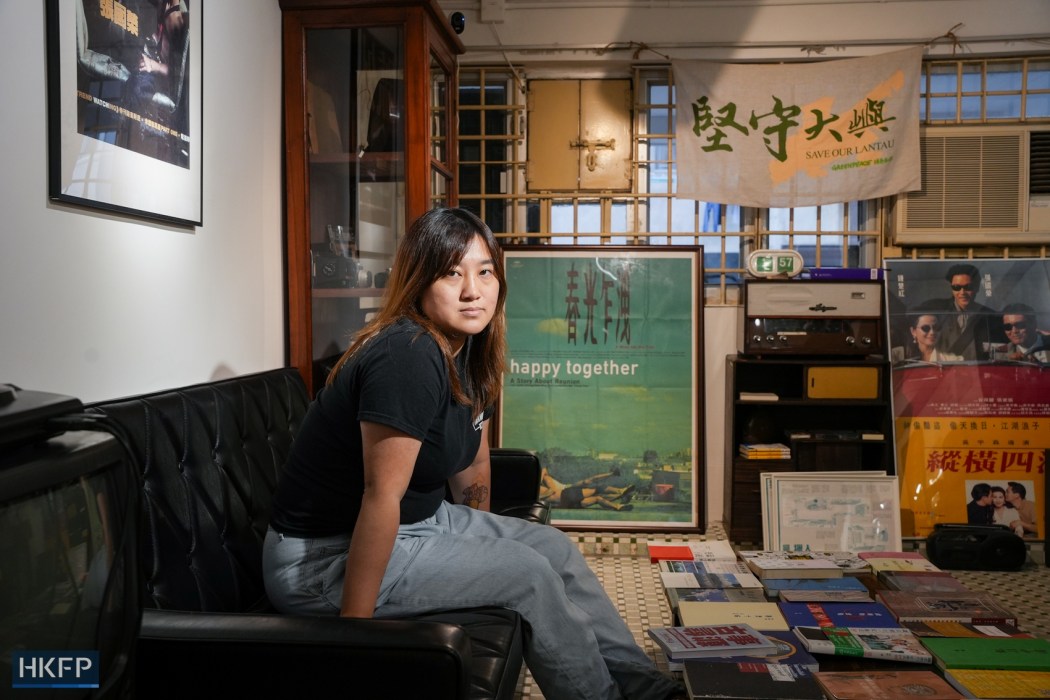
Local media identified the woman as former Civic Party district councillor Leticia Wong, who runs Hunter Bookstore in Sham Shui Po, and the man as Wong’s husband.
Police said the two allegedly sold seditious titles that stoked hatred against Hong Kong authorities, the judiciary, and law enforcement agencies, in violation of the city’s homegrown national security law, the Safeguarding National Security Ordinance, commonly known as Article 23.
Local media reported that Wong and her husband were released on bail on June 26, 48 hours after the arrests. The bookshop published a post on social media the following day, saying that the store would be closed for a while.
In March, independent bookseller Pong Yat-ming and three of the staff members of his Book Punch store were arrested on suspicion of selling seditious titles, including a biography of jailed media mogul Jimmy Lai.
The Civic Party officially shut down in March 2024, ending 18 years of history.
10 months’ jail time for sedition
A Hong Kong man who threw anti-government leaflets from his public housing flat was sentenced to 10 months in prison after pleading guilty to committing seditious acts.
Raymond Wong appeared at the West Kowloon Magistrates’ Court on June 9 to receive the jail sentence handed down by Chief Magistrate Victor So for two counts of “doing with a seditious intention an act or acts that had a seditious intention,” local media reported.
Wong, a 55-year-old construction worker, admitted to throwing the leaflets from his unit in On Tat Estate, Kwun Tong, on two occasions in October 2024 and December 2025.
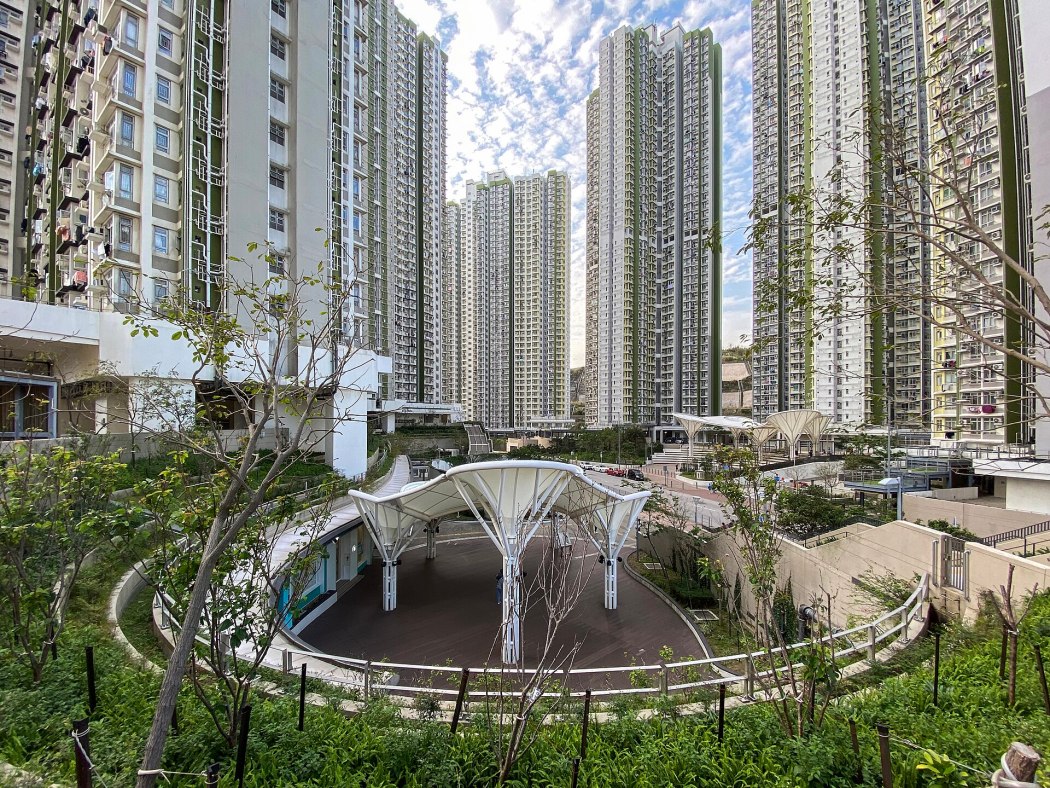
He was arrested in April, and the following month, he pleaded guilty to the charges – an offence under Article 23.
In mitigation, he apologised to his girlfriend and his daughter, as their public housing unit would be reclaimed by the government due to his offence.
Citing a psychological report, Wong’s lawyers said that the defendant did not know how to control the resentment that had built up from losing his full-time job after the 2019 protests and the Covid-19 pandemic.
Ex-Democratic Party chair released from prison
Wu Chi-wai, an ex-lawmaker and former chair of the now-defunct Democratic Party, was released from prison after serving nearly four and a half years for his conviction in the city’s largest national security case.
Wu arrived at Fung Tak Estate in Diamond Hill on the morning of June 30 by car. Earlier that day, two seven-seater vehicles with curtains drawn were seen leaving Stanley Prison, where Wu served his sentence, according to local media reports.
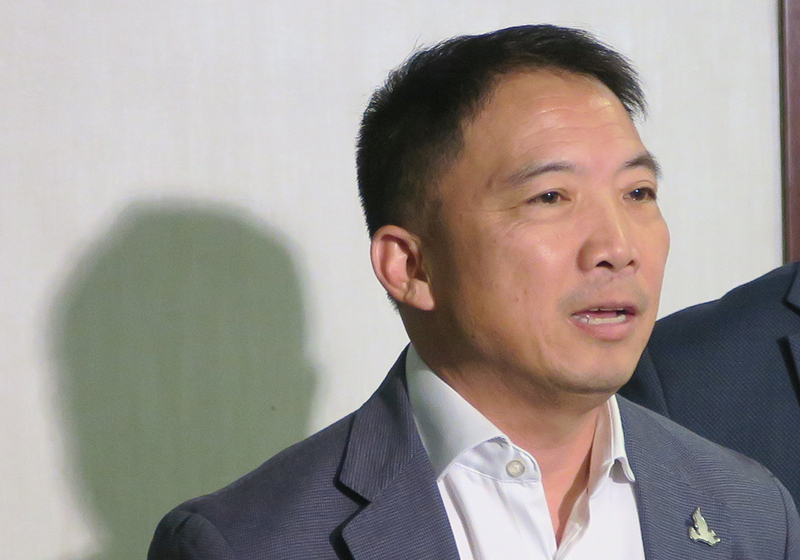
The 63-year-old, carrying two bags of personal belongings as he stepped out of a car, only said “thank you” twice and did not respond to questions from reporters at the scene.
The ex-Democratic Party chair is the 20th defendant in the landmark Hong Kong 47 case to have completed his prison term after being convicted in 2024 of conspiring to commit subversion.
Wu, who was a lawmaker from 2012 to 2020, pleaded guilty and was sentenced to four years and five months in jail. Separately, he also served a jail term of 14 months and two weeks for two unauthorised assembly cases in 2020.
The Democratic Party voted to disband in December last year after operating in the city for more than three decades.
Activist questioned in Japan over nat. sec conviction
Jimmy Sham, one of the activists convicted under Hong Kong’s largest national security law, was held for over 20 hours of questioning at a Japanese airport during a trip in June.
The news was first reported by Japanese newspaper Sankei Shimbun, which said Sham was detained at Tokyo’s Haneda Airport, also known as Tokyo International Airport, upon arrival on June 16.
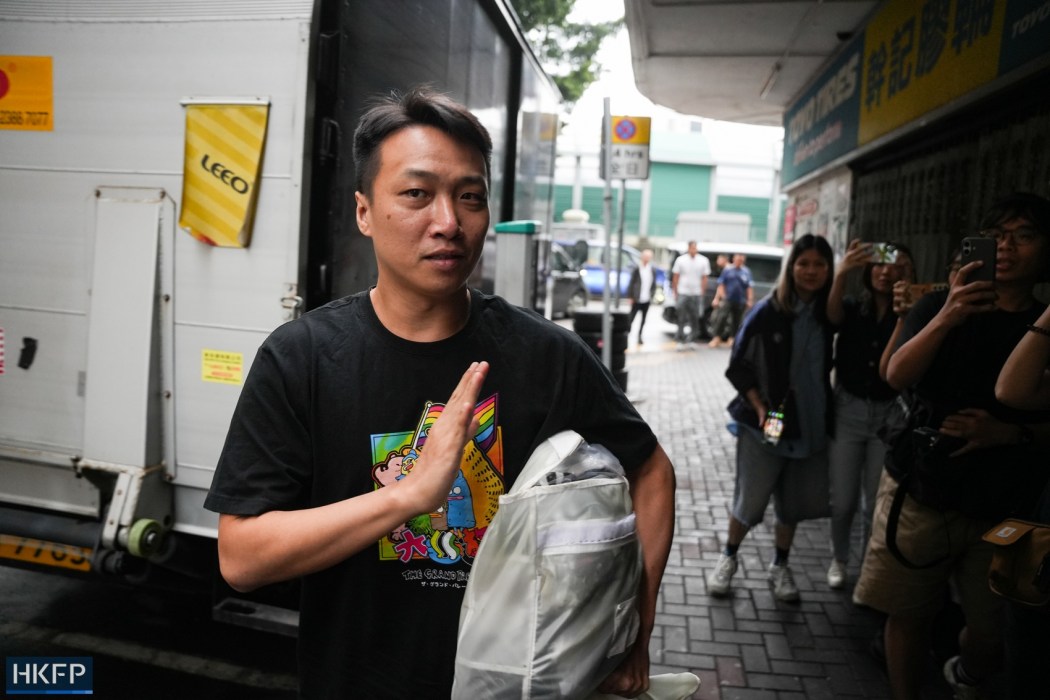
Sham told local media outlets, including Ming Pao and The Collective, that he declared his conviction and jail term in relation to the 47 democrats case to Japanese authorities when he landed at the airport for his five-day trip.
Immigration officers then informed him that Japan did not welcome visitors who had been jailed for more than one year, Sham told local media. They also said he might be subjected to a screening that could last three to four days.
Sham said he explained to them that he was convicted in a political case that did not involve violence.
The activist was eventually allowed to enter Japan after nearly 22 hours of questioning.
Sham was released from jail in May last year after serving time following his conviction in the city’s largest national security case. The case saw 47 opposition figures charged in 2021 with conspiring to commit subversion for their involvement in an unofficial democratic primary.
The activist, who pleaded guilty, was jailed for four years and three months.
Promotion of former police officer
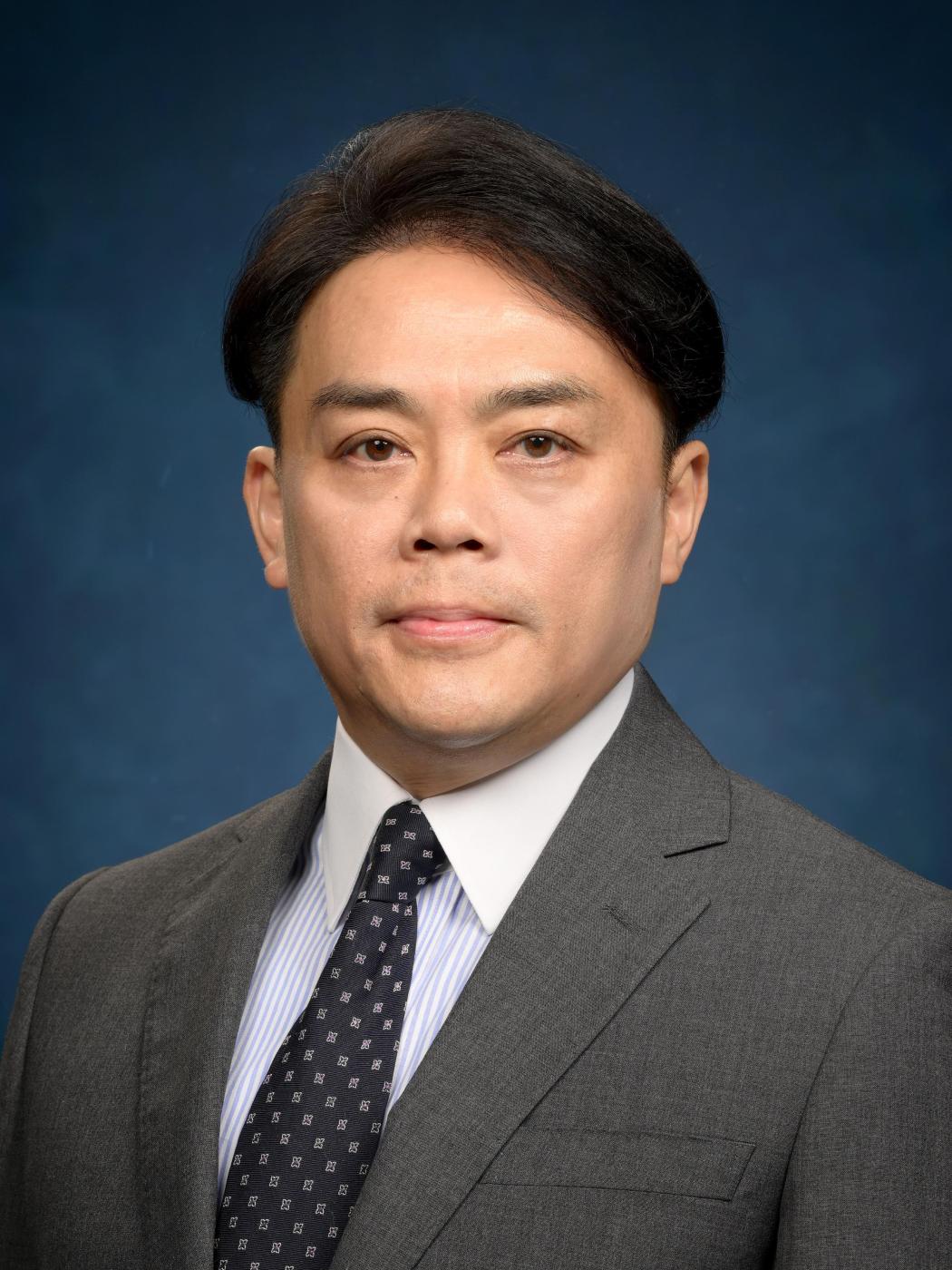
The Hong Kong government appointed a former top police officer to head the Food and Environmental Hygiene Department (FEHD).
The government said in a statement on June 15 that Albert Yuen, who served as deputy commissioner of police (operations) from 2021 to 2023, was “identified as the most suitable candidate.”
Yuen was appointed a year after the FEHD introduced national security-related clauses under the Public Health and Municipal Services Ordinance.
Restaurant licences can now be revoked if licence holders and “related persons” engage in “offending conduct” against national security and the public interest.
Yuen is the latest in a line of former police officers to take up office in government departments. In May, John Tse, who served as chief superintendent of the police force’s public relations branch, took up office as head of the Information Services Department (ISD).
Prosecution and arrest figures
As of June 1, a total of 401 people have been arrested for “cases involving suspected acts or activities that endanger national security” since Beijing’s national security law came into effect, according to the Security Bureau. That figure includes those arrested under Article 23 and for other offences.
Of the 212 people and five companies that have so far been charged, 182 people and four companies have been convicted or are awaiting sentencing.
In total, 103 people and four companies have been charged under Beijing’s national security law, with 79 persons and three companies convicted. 14 people have been charged under Article 23, 12 of whom have been convicted.