There’s a New Democratic Machine. It’s Unabashedly Socialist.
As democratic socialists toppled establishment favorites this midterm cycle, the old guard of the Democratic Party picked up a preferred cudgel against insurgents: These people were propped up by white, urban, coastal, educated electorates — not the ones the Democrats were trying to reach, and certainly not the working class.
It’s true that the four victorious socialists running for Congress — Chris Rabb in Philadelphia, Darializa Avila Chevalier and Claire Valdez in New York City, and Melat Kiros in Denver — won in major cities where progressive politics are more likely to be popular than in the country’s many more rural, poorer, and less educated districts. But before this cycle’s big surge, the Democratic Socialists of America had spent the past decade backing and recruiting candidates in down-ballot races across the U.S., multiplying the number of people in office by a figure of eight and electing mayors, city councilors, state lawmakers, and other local officials in 39 states.
“Everybody is feeling the crunch. Everybody is deeply concerned for their families, for their security,” said Becky Cooper, campaign manager to Francesca Hong, a Wisconsin state representative and formidable DSA candidate for governor. “That transcends political party, transcends ages, and it transcends geography. This is not just a coastal elites thing.”
Despite the narrative that the socialist model only works among electorates dominated by young, white, coastal elites, the DSA, the largest socialist organization in the U.S., is decentralized and operates chapters in a majority of states. Its members currently hold office in states like Ohio, North Carolina, Texas, and Tennessee. Many of those candidates have been elected to local offices even as far-right campaigns to take over bodies like school boards have dominated in recent years. Since 2018, 305 DSA-backed lawmakers have won their races. Democratic socialists won state legislative primaries this season in Georgia and Kentucky, and they’re on the ballot in upcoming primary races in Florida, Michigan, Minnesota, and Wisconsin, where Hong has polled first or second in recent months in a tight gubernatorial primary.
In order to win, they’ve built what some might call a machine, joining forces with more mainstream progressive organizations to marshal resources against a well-financed political establishment that buried candidates on the left in 2024.
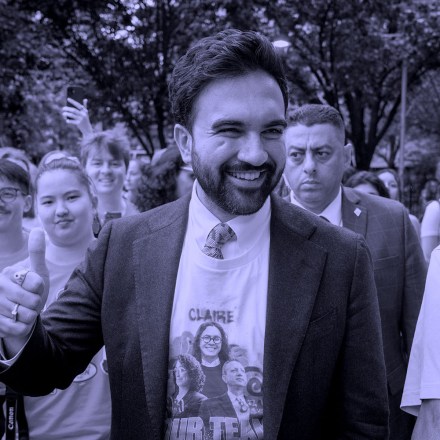
Their success has sent the Democratic establishment into a frenzy. Dismissing the wins in his backyard, House Minority Leader Hakeem Jeffries said the socialist victories in New York were concentrated in “higher-income districts” with an “outsized focus on issues connected to the Middle East.”
But while Valdez and Avila Chevalier won a majority of voters in areas dominated by the young, wealthy, and college-educated, Avila Chevalier beat longtime incumbent Rep. Adriano Espaillat among Black voters, while Valdez dominated over Brooklyn Borough President Antonio Reynoso among majority-Hispanic precincts — suggesting the socialism-curious share of the electorate is more complex than its critics might make it seem.
It’s “a very reductionist identity politics from pundits and critics who don’t have anything meaningful to offer working-class voters.”
“People are going to keep trying to move the goalposts to pretend like this isn’t a movement sweeping the nation,” said democratic socialist New York state Sen. Jabari Brisport, pointing to another DSA member who won a primary upstate in Buffalo. “It’s an attack line that will keep coming again and again, a very reductionist identity politics from pundits and critics who don’t have anything meaningful to offer working-class voters.”
According to Cooper, Democratic leaders hold responsibility for the surging popularity of the socialist brand.
“The socialist label is more popular than the Democratic label because people are recognizing that they’ve been fed a bill of lies through capitalism,” she said.
Democratic socialists looking to take over the governor’s mansion in Wisconsin say their message isn’t contingent on geography, race, or class.
“You’ve had throughout history political leaders use socialist policies without actually calling it socialism,” said Wisconsin state Rep. Darrin Madison, the first Black socialist elected in the state. He pointed to policies like the New Deal, the eight-hour workday, and Social Security. “Building systems of mutual aid, that’s a form of socialism,” Madison said.
Wisconsin’s long history of socialist politics has enjoyed a revival in recent years. Milwaukee sent the first socialist to the House in 1910 and elected three socialist mayors over the next half century, but the state’s socialist caucus died out in the early 1930s — after passing close to 300 bills in the preceding decade. Frank Zeidler, elected Milwaukee mayor in 1948, was the last socialist elected in the city until 2020, when voters elected Ryan Clancy to the County Board of Supervisors. Two years later, Madison and Clancy won election to the state Assembly; the first thing the pair did after taking their oaths of office was to found the Socialist Caucus, which had died out in the 1930s. The caucus doubled in size last year to four members, adding Hong and state Rep. Christian Phelps.

Socialists resuscitated their Wisconsin roots at a time when Democrats had earned a reputation for shirking their responsibilities at every level of Wisconsin’s government. After Bernie Sanders beat Hillary Clinton in the state’s 2016 Democratic primary, its general election voters swung toward Donald Trump — clinching his first presidency. Until current Democratic Wisconsin Gov. Tony Evers was elected in 2018, the state was under full Republican control.
“The last time that Wisconsin had a [Democratic] trifecta was 16 years ago now,” Clancy told The Intercept. After Democratic Gov. Jim Doyle did not seek reelection, the Democratic candidate lost the 2011 governor’s race to Republican Scott Walker, and the GOP flipped both state legislative chambers. “The Democrats at the time squandered that opportunity, and they really failed to deliver for the state.”
Those failures, Clancy said, included not codifying abortion rights ahead of the Supreme Court decision to overturn Roe v. Wade, and not raising the minimum wage, which is still $7.25 an hour, when they had the votes to do so. “They didn’t even bring it up for a vote because they feared what that would mean for their large-dollar donors,” Clancy said.
Cooper said Hong’s campaign is hearing from voters who are increasingly blaming the capitalist system for the problems they see around them. In response, the campaign is talking about what it says is the true definition of socialism, Cooper said: “Taking care of our neighbors, taking care of people’s economic needs.”
“They’re waking up to the fact that it is capitalism at the heart of these issues. It is people profiting off of our neighbors being sick, or not being able to afford groceries or not being able to afford their credit card bills, when we see that people are becoming billionaires while we’re suffering and literally just trying to feed our families,” she said.
Hong’s performance in recent polling shows that socialist policies are resonating with voters, Madison said.
“When folks say this is a reflection of the elites and folks from academia and young folks in college, that does a disservice to community members and their abilities to understand the circumstances that they are in and the ways in which parties have exploited their pain,” he said.
“It doesn’t speak to the reality that folks are facing.”
Nearly 2,000 miles southwest of Wisconsin’s capitol, the city of Los Angeles has all the markers of a coastal haven for democratic socialist politics to thrive: a large working class, high racial diversity, a significant immigrant population with a rich history of progressive organizing, all existing alongside pockets of wealthier, whiter, college educated residents who lean left. The city has its own storied history of socialism and nearly elected a socialist mayor in the early 1900s, riding a wave of labor and working-class support and drawing on the socialist model of Milwaukee.
Since 2020, the LA DSA chapter has gained a foothold in City Council with challenges to the Democratic establishment. When Nithya Raman unseated an incumbent that year with the backing of DSA LA, the victory sent shockwaves throughout an LA establishment — then the DSA repeated the feat three times in subsequent cycles.
Now, Raman has a chance to unseat incumbent Democratic mayor Karen Bass in November, tempting comparisons that suggest the city is on the cusp of its own wave of governmental transformation akin to New York under democratic socialist Mayor Zohran Mamdani. Yet DSA LA has struggled to break out of its main stronghold of the city’s east and northeast sides, into some of the city’s power centers, such as South LA, which has majority Black, Latino, and working-class precincts.
“If we’re serious about building power in the areas where we want to build power, then the process has to begin much earlier than a candidate coming to DSA” for an endorsement, said DSA LA co-chair Leslie Chang. She acknowledged the need to break out of LA’s own “commie corridor,” where many DSA members live.
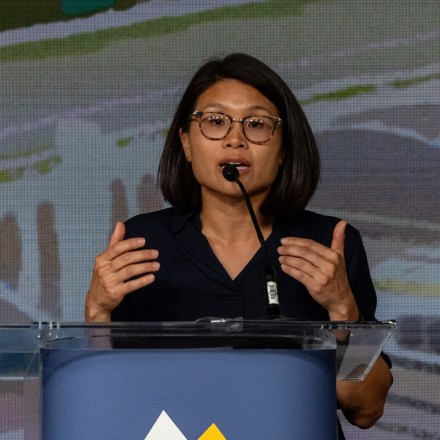
Like in New York, DSA LA has had to battle accusations that its candidates only draw support from white, college-educated voters, despite winning in multiple districts with majority-Latino residents. This reality played out in two city council races on LA’s west and south sides, where one DSA candidate lost outright and the other made it to the runoff — but trailing the establishment pick by 13 percentage points.
Chang, who spent a week in New York knocking on doors and phone-banking for that socialist slate, said the LA chapter needs to follow New York’s lead to train and identify “homegrown” candidates within the organization.
“We need multi-year power building plans for a lot of the things that we want to achieve,” Chang said. “We have to commit to working on projects, like non-electoral campaigns in districts, to become better embedded in that community that we want to represent.”
While DSA found success in its first citywide race when its endorsed city attorney candidate, Marissa Roy, locked out the incumbent from the top two and made it to a November runoff, its members were split over whether to back Raman for mayor or long-shot candidate Rae Huang. Its city council members endorsed Bass. Now, DSA LA’s larger membership has to weigh whether to endorse Raman in November’s runoff as she faces lingering mistrust among the organization and LA’s left after she diverged from her DSA colleagues on key housing issues and on Palestine and Israel. If she does want to unlock the group’s army of canvassing volunteers, Raman would need to collect at least 50 signatures from DSA members, sit for an interview with its electoral politics committee, and fill out a questionnaire that would likely include policy commitments important to the group.
Still, recent socialist victories have had a reverberating effect on the nation’s second largest city. The LA chapter saw bumps in membership after Mamdani’s election last year and another after New York’s congressional primaries, adding 70 new members to its total of 5,000. Chang said the wins in New York have also energized the chapter to begin building toward electing members to the California State Legislature, where only one current DSA member from the Silicon Valley is serving. Elsewhere in California, Mai Vang, endorsed by the Sacramento DSA chapter, is headed to a runoff after leading longtime Democratic incumbent Rep. Doris Matsui; the previous person who held the seat was Matsui’s husband Bob.
“When New York wins, LA wins,” said Sean Wakasa, a DSA LA co-chair with Chang, also mentioning the wins in Philadelphia and Denver. “We’re building politics that working-class people can see themselves in, and it’s built around addressing universal issues around affordability around the ability for people to work.”
DSA might bristle at the suggestion that it’s becoming a political machine. The group prides itself on getting buy-in from its members before taking a position on policy issues and having a painstakingly democratic structure — not the top-down politics they say has led to the downfall of the Democratic Party.
But DSA is playing the game. It’s one group in a coalition of lefty organizations whose chapters have beefed up their coordination this cycle to power socialist and progressive candidates.
In all four of its congressional primary wins so far this cycle, DSA chapters have teamed up with Justice Democrats, the left insurgent group that rose to prominence in 2018 when it helped get the first two DSA members of Congress elected — Reps. Alexandria Ocasio-Cortez, D-N.Y., and Rashida Tlaib, D-Mich. — but suffered last cycle when two of its newer incumbents, Reps. Jamaal Bowman of New York and Cori Bush of Missouri, were ousted by AIPAC-backed challengers. Now, joining forces with DSA chapters and Sunrise Movement, the youth-led climate group that has expanded its ambit to oppose war and authoritarianism, Justice Democrats is receiving mea culpas for previous death knells — as JD spokesperson Usamah Andrabi told The Intercept when Kiros won: “We’re just having an amazing fucking cycle.”

Groups on the left have also massively increased their spending in this year’s primaries after losing candidates last cycle who faced tens of millions of dollars in attacks from deep-pocketed super PACs and dark-money groups. Several pro-Palestine PACs are working or spending on primaries for the first time this cycle. The super PAC American Priorities, funded by Mamdani donors, has spent more than $4 million so far. Those investments have helped shift the dynamics in congressional races even in the face of similar outside spending against the left.
“Justice Democrats has the expertise to run federal challenger primaries — embedding in campaigns as staff and advisers, managing budgets, recruiting and training candidates, coordinating donors and leading independent expenditure programs,” Andrabi told The Intercept. “Combining that expertise with local DSA’s immense field and organizing power, which is unmatched in cities like NYC, delivers these monumental victories.
The national groups that helped power Kiros, Valdez, Avila Chevalier, and Rabb’s congressional campaigns don’t work on state-level races. But the DSA’s local Wisconsin chapters and another three campus chapters of the Young Democratic Socialists of America have endorsed Hong and are helping to boost her campaign by canvassing, fundraising, holding events, and calling voters. A new DSA chapter for Central Wisconsin formed last week and is also expected to endorse her.
Still, Hong’s campaign expects to face a surge in outside spending against her. “We know that super PAC money is going to come in, especially with Fran’s stance on data centers. We know AI money is going to come in,” said Cooper, Hong’s campaign manager. She also said she expects to face money from the pro-Israel lobby, though its flagship national group does not spend on state races.
“We know that we are never going to raise the most money.”
“That doesn’t change our message or our work. We know that we are never going to raise the most money. We know that we’re not going to have a ton of independent expenditures coming in to rescue us. We have 6,000 volunteers on the ground,” she said. The weekend after the New York primaries, the campaign knocked 10,000 doors in a day and a half. “That is how we will offset paid media and the spending and all those kinds of things, is getting people out to have real conversations.”
In addition to outside spending, Cooper said the current pearl-clutching around the rise of democratic socialist candidates was to be expected.
“Any time within the larger pendulum swings, there’s smaller ones as well.”
The post There’s a New Democratic Machine. It’s Unabashedly Socialist. appeared first on The Intercept.