Citizens work together to come up with their county’s AI policies
Each week on The Newsfeed, host Paris Jackson and a team of veteran journalists dive deep into one topic and provide impactful reporting, interviews and community insights from sources you can trust. Each day this week, this post will be updated with a new story from the team.
Cascade PBS reporting prompts “Civic Assembly” in Snohomish County
By Nate Sanford, story published 06/22/2026
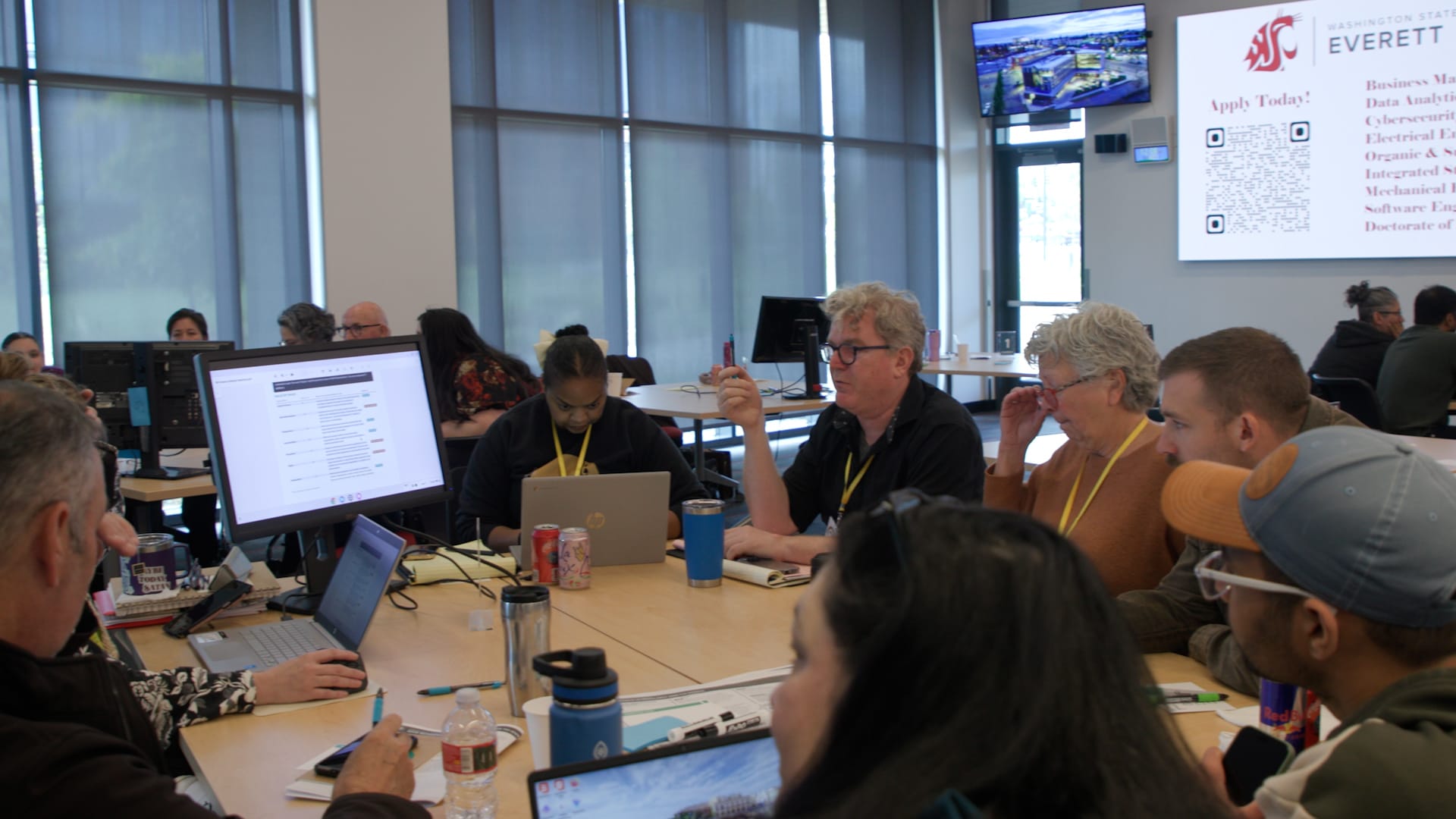
Artificial Intelligence is rapidly evolving, and many local governments are still struggling to catch up and figure out how — or if — they should be using it. In Snohomish County, local leaders decided to try an experiment.
They convened what’s known as a “civic assembly” of 29 randomly selected county residents to deliberate on AI and come up with policy recommendations.
The idea was prompted in part by a series of articles published by Cascade PBS and KNKX last summer. Using thousands of pages of chatlogs obtained through public records requests, we reported on how city officials in Everett had experimented with AI tools like ChatGPT for a variety of tasks.
That reporting raised questions about transparency. It also caught the eye of local leaders in Snohomish County.
“That reporting actually was the thing that kicked off this civic assembly on this particular issue.” said Jillian Youngblood, the director of Civic Genius, the group facilitating the civic assembly.
Civic Genuis is a national nonprofit that’s worked on civic assemblies before in other areas. But this is the first one Youngblood is aware of about AI. The Snohomish County Council says they’ll take the recommendations produced by the group seriously and try to adopt them into law.
Over three weekends in May and June, the group of 29 citizens heard from experts, did research and debated the thorny ethical issues at the heart of AI.
“Humanity needs to be put before technology, and that’s just not happening,” said participant Jessica Rhodes.
“It’s these three weekends that are intense, but my hope was to give something great to the county council government,” said participant Theo Moriarty.
“To be part of something that is so new to Snohomish County, and be part of something kind of historic,” said participant Hillary Moralez.
All this week we’ll hear more from those participants and others about the process, and tell you about the AI questions it surfaced.
Process “reminds people who aren’t politicians that their opinions matter”
Story published 06/23/2026
A civic assembly is a bit like jury duty, but for public policy. They’re more common in Canada and parts of Europe, but still rare in the United States. The goal is to create policies that more directly represent what the community wants.
“I was really excited by the idea of a process that reminds people who aren’t politicians that their opinions matter,” said Mackey Guenther, one of eight facilitators who helped guide conversations at the Snohomish County AI civic assembly.
Guenther used to work for city of Edmonds collecting public feedback on housing policy. He says that type of traditional political participation tends to self-select for people who are already engaged with local government, and that some voices get left out.
“My understanding is that some of the people in this room had never really been involved in a public process before,” Guenther said.
The participants were selected to be demographically representative and were paid $500 each.
“Over the course of three weekends, people struggle through difficult conversations and run into disagreements, but also see a little bit of themselves in other people,” Guenther said.
Participants have their preconceived notions challenged
The group had people with all kinds of backgrounds, including a retired engineer, a police officer in training, a middle school teacher, a social worker and a tech worker.
AI is a polarizing topic. Some participants said they didn’t want the county to use it at all.
“I always joke that I’m a luddite, I have strong thoughts on how technology should be helping people and not taking away from labor or rights of people and their dignity,” said participant Hillary Moralez.
Some participants had a more optimistic view coming into the sessions.
“I come from a software engineering background, and I assumed my reason to be here was to help shape how to help make the county make the most out of AI,” said participant Dhruv Raithatha.
Over the course of the three weekends, the participants heard presentations from experts in law, technology and government. They worked together in small groups to draft a list of shared values and recommendations. The processes shifted some participants’ perspectives.
“I initially went in hoping I could basically just stop everything, which I understand is completely not an option. But what it really did was, it helped me to better understand other people’s thoughts and uses and processes,” Moralez said.
“I think my thought process has grown, and to incorporate all the other social and equitable aspects that I didn’t come in originally thinking about,” Raithatha said.