Stop Calling It a Ceasefire
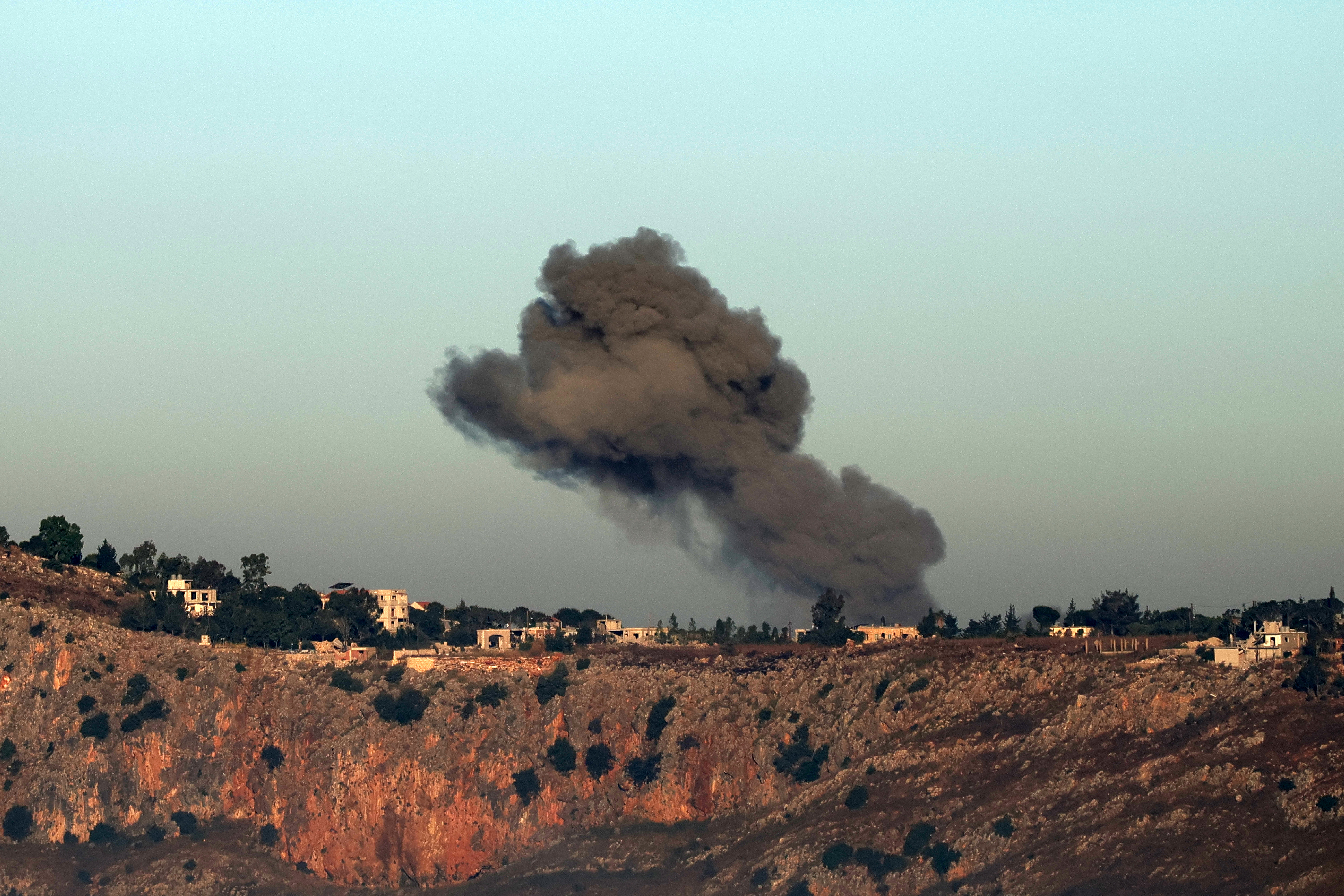
To any reasonable person, a ceasefire is exactly what it sounds like: It is the total cessation of military attacks to end a war. But to the mainstream American media outlets covering the U.S.–Israel war with Iran, what constitutes a “ceasefire” is a rhetorical exercise.
Today, Iran launched missiles at the international airport in Kuwait. As the New York Times reported: “The barrage was one of the biggest attacks on a Gulf nation since the U.S.-Iran cease-fire took effect in April.” ABC News’s live update coverage ran with the breaking news headline “Iran targets US forces, Kuwait airport amid ceasefire.” Over at CNN, the headline was “Kuwait’s airport attacked as fresh Iran-US strikes strain ceasefire.”

Of course, Iran’s latest campaign didn’t come out of nowhere: It comes two days after the U.S. announced that it had bombed radar and drone sites in the country, and one day after Israel bombarded south Lebanon with airstrikes and artillery yet again, reportedly killing at least four people across two towns.
All that bombing, and all of its attendant death and suffering, sure doesn’t feel like a “ceasefire” in any real sense. Still, the Times, along with other national news outlets, continues to spin the fantasy that the ceasefire is intact — only now it’s increasingly “fragile” or “tested.” The paper of record has gone so far as to say that it “hangs in balance.”
In a piece of news analysis in the Times last week — on the heels of the U.S. bombing Iran for the second time in three days — the paper made the case that “a truce isn’t necessarily doomed if the missiles are still flying.” It also argued that while a ceasefire might sound like an end to the bombing, the geopolitical definition hinges on whether both sides agree that a “ceasefire” remains in effect.
If government officials call it a ceasefire, who is The New York Times to question it?
If government officials call it a ceasefire, who is the New York Times to question it?
For many months, another ceasefire in name only has been touted in Gaza. What that’s looked like in practice is Israel relentlessly bombing the Palestinians on a near-daily basis. Al Jazeera reported that since the “ceasefire” in Gaza was announced in October 2025, Israel has killed at least 922 people and injured 2,786.
To the people of Gaza and of south Lebanon, there is no ceasefire. Continuing to carry water for the idea that we’re no longer at war, or that there’s been any meaningful progress made to end this war, is to provide cover for the U.S. and Israel, the countries that launched this war of aggression and continue to execute it. It also provides President Donald Trump with the political cover he so desperately desires as he realizes that he’s powerless to end the deeply unpopular war he started with Israel, and that no number of testy phone calls will move the needle if our ally won’t agree to a true ceasefire.

The mainstream media is perfectly comfortable spinning the fiction that we’re currently in a gray zone somewhere between war and peace because the stakes are an abstraction. To them, blindly supporting American imperialism and Israeli aggression are baked-in ideological assumptions, not matters of life or death. It’s no coincidence that the New York Times has done more than any other media organization to massage the language around Israel, Gaza, and Iran to an extreme degree.
But words like “ceasefire” matter a great deal, which is why it’s critically important for the media to call out acts of war for exactly what they are. In this way, the brutal fact of war is black and white: Your country is either killing people with the bombs it’s dropping, or it’s not. Failing to acknowledge that reality is worse than dishonest — it is to irrevocably deprive those paying the highest price of their humanity.
The post Stop Calling It a Ceasefire appeared first on The Intercept.