Burnham Wins in Makerfield: Can the ‘Politics of Place’ Now Offer an Antidote to the Poverty of Possibility?
Andy Burnham has made much of the “politics of place”.
By choosing Makerfield as the place of his return to Westminster, what does the constituency and its voters tell us about his likely politics?
Overwhelmingly white, mainly working-class, marginalised in the march to post-industrialisation, Makerfield appears to be the epitome of a ‘Red Wall’ constituency: part of a belt of ‘left behind’ towns and villages that commentators commend or criticise for rejecting the ‘metropolitan elites’ and the UK’s growing social and ethnic diversity.
But the constituency of Makerfield is not a town or a village. With only the peak of Winterhill as a common landmark, the constituency is a scatter of villages and small towns thrown up within ribbons of terraced housing around pits and mills that no longer exist.
Though the parties of the right play on the nostalgia for a lost sense of cohesion, most of Makerfield never acquired the civic fabric – a market square, a planned centre, shared gathering places – that would knit people together in the first place.
It is an area afforded neither old security nor progressive aspiration. Can Burnham deliver either or both as its new MP?
Common Ground
Nearly a hundred years ago, this part of Lancashire was grimly and vividly depicted in George Orwell’s The Road to Wigan Pier as a classic case study in exploitation, poverty, pollution, and the squalor of the ‘dark satanic mills’ of Britain’s Industrial Revolution.
But while the slag heaps, filthy canals, sink holes, and sulfurous chimney stacks have gone, the legacy of those rapid and often rapacious extractive industries still disturb the underlying social landscape.
The surviving Victorian housing stock, with its characteristic combination of dark red brick, sit right on the road without front gardens, driveways, or parking spaces: they were built for an era in which ‘armies of labour’ could walk to a huge nearby pit head or mill.
When those places of work closed under Thatcher, and all the clubs and meeting places with them, these communities lost their heart.
Despite a spate of council housing and warehouses for light industry springing up in the surrounding fields, there has been little municipal effort to create new common ground around schools, music venues, sports centres, libraries, cinemas, or renovated high streets.
In Ashton, the main focus of the constituency, the town centre is dominated by a car park facing a short parade of shops which includes a Boots and Costa Coffee, alongside a charity shop or two. Only Iceland, Home Bargains, Aldi, and Lidl stores can be found off major roundabouts and roads. Pubs are dotted here and there at intervals.
Now part of Greater Manchester, and served by the distinctive Bee Network buses introduced by Burnham as Mayor, Ashton feels very far away from a great metropolis.
Come evening, the place is deserted.
The Totem of Truth
With the world descending on Makerfield as it went to the polls, the locals were friendly, if a little fed-up of it all.
Engaged on local and national issues, and sceptical about whether politics could do anything to change anything, the people of Makerfield weren’t bitter.
As one elderly lady put it out shopping in Ashton, “we all need to live together”.
With not a whiff of ‘these metropolitan Londoners coming up and only now taking an interest in our town’, this reception was a stark contrast to the “accent snobbery” described by one Labour MP, who represents a northern consistency, the night before over a pint in Burnham’s teeming campaign HQ at Stubshaw Cross Community and Sports Club.
“People in Westminster basically think we’re thick when they hear us speak,” is how the Oxbridge-educated MP put it.
In between the town’s two charity shops, the ‘Totem of Truth’ had been temporarily erected by campaign group Reform Watch, displaying the Reform UK candidate Robert Kenyon’s history of misogyny.
One couple stopped to question where the totem of truths were for Burnham and the other candidates. “It’s about fairness,” the elderly woman said. It was a word that surfaced several times in different contexts during the weekend.
Another woman, terrified at the prospect of a Reform win following its success in the recent local elections in the area, was horrified by Kenyon’s comments – including his claims that women have abortions for “vanity purposes” so they can “shag anyone they want”.
Several women voters raised the issue of Kenyon’s misogyny during our trip and said it had put them off. It does not seem to have helped him, with the Reform candidate winning 15,696 votes compared to Burnham’s 24,927 in the by-election.
But not everyone shared the sentiment. The Reform Watch team recalled, to both laughs and disgust, how earlier in the day, two young women had stopped by the Totem of Truth and said they didn’t care about Kenyon’s remarks because he was so good-looking.
As locals got talking in small groups around the totem, oft-repeated sentiments were aired: about politicians who are “just in it for themselves”, how both Labour and the Conservatives had offered the area nothing, the unpopularity of Keir Starmer in particular, and why Reform or Restore should now be given a throw of the dice – like voting for Brexit a decade earlier – just to shake things up.
When talk turned to immigration, as it frequently did, the distinction was often made between “illegal” immigrants who don’t get jobs or contribute to society and the problem of “small boats”; and immigration and diversity in the UK more broadly, which many said they welcomed.
Shortly after a Restore Britain activist appeared on the scene with a megaphone and camera – telling Reform Watch that this would be “his first punch-up of the day” – the Totem of Truth was last seen being carried off into the sea of cars in Ashton’s town centre.
The Pit and the Pendulum
But Ashton at least has some central gathering space, and during the local elections Reform had its narrowest lead there at approximately 14%. The wards which have virtually no civic centres swung hardest away from Labour.
Reform’s lead in the council elections doubled in the old mining areas of Hindley and Abram that developed rapidly in the middle of the 19th Century.
In 1911, Abram was described as “distinctly unpicturesque”, its trees “stunted and blackened with smoke”, made of “collieries, pit-banks and railway lines”. In the shadow of the last working pits, where coal was a living wage into the early 1990s, Reform achieved its highest share – 56.1% – earlier this year.
Bickershaw and Parsonage, the last two pits in the Wigan Coalfield, closed in March 1992, ending more than 200 years of mining. The 1984-85 strike left its mark here too, including the mass picket of June 1984 known as ‘the Battle of Bickershaw’. Hindley, the ward which employed men in the Bickershaw pit until its closure, records Labour’s lowest floor anywhere in the constituency, at 21.4%.
You can see why the Conservatives have fared badly here, since Thatcher is held responsible for the closure of the pits, with little provision for alternative employment. The area was abandoned to itself. In the years that followed, few benefited from the aspirational promises of New Labour either.
None of the urban renewal and regeneration of northern cities such as Manchester and Sheffield has ‘trickled down’. The stagnation of wages and growth since the credit crunch of 2008 has only compounded the problem.
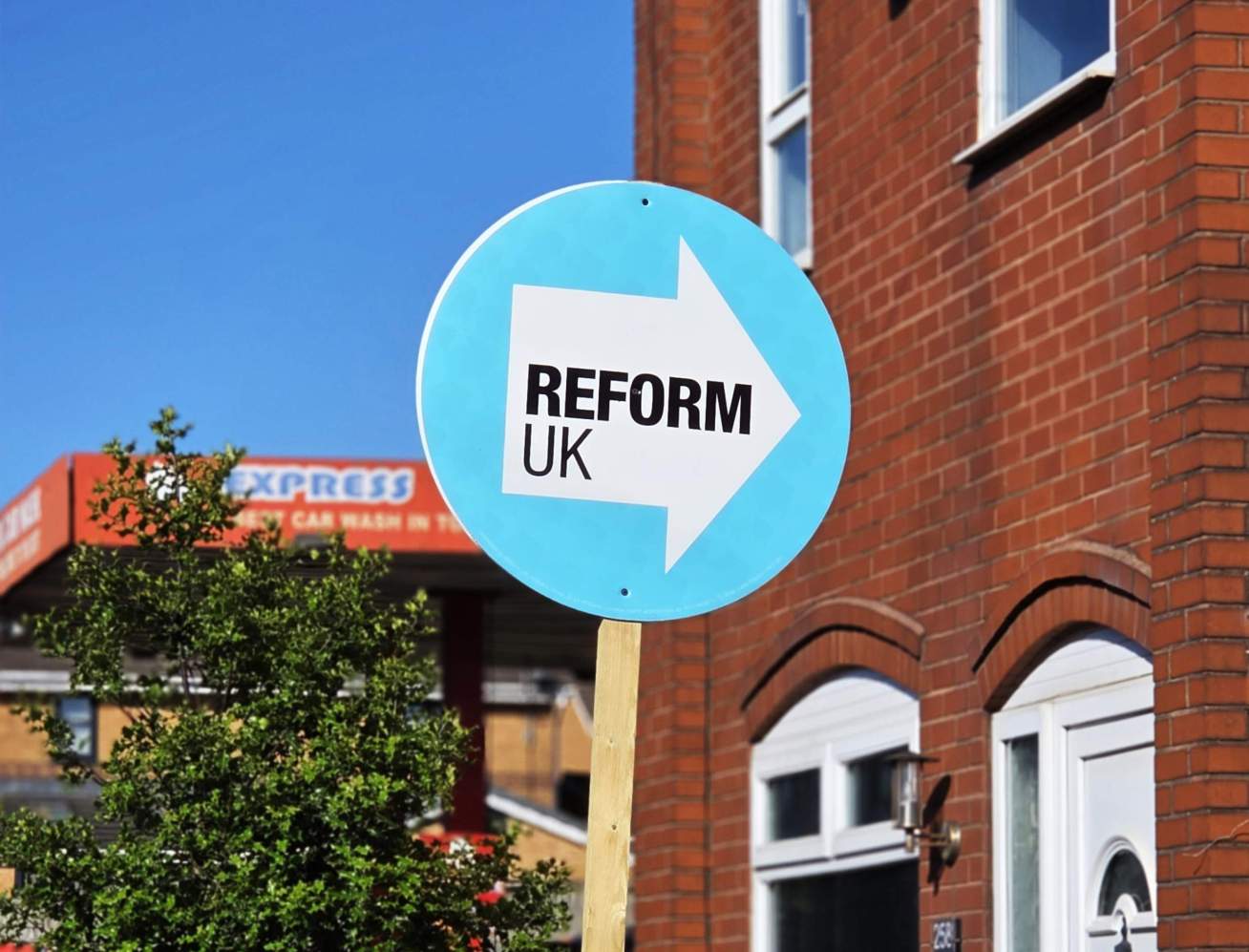
With few places for men to gather, local rugby league teams provided one last outlet for cohesion. But as with football, far-right activists also penetrated team support and tapped into the frustrated male anger. The estates where the EDL thrived in the 90s are now marked with lampposts covered with St George’s flags, and had the biggest number of Reform and Restore placards.
The Chess Board of Englishness
But not all those attracted to the new parties of the right are repelled by Thatcherite Conservatism. Some want to bring it back to an area still devastated by its policies.
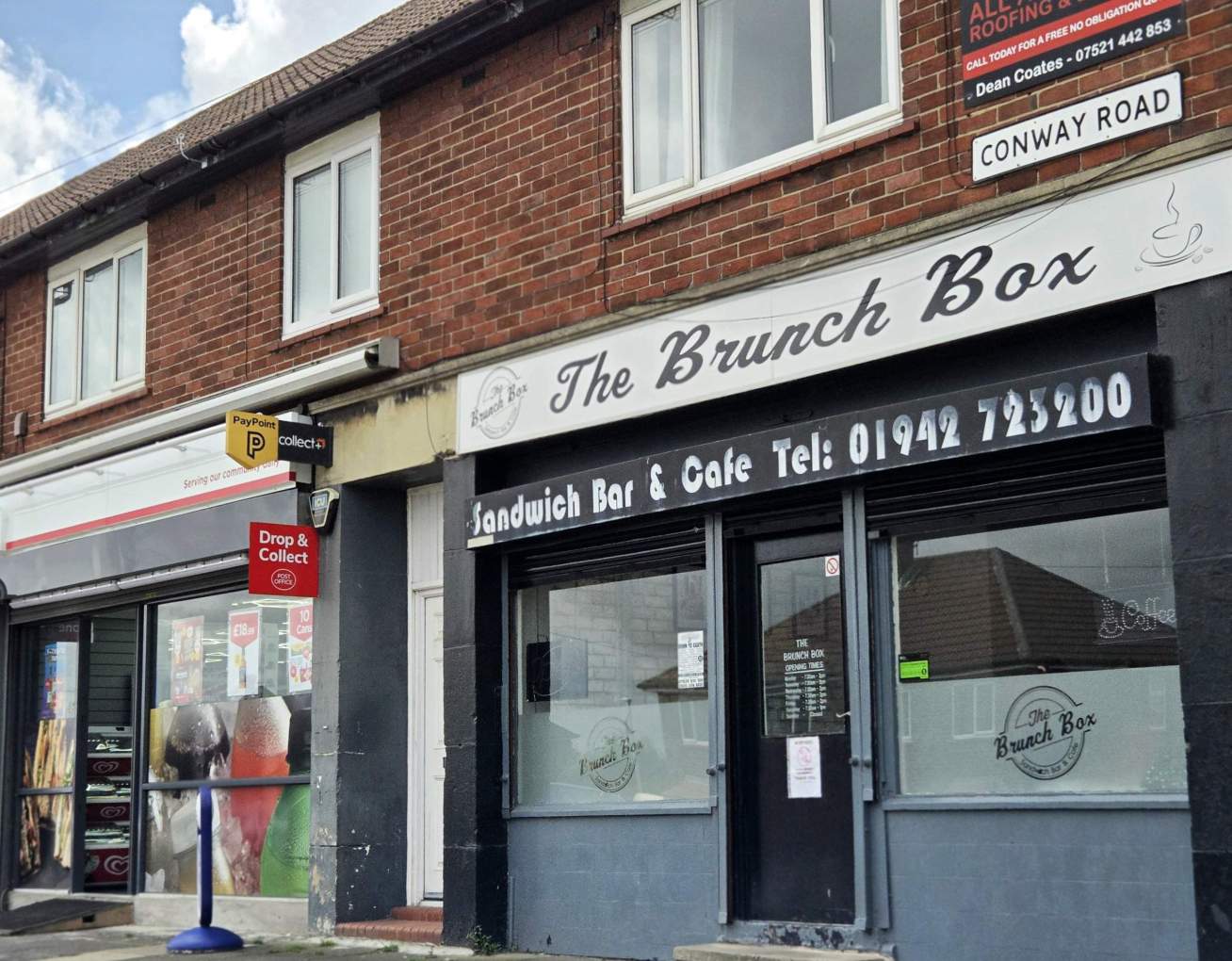
In The Brunch Box in Bryn, we got talking to a trio of campaigners flying the flag for Rupert Lowe’s Restore Britain over a late English breakfast.
One of the three, with the veneered smile of the Cheshire Cat and wearing a cap bearing the party’s name, grinned as he stood to attention and performed a faux military salute at each mention of “Trump” and “Musk” as the conversation progressed.
Keen to chat and respectable in their manners, the men – all up from the south to campaign – longed to “restore” Britain to the days of Thatcher, both in economic and social terms, when “government didn’t get in the way”.
Why weren’t they supporting Nigel Farage’s party? Lowe was a better businessman than Farage, they claimed, with Lowe apparently even having been Farage’s boss during one stint in the City.
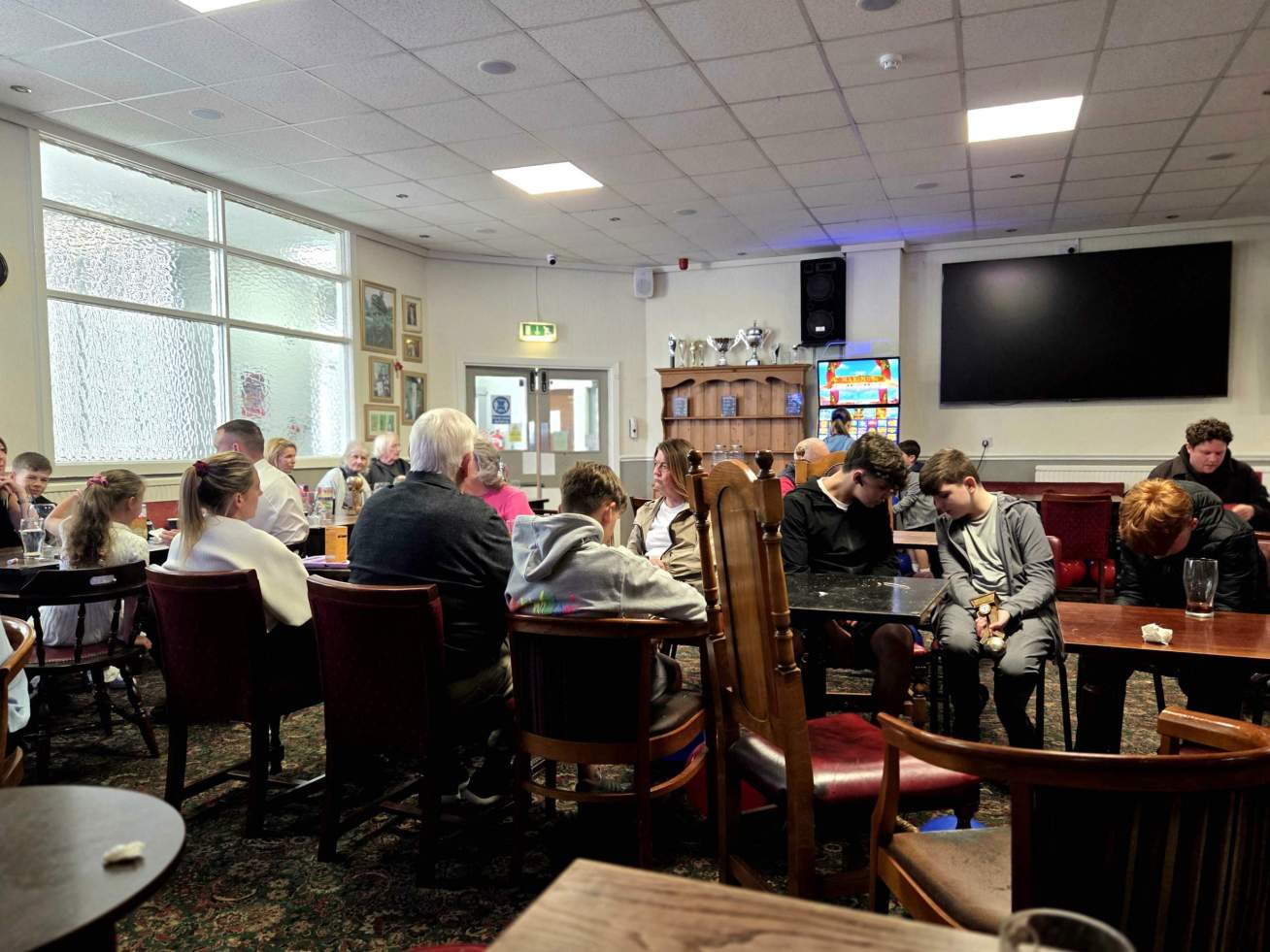
On national identity and how that feeds into their support for Restore, the men made the distinction – increasingly voiced in factions on the right, including by people of colour in these factions – that no one is against a civic nationalism that can be expressed through ‘Britishness’, but that is different from the ethnonationalism (not their word) when it comes to ‘Englishness’.
One offered the scenario that a man born in Britain to Pakistani parents was absolutely British, but couldn’t be said to be English – in the same way that if this person then went and lived in Pakistan, he couldn’t be said to be ‘Pakistani’. The multiple identities used by many children of immigrants – such as ‘British Pakistani’ (although, admittedly, not often ‘English Pakistani’) – passed the man by.
“The thing is,” the chap next to him said, “that we’ve got a chessboard. And, recently, all these other pieces and counters like Tiddlywinks have been put on the board. And we want to get back to playing chess.”
Sitting in the opposite corner of the cafe was Anne, a former NHS psychiatric nurse, who was born in 1940.
She’d had enough of all the by-election politics, she told us, while waiting for her omelette and chips. Still, Burnham had done a lot for the area over the years, both as Greater Manchester Mayor and as the former MP for Leigh. Farage was a “fake” who couldn’t be trusted. And Rupert Lowe was looking like a good bet.
Recalling how she used to walk around a bombed-out London as a child, Anne said she would now be too scared to visit the capital because of “all the groups of men” coming into the city.
She rarely puts the TV on these days, she said, tapping the phone next to her on the table. For a woman who has had enough of politics, she’s constantly engaged: watching a dedicated online channel covering the Iran war every day; as well as different GB News shows because “the BBC doesn’t tell you everything”. When we pointed out that GB News’ portrayal of events should also be questioned, Anne said she knew that. But she enjoys its Sunday politics show.
Out of the Mainstream
Areas such as Makerfield haven’t so much been passively ‘left behind’, but used and then abandoned to themselves. It’s time they were heard.
Andy Burnham has spoken of the failures of ‘trickle down’ neoliberalism, and that for people in communities such as Makerfield this has felt like more of a ‘siphoning off’ – of amenities, services, jobs, and opportunities.
The physical poverty of Orwell’s day has gone, but it has been replaced by a poverty of imagination and possibility.
Given this quiet desperation, we should understand how people were inclined to vote in the local elections for any challenger to a two-party system that has let them down.
Whether, as Makerfield’s MP, Burnham will be able to build something new in the area – let alone in the UK as a whole – is still to be seen. But it’s clear that neither Reform nor Restore could either restore or reform the constituency by pandering to prejudice.
The popular image of the ‘Red Wall’ conjures up a bulwark. But no one wants to be just a brick in the wall, and the far-right solution – building up fear of strangers and demographic change – will only diminish commerce and communication with the wider world.
Why reject the mainstream when, more than anything, Makerfield is crying to be let in.
Andy Burnham has warned Labour that his win is its “final chance”. A weekend in Makerfield shows why so many areas of the country like Makerfield have given up on calling for something, anything, to change. Yet, they will likely hold the key to the future direction of British politics in the years to come.
With thanks to Anna Schurer of North West Bylines