BOOM! Billionaires Punched in the Nose Over Paramount-Warner by State Enforcers, Unions
Yesterday, 12 states, led by California Attorney General Rob Bonta, filed a complaint asking a Federal judge to stop the $110 billion merger of Paramount and Warner Bros Discovery, which would otherwise be the largest combination of Hollywood studios in history. The states alleged this deal would put too much power in the hands of the billionaire Ellison family.
Then today, another shoe dropped. The Writer’s Guild East and the Writer’s Guild West filed another case opposing the deal, this one on grounds that it would give the Ellison’s too much power over workers in Hollywood. The complaint from the writers unions included statements from well-known creative power players in the tv and movie business, the people behind The Office, Spiderman, Stepbrothers, and so forth. And that’s not all. The states also filed for an emergency injunction to pause the deal, with the first hearing on Friday morning at 10am. More action could be coming.
In this piece, I’m going to explain what is happening, the arguments involved, and next steps. But make no mistake, this legal case is the most significant fight over corporate power and media we may see in this Trump term.
There’s more than just TV and movies at stake, though those are significant enough. Larry Ellison, who made his money founding database company Oracle, has reshaped Paramount’s CBS to be friendlier to his Trump, firing Stephen Colbert and killing stories on 60 Minutes critical of the government. If Paramount takes over Warner, the expectation is that Ellison will also refashion CNN into a conservative-friendly outlet.
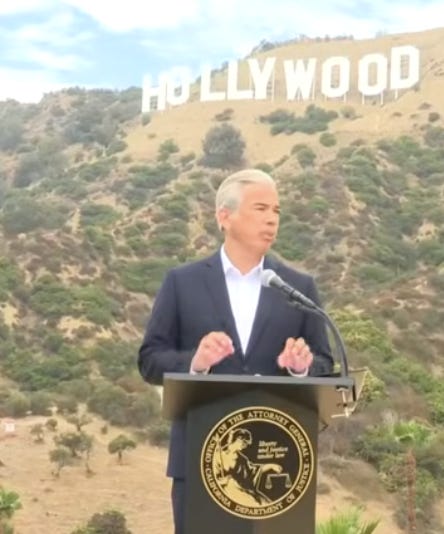
But the heart of the combination is the movie and TV business. And as I noted on Sunday, this deal wasn’t supposed to encounter political hurdles. Richard Rushfield at the Ankler reported that the Hollywood monied establishment never believed that real opposition to this deal could materialize.
When inklings of opposition from state officials emerged, the thinking was that Bonta wouldn’t dare act, that he was just making political noise to please Democrats mad over CNN. For instance, Puck’s Matt Belloni, a podcast host popular in the entertainment business who had earlier written, with questionable sourcing, that “Rob Bonta wants Paramount to sell CNN.” That dynamic has changed. Hollywood is surprised by the challenge, and Bonta, at his press conference, took a veiled shot at Belloni.
From the other side, opponents of the merger are quite pleased. Actor Mark Ruffalo, praised the case, as did New York City Mayor Zohran Mamdani, who made it clear that the deal would negatively affect NYC.
This case is unprecedented in more ways that one. The Federal Antitrust Division gave the green light for the deal against the wishes of staff, and actively lobbied for the merger with a public statement of support. As if that weren’t weird enough, state attorneys general have never challenged a merger this big and this political, but did so anyway. Moreover, the WGA has never filed an antitrust case to block a deal, and their claims on labor market shares seem like a new front in antitrust law.
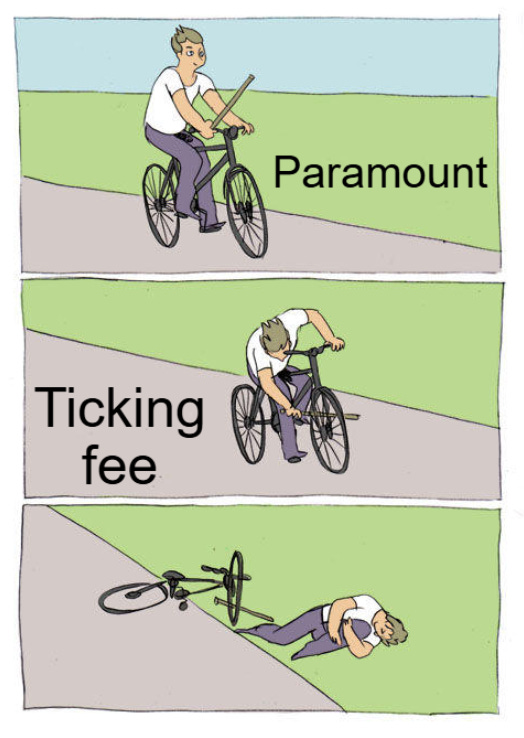
The deal is also structured oddly, with Paramount agreeing to pay Warner shareholders a “ticking fee” of $7 million a day, starting September 30th. Such a deal structure indicated remarkable confidence by the Ellison’s they could get this merger over the line in near-record time.
And yet, even when Bonta announced opposition yesterday, Wall Street bid up the stock of Warner, meaning that merger arbitrageurs looked at the case and thought that either the deal is still likely to close, or that Warner is likely to get a ticking fee, or both. So what happens now?
The States’ Case Against the Merger
Let’s start with the case itself. The state complaint is a pretty meat and potatoes argument, alleging that the market shares of the companies will lead to a reduction in output and higher prices for theater owners and consumers. (If you want all the documents on the docket, you can use this site, Courtlistener, which pulls them from the courts and posts them for free.)
The states argue the combination of these two companies will cut competition in three markets. The first is wide release movies, so these are movies that go into 600 or more movie theaters on their first weekend. The second are blockbusters, which are movies that have big budgets, stars, recognizable IP, and go into 3000 movie theaters or more. And the third are linear cable channels, things like TNT, CNN, the Food Network, the Cartoon Network, et al.
There are two ways to judge what’s called indirect market power, the first is raw market share thresholds. In terms of raw market shares, a merger is presumptively illegal if a company gets 30% of the market. It can be illegal if it gets less than 30%, and it can be legal the merger fosters more than 30%, but the presumption is 30%. For wide release films, Paramount-Warner would get 27% of the market, for blockbusters, it would be a little over 30%, and for linear cable viewership, it would be 34%.
The other way is to measure market share thresholds against concentration in the rest of the market. That is, if your merger rolls up 25% of a market, and there a dozen other players each with 5% of that market, it’s less of a threat than one firm having 25% of a market and the other 75% being controlled by one entity. Even though in both markets a company has 25% share, the competitive dynamic is very different. The metric to measure market shares against overall market concentration is known as the Herfindahl-Hirschman Index, or HHI, and you calculate it by squaring the percentage market share of each firm in an industry and summing the results.
If you do it by HHI, the situation looks much worse, because these are concentrated markets. For instance, just five studios are responsible for 95% of all blockbusters; if this merger goes through, then Paramount and Disney will control 60% of that. And blockbusters are the key to theatrical health, you can run a movie theater without niche art films, you can’t run one without the big movies.
So movie theaters are likely to get a much worse revenue split from the remaining four studios if this merger happens, because they’ll have less leverage. Disney cut the theater take when they bought Fox, and the head of the trade association for movie theaters, Cinemas United, has stated it clearly, saying that “studio consolidation is one of the biggest threats to exhibition” and has led to “increased costs for exhibitors and ultimately for the movie-going public.”
Specifically, theater owners have “declining leverage in negotiating reasonable terms with studios regarding distribution of movies” even before this merger, which will worsen the situation. Studios can “dictate the licensing fees, length of theatrical windows, scheduling, screen-placement of movies, and access to historic film catalogs,” and this consolidation will worsen the situation for them, and for consumers. Theaters are also often the anchors for public spaces like malls, which means that closures will hurt local businesses relying on foot traffic.
According to the states, a similar bargaining dynamic is true for cable. If this merger goes through, then Paramount and Disney will control 59% of basic cable in the U.S. You might scoff at basic cable, but Paramount generated $1.1 billion in free cash flow from these channels in the first quarter of this year; these are their cash cows for now, controlling content like March Madness and MLB games, as well as news. With a bigger portfolio of properties, they will have more bargaining leverage against pay-TV distributors and their threats to withhold content will be more powerful.
There are other arguments, such as mass layoffs, which I’ll get to. But for now, those are the arguments for why the deal is illegal. The states are still investigating, so they could update the complaint with new claims.
Paramount’s Counter
To litigate their side, Paramount hired a superstar antitrust lawyer, Jeff Kessler. This morning, he went on CNBC today to talk about the process and their thinking.
Kessler claimed that the deal, rather than reducing competition, will be “pro-competitive” because it will allow Paramount to create a rival to Netflix and Amazon Prime in streaming. Hollywood, he said, is a struggling industry. Any concerns about reducing output in theatrical production, he argues, should be taken care of by the company’s promise to make 30 pictures a year and keep them in movie theaters for at least 45 days without sending them to streaming or another distribution channel.
Kessler also said that Paramount believes so strongly in their case that they will take it to the Supreme Court if necessary, having hired conservative litigator Paul Clement. In fact, Paramount’s Makan Delrahim has hired seven different big law firms to litigate this case, and that’s consistent with his track record. Delrahim while at DOJ tended to shy away from litigation when the other side had fancy lawyers. With an unlimited budget now, he is buying all the fancy lawyers he can.
This dynamic shades media coverage, because most reporters will ask antitrust lawyers to fill them in on the details of the law, and now much of the antitrust bar is connected in some way to Paramount’s side. That is one reason, though not the only, you don’t hear any fancy antitrust lawyers talking about the rancid corruption of the Trump era, even though they never stopped gabbing about the politicization of the agencies under Lina Khan. Establishment antitrust lawyers really like money, almost as much as they like mergers.
The Labor Case Against the Deal
That said, there’s another serious complaint, which was filed by the WGA on behalf of writers. The complaint is here, and it’s worth reading. The writers allege that vertically integrated streamers engage in self-dealing to the disadvantage of writers, and that this combination will make it worse.
The WGA claims there are three markets in which the combined company will unfairly exercise market power to lower writer wages and limit their creative expressive output. The first is against writers for big budget movies, the second is against writers who write episodic TV series, and the third is against writers who have deals with studios to produce shows. In all three, the combined entity will control between a third and forty percent of the market for writers, more than enough to be illegal.
Moreover, the vertical nature of the firms, that they own streaming as well as production, leads to a situation where it’s easier for dominant firms to cheat writers out of residuals with artificially low intra-corporate payments. Paramount, for instance, is likely to structure it’s ‘payments’ to put a Paramount movie on Paramount streaming to the disadvantage of writers who get a piece.
The labor complaint is fascinating, but here are two quotes from writers that I find relevant. The first is from David Koepp, the screenwriter of Spider-Man, Jurassic Park, and Mission: Impossible. Here’s what he says about how Disney-Fox changed the market.
“The practical consequence [of the Disney-Fox merger] for screenwriters was immediate and categorical. Writers stopped submitting projects to Fox as had been our practice. Not because anyone issued a directive, but because the creative identity that made Fox a meaningful buyer had been absorbed into Disney’s priorities. Disney’s identity is clear: Lucasfilm, Marvel, Pixar, live-action remakes of animated films, and a small number of Fox legacy projects. An original adult thriller, a political drama, a mid-budget character study, none of those belong in Disney’s creative program, and every working writer understands that. The buyer that Fox represented did not migrate to Disney. It disappeared.”
And here’s Mike Schur, a writer, producer, and/or show runner for Saturday Night Live, The Office, Parks & Recreation, and The Good Place, on how the market in Hollywood no longer functions.
“Overall deals are, at their core, a competitive instrument. Previously, if a studio did not secure a writer with an overall deal, the writer, actively employed by one studio as a writer on staff, could walk across the street and develop a new show for a competitor. As consolidation has reduced the number of independent buyers and vertical integration has made cross-company sales increasingly rare, that competitive threat has materially weakened. The result is a market in which overall deals are offered less frequently, to fewer writers, on shorter terms, and at lower guaranteed compensation. This is at least in part because the competitive pressure that once incentivized studios to pay for exclusivity has been replaced by a market in which exclusivity is in effect already guaranteed by the consolidation itself, not because the work writers provide has become less valuable.”
“What I came to understand is that the studios had become so horizontally consolidated (through corporate mergers) and vertically siloed (the buyers incentivized to purchase shows only from their “hometown” studios) that the deal terms at which a seller was willing to sell, and at which an outside buyer was willing to buy, no longer overlapped. Even when both sides had an interest in making a show together and wanted to close the deal based on the creative package, no deal could be reached. I had never experienced this before and it signaled to me that something fundamental had broken in the market.”
How the Arguments Between Paramount and the States Will Play Out
The writers and states’ frame is different than Paramount’s. While Kessler argued the industry is struggling, in fact box office revenue is starting to go up now, as Gen Z discovers they really like going to the movies. The states point out the industry is “thriving,” which is actually true, even if it’s counter-intuitive.
As for Kessler’s view that the deal promotes competition by creating a streaming giant to compete with Netflix and Amazon, the states point out that even if that were true, legally speaking creating benefits in one market doesn’t mitigate harm to a different market. The Clayton Act says that mergers that may substantially lessen competition are illegal, it doesn’t have a balancing test. That said, Paramount will argue at some level that these aren’t necessarily different markets, that a movie is a movie is a movie, whether streamed or in theaters.
The states also think the 30 theatrical releases a year promise is unlikely to materialize, because of the massive debt load and logistical challenges of doing so many films with stars, IP, and big marketing budgets, all while conducting layoffs. They also point to the history of every other media merger, which reduced output despite promises to the contrary. When Disney bought Fox in 2019, on their very first call after closing, Disney’s CEO announced they would slash Fox’s theatrical slate by more than half. Over the next few years, Disney/Fox cut output by 52%, while other studios cut it by just 13%.
Similarly, after Discovery bought Warner, CEO David Zaslav took a bunch of shows off HBO Max, and chose not to release expensive films like the $80 million Batgirl to preserve tax advantages they could use to pay off merger-related debt. This one was especially nasty, because Batgirl was supposed to be good, but Warner spread rumors it was poor quality so as to justify shelving it. But it wasn’t just Batgirl, the output reduction was across the board.
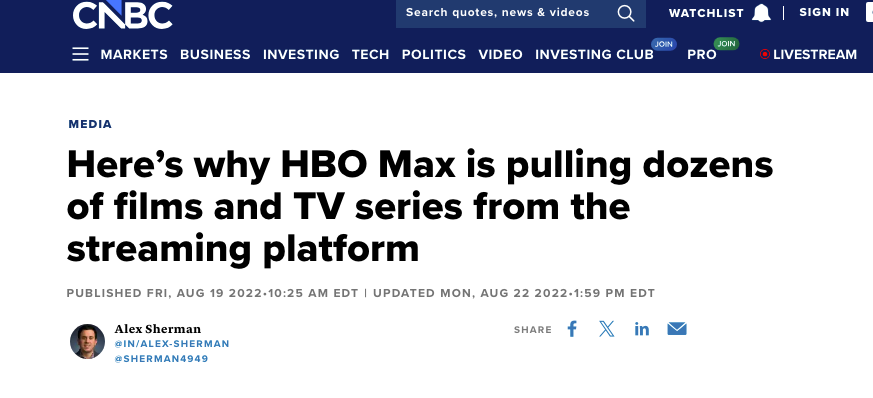
All that said, there are differences between the Disney-Fox deal and Paramount-Warner. I actually do believe David Ellison wants to make 30 movies a year. Their strategy sort of depends on it. I just don’t think they will, because of the debt load, the difficulty of the endeavor, their announced massive layoffs, and the general incompetence of Ellison, whose abilities seem concentrated in the important skill of having a very rich father. If there’s one ironclad law in Hollywood, it’s that no acquisition of Warner ever works out.
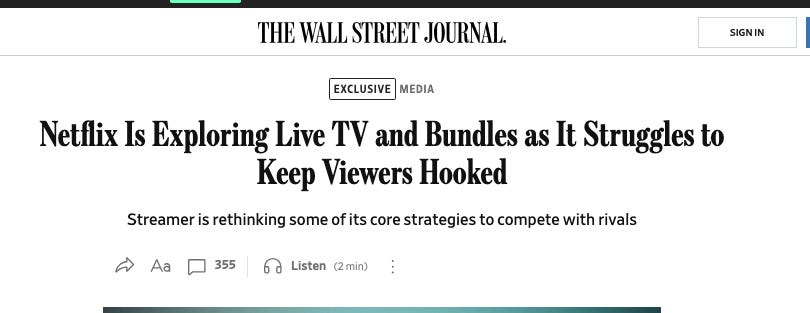
And streaming, which is the point of the merger, just isn’t a very good business. Wells Fargo is encouraging Disney to get out of Disney Plus, since the company would be more profitable if it just made and sold content. Even Netflix is struggling.
I should say, one argument that I’m surprised Kessler didn’t make on CNBC, though they will no doubt make it later, is that there is a lot of new competition in the market. In 2026, Amazon’s Project Hail Mary, Lionsgate’s Michael, Focus’s Obsession, and A24’s Backrooms have all been in the top ten grossing pictures. That is likely an anomaly; the major studios have dominated every other year in the past decade. Entertainment is weird, sometimes you get a Barbenheimer, but these are one-offs. Still, it’s a real phenomenon right now.
These arguments aside, there’s an important process question lurking. Can Paramount simply take over Warner Bros Discovery while this case is ongoing? If so, they’d start layoffs, green lighting or canceling movies, restructuring CNN, and so forth. Warner CEO David Zaslav would get his billion dollar payoff, and it’ll be hard to unwind, even if the deal ultimately gets blocked.
The Process of Getting a Temporary Injunction
I’m used to covering Federal cases, and in those the defendants and the government agree on a schedule, and they agree not to close the deal before trial. In this case, Paramount has been hostile, refusing to hand over documents, and saying they will complete the deal regardless of what happens later this month.
So last night, the states asked for a temporary restraining order to stop a closing from happening. The hearing for the TRO is scheduled on Friday at 10am. To win a TRO, it’s a bit like a mini-antitrust trial. States will have to show a likelihood of success on the merits, meaning they have to convince a judge there’s a pretty good chance they triumph at trial. They must also demonstrate there is a substantial risk of immediate irreparable harm if the transaction goes through, that the burden on the plaintiff outweighs that on the defendants, and that the public interest weighs in favor of the TRO.
I’ve already gone over the case itself. The states are claiming that the harms will be irreparable and instant, because the companies will immediately start layoffs if they take over. Moreover, they will start green lighting and canceling movies and shows, meaning that artists will be affected instantly. And they will begin destroying content, as Discovery did when they took over Warner. These claims are likely true, Ellison has made it clear he wants to have one streaming service, not HBO Now and Paramount Plus. So changes will happen quickly.
Paramount’s main approach will be to say that the underlying case is weak, and that there is no likelihood of success on the merits. They will also argue that the ticking fee of $7 million a day is a true hardship. Beyond that, they are playing an intimidation game, implicitly threatening the judge with an appeal all the way up to a conservative Supreme Court.
I do not find Paramount’s hardship claims persuasive, as it’s a deal they agreed to in order to beat Netflix in a bidding contest where political contestation was a big part of the battle. There are other arguments, some outlandish, but I’ll stop here.
Technically, a TRO lasts for 15 days, at which point the states would have to ask for another TRO for another 15 days, and then they’d have to go to a hearing to get what’s called a preliminary injunction until the actual trial. But usually a judge, if they grant a TRO, will tend to tell the defendant “gee it’d be really nice if you would agree to pause closing until the trial,” and companies tend not to like annoying the judge hearing their case. Then again, Kessler said that Paramount is willing to appeal the TRO, so who knows?
Judgement Day
There’s another very important question, perhaps the most important question in every single antitrust case. Who is the judge? And while I’d like to tell you I know, I don’t. There is already a class action antitrust claim against the merger, being heard by Judge Araceli Martínez-Olguín, an immigrants rights advocate appointed to the bench by Biden. Usually related cases are assigned to one judge, so that will likely happen here.
How would Martínez-Olguín rule?Martínez-Olguín is familiar with antitrust, having overseen the Black Knight/ICE merger settled by the FTC under Lina Khan, and ruling against a plaintiff in a right-to-repair case, though that was somewhat about dealing with new precedent. Martínez-Olguín was fair, but she likes settlements. So even though it didn’t go to trial, the Black Knight settlement was fine, since the company had to sell off its crown jewels.
It’s also worth noting that there are oral arguments on Thursday in the consumer class action case against the deal, so we’ll know a bit more then. That said, while it’s the same general topic, I did read that complaint, and honestly found it to be quite shoddy, so I don’t know how much we’ll learn from that particular hearing.
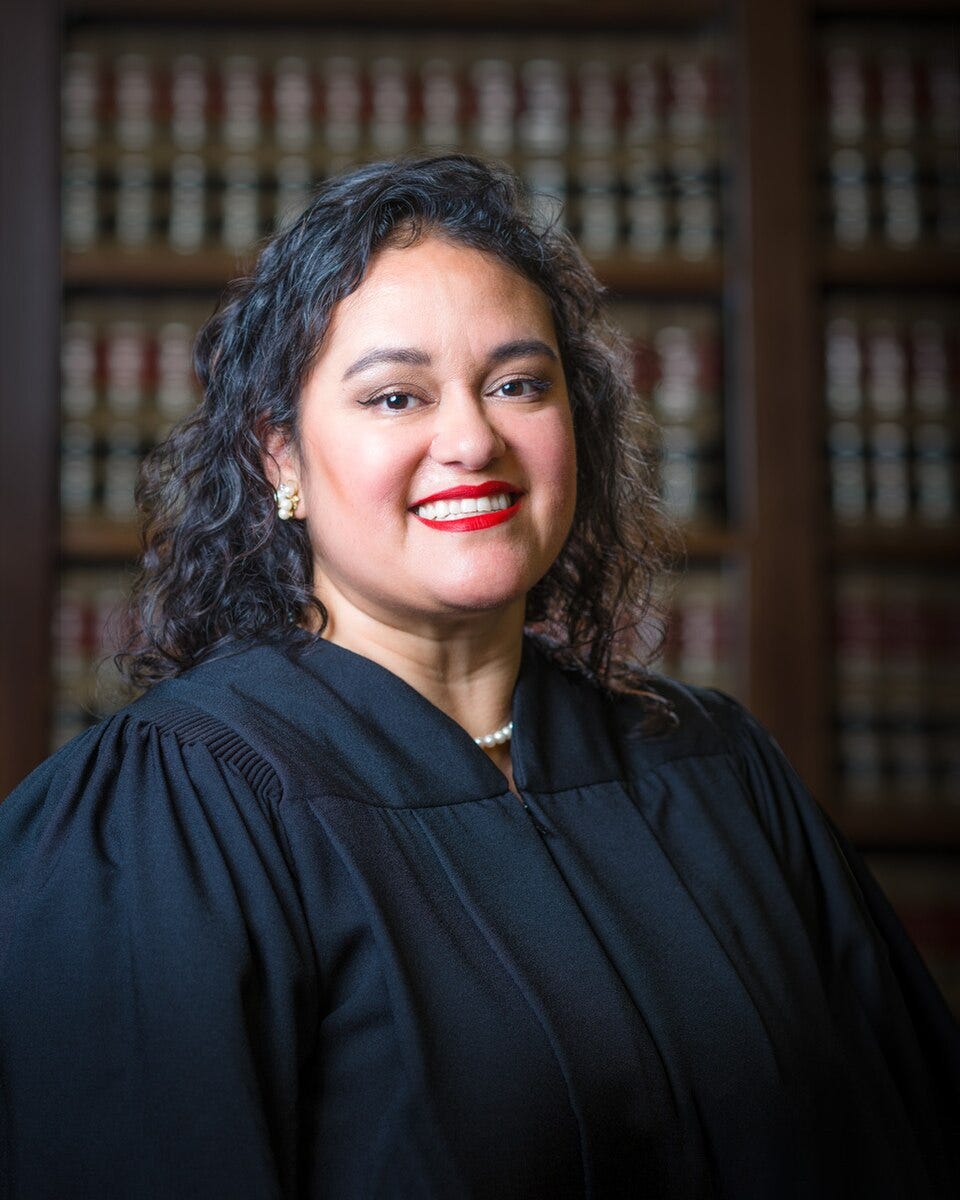
That said, even though it’ll probably eventually go to Martínez-Olguín, the case was actually assigned to a different judge, Casey Pitts, who is a labor lawyer appointed by Joe Biden. I would not see Pitts as a good draw for Paramount, as he heard the states’ claims on Juniper-HPE and is well-versed in how the Trump Antitrust Division operates.
Either way, the raw corruption and partisan nature of this deal will be hard to ignore. Paramount is trying to accuse the states of being political, but again, that’s tough to square with the facts.
A Compressed Timeline
Most establishment antitrust lawyers and Wall Street arbitrage investors are jeering at opposition to this deal. On CNBC yesterday, David Faber couldn’t help but snicker at what he perceived to be the feeble nature of the arguments. As I noted, arbs bid up the stock, indicating they are betting it’ll close. And Kessler said he believes the states won’t even be able to secure a temporary injunction to pause the merger while the case goes to trial, because it’s that weak.
It’s hard to see that side, however, as anything but talking their book. After all, the Antitrust Division, who are a cautious bunch, did want to challenge the deal. William Kovacic, a former chairman of the F.T.C. and a well-respected Republican, said more objectively that “I think the states’ case is strong enough to create real headaches for the parties.” And the New York Times reported that “Corporate deal makers have told DealBook that they’re increasingly anxious about states’ antitrust scrutiny, and some say they have passed on potential transactions over those concerns.”
So to say that it’s a totally flimsy case is an overstatement. It is not a slam dunk case, but it looks fine to me. And the Writer’s Guild complaint adds to the opposition in a serious way.
In fact, the reason for the jeering is actually a result of the normalization of corruption. Despite the multi-trillion dollar deal wave we’re in, there are no other major merger challenges happening, so there’s no frame of reference except non-enforcement. While everyone else breaks the law in mega-mergers, having one case open seems arbitrary. Why go after Paramount-Warner? The Ellison’s likely feel singled out. But from a more rational perspective, stopping one bank robbery is good, even if there are many other bank robberies that aren’t being stopped. An argument “well my friends are all robbing banks, you’re being political by not letting me do it too because you’re the one cop I can’t pay off” kind of has a vibe to it, even if it is intrinsically insane.
Yet, that’s where we are. America has seen better days. On other hand, maybe Hollywood standing up against consolidation, and Bonta and 11 other state attorneys general following through to protect this industry, shows that America is also waking up.
Thanks for reading! Your tips make this newsletter what it is, so please send tips on weird monopolies, stories I’ve missed, or other thoughts. And if you liked this issue of BIG, you can sign up here for more issues, a newsletter on how to restore fair commerce, innovation, and democracy. Consider becoming a paying subscriber to support this work, or if you are a paying subscriber, giving a gift subscription to a friend, colleague, or family member. If you really liked it, read my book, Goliath: The 100-Year War Between Monopoly Power and Democracy.
cheers,
Matt Stoller