Death Valley’s Badwater 135 just got harder. Meet the SoCal runner chasing a 19th finish
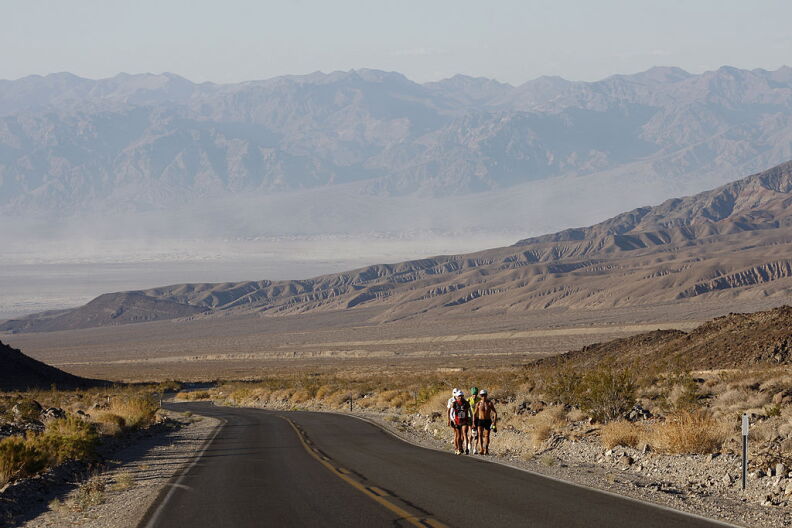
When the full moon rises over Death Valley tomorrow night, 98 endurance athletes will begin their 135-mile run across the scorching desert before going over two mountain ranges and finishing up a third at Mount Whitney Portal.
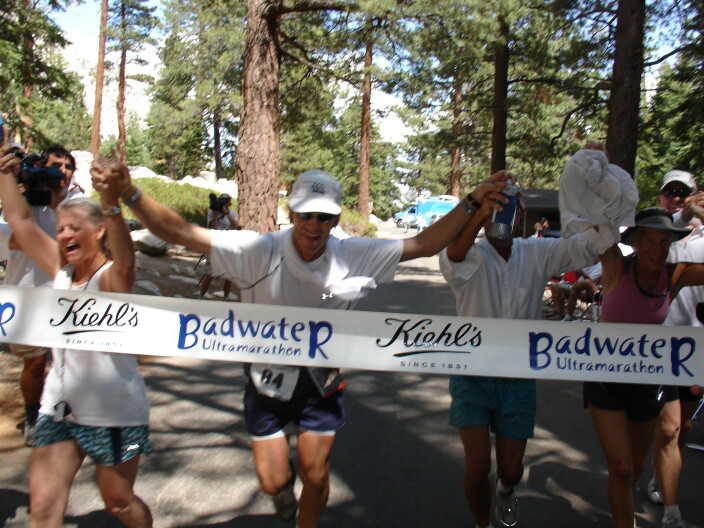
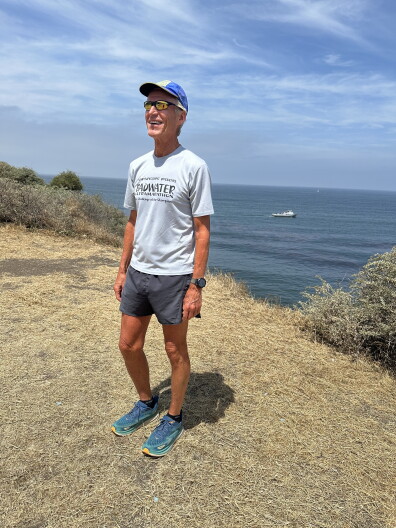
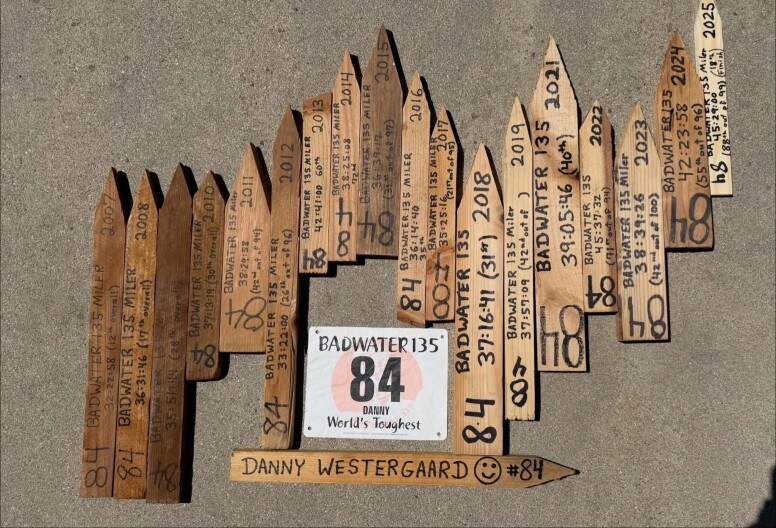
Southern California has always supplied a good portion of the runners taking on the challenge of the Badwater 135 ultramarathon, and this year’s crop of locals includes Danny Westergaard, 67, holder of the longest streak of finishes. He’s completed the race 18 consecutive years. Whether he’d finished his 19th is a big question.
And even as the field of runners in this invitational race gets more and more competitive every year, Westergaard keeps getting asked back.
‘It’s a masochist thing’
“I’m foolish enough to keep signing up as long as I can get in, and as long as I’m able to make the cutoffs … every year I’m thankful that I get in,” he said.
He used to run every day when he was younger and could recover faster. Nowadays, he runs about every other day.
“Typically, I’ll do, like, maybe 10 miles, but at a slow pace, and then on the weekend I’ll try to do something longer,” he said.
His last race was 227 miles of a 250-mile race. He missed one of the cutoffs, which are landmarks the runners must pass in a certain amount of time in order to continue on. Cutoffs will be an issue this year at Badwater.
The race got harder this year
Despite his 18 consecutive Badwater finishes, Westergaard has his work cut out for him to extend his streak. That’s because the long-time 48-hour deadline to cross the finish line has shrunk to just 45 hours.
“It’s a definite concern, the 45 hours,” Westergaard said. His first time running Badwater, he finished 12th in 32 hours and 22 minutes. Last year, it took 45 hours and 29 minutes.
There is an additional cutoff imposed by the National Park Service, which operates Death Valley National Park. Runners must pass the 2,000-foot elevation sign on the run up to Towne Pass — at about the 50-mile mark of the race — within 14 hours of starting or they’re out. So no matter the heat, participants have got to persevere.
“And especially if you have a bad spell in there, which a lot of people do at some point, all your downtime, the clock never stops. So if you’re sitting, you know, sick trying to recuperate, the clock is still ticking. So you have to find a way to keep moving,” he said.
Westergaard is starting with the first wave of somewhat slower runners at 8 p.m. tomorrow so he has more time to get past the 50-mile cutoff. Other, faster runners start in waves at 9 and 10 p.m. Temperatures are in the high 90s at night before spiking up to well over 115 degrees in the daytime.
And once he makes it out of the desert, there is the final 13-mile steep slog up the mountain to Whitney Portal and the finish line. Some runners can only power hike the road as they near the end of the race.
Beyond the physical and mental challenge, the logistics of getting yourself and your crew safely across the desert heat and mountain climbs makes Badwater 135 an especially difficult race.
How to conquer Badwater 135
Westergaard is a retired aerospace engineer from Palos Verdes Estates — super organized guy — and after 18 consecutive finishes, he and his crew chief Jennifer Drain are dialed in.
He’s also got an experienced crew including his daughters Madison and Meagan. They follow him in a rental van as he runs, and they can also run with him as pacers.
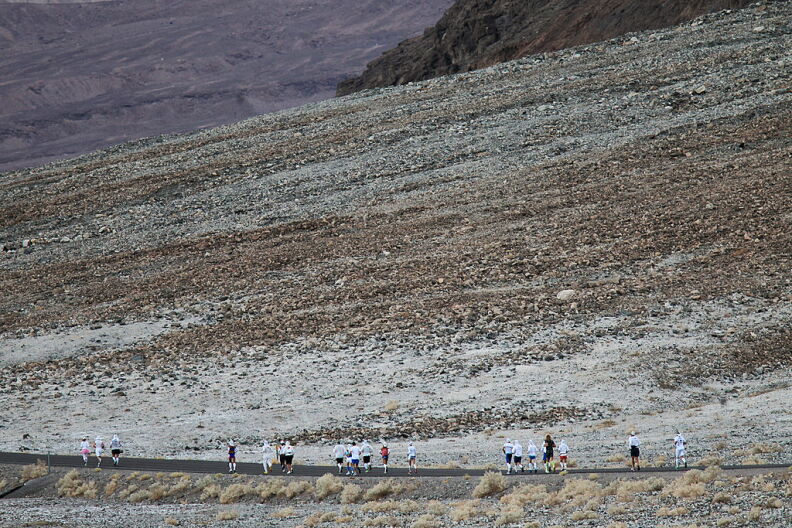
The van stops every mile or so and it’s like a Formula 1 pit crew, offering ice, food, energy gels, electrolyte drinks, a fresh shirt, or anti-chafing cream to put down the shorts or any place else that might rub raw in the heat. And then there is his own special recipe made from a sports energy drink powder.
“We’ll do a paste, like a pancake batter. And we put it in these 5-ounce flasks, And I’ll just take a shot of it. It’s great calories and great carbs and protein,” Westergaard said.
He also eats real foods during the race — fish, fruit, watermelon, veggie roll-ups with hummus, sweet potatoes. The crew also has to eat so that has to be purchased in advance and put on ice.
And yes, there is ice, at least 100 pounds of it.
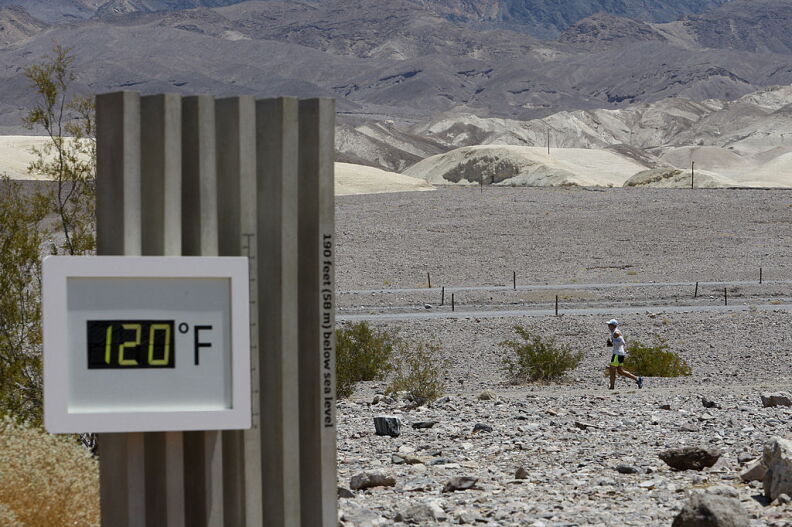
“We’ll bring one big cooler just full of ice ’cause ice is king out there. It’s like gold. It’s so valuable,” he said.
They also pack blister supplies, extra shoes, headlamps and safety vests — the list goes on and on. All in all, costs for the race can run up to thousands of dollars.
For the past month, Westergaard has been heat training, not just while running on the roads, but baking in his gym’s sauna, for hours at a time.
“That’s a masochist thing, but the harder the training, the easier the race,” he said. “So the more torture you can put yourself in, and simulate race conditions during training, then the more acclimated and prepared you’ll be for the race.”