As New York Swelters, Fight Heats Up Between Con Ed and Battery Storage Developers
Battery energy storage facilities could improve grid efficiency and affordability while reducing reliance on fossil fuels. But an ongoing regulatory battle with Con Edison reflects larger challenges concerning New York City’s grid.
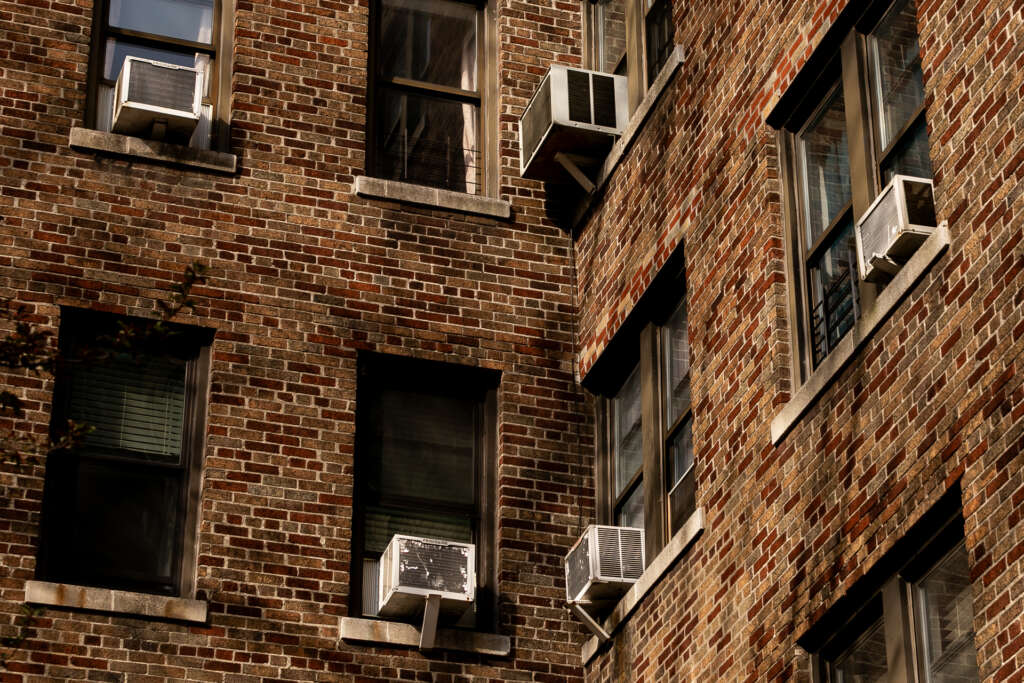
Across the five boroughs, air conditioners are on full blast as the city sweats through a scorching heat wave.
Unfortunately, moments like these are when New Yorkers are most at risk of losing power or paying elevated prices to stay cool. For this reason, some are calling for the city’s electrical grid to open up to more battery energy storage systems (BESS), which could provide relief during these periods of high demand.
“This is a time when we should be embracing technologies that relieve some of that strain rather than hindering them,” said Patrick Robbins, director of the Utility Customers Association, an advocacy group created at the end of last year.
Large-scale battery facilities can use electricity from the grid to charge during periods of low demand, such as overnight, and then discharge energy to supplement the grid when demand is high—like during a heat wave. To Robbins, the goals of a cleaner grid and cheaper energy prices go hand in hand.
Recently, however, battery developers say that Con Edison has made it excessively cost-prohibitive for them to hook new systems up to the grid. Con Ed argues these facilities can cause large peaks in energy usage while they charge, and that developers should pay for costly upgrades so as to not impact customers’ bills.
Bill Acker, executive director of NY-BEST, the state industry trade organization for energy storage, says the state’s standard review procedures for new projects already limited these expected peaks—to which Con Edison added new, unnecessary buffers as part of a policy change last year.
Battery systems have the ability to charge at staggered times, which could allow for greater hosting capacity and grid efficiency, Acker argues, rather than the peaks Con Edison projects.
“In New York City, utilization of the grid is typically less than 50 percent,” he said. “Going forward, we believe that we need a much more intelligent grid that incorporates energy storage and other flexible assets.”
In response to the ongoing debate, City Councilmember Sandy Nurse sponsored a resolution in April that calls upon the state’s Public Service Commission to roll back Con Ed’s new costlier interconnection policy, so as not to constrain BESS development.
“To avoid blackouts in moments like this, we need to get more renewable energy flowing into our grid,” said Nurse. “Con Edison is standing in the way of progress by charging exorbitant fees to the battery energy storage systems that help solve this problem.”
One of the resolution’s co-sponsors, Councilmember James Gennaro, also introduced a bill that would amend the city’s fire code to waive restrictions on the installation of small-scale BESS on residential properties, outdoors or in garages. The bill would also expedite permitting for medium-scale energy storage systems.
Gennaro told City Limits that “expanding safe battery energy storage is an important part of building a cleaner and more reliable grid.”
“We can protect public safety while also making it easier for New Yorkers to adopt technologies that strengthen our grid, reduce emissions and improve resilience during extreme weather,” said Gennaro in an emailed statement.
Large-scale battery charging still produces carbon emissions, since the energy grid in New York City primarily derives from fossil fuels, largely due to transmission constraints compared to the rest of the state.
Even so, BESS proponents say their expansion could reduce reliance on old “peaker” power plants that bolster the grid during high-demand periods, and which burn fossil fuels inefficiently. The state has for years tried to retire its network of peakers, which are associated with poor public health outcomes, such as pediatric asthma, in disadvantaged communities.
For this reason, residents of areas like the South Bronx have embraced new BESS in their neighborhoods. According to Leslie Vasquez, an organizer with The Point CDC, Hunts Point residents have engaged positively with NineDot, one of the largest BESS developers which is opening three facilities in the area.
“Battery storage allows us to not depend on the usage of power plants that keep polluting our air, especially now in the peak of the summer heat,” said Vasquez.
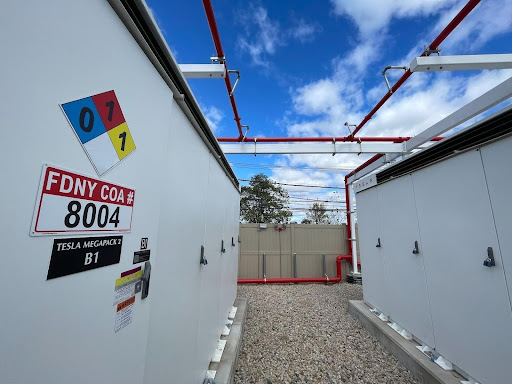
Not all city residents are pleased with battery facilities, however. Several proposals for BESS sites in neighborhoods in Queens and Staten Island spurred protests and contentious town hall meetings earlier this year, with residents citing fire safety concerns and property value anxieties.
Although no BESS-related fires have been reported in New York City, which currently hosts 84 active facilities, there have been other cases of lithium-ion battery fires elsewhere in the state that burned for days on end.
BESS developers are petitioning the PSC to restrict Con Edison from applying its “two-step test,” which it began using last year to determine the costs of new grid connections. Under the policy, if Con Ed determines a project could strain local grid capacity, the developer is required to pay for the infrastructure to accommodate it.
This could cost some projects’ entire budget, rendering them infeasible, developers say.
A spokesperson for Con Edison told City Limits that rapid growth in battery systems has created new challenges, including the potential for overnight peaks for local substations. They said they must reasonably plan for new projects to move forward once they carry out an interconnection agreement—the contracting process by which new power generators connect to the grid (though battery developers argue that, realistically, not all of those projects will be carried out).
“The objective is not to slow deployment, but to ensure a balanced pace of growth that strengthens reliability, maximizes customer benefits, and avoids unnecessary infrastructure costs,” said the Con Edison spokesperson in an emailed statement. “Con Edison remains committed to working with developers, policymakers, and regulators to expand storage in ways that support New York’s clean energy goals while maintaining reliability and affordability for customers.”
The City of New York filed comments in May in support of NY-BEST’s petition, according to PSC filings.
New York State aims to reach 6,000 megawatts of energy storage capacity by 2030. State-level data show that only 16.3 megawatts were installed this year, compared to 57.6 megawatts in 2025 (the cumulative total completed is around 545 megawatts).
More capacity is contracted: Con Ed stated in March that it had 1,000 megawatts of storage either operating on the grid or with an interconnection agreement in place.
But Acker told City Limits that due to the company’s policies, developers halted several projects originally slated to be up and running this summer.
On Thursday, as temperatures climbed for the second day, Con Edison asked customers in the northwest section of the Bronx and the northern tip of Manhattan to conserve energy while company crews repaired equipment, and later had to turn off power in parts of Riverdale.
To reach the reporter behind this story, contact Casey@citylimits.org. To reach the editor, contact Jeanmarie@citylimits.org
Want to republish this story? Find City Limits’ reprint policy here.
The post As New York Swelters, Fight Heats Up Between Con Ed and Battery Storage Developers appeared first on City Limits.