Another drug manufacturer settles with Oregon, dozens of states over price-fixing allegations
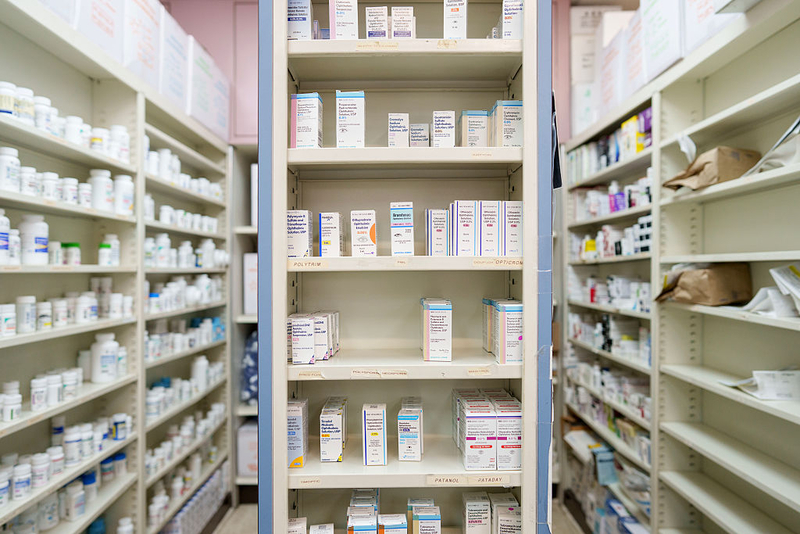
Medications are stored on shelves at a pharmacy in Los Angeles. Oregon’s attorney general and other state attorneys general have sued dozens of generic drug companies during the last decade, alleging their executives coordinated on price fixing schemes that have kept some drug prices artificially high for consumers and limited competition. (Photo by Eric Thayer/Getty Images)
The fifth pharmaceutical company sued by Oregon’s attorney general and dozens of other state attorneys general for violating federal antitrust laws in the last decade agreed to settle, this time for nearly $30 million.
Oregon Attorney General Dan Rayfield announced Wednesday that generic drug manufacturer Glenmark, accused of participating in an elaborate price fixing scheme with other manufacturers to inflate prescription drug costs for consumers and limit competition, will settle for $29.6 million. Oregon’s share of the settlement is $316,000, and Oregonians who purchased drugs manufactured by the company and several others between May 2009 and December 2019 could be eligible for settlement dollars.
“Glenmark was working with other drug companies to keep prices artificially high, and Oregon families paid for it every time they picked up a prescription. This is money out of people’s pockets for medications they needed,” Rayfield said in a statement
Rayfield’s predecessor, former Attorney General Ellen Rosenblum, joined three major, multistate antitrust lawsuits against Glenmark and dozens of pharmaceutical companies between 2016 and 2020. All of the suits were brought by state attorneys general in U.S. District Court in Connecticut.
One of the suits, from 2020, is expected to go to trial soon. Four other pharmaceutical companies have settled with Oregon and the states over the decade for a total of nearly $67 million.
Glenmark agreed as part of its settlement to cooperate in the ongoing multistate suits, which began with multi-year investigations and a database of over 20 million documents, phone records, sales records and interviews with corroborating witnesses in the industry, according to Rayfield’s news release.
That includes evidence that executives across companies met with each other for parties, golf outings and “girls’ nights out” to make illegal agreements to keep prices artificially high.
Rayfield last year helped to secure a $9.25 million settlement from two testosterone replacement gel manufacturers involved in drug-price fixing and in January filed suit against six of the nation’s largest pharmaceutical companies and pharmacy benefit managers in Multnomah County Circuit Court for conspiring to artificially inflate insulin prices and other critical diabetes medications for years.