AIPAC, AI, Crypto, and Gambling Are Hiding Their Big Election Spends
Republican Rep. Thomas Massie was decisively ousted on Tuesday night in his Kentucky primary, a win for President Donald Trump, who had launched an all-out attack on the congressman for his role in pushing for the release of the Epstein files. But in Pennsylvania, the left had a lot to celebrate. Chris Rabb won by nearly 15 points in Philadelphia in a major win for progressives. And Bob Brooks, a retired firefighter and union head, sailed to victory with the support of both the left and moderates.
Mysterious super PACs with ties to Republican donors poured millions into influencing the election results in both states with varying degrees of success. In Kentucky, AIPAC’s super political action committee and two other groups backed by pro-Israel donors spent more than $15 million in opposition to Massie or in support of his opponent, according to Federal Election Commission reports released through Tuesday.
In Pennsylvania, advertisements from Lead Left — a super PAC that reportedly has ties to Republican donors — dropped ads attacking two of the candidates as not progressive enough, leading to speculation that Republicans were trying to prop up a weaker candidate for the general election.
This week on The Intercept Briefing, host Jessica Washington and politics reporter Matt Sledge break down the contentious primary races, the record-level campaign spending and how obscure groups funding the midterm elections are hiding donors’ tracks.
“Groups can kind of game campaign finance deadlines and create super PACs to funnel money to other super PACs so that reporting deadlines are missed and use these ‘pop-up super PACs’ to ensure that ordinary voters never find out who is funding ads before a campaign happens,” says Sledge. “Sometimes there’s even a second layer of pop-up super PACness where those bland-sounding groups send money to other bland-sounding groups. God help you if you’re an ordinary voter trying to track all this money.”
The consequential U.S. Supreme Court decision in Citizens United 16 years ago has allowed courts to chip away at campaign financing restrictions. “Now here we are where any industry that’s facing regulation or any donors who support an unpopular cause can really just open the spigots and try to throw primaries their way,” adds Sledge.
Certain industries have gotten smart about how to hide where the money is coming from. “Ordinary voters don’t generally like crypto, AI or gambling. They may tolerate it at a maximum, but they’re not motivated by the idea of electing pro-crypto, pro-AI, pro-gambling people,” notes Sledge. “But all of these industries have realized, ‘OK, we can use super PACs that run ads that have nothing to do with our industry and get our friends elected to Congress, and they are going to remember that we spent a lot of money on their races.’”
For more, listen to the full conversation of The Intercept Briefing on Apple Podcasts, Spotify, YouTube or wherever you listen.
Transcript
Jessica Washington: Welcome to The Intercept Briefing. I’m Jessica Washington, politics reporter at The Intercept.
Matt Sledge: And I’m Matt Sledge, another politics reporter at The Intercept.
JW: Today, we’re going to dive right in because I know we’re both exhausted. We were both up late covering the Kentucky and Pennsylvania primaries. Matt, we’re speaking Wednesday morning, fresh off of that Kentucky primary election, where President Donald Trump endorsed Republican Rep. Thomas Massie’s opponent.
Massie decisively lost his race. Is this proof that despite inflation, gas prices, the war in Iran, Trump is still a kingmaker, or I guess in Massie’s case, a hangman?
MS: Certainly when it comes to the Republican Party and intraparty politics, some people thought Massie might pull this out, and instead it was a pretty humiliating defeat for a long-term incumbent in the House.
“This is a party-on-party fight. Trump took out a guy who votes conservative nearly all the time.”
But you do have to step back a little bit and remember, this is a party-on-party fight. Trump took out a guy who votes conservative nearly all the time, and it’s a safe Republican district. So he spent a lot of political capital taking out one Republican to replace with another Republican, essentially because he was mad about the Epstein files.
JW: The Epstein files is an interesting part of all of this because Thomas Massie fought so hard to get the Epstein files released. We talked about it on the podcast with one of the attorneys for some of Epstein’s survivors, and it did seem like an issue that was breaking out politically.

Democrats have been speaking about it. I actually heard at the Center for American Progress’s event on Tuesday, House Minority Leader Hakeem Jeffries actually spoke about the Epstein files and talked about it as a top issue for Democrats. So we know this is something that they are trying to make an election issue, but it doesn’t seem like it worked for Massie. Why do you think that is?
MS: I think it’s because it cut against the president so much and, just in the larger picture, enraged the president and turned him decisively against Massie. They had their problems before. I think it was hard for Thomas Massie to argue in his district that getting the Epstein files released was a great coup but also that it didn’t harm the president, because it clearly did harm the president politically. Ultimately, the voters in his district decided that helping the president was more important than anything else.
JW: We also know that pro-Israel groups poured money into this race as well to try and defeat Thomas Massie. Is there anything that you can say about that?
MS: Yeah, it was a lot of money. It was over $15 million from two explicitly pro-Israel groups, super PAC affiliated with AIPAC and then a Republican pro-Israel group. Then also there was a kind of special purpose-created super PAC that was funded in large part by pro-Israel donors. So this was the most expensive House race in history. A huge percentage of that spending came from donors who were motivated by the issue of Israel.
Massie has always opposed foreign aid in general, but I will say he has seemed to take special delight in tweaking supporters of Israel. Obviously that is a minority position within the Republican Party, so these groups came for him, and they were successfully able to help the president oust him.
JW: We’re going to talk a little bit more about how super PACs are hiding where their money is going in this election. But before we do that, I wanted to touch a little bit more on Democratic primaries from last night. So Pennsylvania had some big primaries. Are there any top lines from that race you want to share?
MS: I wasn’t following Pennsylvania as much, but of course, everybody was watching that race in Philadelphia, where Chris Rabb was able to pull out a victory. That’s a huge win for the Democratic Socialist wing of the party. He was up against a more establishment Democrat, and it shows that there is this really energized cohort within the Democratic Party that’s really excited to elect progressives.
JW: As I mentioned at the beginning of this podcast, I was up covering that race. One really interesting thing, aside from the Philadelphia primary, was in Pennsylvania 7, the Pennsylvania governor, Josh Shapiro, ended up backing — really heavily backing — Bob Brooks, one of the more progressive candidates in that race. We also saw Bernie Sanders backing him and the Working Families Party. So we saw this coalition effort between more mainstream center-left and progressives which is obviously different than what we saw in Philadelphia, but it’s interesting to see how those two coalitions could work together in Congress.
And Matt, I want to talk a little bit more about how super PACs are operating in this race. You have a new piece out this week that gets into all of that. So it’s about groups that are funding the 2026 midterm races. You looked at a dizzying array of players who are throwing money into this election cycle.
Before we get into some of those players and the issues they’re pushing, can you set the stage for us? How would you describe the current campaign finance landscape?
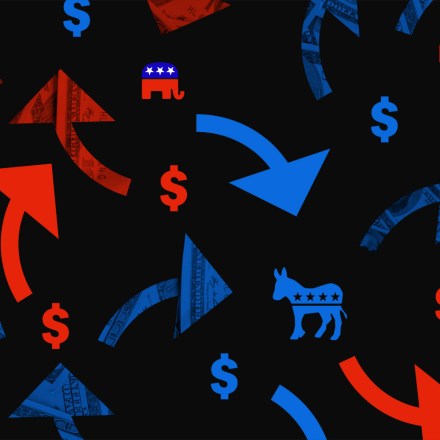
MS: It’s just kinda anything goes, and we’ve seen this gradual and then not so gradual evolution from the Citizens United decision in 2010, which opened the doors for allegedly independent spending on elections. The courts have just chipped away at whatever protections there are. Then the Federal Election Commission (FEC) has refused to get in the way of some pretty questionable behavior.
Now here we are where any industry that’s facing regulation or any donors who support an unpopular cause can really just open the spigots and try to throw primaries their way. A lot of time, they’re doing it in ways that cover their tracks a little bit, and they’re running ads that have nothing to do with their chosen issues.
JW: I want to get into the history of this, how we even got there. Citizens United is, I would argue, a boogeyman, not just for the left, but anyone who cares about democracy at all. Can you remind us how that SCOTUS decision really changed the landscape for how campaigns are funded and how we’re seeing that evolve in this election cycle?
MS: It is a boogeyman on the left and elsewhere, but I would say a boogeyman for good reason. A truly significant Supreme Court decision that basically said, individual candidates running for office, we can still limit, how much they’re raising and through that, how much they’re spending on elections, but these allegedly independent spenders, groups like super PACs, can spend as much money as they want on a race because they have no connection to the candidates.
There is no danger of corruption, and that’s really what we’re interested in policing here. We don’t want to police free speech. It essentially equated political spending with free speech, which a lot of people would take issue with.
One of the things that has been really interesting, I say interesting with some chagrin, as this system has evolved, is that we are now in this place, and I wrote about this in my recent article, where groups can kind of game campaign finance deadlines and create super PACs to funnel money to other super PACs so that reporting deadlines are missed and use these “pop-up super PACs” to ensure that ordinary voters never find out who is funding ads before a campaign happens.
Some of these newer industries that are getting in on the campaign spending game, like crypto and artificial intelligence, are also setting up entire networks of super PACs, sometimes a mama or a papa super PAC, and then a Democratic-affiliated super PAC and a Republican-affiliated super PAC so that both donors can channel their money to one party affiliate and to make it a little harder for voters to track where all the money is coming from.
JW: I really recommend that people go check out your piece. I think it’s an amazing glossary on what’s happening in our elections and the aftermath of Citizens United 16 years later.
This isn’t just about AI or crypto, as you’ve mentioned. There’s also AIPAC. The Intercept has reported extensively on the American Israel Public Affairs Committee, which has been spending directly on campaigns for a little while now.
In 2024, our colleague Akela Lacy wrote, “AIPAC embraced a new strategy. It would use its vast funds to oust progressive members of Congress who criticized human rights abuses by Israel and the country’s receipt of billions of U.S. dollars in military funding.” Matt, how is AIPAC operating this election cycle?
Given that there’s growing opposition on both the left and the right to Israel’s genocide in Gaza and influence in U.S. politics, is the group changing its tactics?
“AIPAC’s brand is in the dumps. Israel’s brand is in the dumps with Democrats as well. ”
MS: AIPAC’s brand is in the dumps. Israel’s brand is in the dumps with Democrats as well. You see even very pro-Israel Democratic politicians saying, “I’m not taking AIPAC money.” What the group has done is really make use of these pop-up super PACs. So it’s no longer the United Democracy Project, which is AIPAC’s primary super PAC affiliate spending money in these races. It’s groups with very bland, friendly-sounding names, and AIPAC’s super PAC affiliate sends money to them.
Sometimes there’s even a second layer of pop-up super PACness where those bland-sounding groups send money to other bland-sounding groups. God help you if you’re an ordinary voter trying to track all this money. All you see are negative ads attacking candidates on issues that have nothing to do with AIPAC or Israel.
JW: You just teased it a bit, but I know you poked around some FEC, — Federal Election Commission — reports, for a recent Chicago race and found some interesting information about how AIPAC donors were operating in the race. First, can you tell us what happened in Chicago, and what did you find in the reports?
MS: In Chicago, there was a newly created group called Elect Chicago Women, which sounds great. Who doesn’t want to elect Chicago women? They received money from the United Democracy Project, which is AIPAC’s super PAC affiliate. Then they turned around and handed a million dollars to another newly created group called the Chicago Progressive Partnership. It’s a little surprising they didn’t add “and apple pie” at the end of that.
“It tweaked things so that under the FEC’s campaign finance rules, the donors for that money did not have to be disclosed until after the race. ”
So basically what that did is it tweaked things so that under the FEC’s campaign finance rules, the donors for that money did not have to be disclosed until after the race. In, for instance, the 9th Congressional District primary, there was this really hotly contested race between a progressive and an even more progressive candidate, both of whom were not favored by AIPAC.
AIPAC attempted to, through these super PACs, play the spoiler and boost an entirely different super left progressive candidate to hurt Kat Abughazaleh, the influencer. You could argue it worked because she didn’t lose by that much, and they may have successfully employed this tactic. They didn’t ultimately get their chosen candidate over the line, but they did help a candidate they really disliked lose.
JW: We saw this in Pennsylvania on Tuesday night as well. There’s this group, Lead Left, and the New York Times had reported, as well as Punchbowl, on some interesting ties that they had to Republican groups while also trying to sandbag the progressive candidates in the race by arguing that they weren’t really progressive or that Ryan Croswell, who no one would really argue is a progressive, is, just hiding and is really a Republican.
So we’ve seen this in other races, but I wanted to ask, what other races you’ve seen this happen in and what might be of interest to people here?
MS: Yeah, there’s something that’s really interesting happening in Michigan right now where there’s another one of these newly created groups spending a lot of money to boost Haley Stevens, who’s AIPAC’s preferred candidate in the race.
They are using a consulting firm that AIPAC’s super PAC has used in the past to buy television ads. But AIPAC came out and said, it’s not us. We’re not spending this money. As far as I can tell, nobody has gotten to the bottom of this, of where this money is coming from. I think there are several different ways where AIPAC could say it’s not us and for it to be technically true.
But perhaps there really is some other mystery group behind all of this spending. But it’s really telling. This is a super high profile Senate race, a lot of journalists on it, a lot of eyes on it. Whoever is behind this money has so far been able to successfully conceal its origin.
I think it’s really hard to argue that it is good for voters to not know where this huge amount of money in the race is coming from.
[Break]
JW: For those who don’t know, you’re effectively our crypto, gambling, AI lobby reporter on top of everything else you do. Obviously there’s been a lot of crypto, gambling, and AI money flooding the system right now. Where are you seeing that money going this season?
MS: A lot of it so far is being spent in these primaries, and a lot of it in the Democratic primaries is being spent to elect flexible centrist candidates.
The thing with all of these industries is ordinary voters don’t generally like crypto, AI, or gambling. They may tolerate it at a maximum, but they’re not motivated by the idea of electing pro-crypto, pro-AI, pro-gambling people. More often the contrary within the Democratic Party. But all of these industries have realized, “OK, we can use super PACs that run ads that have nothing to do with our industry and get our friends elected to Congress, and they are going to remember that we spent a lot of money on their races.”
The likelihood of backlash from voters who have a million other things to keep track of is pretty small. Politicians are just going to decide, “Let’s keep our head down and not piss off crypto, AI, and gambling,” even though those are pretty unpopular industries.
JW: I have to say, when I was at the Center for American Progress event on Tuesday listening to Gavin Newsom, Hakeem Jeffries, the whole Democratic establishment try to figure out how to plot a lane in the AI fight, I kept thinking Matt would find this hilarious.
A lot of saying a lot without saying anything.
MS: Yes, they would like to protect our children without actually doing anything.
JW: Yeah. It did, It was giving a little bit of that.
On that note, The New York Times reported that the Silicon Valley venture capital firm Andreessen Horowitz is the biggest donor this midterm cycle by a long stretch.
The firm’s co-founders, Marc Andreessen and Ben Horowitz, have dumped more than $115 million into the cycle so far. For context, Democratic mega-donor George Soros has put in about $102 million, Elon Musk $85 million, and Wall Street financier Jeff Yass $81 million. Is this kind of spending standard for midterm elections?
What are the priorities being pushed here, in particular by these tech billionaires who are pouring a ton of money into these elections?
MS: Andreessen Horowitz is a really fascinating case study in all of this. They have major investments in crypto and AI. They created this massive crypto super PAC network in the last election cycle. They saw that it was a success, and they are just repeating the pattern for artificial intelligence this cycle, and they’ve gotten some of their friends in the AI industry to spend a bunch of money as well.
As you pointed out, it’s a lot of money even in comparison to other billionaires. I think the explanation for that is that they are in highly regulated industries, or at least industries that should be highly regulated, and we’re at a moment where the rules are being set, and they have recognized an opportunity to have their friends set the rules.
“They have recognized an opportunity to have their friends set the rules.”
JW: Following the money a little bit further down the road, former MAGA influencer Ashley St. Clair has been gaining a lot of attention on social media for posting videos where she alleges — in detail — how the White House and powerful figures on the right coordinate messaging with paid influencers.
Here’s a clip of her in a recent interview on Zeteo.
[Clip]
Ashley St. Clair: There’s multiple chats that they operate in, and these chats also have— Some are just sequestered to large MAGA influencers in which they send these paid campaigns. Others have members of the administration. Others have the Trump children. And they coordinate this messaging and react to things in real time: Here’s how we respond or don’t respond to any given issue at any given time.
They also have the paid campaigns in which messaging is pushed out, and it is very much coordinated through both paid messaging and just wanting to be in the club and not be ostracized.
[End of clip]
JW: Democratic California gubernatorial candidate Tom Steyer is being accused of not properly disclosing that his campaign paid influencers $10,000 each to promote him.
What is known about how influencers and messaging are factoring in elections today? What do you make of all this, Matt?
MS: Yeah, I think we definitely have to take anything Ashley St. Clair says with a huge grain of salt, but—
JW: Good point.
MS: At the same time, I think she’s also probably getting at something. We all saw after the latest assassination attempt how all these influencers immediately argued that we needed to build Trump’s big, beautiful ballroom, and then a lot of people were questioning how they were able to all land on the same message so quickly.
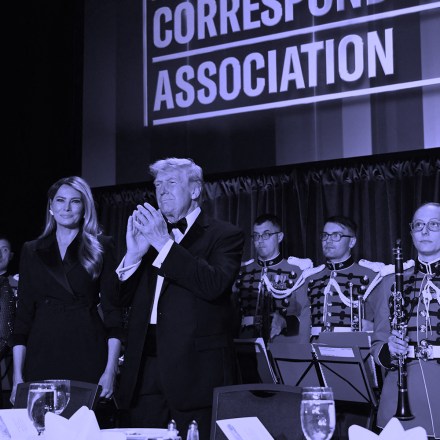
It’s clear when you watch any influencers online that half of them are being paid off, so it’s the most natural thing in the world in one way for politicians and campaigns to get in on it. What is really missing here, what’s really missing in this conversation is the question of regulation and disclosure.
If we had a functioning FEC, they might step in and say, “Whoa, you need to disclose when you’re paying off influencers because that should be something the public knows about.” Instead, we don’t have a functioning FEC or a functioning Congress, so nobody is stepping in to make sure that disclosures are happening.
“Disclosure should be a bare minimum.”
Disclosure should be a bare minimum. Maybe this should be banned outright as well. But we, at the very least, should have clarity on when this is happening, and not just within the context of campaigns but also in the context of politics more broadly.
JW: Those are all really good points.
The lack of any kind of regulation about this is troubling. We’ve obviously been talking about money and where it’s going and how it’s going to influencers, into campaigns, into shady super PACs, but what issues do voters actually care about this election cycle? You and I have covered campaign finance. We’ve covered ICE. But what issues are actually breaking through to voters?
MS: Yeah, I think it’s going to be the economy first and foremost, and then the war on Iran as an extension of the economy, because it dovetails with these concerns about affordability so strongly.
Some of the centrist Dem messaging around affordability is super cringe. But it’s also true that it’s a very important issue for voters. I think it has been rightly identified as a major issue that is just going to dominate everything over the next few months.
I don’t know how much ICE and the crackdowns will really play into the elections. My guess is that’ll be more of a primary issue. Democrats who voted for the Laken Riley Act, for instance, will have problems in primaries over that. But when you look at the polls in the general election, immigration is still one of Trump’s best issues. His numbers have definitely eroded there, but it’s better than everything else by about 10 points.
So I don’t know if that’ll be as much of an issue that candidates are highlighting in the general elections.
JW: On immigration, I do keep thinking that if the elections had been held earlier when everything that was happening in Minnesota that was enraging people. I think that was an issue about immigration, but it was also really an issue about democracy, about people’s right to protest, about the rights that they assumed they held as American citizens to protest against their government.
I want to pivot a little bit to talk about an issue that we’ve been discussing on the show quite frequently, which is the fallout from the SCOTUS decision. So the Supreme Court ruled in favor of essentially gutting the Voting Rights Act, which unleashed a new wave of redistricting wars that have been sparked particularly in the South to eliminate minority-majority districts.
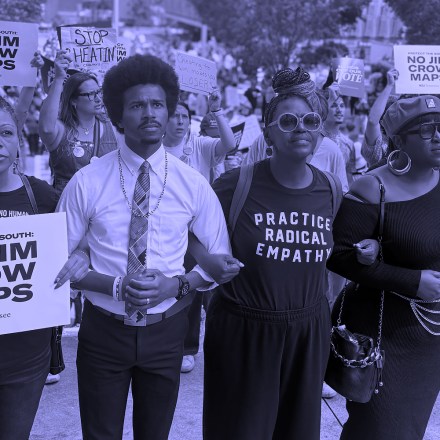
Meanwhile, last week, the Virginia State Supreme Court rejected a voter-approved gerrymandering effort that would have boosted Democrats’ chances of gaining four seats in the House. How are you seeing the redistricting wars take shape? Are there any places you’re keeping a particularly close eye on?
MS: Yeah, we’ve seen Florida, Louisiana, South Carolina quickly pass these new maps.
But, I think in a week or two, we might have hit a wall on the redistricting wars just for practical reasons, because primaries are coming so fast and early voting has opened in so many places. Mississippi, for instance, the governor there has said he’s not going to push redistricting this year, I think essentially just because of the timing.
So we may finally be settling in the place we’re going to be for the elections, and it looks like a net loss of a few seats for the Democrats, which could be really significant if the outcome of the House elections is that close. On major votes in the House right now, it’s only a few votes either way could shift them.
JW: Speaking at the Center for American Progress event, House Minority Leader Hakeem Jeffries had mentioned that they expect to lose about three or four seats as a result of these redistricting efforts in the South, but they have obviously expressed some confidence in being able to overcome those odds.
Are there other midterms races or themes this cycle that you wanted to talk about?
MS: I think that Michigan Senate race is going to be a huge one. It just gets at so many issues, both of style and substance, of where Democratic voters want to go. That, to me, is really high on the list. This California governor’s race is also fascinating in its own kind of train wreck way. So we’ll see how things go there. Really makes you think how important electoral rules are because we could see some crazy outcome that ordinary voters don’t particularly want.
JW: California is the mess that keeps on messing.
MS: OK. Jess, I gotta turn the tables on you. Any other races that you’re watching, no matter how obscure they are?
JW: I am a DC native, and I also live in DC, so I am following the DC mayoral race, which I know is probably not on most people’s radar who do not live in DC, but it’s fascinating. It’s become this debate really around youth crime and these efforts to restart mass incarceration, I would argue, in DC.
So that’s become a really interesting electoral issue between the two more progressive candidates, Janeese Lewis George, who has really fought against these teen curfews, and Kenyan McDuffie, who has been really pushing for these curfews even though he’s tried to paint himself as more of a progressive. So I think that race, although it’s a mayoral race and might not have much impact outside of DC, has been fascinating to watch for me personally.
And with that little tidbit from me, I am going to leave it because I know we are both exhausted. Matt, thank you so much for joining us on the Intercept Briefing.
We’ll add a link to Matt’s story in the show notes.
MS: Thanks for having me on.
JW: That does it for this episode.
This episode was produced by Laura Flynn. Ben Muessig is our editor-in-chief. Maia Hibbett is our Managing Editor. Chelsey B. Coombs is our social and video producer. Fei Liu is our product and design manager. Nara Shin is our copy-editor. William Stanton mixed our show. Legal review by David Bralow.
Slip Stream provided our theme music.
This show and our reporting at The Intercept doesn’t exist without you. Your donation, no matter the amount, makes a real difference. Keep our investigations free and fearless at theintercept.com/join.
And if you haven’t already, please subscribe to The Intercept Briefing wherever you listen to podcasts. Do leave us a rating or a review, it helps other listeners to find us.
Let us know what you think of this episode, or If you want to send us a general message, email us at podcasts@theintercept.com.
Until next time, I’m Jessica Washington.
The post AIPAC, AI, Crypto, and Gambling Are Hiding Their Big Election Spends appeared first on The Intercept.