A New Future for NYCHA’s Historic UWS Brownstones? Residents Say Questions Remain
NYCHA is moving ahead with plans to rehabilitate a unique cluster of Manhattan brownstones, many of which are afforded landmark protection status, by converting the apartments to private management.
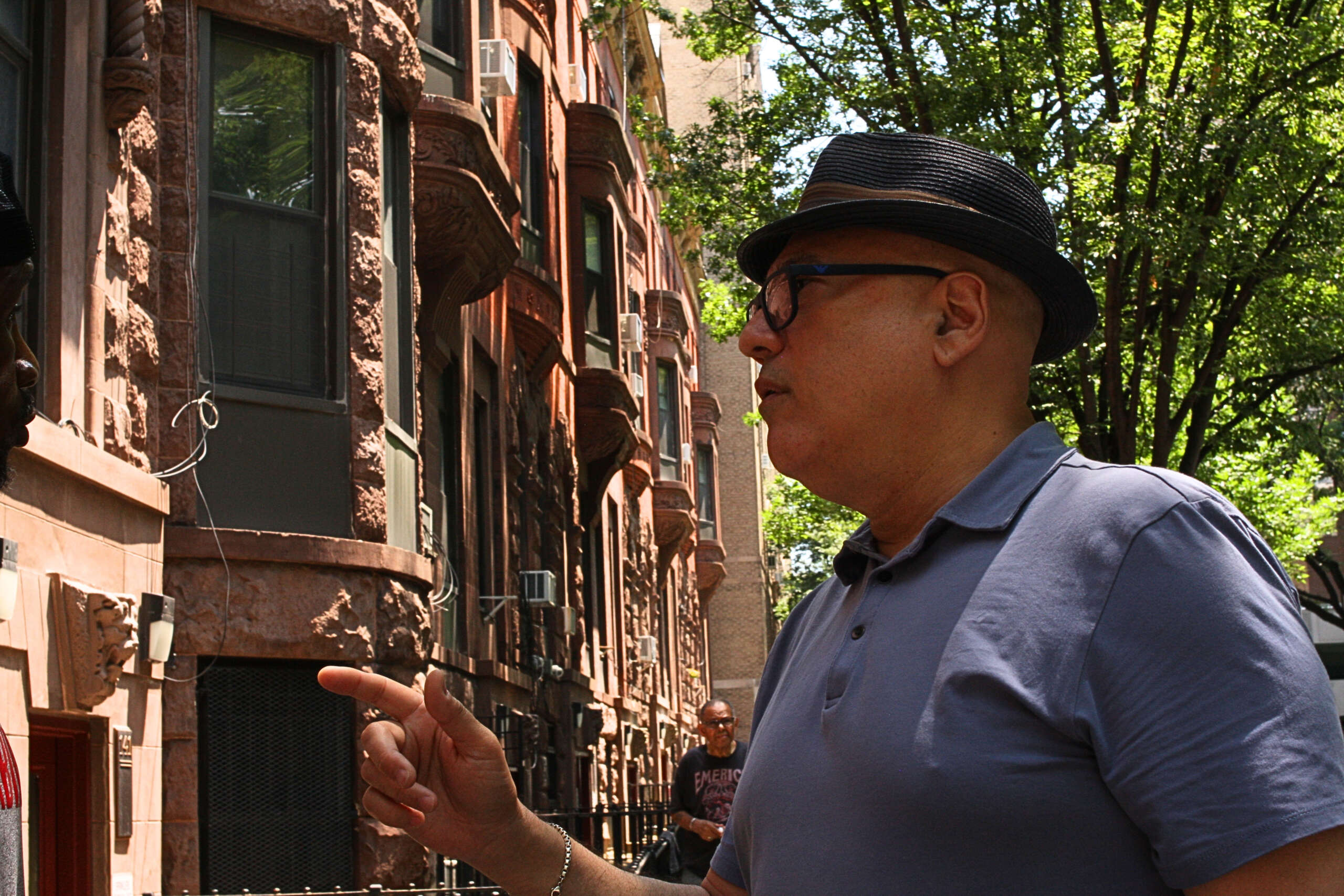
Victor Gotay, a 60-year-old Upper West Sider, has lived in a historic brownstone that operates as public housing for most of his life. He’s also collected full-page photos documenting NYCHA buildings in his neighborhood, and the people who lived in them, through decades of change.
He’s fascinated by the details of his lifelong neighborhood’s past.
“This is what children played in,” Gotay said, pointing to a photo of children gathered together in a small, barren paved area, likely taken in the late 1950s. “This was a family living in one room,” he said of another. Shuffling through the photos, he spotted a shot of the chocolate-façade exterior of his building.
His parents moved into the brownstone, tucked away on West 93rd Street between Amsterdam and Columbus avenues, just after his first birthday in 1967. It’s one of a unique cluster of 36 buildings, collectively called the WSUR Brownstones.
In those decades, the neighborhood was changing a lot: as urban planner Robert Moses famously spearheaded construction of now-famous city icons in the area, like Lincoln Center, and expanded universities, he also razed the Upper West Side’s low-income neighborhoods, displacing thousands of people to make the space.
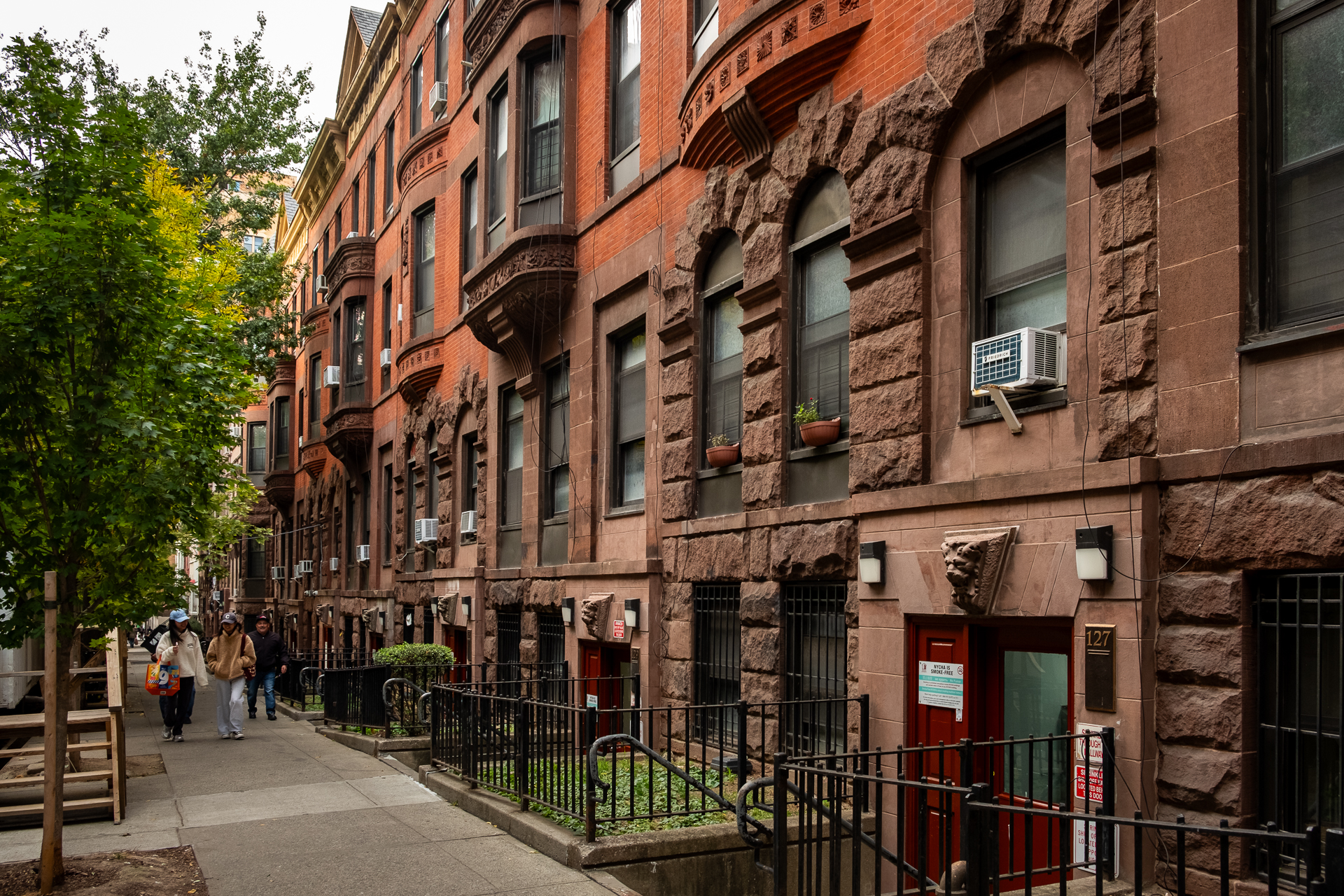
The brownstones were spared, having been part of a unique strategy of conservation called the West Side Urban Renewal Area project since the 1950s. Spearheaded by the city’s planning commissioner in 1955, it arose as an alternative to Moses’ slum clearing practices in its model to preserve instead of demolish the neighborhood’s housing stock. The New York City Housing Authority (NYCHA) was the first to develop housing in the area, ultimately taking over 36 brownstones, which at the time were subdivided into single room occupancy houses, and converting them into the 236 public housing units that still exist today.
Decades later, Gotay still lives there—now with his wife, and as his mother’s caretaker. “It’s funny because my life has really circled around the entire urban renewal process, if you will, that was installed by Robert Moses,” he told City Limits.
Now, another big change is on the horizon.
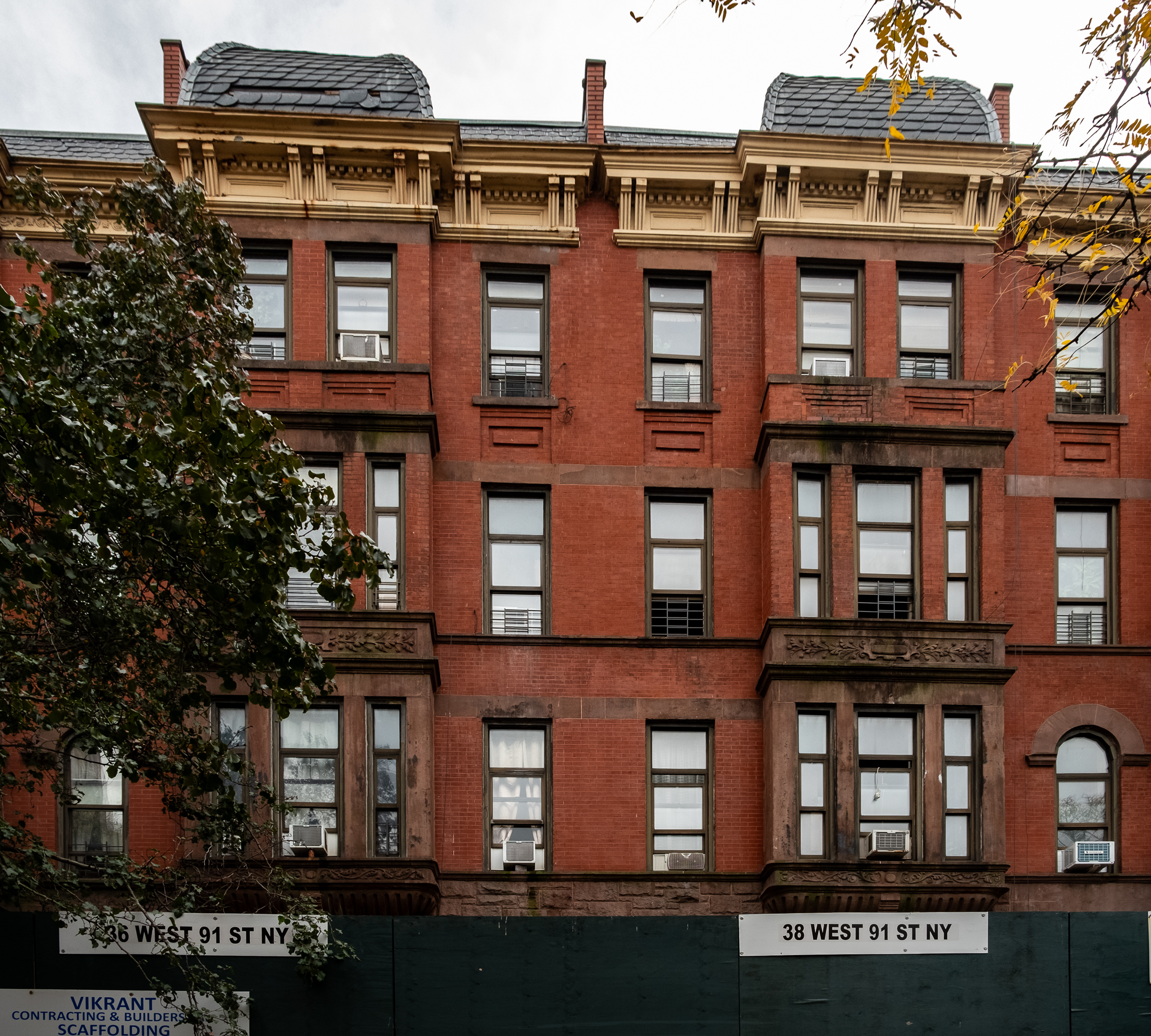
NYCHA, the country’s largest public housing system, is moving ahead with plans to partner with a private management company to rehabilitate 10 developments in Manhattan’s Upper West Side, including the WSUR Brownstones.
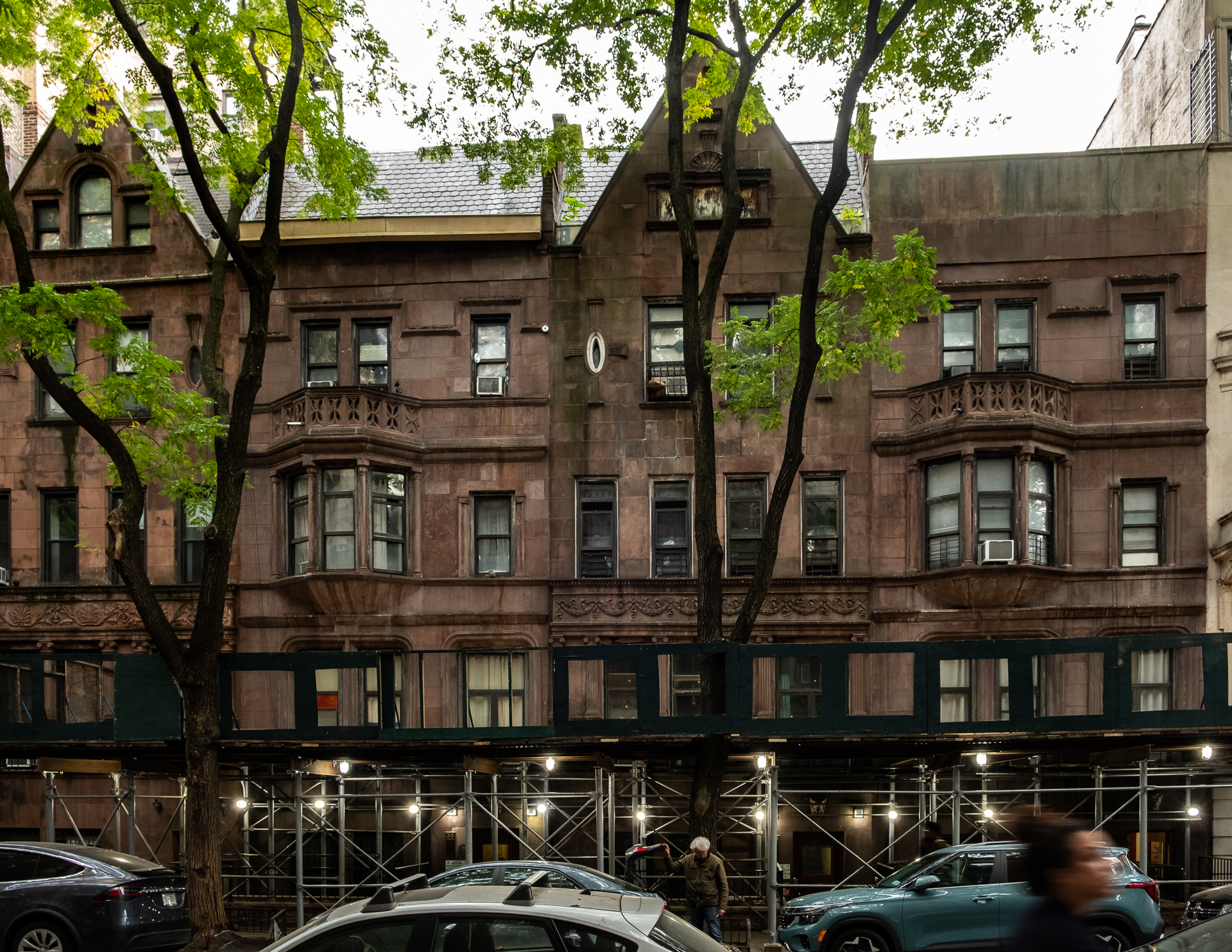
Many of the historic edifices, which represent nearly all the brownstones NYCHA owns, are also part of city-designated historic districts between 89th and 93rd Streets on the Upper West Side, which are protected by strict landmark preservation regulations.
The plans are part of a larger effort, called the Permanent Affordability Commitment Together or PACT program, through which NYCHA taps private companies to manage buildings and converts the properties to a different federal housing program.
It’s one of the only ways, officials say, to access badly needed repair money, since Congress has underfunded traditional Section 9 public housing for decades.
Residents of the brownstones are well aware of their aging buildings’ issues: in 2019, some of them went without gas for nearly a year, and ceilings in three tenants’ apartments partially collapsed in 2023.
As a baseline, the private partnership promises to finance a huge scope of work that includes renovated apartments and common areas plus new windows, heating and plumbing systems, according to a NYCHA spokesperson.
Despite those guarantees, residents are raising questions about who NYCHA is considering as private partners and whether they’ll have a significant say in the selection. NYCHA’s application deadline for interested partners passed in April, and residents still don’t know which companies are in the running.
Another longtime resident, Veronica Lopez, is uncertain if repairs and operations will go well under the new management. She’s worried that residents will lose certain protections once they convert, despite assurances from NYCHA that PACT tenants retain the same rights they had before. “We’re not seeing the longevity of what will happen afterwards,” Lopez told City Limits.
NYCHA’s plan for the brownstones
Gotay, who’s also the vice president of the brownstones’ tenant association, shares a two-bedroom apartment with his wife and his 85-year-old mother. He said initially, NYCHA’s partnership and rehabilitation plans “were rather appealing to residents who have been struggling for the last 40 years to get a basic repair.”
Upcoming work on the brownstones is part of a broader initiative NYCHA calls the “PACT Citywide Clusters” Project, which plans to rehabilitate 27 NYCHA developments across the city, representing over 5,000 units. The 36 brownstones, containing 236 units, are one of 10 developments in the project’s Manhattan cluster.
“It seemed at the time to be encouraging,” Gotay told City Limits.
His main concerns now, he said, are two-fold: he worries that NYCHA will select a private partner with a poor track record—as some PACT tenants say has been the case at other developments—and that residents will not have enough input in the selection process.
At this stage, NYCHA is reviewing bids from potential development teams, who must clear its pre-qualifications and be able to “demonstrate experience having successfully completed large-scale rehabilitation and/or new construction projects,” of at least 1,500 units, according to NYCHA’s project overview.
“We have not been privy to who is actually bidding as a property manager, contractors for this project. There has been no transparency,” Gotay said. “And we were promised to have a say in the selection process as well.”
A spokesperson for the housing authority says that will happen soon. This summer, NYCHA will ask teams that passed initial reviews to prepare final proposals, which will be shared with a group of resident leaders from each development, the housing authority’s spokesperson said.
Tenants will then, along with an independent facilitation team, interview potential management partners, and participate in a scoring exercise that will influence NYCHA’s selection.
Residents can expect the next meeting to communicate timelines in the fall, and NYCHA expects to select a management partner, or PACT partner, for the Manhattan project by early 2027, the spokesperson said.
NYCHA’s brownstone plans are part of a much bigger picture
The rehabilitation plans are part of NYCHA’s much larger ongoing effort to shift operations at thousands of its developments into the hands of private management companies, in order to qualify for additional federal funding, which the critically under-funded housing authority needs to address its $78 billion repairs backlog.
When NYCHA forms a partnership with a private company, the development converts its funding from the Section 9 program to another federal program called Section 8, which comes with a higher government subsidy.
So far, NYCHA has converted more than 31,000 of its apartments to Section 8 under PACT, which was launched in 2016 during former Mayor Bill de Blasio’s administration with a goal to convert 62,000 units over 10 years.
So far, 119 developments have entered PACT partnerships, and raised over $10.3 billion for repairs and renovations, according to NYCHA. The repairs have been sizable, including all new apartments (where walls and floors are removed and reinstalled to remediate mold and asbestos), windows and floors in common areas, and upgraded building systems. Converted developments have also received renovated court yards and playgrounds.
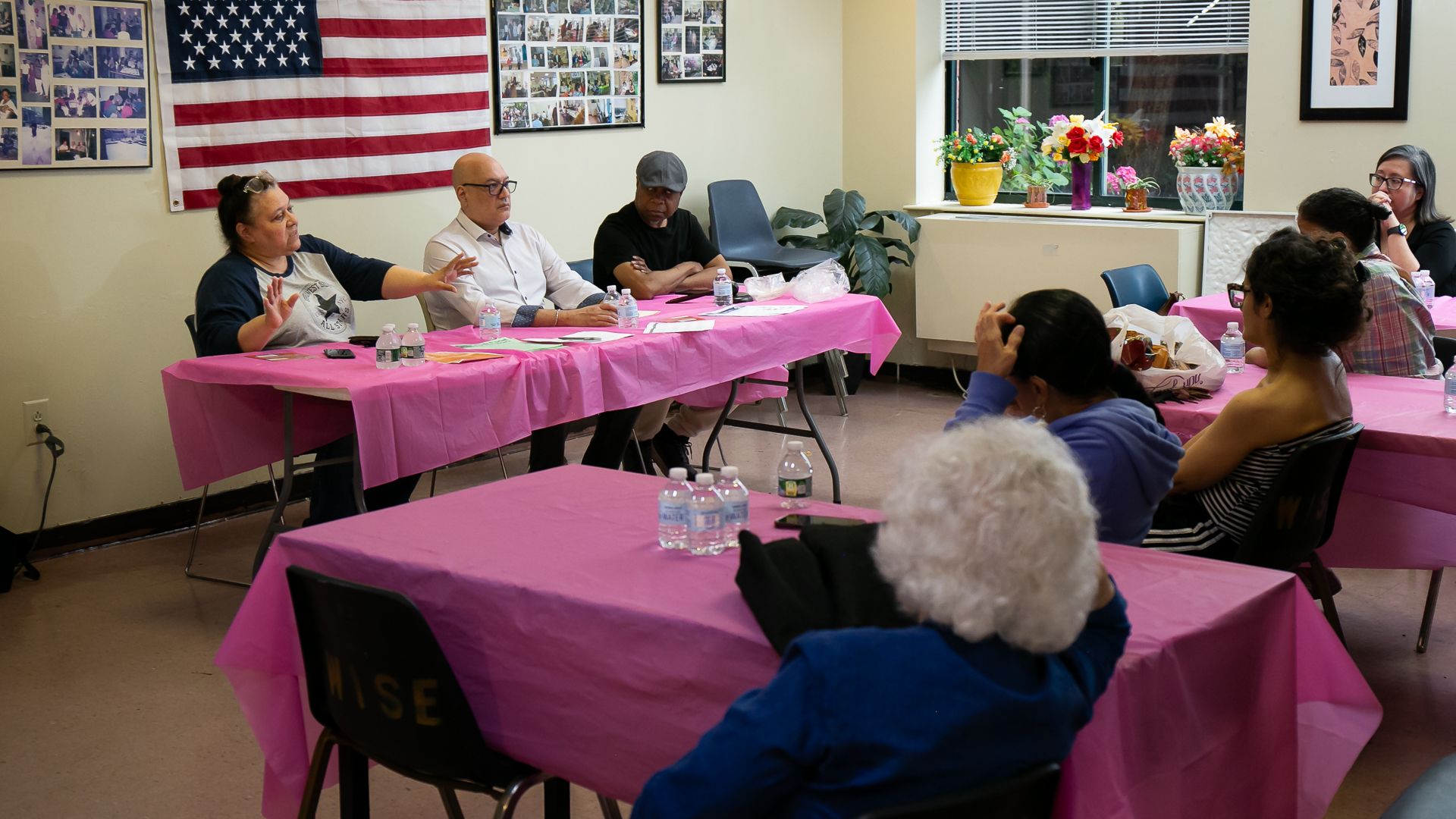
‘We’re afraid of being afraid’: Residents worry about miscommunications
In addition to which management company will take over, tenants also don’t know if they will have to leave their homes during construction—and if they do, where they would go, and for how long. The uncertainty, Gotay said, is a source of fear for some.
“We’re afraid of being afraid,” Gotay said, adding that historic miscommunications and slow, inadequate repairs by NYCHA make many residents skeptical to trust the solution on the table. “There is no bright light shining at the end of this tunnel, giving us this hope that things will go well.”
In a statement to City Limits, a NYCHA spokesperson said “we will rely on input from residents to guide PACT partner selection, scope of work, and plans for property management and social services.”
Another longtime resident, Cynthia Tibbs, who is the tenant association president of the 36 buildings, worries that the promises will fall through.
Communications with NYCHA’s real estate team so far, she said, “have not gone well.” In a meeting with NYCHA officials in May, she recalled an incident when one of the management teams hoping to take on operations at the developments sent interns, incorrectly described to her as architects—and she later found them playing with toys leftover from an event in one of the community rooms.
“I was told that it was architects coming up to survey the buildings,” she said, according to a transcript of the meeting shared with City Limits. “Then I find out later that they’re not, they were just looking around and playing with my toys.”
NYCHA’s real estate team apologized for the miscommunication. “They were very unprofessional,” Tibbs told City Limits.

The uncertainty about who could be taking over and when, she said, is a source of stress as she prepares to relocate during the anticipated rehabilitation.
A NYCHA spokesperson told City Limits that while no decisions have been made yet, temporary moves will likely be required for most or all residents because of the nature of expected repairs.
In a typical situation, the spokesperson said, residents are placed in open units either within their own developments or nearby during construction, and sign agreements that guarantee their right to return to their unit once renovations are complete. Moving expenses are covered by the PACT partner.
Some brownstones are landmark protected, but not all
Of the 36 WSUR Brownstones, 26 buildings are within a city-designated historic district, which affords certain protections including “demolition by neglect,” which requires the buildings to be kept in good repair, and other design standards set by the city’s Landmark Preservation Commission. The building Gotay grew up in isn’t part of those protected.
A NYCHA spokesperson told City Limits that it doesn’t anticipate drastic rehabilitation differences between the buildings within and outside of the historic district, but will respond to each building’s unique needs.
“I can’t lose sleep over this, worrying about the wrecking ball coming,” Gotay told City Limits. His priority, he said, is ensuring his 85-year-old mother can manage the changes.
She moved into the home three years after getting married in 1964, he said, and has lived there ever since. “My mother has outlived my father by 34 years, and she never remarried,” Gotay said. “As we say, his spirit is very much alive in the apartment.”
While he’s skeptical of the project, he also understands that it could unlock direly needed resources for people, especially those who live in decrepit apartments.
“We have certain residents who are very much eager that this program kicks off because they feel it’s going to be an answer to all of their problems,” Gotay said. “Maybe once this program is instituted, it does work out for the better for some individuals. It may not work for all.”
To reach the reporter behind this story, contact Sunny@citylimits.org. To reach the editor, contact Jeanmarie@citylimits.org
Want to republish this story? Find City Limits’ reprint policy here.
The post A New Future for NYCHA’s Historic UWS Brownstones? Residents Say Questions Remain appeared first on City Limits.