The Trump Administration’s Shameless Snuff-Film Fixation
Turning Murder Into Content
Half a decade later and I still remember his voice. A young man lies on the ground, begging, pleading, screaming as another man, swinging a machete, forces him to place his right arm on a small wooden bench. The attacker wants to make things easier on himself.
But it was never going to be easy.
The assailant begins hacking away. Swinging the panga again and again and again, taunting his victim as he delivers the blows. It unfolds slowly. You learn that even for a strong man with a large, sharp blade, it’s difficult to amputate an arm. Excruciatingly difficult.
It’s got to be the longest 1 minute and 18 seconds ever. After the final swing, you see the victim kicking his legs back and forth — in a way I’ve never seen another human move — writhing in agony on the ground.
For a while, my sources in conflict zones, and others who knew I investigated atrocities, would regularly send me such gruesome videos. There was the man lying in a street in the Democratic Republic of Congo as an assailant with a machete attempts to cut off his leg below the knee; I can still remember the exact sound of his cries. There’s the video of the captured Kurdish fighters. I recall how the second woman to be killed — just before she’s shot, point blank, in the head — watches the execution of her comrade. She doesn’t plead or cry or even flinch.
I would dutifully watch the videos, analyze them, and then pitch an article if I could make something of the footage. “You are going to die,” said a Cameroonian soldier, speaking to a group of women he referred to as “BH” — shorthand for the terrorist group, Boko Haram. In that video, which I reported on for The Intercept back in 2018, soldiers force their victims to kneel, including a woman with a toddler strapped to her back. One of those men directs the tiny girl to stand next to her mother. He then pulls the little girl’s shirt over her head, blindfolding her. You can guess what follows.
Videos of war zone violence, from Myanmar to Ukraine to the Middle East, have proliferated even more in the years since. Drones chasing panicked soldiers, or even toying with their quarry, before killing them, have grown into a popular modern motif. And graphic video of ambushes, executions, and traditional trophy “photos” are a commonplace. This type of footage, which used to lurk at LiveLeak and deeper recesses of the internet, is now more ubiquitous, circulating in more accessible online locales like Reddit.
Watching footage of such slaughter comes with a price. In 2015, Eyewitness Media Hub conducted a survey of people who often work with graphic “user-generated content.” Even back then, more than half of the 209 respondents reported that they viewed distressing media several times weekly. Twelve percent of the responding journalists and almost a quarter of the human rights and humanitarian workers said they viewed such traumatic content daily. Forty percent of respondents said that viewing such distressing images and video had a negative impact on their personal lives, leaving them with feelings of isolation, flashbacks, nightmares, and other stress-related symptoms. One quarter reported high or even very high “professional adverse effects.” More recently, a 2023 study of 300 Pakistani journalists found more than 66 percent reported experiencing indirect trauma.
“Intrusive recollections — re-seeing traumatic images one has been working with — are not unusual,” wrote Gavin Rees at the Dart Center for Journalism and Trauma, where I was once a fellow. “Our brains are designed to form vivid pictures of disturbing things, so you may experience images popping back into consciousness at unexpected moments.”
Strange as it may sound, some gruesome videos have had more staying power than horrors I saw in person.
I’ve certainly found this to be true. As a conflict and crisis reporter, I saw some disturbing things in the field which lodged in my brain. But strange as it may sound, some gruesome videos have had more staying power than horrors I saw in person. It’s a phenomenon that I’ve also encountered among other journalists, soldiers, veterans, and witnesses of war violence. I once knew a man who saw something incredibly traumatic — an almost unthinkable atrocity — which his mind blocked out almost entirely. He watched a movie where nearly the same type of murder-spectacle played out and was horrified. He told me that after watching the film, he couldn’t believe someone would do such a thing — and yet, he had seen exactly that same horror show.
In recent months, my laptop has been filling up with a different type of snuff film. The footage is very similar to those Cameroonian clips: defenseless people being slaughtered as the murderers film. In these cases, however, the videos are shared not by some low-ranking murderer or accomplice-in-arms. The first of them was posted on social media by the commander-in-chief of the U.S. armed forces, President Donald Trump. Several later videos were posted online by self-styled Secretary of War Pete Hegseth. The most recent clips have been shared by a military command headed by a four-star Marine Corps general, Southern Command chief Gen. Francis L. Donovan.
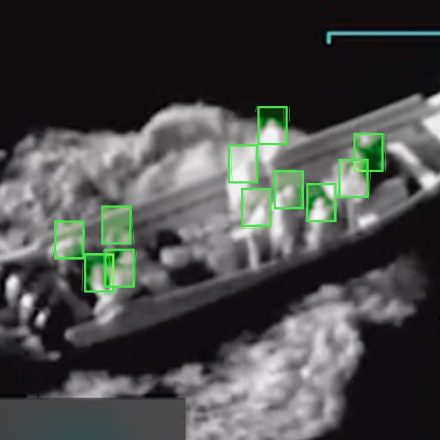
Under Operation Southern Spear, the U.S. military has conducted more than 60 attacks on so-called drug boats in the Caribbean and Eastern Pacific Ocean, killing more than 200 civilians, since September 2025.
Experts in the laws of war, as well as members of Congress from both parties, say the strikes are illegal, extrajudicial killings. These summary executions are a deviation from the standard practice in the long-running U.S. war on drugs, in which law enforcement agencies generally detained suspected drug smugglers and brought them to trial. After each of these double or triple or mass murders, Trump, Hegseth, or SOUTHCOM have posted a video of those civilians being executed from above.
Snuff films have become a signature of the second Trump administration. Just eight days after Trump took office for a second time, Sebastian Gorka, the senior counterterrorism director on the National Security Council, said he presented Trump with a target in Somalia. “Kill him!’” Trump replied, and the man was slain in an airstrike. “He declassified the video because the president wanted to post it. So he posts the video of the hammers of hell being dropped on this ISIS leader,” Gorka recalled with a laugh. “President puts it on Truth Social. … He got 120 million likes in like 18 hours. And at the bottom of that post, he wrote, ‘We will find you and we will kill you.’ Which we have made into the motto of our directorate.”
This cavalier attitude toward turning murder into online content stands in stark contrast to past U.S. military responses to videos of killings released by foes. Twenty years ago, U.S. military officials condemned terrorist “snuff films” — snipers filming their kills — in Iraq. And when it came to a video of two dead American troops shared online, the U.S.-led Multinational Division Baghdad “condemn[ed] the release of the video in the strongest of terms.” The command added: “It demonstrates the barbaric and brutal nature of the terrorists and their complete disregard for human life.”
A decade later, as the Islamic State group released shocking execution videos, one of Hegseth’s predecessors — Chuck Hagel — expressed revulsion at the group’s spectacle of slaughter. “I think regardless of your background, your experience, just as a human being with having some sense of decency and respect for human life and other people, it makes you sick to your stomach,” he said of the group’s videos of the killing of defenseless civilians. “But it again reminds of the kind of brutality and the barbarism that is afoot in some of these areas of the world.”
But Gorka — back then the national security editor of Breitbart News — had a different takeaway. He also mentioned ISIS’s brutality but seemingly with more than a hint of admiration. “Every American, everybody who stands for the values of this republic needs to watch these videos because then you understand the nature of the threat of the brutality of the people we’re facing,” he said of ISIS’s snuff films in 2014. “It’s very, very slick. Think about one thing — just two weeks ago, Ayman al-Zawahiri, the head of al Qaeda, issued a 55-minute lecture in Arabic. … That’s not going to bring you recruits. That’s not going to further your cause as a jihadist. These people do instant little messages. They do these short videos. They have a very, very professional audio/visual social media crew.”

Whether or not Gorka has been the driving force behind the snuff film fixation, the Trump administration seems to be larded up with MAGA minions channeling their inner ISIS. When the Iran war began, military officials began spoon-feeding Trump so-called highlight reels of strikes on targets, according to reporting by NBC: “The daily montage typically runs for about two minutes, sometimes longer, the officials said. One described each daily video as a series of clips of ‘stuff blowing up.’”
The White House has then taken such footage and spliced in clips from action films, TV shows, and video games to create online content. In one, the White House combined clips from Nintendo’s Wii Sports with videos of attacks on Iran. Another — captioned “STRIKE” — featured a former professional bowler, anthropomorphic AI bowling pins labeled “Iranian regime officials,” a fake fighter jet, and real airstrike footage. Videos of airstrikes were also combined with short clips — “Gladiator,” “Braveheart,” “John Wick,” “Superman,” “Better Call Saul,” “Dragon Ball Z” — to create “JUSTICE THE AMERICAN WAY,” a video posted by the White House and eagerly shared online by top administration officials. It ends with a voiceover saying “flawless victory” — an audio clip from the video game “Mortal Kombat.”
“Hey White House, please remove the Tropic Thunder clip. We never gave you permission and have no interest in being a part of your propaganda machine. War is not a movie,” Ben Stiller, who directed and starred in the movie “Tropic Thunder,” featured in the aforementioned Justice video, wrote on social media. Three months later, the White House’s murderous mash-up remains on X.
The White House employs a media strategy that melds influence operations with influencer culture, muddying the news cycle, laundering lies, and countering critical coverage by flooding the zone with shoddy propaganda, TikTok-style memes, rancid AI slop, and music videos. “We’re here. We’re in your face. It’s irreverent. It’s unapologetic,” Kaelan Dorr, a deputy assistant to the president who runs the digital media team, told the Washington Post last year, after countering criticism of its brutal anti-immigrant policies with social media that turned federal viciousness into a joke. The Trump administration’s viral war porn provides another layer of calloused cruelty obscuring the human costs of America’s global killing spree.
In a 2002 New Yorker essay on images of the suffering wrought by war or torture, Susan Sontag reflected on photographs of Black victims of lynchings from the 1890s to the 1930s. “The lynching pictures tell us about human wickedness. About inhumanity. They force us to think about the extent of the evil unleashed specifically by racism. Intrinsic to the perpetration of this evil is the shamelessness of photographing it,” she wrote. “The pictures were taken as souvenirs and made, some of them, into postcards; more than a few show grinning spectators, good churchgoing citizens, as most of them had to be, posing for a camera with the backdrop of a naked, charred, mutilated body hanging from a tree.”
The Trump administration’s snuff films are no less dehumanizing or shameless — even if the victims are censored in the footage — and the cheering replies on social media celebrating the boat strikes and murder memes are the modern-day equivalent of those churchgoers’ grins. But unlike the singular images of horrific violence meted out on black victims across the U.S., we are — 100 years later — drowning in endless videos of boat strikes and drone attacks and impacting missiles and bombs dropped on apartment buildings. The voyeuristic nature of the content dehumanizes the victims and debases us all.

Trump, Hegseth, Gorka, and Donovan might be immune to any shame, regret, or guilt. Serial killers — people who murder a series of victims over a period of time — often lack empathy or remorse. But the entire kill chain involved in strikes and the propaganda apparatus that transforms footage of murders into social media content is filled with thousands of people — military personnel, members of the intelligence community, White House workers, and others — for whom these videos might not be so easy to dismiss and forget.
Most of the Trump administration’s boat strike footage plays like the movies of his childhood, flickering black-and-white footage, and the movies of his parents’ youth, silent films. You don’t hear the explosion of a missile’s impact or the cries of the wounded and dying. In that respect, it’s different than a homemade video of a young man having his arm hacked off with a machete. Those sounds, those cries got stuck in my head — more so than even the visual horror. The Americans who make the snuff films possible might be spared this. But in the end, that might actually be worse.
A veteran once told me of a murder he replayed again and again in his head for the rest of his life. Like the boat strike footage, he said there was no sound. That’s what he said was so terrifying. This veteran always saw the victim, mouth agape, screaming in agony. But he could never conjure a soundtrack. It was awful. Unnerving. Maddening. Agonizing. It caused his head to ache, his chest to tighten, and his guts to twist into knots. This horrific hush was deafening. He told me that, decades and decades later, it was — above all — this “silent scream” that tortured him.
The post The Trump Administration’s Shameless Snuff-Film Fixation appeared first on The Intercept.