LA officials and LAHSA trade blame as homeless service providers await millions in late payments
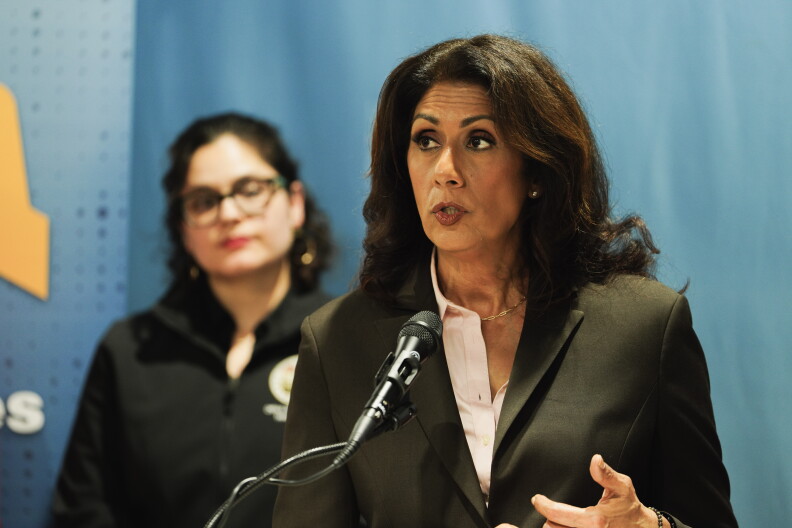
Los Angeles’ regional homeless services agency revealed last month that it’s behind on paying tens of millions of public dollars to homeless services providers currently operating shelters and other services for unhoused Angelenos.
Leaders at the Los Angeles Homeless Services Authority, or LAHSA, said the agency currently owes more than $50 million to service providers for services they’ve already provided. Several LAHSA contractors told LAist they’re taking on debt to maintain operations while awaiting payments.
Now, the city of L.A. and L.A County are investigating the causes of LAHSA’s cashflow problems and pushing to get those contractors paid.
The agency’s finance team blames the payment delays on a variety of factors, including LAHSA’s own outdated policies, disorganized workflows and low morale among staff.
They also point to local bureaucracies, especially within city government, which LAHSA said has failed to pass along tens of millions in public funds meant for providers.
Starting Thursday, the county’s auditor-controller is launching a review of LAHSA’s financial operations. The audit is expected to conclude this month, officials said. County supervisors also approved a motion this week asking staff to come up with a plan to speed up late payments to county-funded providers.
Officials from the city of L.A. said the Los Angeles Housing Department, City Administrative Officer’s Office and LAHSA are working together to expedite the contracting and payments processes on the city side.
This budget year, which ends June 30, LAHSA is responsible for doling out nearly $700 million in city, county and state and federal dollars to the local organizations it contracts with to provide homeless services.
LAHSA’s latest payments crisis comes as L.A.’s lead homelessness agency has been under heightened scrutiny for more than a year, after an L.A. County audit and federal court-ordered review found widespread financial mismanagement.
County officials cited LAHSA’s oversight problems when they voted last April to shift more than $300 million in funds away from the agency next budget year and oversee the funds itself within a new homelessness department.
“LAHSA does not have the staffing or expertise to pay its bills,” Supervisor Lindsey Horvath said in a statement. “These failures have destabilized providers and eroded public trust — and they must end.”
Now, the L.A. City Council is weighing moving the city’s roughly $300 million away from the troubled agency soon, too.
Some officials are calling for serious reforms at LAHSA’s finance department. L.A. City Councilmember Monica Rodriguez told LAist the delayed payments aren’t an isolated incident, but a symptom of the agency’s broken governance structure.
“When the City routes hundreds of millions of taxpayer dollars through a joint authority without directly negotiating and contracting with providers, accountability becomes blurred and finger-pointing replaces responsibility,” Rodriguez said in a statement.
LAHSA’s finances
Providers raised the same concerns about late LAHSA payments nearly two years ago, and officials promised to make changes.
L.A. County began issuing quarterly advance payments to LAHSA to pay homeless service providers ahead of time, officials said, instead of weeks or months later. The city started doing the same thing for many of its LAHSA contracts.
Janine Trejo, LAHSA’s chief financial officer, was instrumental in developing the new advanced payment model, according to the agency.
But that fix, which was meant to speed up payments, is now a bottleneck. The advance-payments system has become administratively burdensome for overworked and undertrained staff, LAHSA officials said. And the agency failed to release many of those advances to providers on time this year.
“Having an advanced model is great for the providers, but it’s extremely difficult for LAHSA,” said Gita O’Neill, the agency’s interim CEO, in a public meeting last week.
In December, LAHSA put a new plan in place for contracts, which O’Neill said “will prevent the avalanche of invoices” next budget year. She said LAHSA is working to identify consultants to help the agency modernize how it issues and recoups advances, submits cash requests to funders and disperses checks.
“We’re actually gonna go through it with an outside firm and make sure it works,” O’Neill said last week at a LAHSA Commission meeting. “Not just fixing the tools, but actually checking the process to see if we can make it better, since it’s my understanding that this happens year after year at LAHSA and it can’t continue. We aren’t just gonna put a band-aid on it.”
O’Neill acknowledged the agency is in deep crisis.
“LAHSA has been structured for decades as the entity that takes the blame,” O’Neill said. “Political incentive has always been to point at LAHSA rather than to address structural issues.”
The blame game
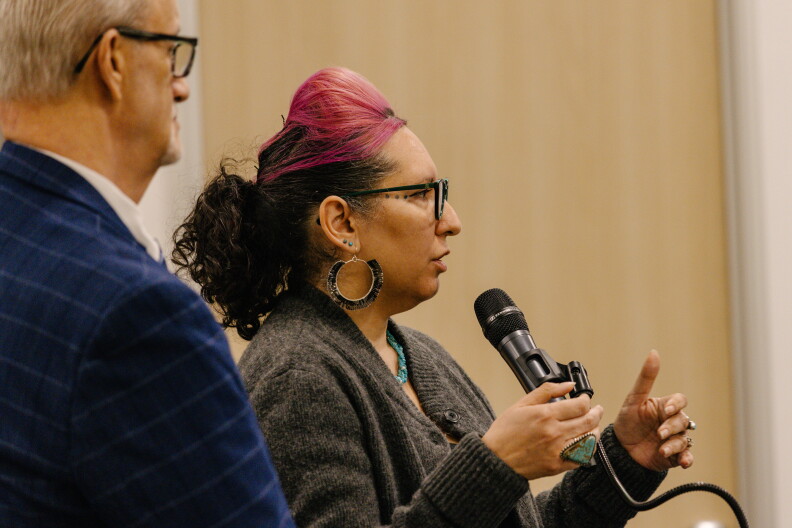
Last month, LAHSA finance deputy Janine Lim told the commission overseeing the agency that delayed payments were partly caused by the city of L.A. not passing along funds.
LAHSA Commission member Amy Perkins, also a policy deputy for county Supervisor Lindsey Horvath, pressed Lim on why the agency had not raised an alarm.
“Providers are submitting invoices for work they’ve completed for the city of Los Angeles and you don’t have that money, and you are not calling out that as a 911?” Perkins said. “That feels like a 911 to me.”
Lim said she had informed providers consistently that LAHSA was waiting on payments from the city — more than $40 million as of last week.
Contracts for the Inside Safe program, which moves people from encampments into shelter, had the longest delays, Lim said. That program is funded quarterly, making payments more complicated.
“ Government funding, I think as we know, is some of the toughest dollars to manage,” Lim said.
Several homeless services providers told LAist that the wait is typically longer for city-funded contracts, because there are more departments and offices involved.
“What may take the County a few days or a week to approve, can take considerably longer at the City level,” said Kelvin Driscoll, CEO of HOPICS, in a written comment. “The City has a much more complex process that can, and has, caused delays for months in both finalizing contracts as well as funding.”
City pushes back
City officials acknowledged the need to streamline their processes, but said LAHSA was slow to finalize contracts for the current budget year.
The city of L.A. executed its eight contracts with LAHSA in September, a few months after the budget year had already started. It then took LAHSA until this February to finalize 160 subcontracts with the providers, city officials said.
“While there is certainly room to move faster on the city side, most of the delay this year in contracting was at LAHSA,” L.A. City Councilmember Nithya Raman told LAist.
Matt Szabo, L.A.’s city administrative officer, said the city has already given LAHSA more money than it has asked for when it comes to advances.
“The City has disbursed more than $138 million to LAHSA in advance-payments this year, far in excess of what we have been billed for to date,” Szabo told LAist in a statement.
Raman, who chairs the council’s homelessness committee, said the overdue payments are unacceptable.
“I do not think the city should sign any new contract with LAHSA for next fiscal year until LAHSA has an outside, qualified accounting firm in place to process its payments and cashflow,” Raman said.
Meanwhile, L.A. Mayor Karen Bass blamed the City Council for contributing to the delays.
During this year’s budget process, the council voted to move half of all funding for shelter beds into the city’s unappropriated balance, to allow for more spending flexibility and oversight. That decision has caused severe payment delays this budget year, the mayor’s office said.
“Mayor Bass is exploring all available options to improve this system, including reevaluating the cost-reimbursement model, advocating for a multi-year budget, and working with the city council to keep all homelessness funding outside of the unappropriated balance,” a Bass spokesperson told LAist.
The Housing Department administers LAHSA’s city-funded homelessness contracts. The department did not immediately respond to questions about the delayed payments.
What’s next?
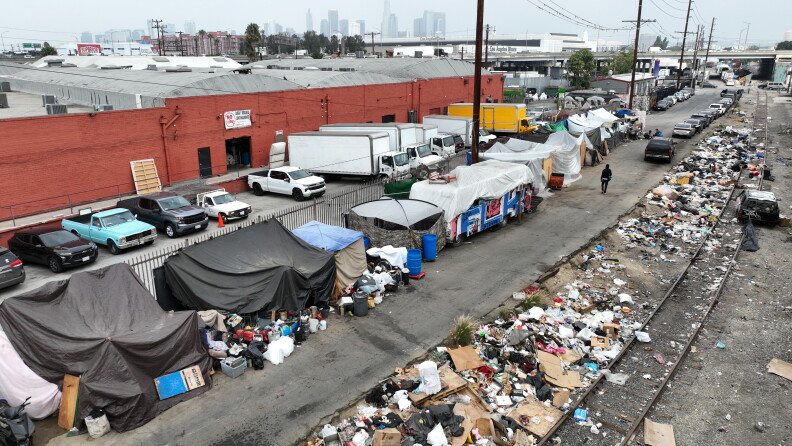
The evaluation by the Auditor-Controller’s Office will focus on the agency’s delayed processing of invoices and its failure to draw down available funds in time to pay scheduled advance payments to some county-funded providers last month.
Acting County CEO Joe Nicchitta sent a letter notifying LAHSA of the review last week.
“ Why this happened, I think, remains unclear,” Nicchitta told county supervisors this week. “We all agreed that a review of LAHSA’s policies, procedures, and financial records relating to the advances was warranted and necessary to make sure that we understood what was happening.”
County officials are expected to return to the Board of Supervisors with a financial analysis and corrective action plan next month.
In July, L.A. County will start managing its homelessness funds directly, through the Department of Homeless Services and Housing, instead of relying on LAHSA.
LAHSA is still expected to manage $340 million in homelessness dollars for the city of L.A. next budget year. But the future of that arrangement is uncertain, as city officials consider withdrawing from the troubled agency.
After an L.A. City Council committee discussed options at a meeting Wednesday, Bass released a statement urging the council not to withdraw funding from LAHSA without a plan in place.
“We need to continue putting people and services first,” Bass said.