Gallery applauds as Tony Greenstein is unanimously acquitted of inviting support for terrorism
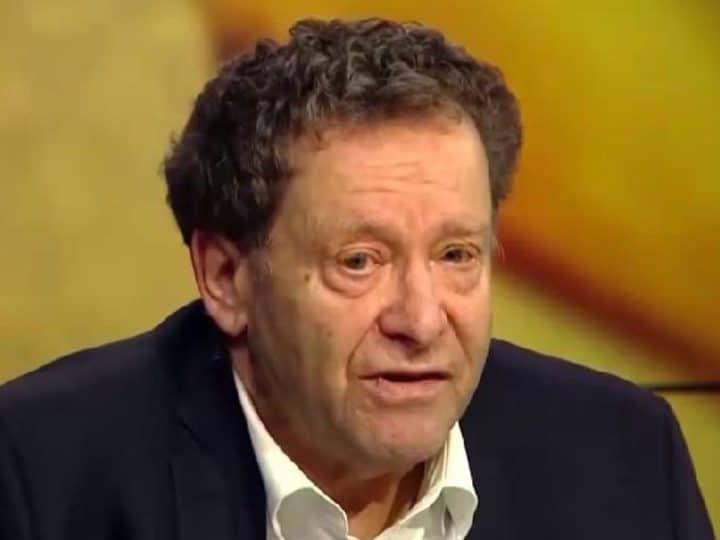
Tony Greenstein’s trial at Kingston Crown Court has ended in a spectacular own goal for Sussex Zionist complainants and the Crown Prosecution Service (CPS), as a jury of seven men and five women took just two hours and eleven minutes to clear the 72-year-old Jewish anti-Zionist writer and activist. The verdict left an openly hostile judge furious and the unfortunate CPS humiliated.
Greenstein, a veteran socialist, author, and founding member of the Palestine Solidarity Campaign, was charged under Section 12(1) of the Terrorism Act 2000 with inviting support for a proscribed organisation following three social media posts published on 7 October 2023. Facing up to 14 years in prison for describing the breakout from the Strip as a “Gaza ghetto uprising”, Greenstein delivered a blistering closing defence to the jury that resulted in spontaneous applause echoing from the packed public gallery.
The Crown’s party political analogy
The CPS, represented by Kate Temple-Mabe, who was bound by the cab rank principle to present the state’s case, attempted to convince the jury that by linking to his blog and stating Greenstein was criminally inviting the public to support Hamas:
whatever criticisms one can make of Hamas, we should congratulate them on this well-planned and audacious attack
The prosecution tried to simplify their case by equating Palestinian anti-colonial resistance to a British party political analogy. The Crown argued that if an individual dislikes Party A more than Party B, knocking on doors for Party B makes them a supporter of Party B, no matter what their past ideological leanings. Under this logic, the prosecution claimed that praising the tactical efficiency of the October 7th military offensive constituted an endorsement for Hamas.
The prosecution also leaned heavily on online exchanges, including a reply to Peter Tatchell where Greenstein argued that October 7th was not the time or place to criticise Hamas for LGBT issues while bombs were raining down on Gaza.
Judicial interference and Greenstein’s excluded evidence
Throughout the trial, defence barrister Lawrence McNulty pushed back against the judge’s interference and did so in a way that made the jury highly aware of how the bench was attempting to steer the case. McNulty eventually stood down so Greenstein could address the jury directly in person, while solicitor Zafar Iqbal remained in court to instruct him.
The tension between the bench and defence reached a flashpoint before police witnesses were questioned. Clearly nervous about where the defence might lead and seeking to control the narrative from the outset, Judge Sarah Plaschkes KC demanded to know in advance what line of questioning McNulty intended to pursue with the police. McNulty pushed back immediately, asking the judge whether she planned to micromanage the defence. He even offered to hand over a full list of his questions if the bench formally compelled him to do so, a demand Plaschkes ultimately refused. As the standoff threatened to turn into a complete stalemate, the jury was eventually brought back into the courtroom, where McNulty proceeded to ask the officer just a single question: getting the police to confirm that the transcript from Greenstein’s second interview was so short that it had obviously been heavily redacted.
The jurors were asked to leave the courtroom quite frequently so that Judge Plaschkes could attempt to impose limits on the defence team, which they consistently managed to get around. Significant context was actively kept from the jury. Large sections of Greenstein’s voluntary police interview transcripts were excluded, and over half of the controversial blog post was omitted from the prosecution’s extracts. Furthermore, dozens of historical articles attacking Hamas across the 3,500 posts on Greenstein’s platform — including pieces written by guest bloggers as well as mainstream outlets like The Washington Post and Haaretz that he regularly published — were ruled inadmissible as evidence to the court or jury.
Greenstein pointed out the huge gaps in what the jury was permitted to see, noting that had any of the posts on his platform expressed praise or support for Hamas, the Crown would have rushed to include every single one of them. Instead, because his site served as an open forum documenting decades of trenchant opposition to religious fundamentalism by both himself and contributing writers, those articles were deliberately kept out of evidence to bolster the state’s fragile prosecution. Greenstein and his legal team made sure the jury became aware of this censorship, a revelation that decisively turned the room against the heavy-handed approach of the judge and prosecution.
Judge Plaschkes repeatedly halted Greenstein’s evidence when he sought to provide historical context, warning him against treating the court as a “political forum” and claiming the jury was “not concerned with events in the Middle East”. Greenstein rebuked the bench directly, retorting that turning a blind eye to genocide is the exact problem with the ruling class in Britain. As the judge attempted to silence him further, Greenstein fired back that he was talking about human rights, including her own.
Plaschkes went on to direct the jury to disregard the excluded blog posts and strictly instructed them to ignore Greenstein’s mentions of the 14-year sentence hanging over him. At one point during the trial, Greenstein remarked directly to the bench that it felt as though the prosecution had two people working for it, implying that the judge was ganging up with the prosecution.
Tony Greenstein’s closing address
Giving evidence, Greenstein described Gaza as a cage and a human prison where Palestinians had been locked up for 57 years, asking the jury to imagine living under an inescapable blockade with poisoned water and power cuts. He insisted that when a colonial power holds another people down, those people have the right to resist.
Addressing the jury directly in his closing speech, Greenstein dismantled the Crown’s party political analogy:
The prosecution used an analogy of supporting party A and not party B. This analogy is not sufficient for the context of colonial occupation. I support occupied people, but I have never supported Hamas. Kemi Badenoch might support Andy Burnham if he cuts benefits, but nobody would then accuse Badenoch of supporting Labour.
Greenstein anchored his anti-Zionism in his family history and Jewish heritage. He recounted how his family fled Poland while most relatives were murdered in the Treblinka extermination camp, and recalled how his father, Rabbi Solomon Greenstein, stood at Cable Street in 1936 against Oswald Mosley’s British Union of Fascists. Raised as a religious Zionist who celebrated the 1967 war, Greenstein became an anti-Zionist in 1969 after researching the Nakba for a school debate.
Greenstein drew chilling parallels between historical and contemporary fascist rhetoric, pointing out how Israeli finance minister Bezalel Smotrich and Nazi architect Heinrich Himmler both used identical dehumanising language by referring to human beings as animals to justify mass slaughter.
In an impassioned section of his address, Greenstein confronted the jury directly with the realities of the ongoing genocide:
If the devil exists, it is amongst those who prohibit anaesthetics entering Gaza. It is amongst those who deliberately starve children to death, those who bomb tents and burn children alive, and those who call Palestinians “human animals”.
Explaining his use of the phrase “Gaza ghetto uprising”, Greenstein invoked Marek Edelman, the last surviving commander of the 1943 Warsaw Ghetto Uprising. When Edelman died in 2009, he was accorded a state funeral with full military honours in Poland, yet he remained despised and boycotted by the Israeli establishment because he was a lifelong anti-Zionist who explicitly stated that Gazans were being treated just like Jews were in Warsaw, addressing Palestinian fighters as fellow partisans. Greenstein warned the jury that Britain’s Terrorism Act 2000 is written so broadly that it would have criminalised the Warsaw uprising itself, remarking that it is wide enough to drive a coach and horses through.
Turning to the state’s targeting of Palestine Action, Greenstein drew a direct historical comparison with the Suffragettes. He stressed that the Suffragettes engaged in far more violent direct action — not just smashing windows, but setting off bombs — yet today they are universally celebrated as having been on the right side of history. He told the jury that future generations will view Palestine Action in exactly the same way. He contrasted this with the grotesque abuse of counter-terror legislation, pointing out that while roughly 200 people were arrested for terrorism in 2024, that figure rocketed to 3,000 in 2025, with the average terror suspect now being a 50-something white woman.
He challenged the deep hypocrisy of the state and the architects of the counter-terror legislation. Greenstein pointed out the grim irony that Tony Blair and Jack Straw introduced the Terrorism Act 2000 while launching illegal imperialist wars across Iraq and Afghanistan, foreign invasions that directly bred Islamic State, destabilised the region, and brought blowback to the UK in the form of the 7/7 London bombings and the Manchester Arena attack. The very politicians who engineered modern terror legislation were the ones whose foreign policies brought terrorism to British soil.
He contrasted this with double standards in the establishment media, pointing out that mainstream figures like Alastair Campbell and Rory Stewart interviewed Abu Mohammad al-Jolani — the former leader of the proscribed Syrian militant group HTS (formerly the Syrian branch of Al-Qaeda) who previously had a multi-million dollar CIA bounty on his head before becoming Syria’s president — without facing dawn raids or device seizures. He reminded the jury that Margaret Thatcher and Ronald Reagan had once labelled Nelson Mandela a terrorist, noting that history always delivers its own verdict on such political classifications.
Citing John Stuart Mill, George Orwell’s maxim that liberty means telling people what they do not want to hear, and Benjamin Franklin’s warning on trading liberty for security, Greenstein likened the state’s prosecution to Idi Amin’s famous quip that freedom of speech exists, but not freedom after speech.
Drawing his address to a close, Greenstein quoted Lord Devlin on trial by jury being the lamp that shows freedom lives, and cited the 1670 Bushell’s Case commemorated on the wall of the Old Bailey, which established the constitutional right of juries to acquit according to their conscience without judicial intimidation.
The verdict and the Streisand effect
As Greenstein finished his closing speech, a round of applause broke out across the public gallery.
Before allowing the jury to return with their verdict, Judge Plaschkes addressed the court. She warned the public gallery that anyone unable to remain completely silent when the verdict was delivered would be forced to leave immediately.
The judge also stated that she was initially minded to initiate contempt of court proceedings against Greenstein for raising wider political issues and advising the jury on conscience-based acquittals. She invited the Crown to make a formal contempt complaint, but when Temple-Mabe declined, Judge Plaschkes dropped the matter, remarking that on calm reflection Greenstein’s address amounted only to a rambling speech delivered by an old man. She added her belief that the jury would have reached its decision regardless of his closing remarks. The comment provoked gasps of disapproval across the packed public gallery.
When the unanimous not-guilty verdict was delivered, Greenstein grinned visibly and looked emotional as supporters in the gallery celebrated.
The entire prosecution stands as a clear demonstration of the Streisand effect. Zionist complainants in Sussex sought to criminalise Greenstein and silence anti-Zionist speech. Instead, all they achieved was to amplify Greenstein’s anti-Zionist analysis, his book Zionism During the Holocaust, and his platform onto a national stage. It exposed the sharp contrast where establishment journalists interview former proscribed al-Qaeda leaders without police interference, while anti-war activists face dawn raids and frozen bank accounts. Above all, it delivered a resounding defeat for the state with the fourth jury acquittal out of seven recent Section 12 terrorism prosecutions against pro-Palestine speech — reaffirming that ordinary juries refuse to treat political opposition to genocide as terrorism.
Outside the court, Greenstein addressed a crowd of supporters, declaring the acquittal a shared victory for Palestine and democratic rights in Britain. He affirmed that opposing genocide is not a crime, whereas supplying arms to Israel to perpetrate a genocide is, concluding that the movement stands on the right side of history.
Following the verdict, civil rights groups welcomed the outcome, with human rights organisation CAGE International releasing a statement affirming that the jury’s swift decision demonstrates that Palestinian liberation is not a crime.
Featured image via Twitter